
Last Updated: October 26, 2026
Quick Summary
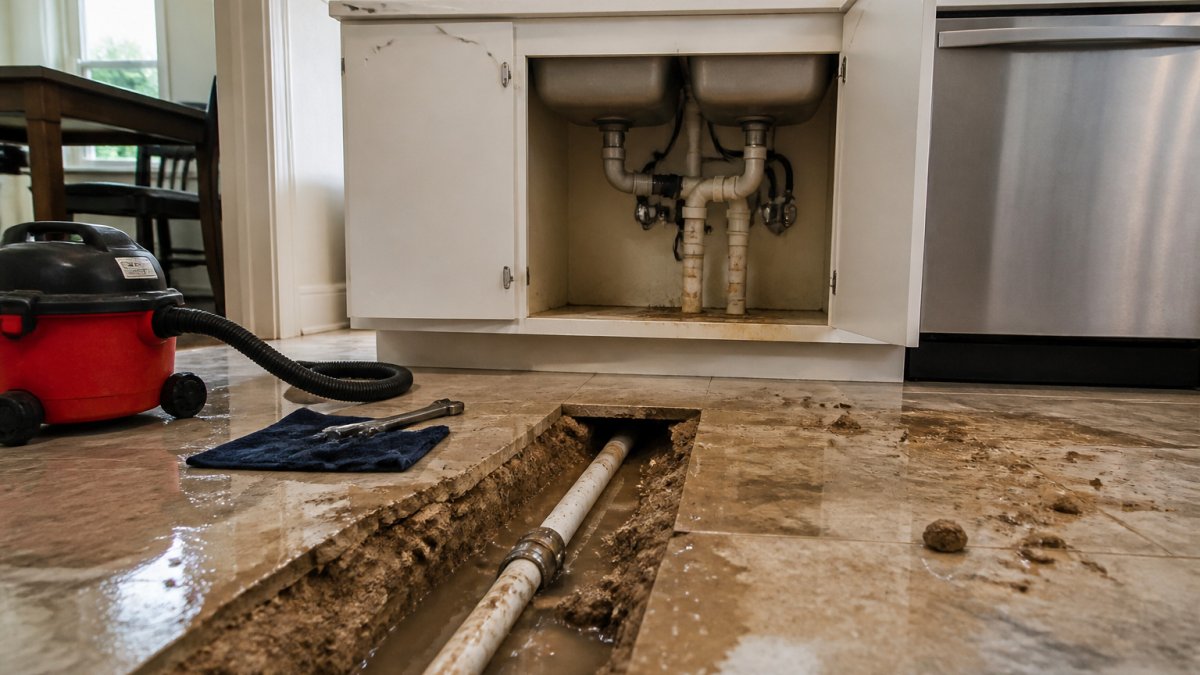
A slab leak kitchen floor can cause an unexplained spike in your water bill, running water sounds when nothing is on, warm spots on the floor, damp flooring, mold or musty odors, and warped or cracked flooring. Check your water meter, inspect under the sink, feel the floor temperature, and listen for continuous water sounds to detect a possible leak.
- Check your water meter by turning off all fixtures and waiting 30 minutes to see if the reading changes
- Listen for running water, hissing, or rushing sounds under the sink, along baseboards, and in rooms below the kitchen
- Walk barefoot across your kitchen to feel for warm spots, especially near the refrigerator, sink, or exterior walls
- Look for damp flooring, wet spots, darker grout lines, and visible moisture on tiles or linoleum
- Contact a licensed plumber if you notice multiple warning signs or suspect a leak beneath your kitchen floor
Table of Contents
- Why Kitchen Slab Leaks Demand Immediate Attention
- 1. Unexplained Spike in Your Water Bill
- 2. Running Water Sounds When Nothing Is On
- 3. Warm Spots or Hot Spots on the Kitchen Floor
- 4. Damp Flooring, Wet Spots, or Visible Moisture
- 5. Mold, Mildew, or Musty Odors in the Kitchen
- 6. Warped, Raised, or Cracked Flooring and Walls
- How to Detect a Slab Leak Safely Without Damaging Your Floor
- Frequently Asked Questions
Why Kitchen Slab Leaks Demand Immediate Attention
A slab leak kitchen floor problem isn’t something you can ignore or postpone. Slab leaks are among the most frequent plumbing problems homeowners face. Water flowing beneath your home’s concrete foundation can cause damage. Structural failure, mold growth, and repair costs may follow.
Slab leaks can be difficult to see. Water may be beneath the flooring, and the leak may have been running for some time before a homeowner notices a problem.
Kitchen leaks can be urgent. Water lines may run beneath kitchen floors, and a leak can cause damage.
This guide describes possible warning signs of a slab leak under your kitchen floor and ways to check for signs of a plumbing leak.
1. Unexplained Spike in Your Water Bill
Your water bill jumped, even though your household’s water use seems unchanged.
A higher water bill can be one sign that something has changed.
A continuous water leak beneath your foundation can cause water usage to rise. A slab leak under your kitchen floor may not be visible. Checking the water meter can help identify water use when fixtures are off.
Check your water meter to confirm:
- Turn off every faucet, appliance, and fixture in your home
- Make sure no toilets are running
- Go to your water meter (usually outside, near the street or in a basement)
- Write down the meter reading
- Wait 30 minutes without using any water
- Check the meter again
If the number changed, water flowed somewhere in your system while you were not using water.
2. Running Water Sounds When Nothing Is On
You hear it at night. Water rushing. A faint hissing. The sound of running water, but every faucet is off. Every appliance is idle. Nobody is using water.
A sound like running water can have different causes; this sound alone does not identify a leak.
You might hear a sound like running water through the floor, through walls, or under cabinets.
Listen carefully in these spots:
- Under the kitchen sink
- Inside kitchen cabinets
- Along the baseboard near the kitchen
- In the room directly below the kitchen (basement, crawlspace, or slab area)
- Near exterior walls where water lines enter the house
If you hear running water when nothing is on, a plumbing leak is one possible explanation.
3. Warm Spots or Hot Spots on the Kitchen Floor
Walk across your kitchen barefoot. Feel the floor temperature. Most of it is cool and normal. But one area, maybe near the refrigerator, or in front of the sink, or along a wall, feels noticeably warmer. Almost hot.
A warm spot can have different causes and does not by itself establish that a hot-water line has ruptured beneath the slab.
A warm spot does not pinpoint the location of a leak.
A warm spot alone does not establish whether a leak is present or identify which line may be involved.
Check for warm spots:
- Walk the kitchen barefoot, paying attention to floor temperature
- Feel along baseboards and near appliances
- Check areas where you hear running water sounds
- Mark any warm spots with tape or a marker so you can show a professional
A warm spot alone does not establish that there is a hot-water line leak beneath the slab.
4. Damp Flooring, Wet Spots, or Visible Moisture
You notice the floor is damp. Not flooded. Not obviously wet. But the tile or linoleum feels slightly moist. Maybe there’s a wet spot that appears and disappears. Or the grout between tiles looks darker than it should.
Damp flooring can have different causes and does not by itself establish that water is seeping from a slab leak.
Visible moisture or dampness does not by itself establish that water is flowing from a leak beneath the slab.
Check for dampness:
- Feel the floor with your hand, especially near the sink and appliances
- Look for discoloration or darker patches on tile or linoleum
- Check grout lines, they often darken first
- Press on the floor to see if moisture appears
- Smell the flooring, musty odors accompany moisture
5. Mold, Mildew, or Musty Odors in the Kitchen
You smell something off in the kitchen. Not food. Not garbage. A musty, earthy smell. Like wet soil or old basement air.
A musty smell can have different causes and does not by itself establish that there is a leak beneath the slab.
A musty smell alone does not establish that a hot-water line is leaking beneath the slab.
Visible spots do not by themselves establish how extensive mold growth may be.
Check for mold and odors:
- Smell around the kitchen, especially near the sink and appliances
- Open cabinet doors under the sink and smell inside
- Look for visible mold on baseboards, grout, or flooring
- Check corners and edges where moisture collects
- Notice if the smell is stronger in certain areas
Musty odors and other signs do not by themselves establish a slab leak kitchen floor problem.
6. Warped, Raised, or Cracked Flooring and Walls
Your kitchen floor is buckling. Tiles are lifting. The linoleum is rippling or bubbling. Or the hardwood (if you have it) is warping and separating.
Warped, raised, or cracked flooring can have different causes and does not by itself establish a leak beneath the slab.
Wall cracks can have different causes and do not by themselves establish water pressure from a slab leak.
Foundation cracks near the kitchen do not by themselves establish that water is affecting the concrete slab.
Check for structural damage:
- Walk across the kitchen floor and feel for soft spots or movement
- Look for lifted or separated tiles
- Check for ripples or bubbles in linoleum or vinyl
- Inspect hardwood for warping, gaps, or separation
- Look at baseboards and walls for cracks
- Check grout lines for new cracks
Structural damage does not by itself establish how long a leak has been running.
How to Detect a Slab Leak Safely Without Damaging Your Floor
If you’ve noticed one or more warning signs, you can check for signs of water use without breaking up your flooring. Learn proven steps to prevent water damage from pipes while you investigate.
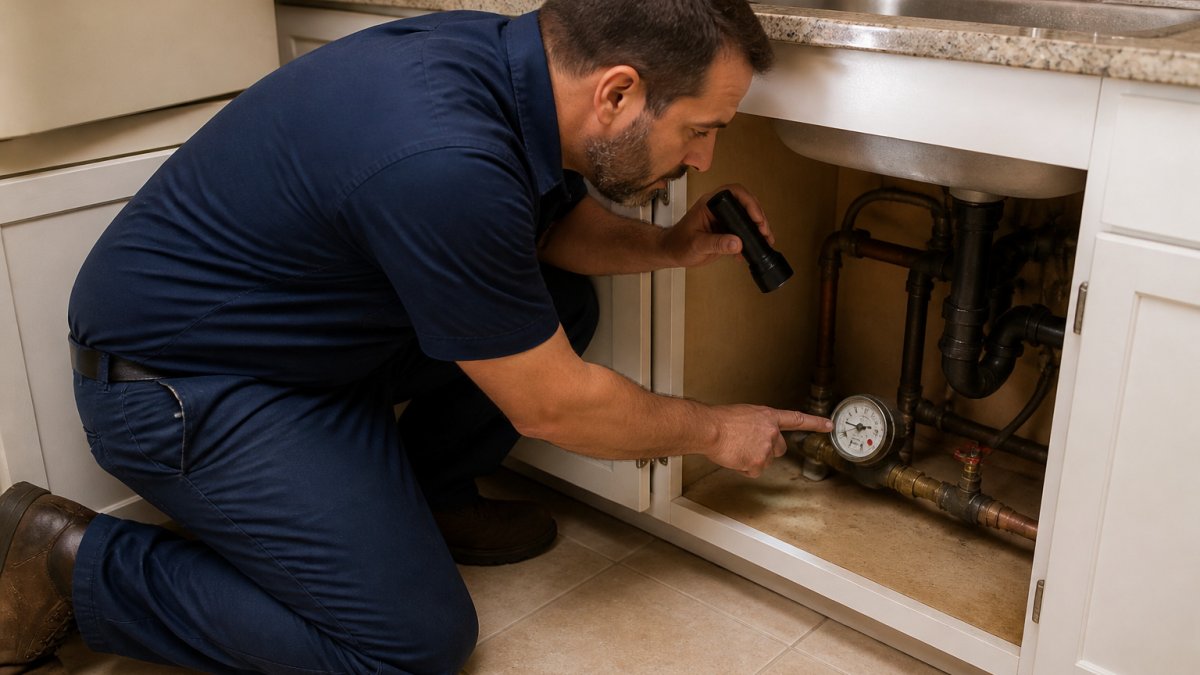
Step 1: Check Your Water Meter
A water meter can help you check whether water is flowing through your system when fixtures are off.
Find your water meter. It’s usually outside your home near the street, or in a basement, crawlspace, or utility room. The meter has a dial or digital display showing your water usage.
Turn off every water source in your home. This includes:
- All faucets (kitchen, bathroom, outdoor)
- Toilet tanks (turn off the supply valve)
- Washing machine and dishwasher
- Refrigerator ice maker
- Any outdoor fountains or sprinklers
Write down your meter reading. Wait 30 minutes. Don’t use any water during this time. Check the meter again.
If the reading changed, water moved through your system while you were not using water; this does not by itself establish that a leak exists.
Step 2: Inspect Under the Kitchen Sink
The area under your sink may be one place to check for visible signs of a leak.
Open the cabinet under your sink. Look for:
- Wet spots on the cabinet floor or walls
- Puddles or pooling water
- Discoloration or staining on wood or materials
- Soft or swollen cabinet materials
- Mold or mildew growth
- Corrosion on metal pipes
Feel the cabinet floor and walls with your hand. Is it damp? Does it feel cold or wet?
Listen carefully in this space. Can you hear running water or hissing sounds?
Moisture, discoloration, or sounds under the sink do not establish that a leak is in the lines beneath the kitchen floor.
Step 3: Feel the Floor Temperature
Walk slowly across your kitchen barefoot or in socks. Pay attention to how the floor feels. Pay attention to whether any area feels noticeably warmer than the rest.
Stop and stand on any area that feels noticeably warmer than the rest. Is it warm to the touch? Uncomfortably hot? Does it stay warm or cool down quickly?
A warm spot alone does not establish that a hot-water line is leaking beneath that location.
Mark warm spots with a piece of tape. This shows a professional exactly where to look.
Step 4: Listen for Continuous Water Sounds
Turn off all background noise. TV, music, appliances, silence everything. Listen in the kitchen.
Do you hear water running? A hissing or rushing sound? Water flowing through pipes?
Listen in these specific locations:
- Directly above where your meter showed movement
- Under the kitchen sink
- Along baseboards and exterior walls
- In the room below the kitchen (if you have a basement or crawlspace)
A sound alone does not establish that a leak is present or that it runs continuously.
Running-water sounds combined with other signs do not establish that a slab leak exists.
If you suspect a leak, contact Alpha Rooter & Plumbing. Our licensed plumbers provide 24/7 emergency plumbing and drain cleaning services, with a guaranteed response time under 90 minutes and upfront pricing with no hidden fees. Hire emergency plumbing services
| Warning Sign | What It Means | Action |
|---|---|---|
| High water bill | Water flowing 24/7 | Check meter for movement |
| Running water sounds | Pressurized water escaping | Listen for hissing or rushing |
| Warm floor spots | A possible sign to investigate | Note the location |
| Damp flooring | A possible sign to investigate | Feel for moisture |
| Mold or musty smell | A possible sign to investigate | Check cabinets and corners |
| Cracked or warped floor | A possible sign to investigate | Inspect for movement |
| Visible moisture | A possible sign to investigate | Check for other signs |
A slab leak kitchen floor problem may require attention. If you suspect a leak, consider contacting a plumbing professional.
The signs covered here may warrant further investigation. Learn what to expect with emergency slab leak repair costs so you can plan your response.
Alpha Rooter & Plumbing provides 24/7 emergency plumbing and drain cleaning services, with a guaranteed response time under 90 minutes. Call now for emergency plumbing services
Frequently Asked Questions
How can you tell if you have a slab leak under a kitchen floor?
Possible signs to investigate include an unexplained jump in your water bill, the sound of running water when all fixtures are off, warm spots on the floor, damp or discolored areas, musty odors, or visible cracks in flooring or walls. These signs do not by themselves establish a slab leak. Check your water meter with all fixtures off; if it’s still moving, water is flowing somewhere in your plumbing system, but that alone does not establish a leak or its location.
What should you do first if you suspect a kitchen slab leak?
You can document what you’ve noticed: your water bill increase, any sounds, temperature changes, or moisture. Take photos of damp spots, stains, or warped flooring. If you suspect a leak, contact a licensed plumber.
How much does slab leak detection cost?
Pricing for slab leak detection is not provided here. Contact Alpha Rooter & Plumbing for current pricing or a quote. Alpha Rooter & Plumbing provides upfront pricing with no hidden fees.
Can a slab leak make the floor feel warm?
A warm area on a kitchen floor does not by itself establish that there is a slab leak or identify which line may be involved. If you suspect a plumbing problem, contact a licensed plumber.
