
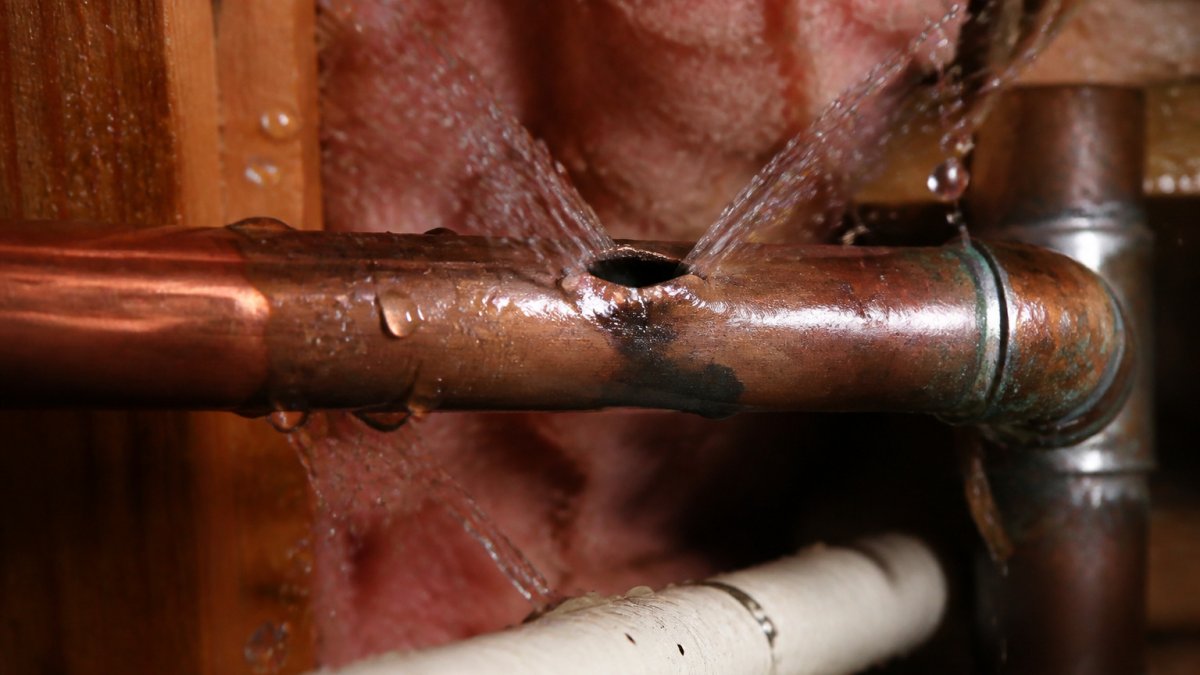
Last Updated: November 2, 2026
Quick Summary
The most common causes of burst pipes in homes are freezing temperatures, high water pressure above 80 psi, aging pipes and corrosion, clogs and restricted flow, pipe movement and vibration, physical damage during work or remodeling, and structural weakness from poor installation. Freezing is the top cause in winter, while pressure buildup can split a pipe in any season.
- Normal household water pressure runs between 40 and 60 psi; above 80 psi joints and older pipe walls start to fail.
- Shut off the main water valve before thawing a frozen pipe so a crack that opens doesn’t flood the room.
- A water meter that keeps spinning with every fixture off confirms water is escaping somewhere.
- Keep indoor temperature at 55°F or higher in winter, even when you are away from home.
- Alpha Rooter & Plumbing handles burst pipes 24/7 and arrives in under 90 minutes.
Table of Contents
- Why Burst Pipes Happen: The 7 Causes Behind Most Home Floods
- Freezing Temperatures: What Causes Pipes to Burst in the Winter
- Summer Heat and High Water Pressure: What Causes a Pipe to Burst in Summer
- Aging Pipes, Corrosion, and Clogs: The Slow Build to Failure
- Pipe Movement, Physical Damage, and Where Bursts Happen
- How to Tell If a Pipe Burst in the Wall
- How to Prevent Pipes from Bursting: A Seasonal Checklist
- When a Pipe Bursts, Call Alpha Rooter & Plumbing
- Frequently Asked Questions
Why Burst Pipes Happen: The 7 Causes Behind Most Home Floods
A burst pipe is a plumbing failure where pressure, wear, or damage splits the pipe wall and releases water into your home. Burst pipe calls come in year-round, and the same handful of causes keep showing up. Below, we break down the seven common causes of burst pipes in homes, how to spot each one early, and what to do when water starts moving fast. If you’re wondering what happens if you don’t fix a burst pipe immediately, the consequences make each cause worth taking seriously.
The seven causes we cover:
- Freezing temperatures and ice blockage
- High water pressure and pressure buildup
- Aging pipes and corrosion
- Clogs and restricted flow
- Pipe movement and vibration
- Physical damage during work or remodeling
- Structural weakness from poor installation
Here are the seven causes the article identifies, with the warning signs that point to each one.
| Cause | What drives it | Warning signs |
|---|---|---|
| Freezing temperatures | Water expands as it turns to ice | No water at one fixture, frost, faint bulge |
| High water pressure | Pressure above 80 psi fails joints and walls | Water hammer, dripping relief valve, hard-spraying faucets |
| Aging pipes and corrosion | Pipes thin from the inside out | Rust-colored water, green or white crust, recurring backups |
| Clogs and restricted flow | Blockage raises pressure behind it | Slow drains at multiple fixtures, gurgling |
| Pipe movement and vibration | Water hammer and thermal expansion fatigue joints | Cracks at solder joints and threaded connections |
| Physical damage | Nails, screws, shovels, or remodeling | Damage often invisible when it happens |
| Structural weakness | Poor installation, unsupported spans | Fails later under pressure |
Freezing Temperatures: What Causes Pipes to Burst in the Winter
Freezing is the top answer to what causes pipes to burst in the winter. Water expands as it turns to ice, and that expansion cracks the pipe wall or pushes pressure toward a weak joint.
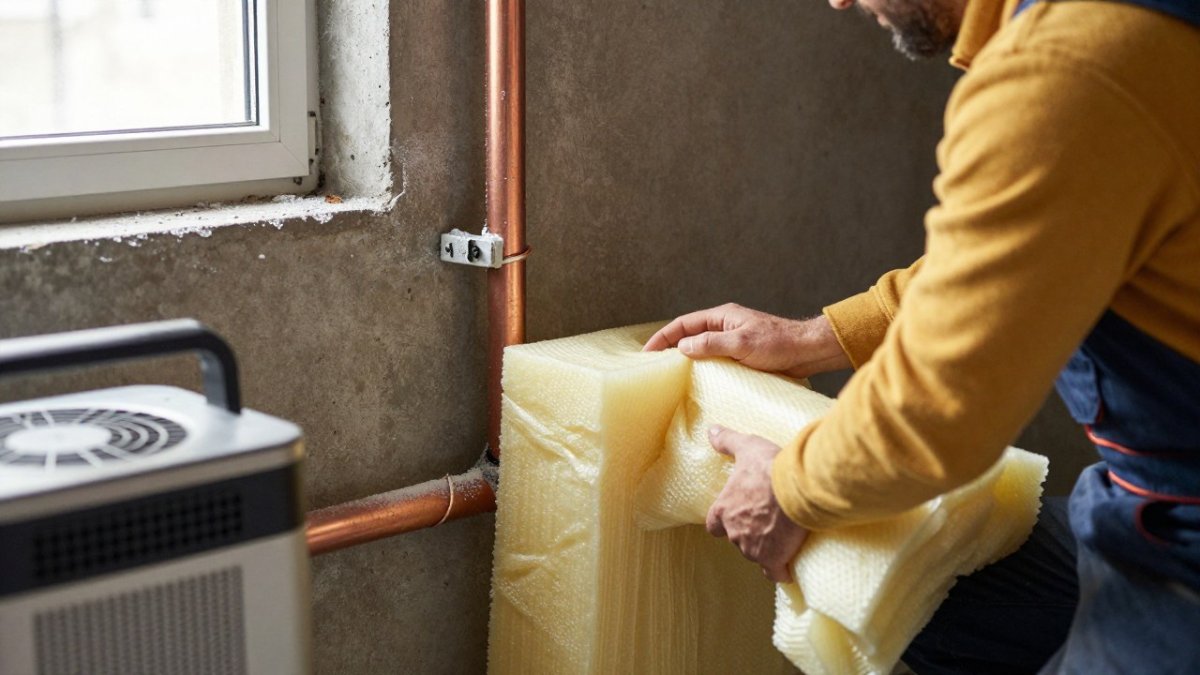
Exposed pipes in cold areas are the first to go: unheated basements, crawl spaces, garages, and exterior walls. A frozen pipe usually shows a few warning signs:
- No water or reduced water flow at one fixture
- Frost on the visible section of pipe
- A faint bulge in the pipe
- Odd gurgling or knocking when you open the tap
If you find a frozen pipe, shut off the main water valve before you thaw it. The ready.gov guidance on frozen pipes recommends this step so a crack that opens during thawing doesn’t flood the room.
Summer Heat and High Water Pressure: What Causes a Pipe to Burst in Summer
Summer bursts rarely come from cold. What causes a pipe to burst in summer is usually pressure. Heat expands water slightly, and outdoor lines and irrigation pipes take on extra load.
Normal household pressure runs between 40 and 60 psi. Above 80 psi, joints and older pipe walls start to fail. A pressure gauge on an outdoor spigot gives you a quick reading. If it’s high, a pressure-reducing valve can bring it back into range.
Watch for these pressure clues:
- Water hammer, a loud bang when a tap closes
- A dripping relief valve on the water heater
- Faucets that spray hard
- Repeated leaks at the same joint
Pressure buildup is slow and quiet. That’s what makes it dangerous. A pipe can hold for years and then split without warning.
Aging Pipes, Corrosion, and Clogs: The Slow Build to Failure
Corrosion and clogs are the slow build to failure, and the mechanism matters because it tells you what to check and when to stop patching.
Different materials fail in different ways, and knowing yours narrows the diagnosis fast:
- Galvanized steel corrodes from the inside, so the pipe looks fine outside while the bore closes down. Rust-colored water, especially after a weekend away, and pressure that drops at upper-floor fixtures are the classic pattern.
- Copper develops pinhole leaks where water chemistry, flux residue, or turbulence attacks the wall. A pinhole leak often shows as a small green or white crust on the pipe, a damp spot on drywall, or a faint hiss behind a wall. Copper can also fail at soldered joints that were overheated during installation.
- Cast iron drain lines rust and scale until the inner diameter shrinks and the pipe becomes brittle. Recurring backups at the same drain, a rough interior visible with a camera, and hairline cracks along the bottom of the pipe are warning signs. Cast iron waste lines in mid-century homes are a common source of hidden leaks in basements and crawl spaces. Learn the signs of corroded cast iron pipes so you can check your own lines.
- PVC and CPVC are less prone to corrosion but can crack from solvent-weld failures, freeze expansion, or physical stress. A crack at a fitting or a joint that weeps only under pressure is typical.
- PEX resists corrosion and freezing better than metal, but fittings and connections are the weak points, and UV exposure or rodent damage can compromise a run.
Clogs deserve their own caution because they are often treated as a drain problem only. A single slow drain is usually local, hair, grease, soap scum.
Use the water meter as a diagnostic. With every fixture off, watch the meter’s leak indicator.
If your home dates to the mid-20th century, checking for signs of corroded cast iron pipes is worth doing before a leak finds you first.
Pipe Movement, Physical Damage, and Where Bursts Happen
Pipes are not static.
Physical damage does the rest.
Bursts cluster in predictable locations, and a room-by-room check is more useful than a general warning:
- Crawl spaces and basements, unheated, often with exposed supply lines and poor insulation. Check for missing pipe insulation, sagging runs, and straps pulled loose from the joists.
- Exterior walls, insulation is often compressed or missing behind cabinets and in corners. Supply lines here are the first to freeze and the most likely to be pierced by a siding nail.
- Garages and attached utility rooms, frequently unheated and used for storage, so pipes get bumped and blocked from warm air.
- Under sinks and behind appliances, supply lines flex when the cabinet is loaded or the appliance is moved; look for kinks, corrosion at the shutoff, and water stains on the cabinet floor.
- Outdoor spigots and irrigation lines, freeze damage and shovel strikes are common; a spigot that drips after being shut off may have a split behind the wall.
- Attics, less common in cold climates but present in some construction; lines here need insulation and a heat source or they are at risk in a hard freeze.
Material changes the risk.
Watch out: before hanging anything on a wall or drilling into a cabinet, use a stud finder with AC/metal detection and keep fasteners clear of the pipe zone, a single screw can start a leak that shows up weeks later.
The practical takeaway: walk the house once a season, check the spots above, and fix loose straps, missing insulation, and small leaks before movement and pressure finish the job.
How to Tell If a Pipe Burst in the Wall
A burst pipe in a wall usually announces itself. The tell is a sudden drop in water pressure plus visible water where no fixture sits. Here’s how to tell if a pipe burst in the wall:
- Water stains or bubbling paint on a wall or ceiling
- A musty smell that appeared overnight
- The sound of running water when every tap is off
- A water meter that keeps spinning with nothing on
- Soft, damp drywall near a bathroom or kitchen
A frozen pipe and a burst pipe can look alike at first. If you need to confirm what you’re seeing, review the signs of a burst pipe emergency. The difference matters. A frozen pipe gives you no water at one fixture and no active leak. A burst pipe gives you water where it shouldn’t be, and the meter confirms it.
Shut off the main water valve the moment you suspect a burst. Then call for help.
How to Prevent Pipes from Bursting: A Seasonal Checklist
Prevention comes down to three habits: keep pipes warm, keep pressure in range, and fix small leaks before they grow. For a concrete plan, see preventing water damage from pipes. A seasonal checklist keeps all three on track.
Fall:
- Insulate exposed pipes in the attic, crawl space, and garage
- Disconnect garden hoses and shut off outdoor spigots
- Seal gaps around pipes where they pass through exterior walls
- Locate the main water valve and tag it
Winter:
- Keep indoor temperature at 55°F or higher, even when away
- Open cabinet doors under sinks on exterior walls
- Let a thin stream drip from the farthest faucet during hard freezes
- Check the water meter before bed during cold snaps
Spring and summer:
- Test water pressure with a gauge on an outdoor spigot
- Inspect for corrosion, rust, and pinhole leaks
- Clear clogs early instead of waiting for a backup
- Schedule a preventive maintenance check on older pipe runs
When a Pipe Bursts, Call Alpha Rooter & Plumbing
An active burst is a race against water damage. Every minute counts. If you’re dealing with water right now, shut off the main water valve and call for help. You can also read emergency steps for a main water pipe that bursts at night while you wait.
At Alpha Rooter & Plumbing, we handle burst pipes and emergency plumbing repair across the area, 24/7. Our licensed plumbers carry state-of-the-art diagnostic and repair tools, and we arrive in under 90 minutes. You get upfront pricing with no hidden fees and no overtime charges.
A burst pipe doesn’t wait for business hours. Neither do we. Call now.
Frequently Asked Questions
How common is it for pipes to burst?
Burst pipes are one of the most frequent plumbing emergencies in homes, especially during hard freezes and in older properties with corroded lines. Water damage from burst pipes can be extensive if the main valve is not shut off quickly. Homes with exposed pipes in unheated spaces, aging galvanized or cast iron lines, or high water pressure face the highest risk.
Does homeowners insurance cover burst pipes?
Most standard homeowners policies cover the water damage a burst pipe causes, but they usually do not pay to repair the pipe itself. Coverage can be denied if the damage stems from neglected maintenance, such as a known leak or a frozen pipe you failed to insulate. Document the damage with photos before cleanup, shut off the water, and call a licensed plumber. Review your policy or ask your insurer what your specific deductible and exclusions are.
Why would a pipe randomly burst?
A pipe rarely bursts without warning. The usual culprits are pressure buildup, corrosion thinning the pipe wall, a clog restricting flow, or movement and vibration loosening joints over time. Freezing water expanding into ice is another common trigger. If a pipe seems to burst out of nowhere, look for earlier signs: reduced water flow, unusual sounds, discolored water, or a pressure gauge reading above 80 psi. A plumber can trace the cause and check the rest of the system.
How can you tell if a pipe burst in a wall?
Watch for water stains spreading on walls or ceilings, paint that bubbles or peels, a musty smell, the sound of running water when no fixture is on, or a sudden drop in water pressure. A spike on your water meter with all taps closed confirms a hidden leak. Shut off the main water valve immediately, then call a licensed plumber to locate and repair the burst before mold and structural damage set in.
