
Table of Contents
- 7 Warning Signs of a Burst Pipe Emergency
- Pinhole Leak vs. Major Burst: How to Tell the Difference
- Pipe Material Matters: Which Types Fail First
- How to Shut Off the Main Water Valve Right Now
- Immediate Steps to Take When a Burst Pipe Emergency Strikes
- Water Damage Restoration Steps After a Burst Pipe
- Emergency Plumbing Repair Cost: What Affects the Price
- Conclusion
Last Updated: August 17, 2026
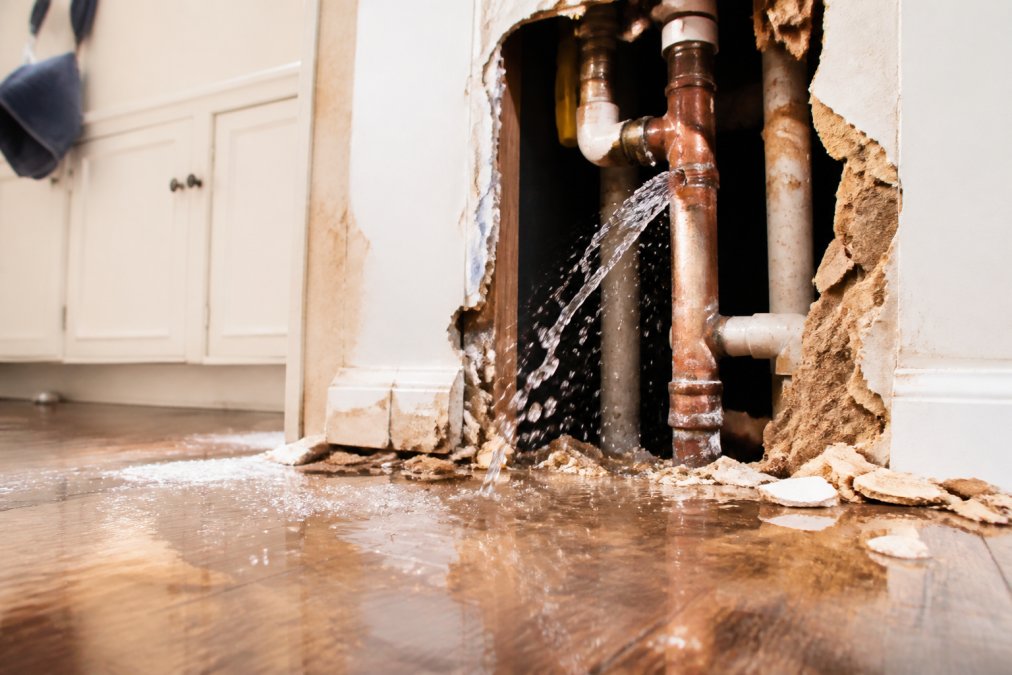
A burst pipe emergency can turn a normal day into a costly disaster. Water escaping a failed pipe causes serious structural damage within hours, and many homeowners don’t recognize warning signs until the situation is out of control. At Alpha Rooter & Plumbing, we respond to burst pipe emergencies daily, the pattern is clear: homeowners who act fast pay far less and recover far quicker than those who wait.
This guide covers the seven warning signs you need to know, how to shut off your water immediately, and the exact steps to take before and after a plumber arrives. We’ll also show you how to document damage for your insurance claim and what separates a pinhole leak from a full pipe failure.
7 Warning Signs of a Burst Pipe Emergency
Recognizing a burst pipe emergency early is the difference between a repair bill and a full restoration project. Most pipe failures give warning before becoming catastrophic.
Sudden Drop in Water Pressure
A sudden, unexplained drop in water pressure across multiple fixtures indicates a burst pipe. When a pipe fails, water escapes before reaching your faucets or appliances. If pressure drops throughout the house simultaneously, treat it as an emergency until proven otherwise.
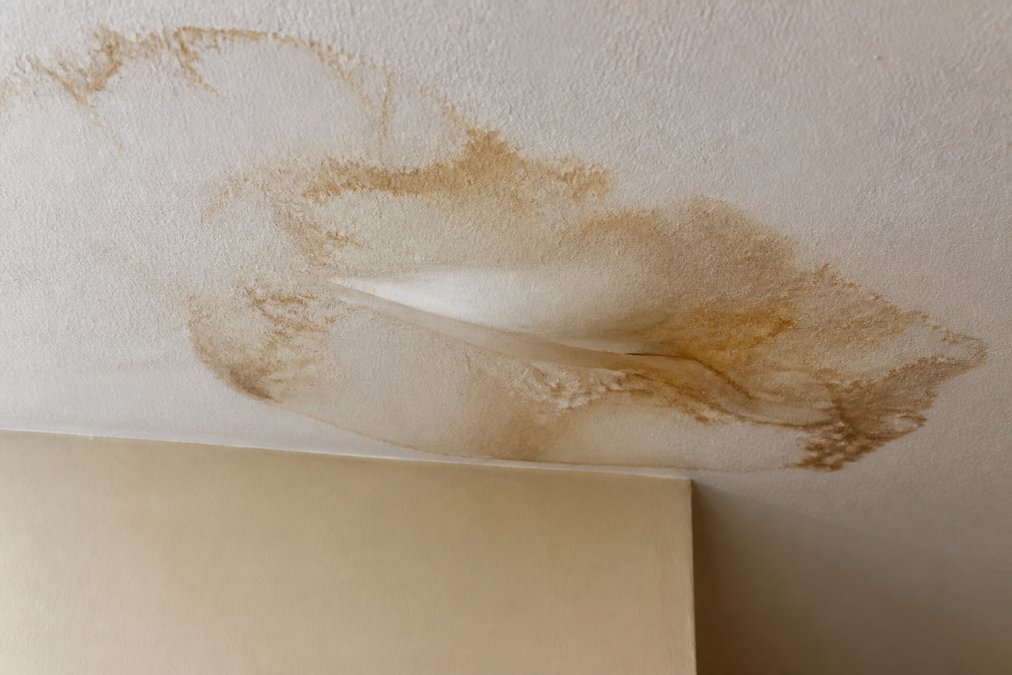
Unexplained Water Stains on Walls or Ceilings
Water stains without an obvious source point to a pipe leaking inside the wall or above the ceiling. These stains typically start as faint yellow or brown discoloration and expand over time. A ceiling that sags or develops a soft, wet feel is particularly urgent, that bulge holds standing water and can collapse under its own weight.
Hissing, Dripping, or Rushing Sounds in Your Walls
A hissing sound inside a wall usually means pressurized water is escaping through a crack. A rushing water sound with no fixtures running signals a major failure. Dripping sounds in the ceiling or behind walls after turning off all fixtures are never normal.
Musty Odors and Dampness
Persistent musty odors in rooms away from bathrooms or kitchens indicate moisture accumulation inside walls or under flooring. By the time you smell mold or mildew, moisture has likely been present long enough to start biological growth.
Discolored or Rusty Water
Discolored water with a brown or reddish tint signals pipe corrosion or sediment disturbance. According to the EPA’s guidance on drinking water quality, discolored water from corroded pipes can carry particulates that affect water safety. Discoloration from multiple taps suggests the supply line or main pipe is compromised.
A Spike in Your Water Bill
An unexplained utility bill spike is a reliable indicator of a hidden leak. Check your water meter when no fixtures are running. If the meter is still moving, water is escaping somewhere in the plumbing system. This test takes two minutes and can save thousands in damage.
Sagging Ceilings or Buckled Flooring
A ceiling that sags, a floor that buckles or feels soft underfoot, or walls that show visible warping all indicate water has accumulated inside structural materials. You’re past the early warning window, the plumbing emergency has already caused water damage requiring both plumbing repair and restoration work.
| Warning Sign | What It Indicates | Urgency Level |
|---|---|---|
| Sudden pressure drop | Active pipe failure | Immediate |
| Water stains on ceiling/wall | Pipe leaking inside structure | High |
| Hissing or rushing sounds | Pressurized leak or burst | Immediate |
| Musty odor and dampness | Slow leak, possible mold risk | High |
| Discolored or rusty water | Pipe corrosion or sediment | Moderate-High |
| Utility bill spike | Hidden ongoing leak | Moderate |
| Sagging ceiling or buckled floor | Water pooling in structure | Immediate |
Pinhole Leak vs. Major Burst: How to Tell the Difference
Not every pipe failure is a dramatic flood. The distinction between a pinhole leak and a major burst determines how fast you need to act and what repair approach is required.
A pinhole leak is a small perforation in the pipe wall, typically caused by corrosion over time. These leaks release water slowly, often going undetected for weeks or months. Signs are subtle: minor dampness behind walls, a slight utility bill spike, or faint discoloration on drywall.
A major burst involves a sudden, significant failure of the pipe wall, releasing high volumes of water rapidly. Signs are unmistakable: a rushing water sound inside walls, immediate flooding, a dramatic drop in water pressure, or a ceiling sagging within hours. Frozen pipes that thaw quickly commonly cause major bursts.
The practical test: shut off all fixtures and check your water meter. A pinhole leak causes slow, steady meter movement. A major burst causes rapid meter movement. Either way, the main shut-off valve is your first action.
Pipe Material Matters: Which Types Fail First
The pipe material in your home directly affects failure risk, failure mode, and repair complexity.
Copper pipes are durable but vulnerable to pinhole corrosion, particularly in areas with acidic water. Many older homes built before the 1980s rely on copper supply lines now past their design lifespan.
Galvanized steel pipes, common in homes built before 1960, corrode from the inside out. As the zinc coating deteriorates, rust accumulates inside the pipe, restricting flow and weakening the pipe wall. Discolored water and low pressure are the first signs.
PVC and CPVC pipes are resistant to corrosion but brittle in cold temperatures. A hard freeze can crack PVC along its length.
PEX (cross-linked polyethylene) pipes are among the most resilient modern options, flexible enough to resist freeze damage in many cases.
According to the American Society of Home Inspectors’ guidance on plumbing lifespan, supply pipes have a typical lifespan of 70-100 years for copper and brass, and 25-40 years for galvanized steel. If your home’s plumbing system is approaching or past those ranges, treat any warning sign as urgent.
How to Shut Off the Main Water Valve Right Now
Shutting off the main water valve is the single most important action you can take in a burst pipe emergency. Every second of delay allows more water damage to accumulate.
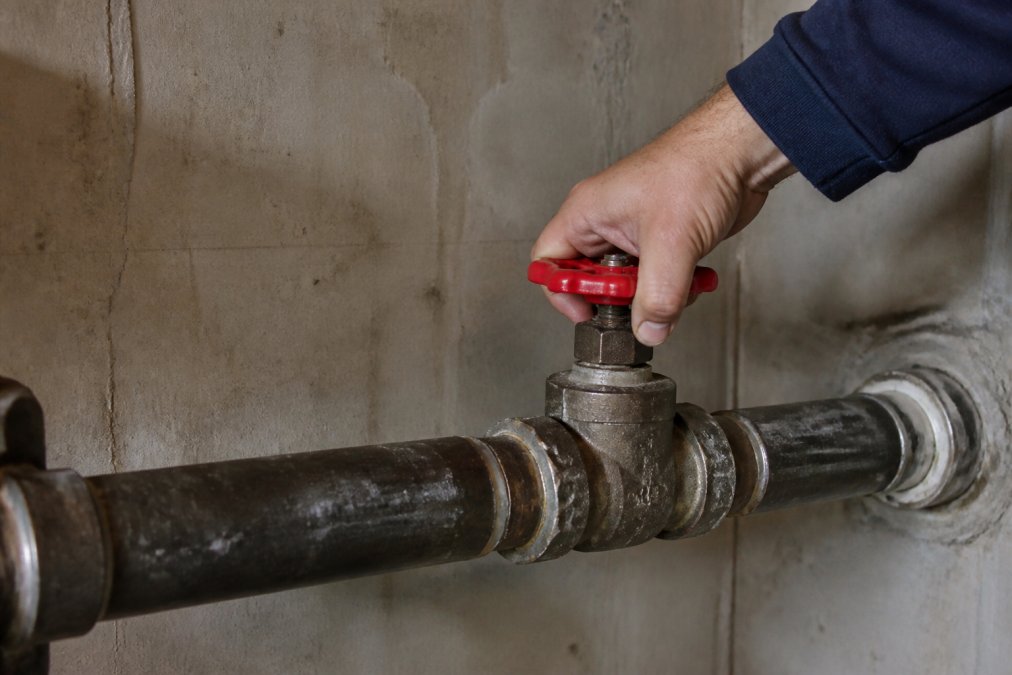
Step 1: Find the main shut-off valve. In most homes, it’s located where the main water supply line enters the building: near the water meter, in the utility room, basement, garage, or crawl space.
Step 2: Identify the valve type. A gate valve (round wheel handle) requires multiple clockwise turns to fully close. A ball valve (lever handle) closes with a quarter-turn so the lever is perpendicular to the pipe.
Step 3: Turn off the valve completely. For gate valves, turn clockwise until it stops. For ball valves, rotate the lever 90 degrees. If the valve is stuck or corroded, do not force it, call an emergency plumber immediately.
Step 4: Open a faucet to release pressure. After shutting off the main, open a cold-water faucet on the lowest floor to drain residual pressure from the plumbing system.
Step 5: Locate the water meter shutoff as backup. If the main shut-off valve fails, the water meter typically has a secondary shutoff.
Find your main shut-off valve before you ever need it. Locate the valve, test that it turns freely, and label it. This two-minute task can prevent thousands of dollars in water damage when a real emergency hits.
Immediate Steps to Take When a Burst Pipe Emergency Strikes
A burst pipe emergency demands a specific sequence of actions.
- Shut off the main water supply using the steps above. Do this first.
- Turn off electricity in affected areas. Water and electricity are a lethal combination. Shut off the circuit breakers for any rooms where water is present.
- Call an emergency plumber. Alpha Rooter & Plumbing offers 24/7 emergency services with a guaranteed response time of under 90 minutes.
- Document everything before cleanup. Take photos and video of all visible water damage, affected walls, ceilings, and flooring. This documentation is critical for your insurance claim.
- Begin water removal if safe to do so. Use towels, mops, or a wet-dry vacuum to remove standing water from floors.
- Move valuables and furniture out of affected areas. Lift rugs off wet floors and move furniture to dry areas.
- Open windows and run fans. Ventilation accelerates drying and reduces moisture accumulation in walls and flooring.
Do not enter a room with standing water if you haven’t confirmed the electricity is off. A flooded basement with live circuits is a fatal hazard.
Water Damage Restoration Steps After a Burst Pipe
Fixing the pipe is only the first step. The water damage restoration process determines whether your home recovers cleanly or develops long-term structural and mold problems.
Mold Prevention: The 48-Hour Window
Mold begins to grow within 24-48 hours of water exposure on organic materials like drywall, wood framing, and flooring. The EPA’s guidance on mold and moisture in buildings recommends drying water-damaged materials within 24-48 hours to prevent mold growth.
Practical steps within that window:
- Extract all standing water immediately using a wet-dry vacuum or pump
- Run dehumidifiers continuously in affected rooms
- Remove saturated drywall and insulation, which cannot be dried in place fast enough to prevent mold
- Lift and remove wet carpet and padding
- Use fans to circulate air through wall cavities if drywall has been removed
If you cannot confirm that all materials are dry within 48 hours, professional restoration services with moisture detection equipment are the safer option.
Documenting the Damage for Your Insurance Claim
Most homeowners’ insurance policies cover sudden and accidental water damage from burst pipes. Documentation is what makes or breaks a claim.
Before cleanup begins:
- Photograph every affected surface: walls, ceilings, floors, and damaged personal property
- Record video walkthrough of all affected rooms
- Note the date and time the damage was discovered
During the repair and restoration process:
- Keep all receipts for emergency plumbing repairs, materials, and restoration services
- Get written estimates and invoices from every contractor
When filing the claim:
- Contact your insurer as soon as the emergency is stabilized
- Provide the photographic and video documentation
- Request a written explanation of any coverage decision
Insurance adjusters work from documentation. An undocumented loss is a disputed loss. Take photos before you touch anything, and keep every receipt from the moment the pipe fails to the final restoration invoice.
Emergency Plumbing Repair Cost: What Affects the Price
The cost of emergency plumbing repair varies based on several factors. What actually drives the final cost:
Pipe location and accessibility. A burst pipe inside an accessible utility room costs far less to reach than one buried in a concrete slab or inside a finished wall cavity.
Pipe material and diameter. Replacing a section of galvanized steel or cast iron requires different materials and labor than repairing PEX or copper.
Extent of water damage. If the burst pipe has caused significant water damage to surrounding structure, the repair scope expands beyond plumbing into restoration work.
Time of service. Emergency calls outside standard business hours typically carry premium rates. Alpha Rooter & Plumbing charges no hourly or overtime fees and provides upfront pricing before any work begins.
Permit requirements. Depending on the scope of repair, local building codes may require a permit for pipe replacement. A licensed plumber (Alpha Rooter & Plumbing holds License #874454) will handle permit requirements correctly, protecting you from liability and ensuring the work meets code.
For current pricing on emergency plumbing repair, contact Alpha Rooter & Plumbing directly for an upfront quote with no hidden fees.
According to the Insurance Information Institute’s guidance on water damage claims, water damage and freezing are among the most common homeowners’ insurance claims. Getting a licensed plumber’s documentation of the failure cause is essential for claim approval.
Frequently Asked Questions
How do you know if a pipe bursts under your house?
A burst pipe under your house often shows up as unexplained wet spots in your yard, a sudden drop in water pressure throughout the home, or a water bill that jumps without any change in usage. You may also hear a faint hissing or rushing sound through the floor. Check your water meter with all fixtures off, if the dial is still moving, water is escaping somewhere in the plumbing system. Call an emergency plumber immediately to locate and repair the break.
Can a burst pipe go unnoticed?
Yes. A slow pinhole leak inside a wall or under a slab can go undetected for weeks. The first clues are often a musty odor, a subtle spike in your utility bill, or faint dampness along a baseboard. Major bursts are harder to miss because water pressure drops sharply and visible water damage appears quickly. Regular moisture detection checks and monitoring your water meter are the most reliable ways to catch a burst pipe emergency before it causes serious structural damage.
What are the immediate steps to take when a pipe bursts?
First, shut off the main water valve to stop water flow. Then turn off the electrical breaker for any rooms where water is pooling, water and live circuits are a safety hazard. Open faucets to drain remaining pressure from the plumbing system. Move furniture and valuables away from the affected area. Take photos and video of all visible water damage before cleanup begins. Then call a licensed emergency plumber. The faster water is stopped, the lower your water damage restoration costs will be.
How urgent is a burst pipe?
A burst pipe is one of the most urgent plumbing emergencies a homeowner can face. Even a small break can release hundreds of gallons per hour, causing structural damage, ruining drywall and flooring, and creating conditions for mold growth within 24 to 48 hours. If water reaches electrical panels or wiring, it becomes a safety risk as well. Treating it as an immediate emergency, shutting off water and calling a licensed plumber right away, is always the right call.
Water damage from a burst pipe escalates fast. The longer water moves through your walls, the more expensive the recovery becomes. Alpha Rooter & Plumbing provides 24/7 emergency plumbing services with a guaranteed under-90-minute response time, upfront pricing with no hidden fees, and licensed professionals equipped with state-of-the-art diagnostic and repair tools. Call Alpha Rooter & Plumbing now before a manageable repair turns into a full restoration project.
This article was written using GrandRanker
Comments are closed