
Last Updated: November 3, 2026
Quick Summary
Shut off the main water valve first, cut power to wet areas, document the damage, and call a burst pipe plumber. That order protects your home, your safety, and your insurance claim. Alpha Rooter & Plumbing guarantees a response time of under 90 minutes, 24 hours a day.
- Open a low faucet after shutting the main valve to drain remaining pressure from the lines.
- Photograph and video all damage before cleanup so your insurer has evidence.
- A frozen pipe blocks flow while a burst pipe releases water, so the response differs.
- Disconnect and drain outdoor hoses before the first frost to prevent split hose bibs.
- Ask whether the diagnostic fee is credited toward the repair before the plumber starts.
Table of Contents
- Why Pipes Burst and Which Failures Need a Burst Pipe Plumber Immediately
- Signs of a Burst Pipe Emergency You Should Never Ignore
- What to Do When a Pipe Bursts: A Step-by-Step Response Checklist
- How to Shut Off Water to House Before the Plumber Arrives
- Where Bursts Happen Most and How Preventive Maintenance Stops Them
- What Burst Pipe Repair Cost Depends On
- Call Alpha Rooter & Plumbing for a Burst Pipe Plumber Under 90 Minutes
- Frequently Asked Questions
Why Pipes Burst and Which Failures Need a Burst Pipe Plumber Immediately
A burst pipe is a plumbing failure where internal pressure, material breakdown, or physical stress splits the pipe wall and releases water uncontrolled. When that happens, every minute counts: water can soak drywall, warp flooring, and reach electrical fixtures fast.
The reason matters because it shapes the repair. Four failure modes cause most bursts in homes, and each shows up differently.
Freezing Temperatures and Ice Blockage
Water expands as it freezes, and that expansion cracks or splits the pipe wall (Essential Tasks After it Warms Up). The burst often reveals itself only when the ice thaws and water sprays out. Exposed pipes in garages, crawl spaces, attics, and exterior walls are the usual suspects. Pipe insulation and a steady indoor temperature are the cheapest defenses you have.
High Water Pressure and Pressure Buildup
Excessive water pressure strains every joint and fitting in the plumbing system. Pressure buildup can come from a failing pressure-reducing valve, thermal expansion in a closed system, or water hammer, the banging you hear when a valve slams shut. A pressure gauge test shows where your system stands.
Corrosion, Aging Pipes, and Pipe Material
Older galvanized steel rusts from the inside until the wall thins to nothing. Copper develops pinhole leaks. Polybutylene, common in homes built during a certain era, becomes brittle with age. Cast iron drains crack and scale over. Aging pipes rarely fail without warning: reduced water flow, discolored water, and recurring leaks are the signals.
Clogs, Restricted Flow, Pipe Movement, and Physical Damage
A clogged pipe builds pressure behind the blockage. Pipe movement and vibration work joints loose over years. And then there is plain physical damage: a nail through drywall, a shovel in the yard, a contractor’s misstep. Structural weakness from any of these turns a small leak into a full rupture.
Signs of a Burst Pipe Emergency You Should Never Ignore
The warning signs of a burst pipe emergency are usually loud and visible: water staining ceilings, unexplained puddles, hissing or rushing sounds inside walls, and a sudden drop in water pressure. Treat any combination as urgent and act before damage spreads.
Watch for these signals:
- Water spots or bulging paint on walls and ceilings
- Unusual sounds behind walls, including hissing or water hammer
- Reduced water flow at fixtures with no obvious cause
How to Tell a Frozen Pipe From a Burst Pipe
A frozen pipe blocks flow; a burst pipe releases it. If faucets give nothing or a trickle, and the pipe feels frosty to the touch, you likely have an ice blockage, not a rupture. If water is actively pooling or spraying, the pipe has already burst. The distinction matters: a frozen pipe can often be thawed safely with a hair dryer and open cabinet doors, while a burst pipe needs the water shutoff and a plumber.
What to Do When a Pipe Bursts: A Step-by-Step Response Checklist
Shut off the main water valve first, then cut power to wet areas, document the damage, and call a burst pipe plumber. That order protects your home, your safety, and your insurance claim.
Here is the response sequence we walk homeowners through:
- Shut off the main water valve immediately.
- Open a low faucet to drain remaining pressure from the lines.
- Cut power to any circuit near standing water at the breaker panel.
- Move furniture, rugs, and electronics away from the water.
- Photograph and video the damage before cleanup for your insurer.
- Call a licensed plumber and describe what you see.
- Start soaking up water with towels or a wet vac.
Delaying action is expensive. If you want to understand exactly what happens when a burst pipe sits unrepaired, our guide on what happens if you don’t fix a burst pipe immediately lays out the damage timeline. If the burst happens after dark, follow the after-hours steps in our article on main water pipe bursts at night.
How to Shut Off Water to House Before the Plumber Arrives
Locate your main water valve before you need it. For most homes it sits near the water meter, in a basement, utility closet, or exterior box near the street. Turn the valve clockwise until it stops.
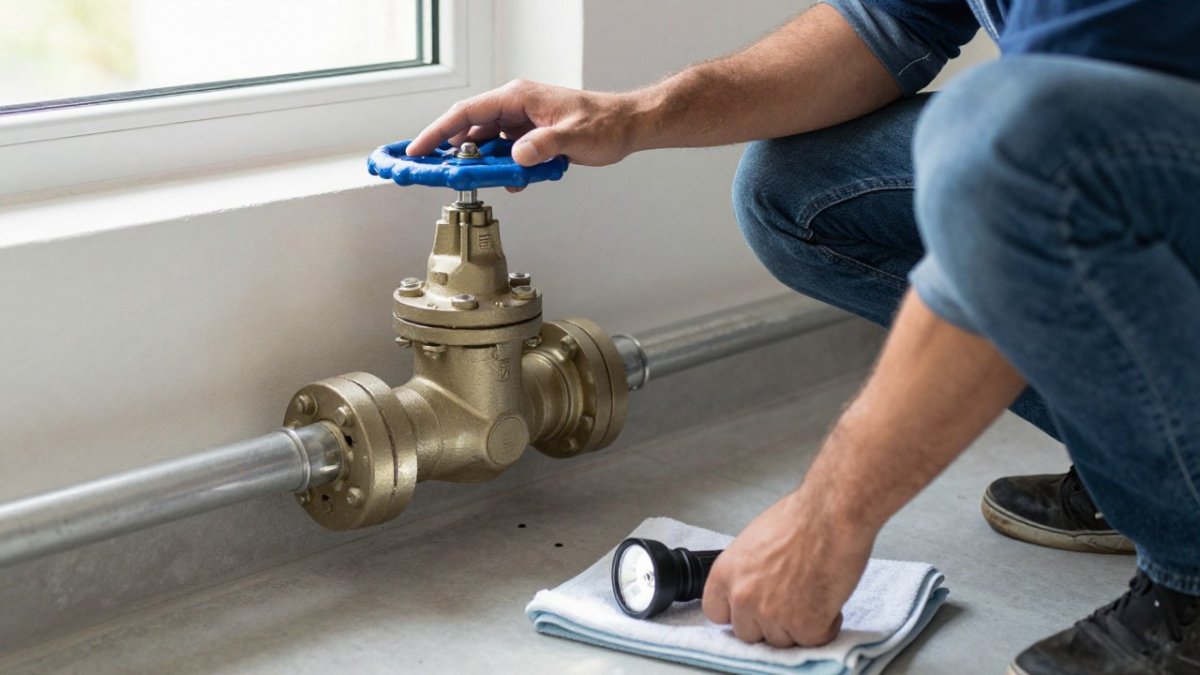
If the valve is stiff or won’t close fully, do not force it hard enough to break the handle. For a fuller walkthrough of valve location, leak detection, and damage prevention, see our guide to preventing water damage from pipes.
Where Bursts Happen Most and How Preventive Maintenance Stops Them
Bursts are not random. They cluster in the parts of a home that stay cold, take abuse, or hide slow deterioration. Knowing where your risk concentrates lets you spend prevention effort where it actually pays off.
The locations that fail most often
- Unheated crawl spaces and basements. Supply lines here sit in cold air with little thermal protection. A draft through a foundation vent can drop the temperature around a pipe well below the indoor reading. Insulate both the pipe and, where practical, the joist bay it runs through.
- Exterior walls. Pipes routed inside exterior walls are separated from freezing air by only sheathing and siding. Kitchen and bathroom sinks on outside walls are classic failure points. Keep cabinet doors open during cold snaps so indoor air reaches the pipes, and never block the wall cavity with insulation packed tight against the pipe.
- Attics and garage ceilings. Builders sometimes run lines through unconditioned attic space to reach a distant fixture. These runs are the first to freeze when temperatures plunge. Pipe insulation plus a steady indoor temperature below are the cheapest defenses.
A prevention routine that targets those spots
| Task | When | What It Prevents |
|---|---|---|
| Insulate exposed pipes in crawl spaces, attics, and garages | Before first frost | Freezing and ice blockage |
| Open cabinet doors on exterior-wall sinks during cold snaps | Any night below freezing | Frozen supply lines |
| Disconnect and drain outdoor hoses; shut off exterior valves | Late fall | Split hose bibs and exterior lines |
| Test water pressure with a gauge | Twice a year | Pressure buildup and joint failure |
| Inspect under sinks and behind appliances | Quarterly | Slow leaks turning into bursts |
| Schedule a plumbing inspection for aging pipes | Annually | Corrosion and pipe material failure |
Pressure diagnosis and prevention thresholds
High pressure is the quiet cause. A simple hose-bib pressure gauge screwed onto an outdoor spigot gives you a reading in seconds.
Pipe materials and their different failure risks
- Copper develops pinhole leaks, especially where flux was left behind or water chemistry is aggressive. It also splits when a line freezes.
- Galvanized steel rusts from the inside until the wall thins, which shows up first as reduced flow and discolored water.
- PVC and CPVC are brittle and crack under impact or when water inside freezes; they also weaken with age and sunlight exposure.
If you want the deeper breakdown of why each material fails, read our article on common causes of burst pipes in homes.
What Burst Pipe Repair Cost Depends On
Burst pipe repair cost depends on where the pipe sits, what it is made of, how much water damage occurred, and whether the repair happens after hours.
The main cost drivers:
- Access. Pipes inside walls, under slabs, or behind cabinetry take more labor to reach and more labor to put back. Opening and closing a wall can rival the plumbing work itself.
- Pipe material. Matching or replacing old cast iron and galvanized steel costs more than modern materials, and mixing materials at a joint adds fittings and time.
- Damage scope. Water damage restoration, drywall repair, and drying equipment add to the total, and the longer water sits, the more of the structure it reaches.
We quote upfront before any work begins, with no hourly or overtime charges. For a clear explanation of what service call fees cover and how to avoid hidden costs, see our plumbing service call fee guide.
Repair or replace the line?
A single split in an otherwise sound copper run is usually a repair. A galvanized or polybutylene line that has already failed once is often a candidate for replacement, because the next failure is usually nearby and the labor to open the same wall twice costs more than doing it once. Ask the plumber to show you the failed section and explain why repair is or is not the right call for the rest of the run.
Document the damage before cleanup
Your insurer will want evidence, and the clock starts the moment water stops flowing. Before you tear out drywall or throw away ruined belongings:
- Photograph and video every wet surface, including ceilings, floors, and the failed pipe itself.
- Keep a written list of damaged items with approximate replacement values.
- Save receipts for any emergency supplies, drying equipment, or temporary repairs.
- Note the date and time the burst occurred and when you shut off the water.
Coverage varies by policy, so read your declarations page and call your agent before assuming a repair is or is not covered. Many policies treat sudden accidental discharge differently from long-term leakage, and the distinction often turns on how quickly the problem was discovered and reported.
What to expect on the invoice
Ask for the diagnostic charge and the after-hours policy before the plumber starts, and confirm whether the diagnostic fee is credited toward the repair. That one question prevents most billing surprises.
Call Alpha Rooter & Plumbing for a Burst Pipe Plumber Under 90 Minutes
When water is pouring through your ceiling, the only question that matters is how fast help arrives. Alpha Rooter & Plumbing guarantees a response time of under 90 minutes, 24 hours a day, with licensed plumbers and upfront pricing and no hidden fees. We handle everything from minor repairs to major renovations, backed by License #874454.
Frequently Asked Questions
How quickly should I call a burst pipe plumber?
Call as soon as you have shut off the main water valve. Every minute water keeps flowing adds to water damage, soaked drywall, and flooring replacement. A burst pipe plumber can stop the leak and assess structural damage before it spreads. Alpha Rooter & Plumbing answers calls 24/7 and targets arrival in under 90 minutes, with licensed plumbers and upfront pricing.
Does homeowners insurance cover burst pipe repair cost?
Most standard homeowners policies cover sudden water damage from a burst pipe, including drywall, flooring, and belongings, but they usually exclude the pipe repair itself when it failed from age or poor maintenance. Your burst pipe repair cost may be split: insurance for the damage, you for the plumbing fix. Photograph everything, keep receipts, and ask the plumber for a written report you can send to your insurer.
How can I tell if a pipe burst inside a wall?
Look for warning signs of a burst pipe emergency: water stains spreading on walls or ceilings, paint bubbling, a musty smell, the sound of running water when no fixture is on, or a sudden drop in water pressure. If you see any of these, shut off the main water valve and call a plumber. A burst pipe plumber can use leak detection tools to find the break without tearing open the whole wall.
What should I do first when a pipe bursts?
Shut off the main water valve, then cut power to any flooded area at the breaker if it is safe to reach. Move valuables and furniture away from the water, place towels or buckets to limit spread, and call a burst pipe plumber. Do not use electrical outlets or appliances in standing water. Document the damage with photos before cleanup so your insurance claim is easier to support.
A burst pipe is a race against water damage, and the clock starts the second you hear that hiss. Alpha Rooter & Plumbing answers around the clock, arrives in under 90 minutes, and quotes the price before the wrench comes out. Our licensed team brings state-of-the-art diagnostic and repair tools to every call, so the job gets done right the first time. Get started with Alpha Rooter & Plumbing and stop the water before it stops your day.
