
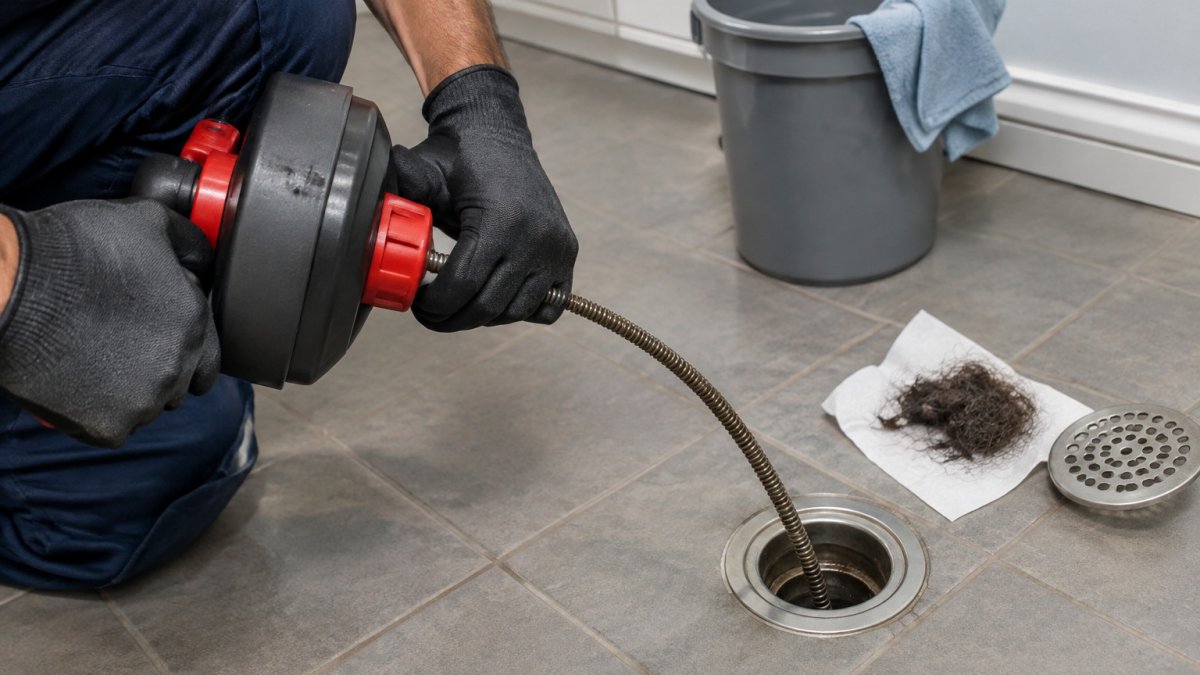
Last Updated: November 4, 2026
Quick Summary
The best hair clog tools are a plastic drain strip for clogs near the opening and a flexible steel snake for deeper blockages. Start with a mechanical tool to pull the hair out, since chemical cleaners often cannot dissolve a dense hair mass. Use a chemical cleaner only as a follow-up for residual buildup.
- Plastic drain strips are inexpensive and work well on clogs near the drain opening.
- Flexible steel snakes reach deeper clogs, but feed them slowly and stop at heavy resistance.
- Remove the drain stopper first, since hair often wraps around it.
- Chemical cleaners can splash back if used with a snake right after application.
- Clean the stopper weekly and use a manual tool monthly to prevent recurring clogs.
Table of Contents
- Why Hair Clogs Form and Why They Keep Coming Back
- Types of Hair Removal Tools and What Each One Does Best
- Drain Snake vs Chemical Cleaner: Which Should You Use First?
- Step-by-Step: Clearing a Hair Clog with a Drain Snake
- Eco-Friendly Alternatives and Drain Type Compatibility
- Preventing Hair Clogs in Bathroom Drains
- When to Call Alpha Rooter & Plumbing Instead of Doing It Yourself
- Frequently Asked Questions
Hair clogs are the most common reason a bathroom drain stops draining, and most hair clog tools needed to fix them are inexpensive and easy to use. A few strands catch on the drain stopper, a soap film builds up around them, and within weeks the water pools around your ankles.
The right of the hair clog tools depends on where the hair is caught and how far it has traveled. For a broader look at clearing stubborn drain clogs, from plungers to snakes, see Best Ways to Clear Stubborn Drain Clogs. A plastic strip works for a clog near the opening. A flexible steel snake reaches deeper. Chemical cleaners can help, but they have limits.
Why Hair Clogs Form and Why They Keep Coming Back
Hair does not dissolve in water. It tangles around the drain stopper, collects in the P-trap, and holds onto soap residue until a solid plug forms. Each shower adds a few more strands, so a clog that clears today can return in a month if the underlying buildup stays.
Recurring clogs usually mean the hair is not being removed, only pushed further down the pipe. To understand the real causes and fixes, read How to Fix Recurring Drain Clogs. A tool that pulls the whole mass out, paired with regular cleaning of the stopper, breaks that cycle far better than repeated chemical treatments.
Types of Hair Removal Tools and What Each One Does Best
Most hair clogs respond to one of two mechanical tool types. Choosing between them comes down to how deep the blockage sits.
Manual Plastic Drain Snakes and Barbed Strips
Plastic strips with small barbs are the cheapest and easiest option. You push the strip into the drain, twist gently, and pull out the hair that catches on the barbs. Plastic drain strips of this type are inexpensive, so keeping a spare on hand makes sense.
The trade-off is strength. Plastic can flex or snap when it hits a dense clump, and its reach is short. Use it for clogs you can see or feel near the opening of the drain.
Flexible Steel Snakes for Deeper Clogs
When the blockage sits farther down the pipe, a flexible steel snake reaches it. A flexible steel cable with a hooked end can reach farther down the pipe than a plastic strip.
Steel snakes need more care. Feed the cable slowly, rotate it as you advance, and stop if you meet heavy resistance. Forcing it can scratch the pipe interior or push the clog further in.
The two main mechanical tool types differ mainly in how deep they reach and how much force they can take.
| Tool | Best for | Key difference |
|---|---|---|
| Plastic drain strip | Clogs near the drain opening | Cheap and easy, but can flex or snap |
| Flexible steel snake | Deeper clogs farther down the pipe | Reaches farther, but can scratch or push the clog deeper |
Drain Snake vs Chemical Cleaner: Which Should You Use First?
Start with a mechanical tool. A drain snake removes the hair physically, so the clog is gone rather than dissolved into a slurry that may still partly block the line. Chemicals are a follow-up, not a first move, and understanding why comes down to how each product actually works.
What Each Type of Cleaner Does
Caustic cleaners. Products of this type use strong alkaline or oxidizing ingredients to break down organic buildup. They can generate heat as they react, which may stress older pipes and plastic fittings. Because they sit on top of standing water, on a fully blocked drain the product may not reach the clog.
Enzyme and bacteria cleaners. Products of this type use enzymes and bacteria to digest the organic film around a clog. They are generally slower-acting than caustic products and work best on slow drains rather than a hard block.
Acid cleaners. Acid-based products are aggressive and hazardous. They are rarely the right choice for a hair clog in a home drain, and if a label warns about acid, treat it as a last resort.
Why the Snake Comes First
A snake pulls the hair mass out. A chemical dissolves what it can reach, but the dense wad of hair and soap scum at the center of most bathroom clogs is exactly the material that resists chemical breakdown. Pour a caustic cleaner onto a fully blocked drain and it pools above the clog, reacting with the standing water and the pipe walls instead of the blockage. A snake removes the mass, and any chemical you use afterward only has to handle the thin film left behind.
Safety Precautions for Chemical Cleaners
- Never mix products. Combining a caustic cleaner with an acid or with bleach can release toxic gas. Use one product, flush thoroughly, and wait before trying another.
- Do not pour boiling water after a chemical cleaner. It can cause the chemical to splash back, and it can crack older PVC joints.
- Wear gloves and eye protection. Caustic cleaners cause chemical burns on contact.
- Ventilate the room. Open a window and run the exhaust fan while the product works.
- Keep children and pets out of the bathroom until the drain is flushed and the product is gone.
- Never use a snake immediately after pouring a caustic cleaner. The cable can splash the chemical back onto your skin or into your eyes.
A Practical Order of Operations
- Remove the stopper or strainer and pull out what you can by hand or with a plastic strip.
- Run a snake to clear the main mass.
- If the drain is still slow, apply an enzyme cleaner overnight to break down the residual film.
- Reserve a caustic cleaner for a slow drain with no solid blockage, and follow the label exactly.
- If the drain still backs up after a snake and a cleaner, the clog is deeper than a hand tool reaches, that is the point to call a professional rather than pour a second chemical.
Step-by-Step: Clearing a Hair Clog with a Drain Snake
A standard bathroom sink or shower drain can often be cleared in a short session.
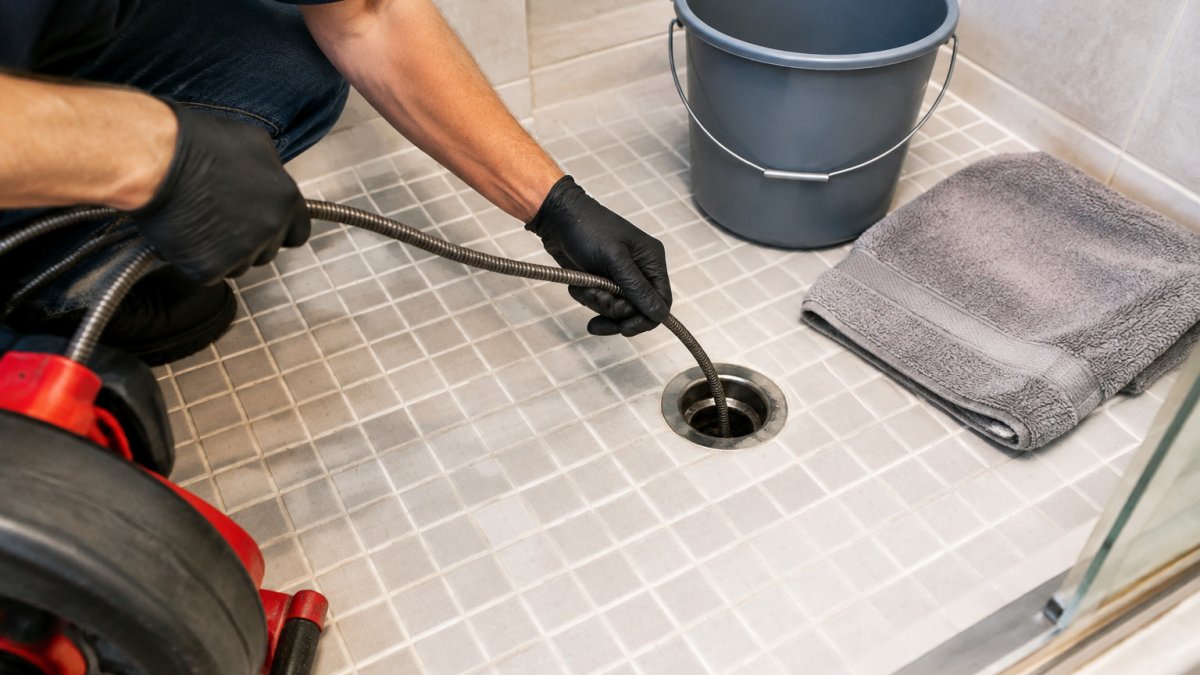
- Remove the drain cover or stopper. Most pop-up stoppers unscrew or lift out. Look for hair wrapped around the stopper arm, since that is often the main source.
- Put on gloves and place a towel and bucket nearby. Drain water and hair are unpleasant to handle.
- Insert the plastic strip or steel snake slowly. Feed it in until you feel resistance, then rotate it gently to catch the hair on the barbs or hook.
- Pull the snake out steadily. Expect a wad of hair, sometimes with soap scum attached. Wipe the tool clean into the bucket after each pull.
- Repeat until the drain runs freely. Run hot water for a minute to test the flow. If water still pools, the clog is deeper than the snake reaches.
- Clean and reinstall the stopper. Remove any hair still caught on it, then put the stopper back.
Watch out: Do not pour boiling water after a chemical cleaner. It can cause the chemical to splash back, and it can also crack older PVC joints in some homes.
Eco-Friendly Alternatives and Drain Type Compatibility
Bathroom drains differ in stopper assembly, strainer style, and pipe material, and these change which tool fits and how much force is safe.
Matching the Tool to the Drain Type
Pop-up sink stoppers. These have a stopper that lifts out and a pivot rod behind the drain.
Grid strainers in showers and tubs. The strainer is screwed down and must come up before any tool goes in. Once removed, a 25- to 33-inch plastic strip reaches the typical shower P-trap.
Overflow drains. The overflow opening is a second access point that most homeowners ignore.
Older cast iron and thin PVC. Homes built before the 1960s often have cast iron drain lines that are already scaled and brittle inside. A steel snake cranked hard can crack a joint or gouge the pipe wall.
Eco-Friendly and Non-Toxic Options
For households avoiding caustic chemicals, the practical choices fall into two groups.
Enzyme and bacteria cleaners. Enzyme and bacteria cleaners use enzymes and bacteria that feed on the organic film, hair, soap scum, skin cells, that holds a clog together.
Mechanical DIY hacks. A barbed plastic strip or a steel snake is itself the most eco-friendly tool available, it removes the hair physically with no chemical residue and no plastic bottle to discard.
Septic owners should confirm any product is labeled septic-safe before pouring it in. Even enzyme cleaners add biological load, and a system that is already stressed does not need extra volume.
Preventing Hair Clogs in Bathroom Drains
Prevention is cheaper than repair. A few habits keep most clogs from forming.
- Install a drain strainer or hair catcher. A mesh cover over the drain traps hair before it enters the pipe.
- Clean the stopper weekly. Pull the stopper and remove the hair wrapped around it.
- Use a manual tool monthly. A quick pass with a plastic strip catches hair before it builds into a mass.
- Flush the drain with hot water periodically. This helps move soap film along, though it does not remove hair on its own.
A simple maintenance schedule works well: weekly stopper cleaning, monthly tool pass, and a yearly check of the P-trap for buildup.
When to Call Alpha Rooter & Plumbing Instead of Doing It Yourself
A DIY tool solves most hair clogs, but some situations call for a licensed plumber. Call a professional when water backs up in multiple fixtures at once, when a clog returns within days of clearing, or when a snake meets resistance and will not advance. Gurgling from other drains, sewage odors, or water rising in a basement or shower pan are also signs of a deeper blockage in the main line.
Alpha Rooter & Plumbing offers 24/7 emergency service with a response time under 90 minutes, and it provides upfront pricing with no hidden fees and no hourly or overtime charges. Pricing for a specific job depends on the location of the blockage and the equipment required, so contact the team directly for a quote. You can also compare professional drain cleaning services cost and see when DIY tends to fall short. The company is licensed (License #874454).
If a clog keeps returning, a licensed plumber can check the drain line for deeper causes. Clearing a hair clog yourself is a reasonable first step. Recurring or spreading backups are a sign that the problem needs professional attention. Learn more in Slow Drain Fix: When to Call a Professional Service.
Frequently Asked Questions
What is the best hair clog remover tool?
For most bathroom drains, a barbed plastic drain strip or a flexible drain snake removes hair without chemicals. Plastic strips are inexpensive, but they can snap in deep drains. A steel-cable snake with a hook end reaches farther. Choose the tool based on how far down the clog sits and how often you need to clear the drain.
Do chemical drain cleaners actually remove hair clogs?
Chemical cleaners can dissolve hair and soap scum, especially gel formulas that sink through standing water. Chemical cleaners of this type target organic buildup, but they can be harsh on some pipes and septic systems. Enzyme-based cleaners are gentler but may take longer. Check each product’s label before use.
When should you call a professional for a hair clog?
Call a licensed plumber if the drain stays slow after using a snake and a cleaner, if multiple fixtures back up at once, or if water rises in a lower-level drain. Gurgling toilets, sewage odors and water pooling near floor drains can signal a main line problem that home tools cannot reach. Alpha Rooter & Plumbing offers 24/7 service in the Los Angeles area with a response time under 90 minutes and upfront pricing with no hidden fees.
