
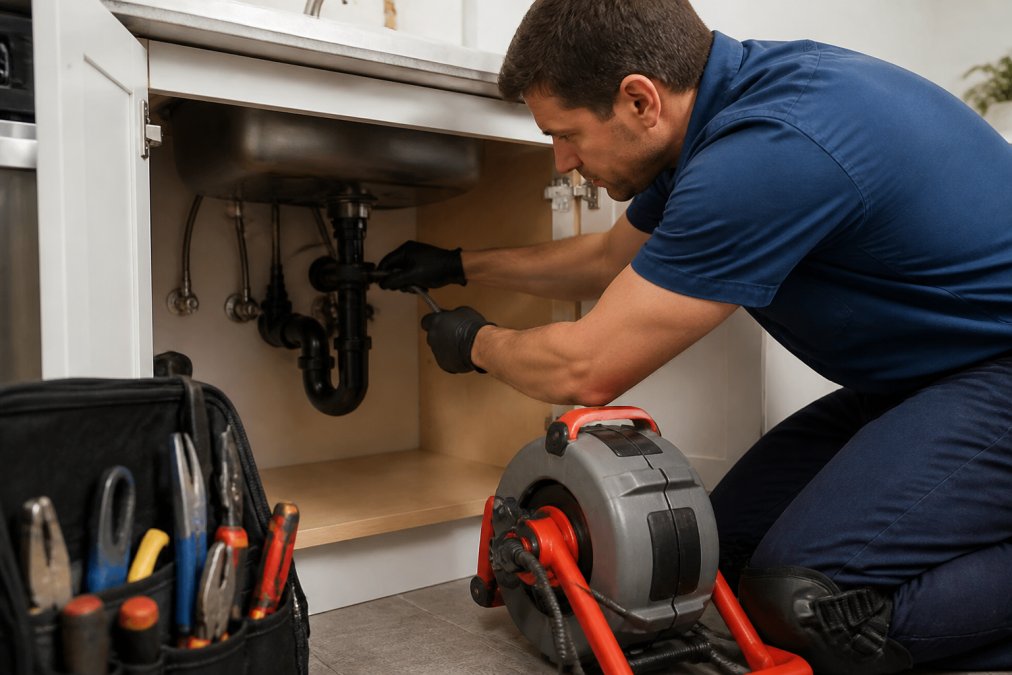
Table of Contents
- Diagnostic Decision Matrix: DIY or Professional Slow Drain Fix?
- DIY Methods for Clearing Minor Clogs
- Signs Your Slow Drain Needs a Professional Service
- Hydro Jetting vs Snaking: Which Professional Drain Cleaning Method Works Best?
- Understanding Professional Drain Cleaning Cost
- How to Prevent Recurring Drain Clogs
- What to Expect During a Professional Service Visit
- The Long-Term Cost of Neglecting a Slow Drain
- Frequently Asked Questions
Last Updated: September 13, 2026
Diagnostic Decision Matrix: DIY or Professional Slow Drain Fix?
A slow drain fix is rarely an emergency, but it is always a warning. A slow drain fix is rarely an emergency, but it is always a warning. This guide helps you tell the difference before you spend money on the wrong solution. This guide helps you tell the difference before you spend money on the wrong solution.
Three variables decide the fix: where the blockage sits, how many fixtures are affected, and whether water drains at all.
Quick Self-Assessment: Is Your Drain Slow or Blocked?
Slow drain means water pools briefly, then drains within a minute or two. Blocked drain means standing water that does not move, or backs up into other fixtures. A slow drain is a partial blockage that usually responds to DIY methods; a blocked drain is a full one and often needs a professional.
Run this test: fill the sink or tub and watch how it drains. One slow fixture means a local clog; two or more slow fixtures mean the main line or vent stack, which DIY tools will not reach.
When DIY Methods Are Enough
DIY is the right call when one fixture is affected, the water still moves, and you have not used chemical cleaners on that drain. A plunger, drain snake, or p-trap cleaning handles most hair clogs and soap scum. If the drain improves after one or two attempts, you are done; if not, stop.
DIY Methods for Clearing Minor Clogs
The three tools that clear most minor clogs are a plunger, a drain snake, and a bucket for p-trap cleaning. All three physically remove the blockage instead of dissolving it.
Tools You Already Own: Plunger, Drain Snake, and P-Trap
- Plunger: Best for toilets and flat-bottom sinks. Seal the drain, add water to cover the cup, and plunge firmly 15-20 times.
- Drain snake: A hand-crank snake reaches 15-25 feet into a fixture trap or branch line. Feed it slowly and crank when you feel resistance.
- P-trap: Place a bucket underneath, unscrew both slip nuts, and clear the trap by hand. This catches most hair clogs and soap scum.
Avoid chemical drain cleaners on older pipes (the EPA). They generate heat as they react, and cast iron or galvanized lines from the 1950s do not tolerate that stress.
When to Stop DIY and Call a Professional Service
Stop DIY if the drain backs up again within a week, multiple fixtures are slow, you smell sewage, or you hear gurgling pipes after every use. Gurgling means the vent stack is partially blocked, and no plunger will fix that. A professional drain cleaning service has the camera inspection and hydro-jetting equipment to reach the main line.
Pouring chemical cleaner into a fully blocked drain can leave caustic liquid sitting in the pipe for hours, which damages older cast iron and creates a hazard for anyone who opens the trap later (the CDC). If the drain is fully blocked, skip the chemicals.
Signs Your Slow Drain Needs a Professional Service
Call a professional for standing water that does not drain, sewage odor, water backing up into a second fixture, or repeated clogs in the same drain. These point to a main line blockage or failing sewer line, not a fixture-level clog.
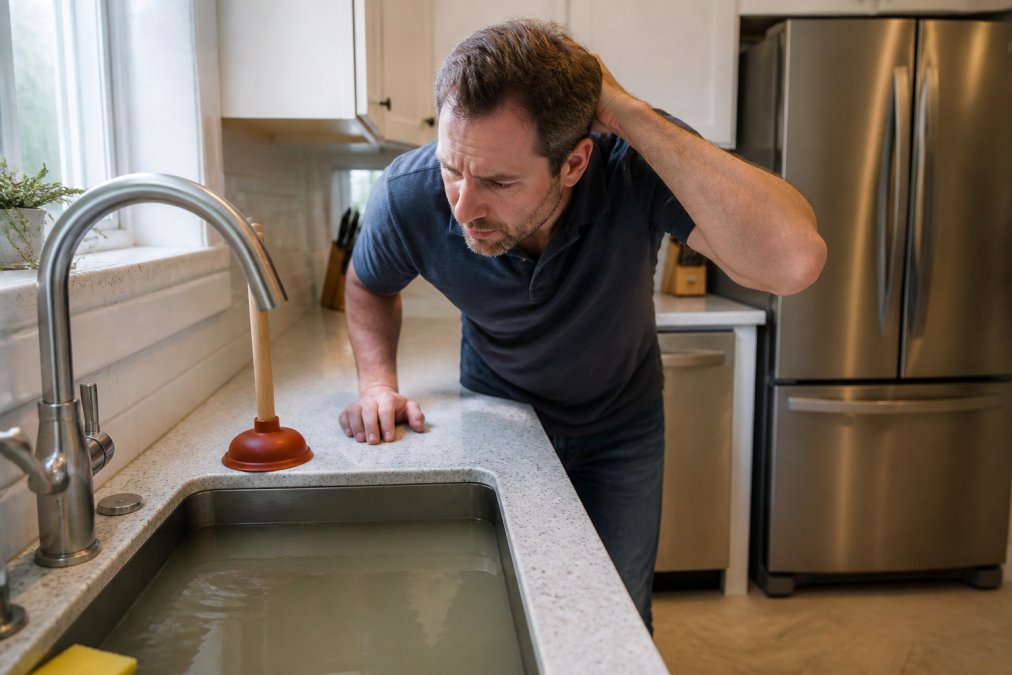
The clearest signal is backflow. If flushing a toilet makes the shower drain gurgle, or the washing machine sends water into the kitchen sink, the blockage is downstream of both fixtures, the main line. A drain snake cannot reach it from a fixture, and a plunger only pushes water back and forth.
Recurring clogs matter too. A drain that clears and clogs again every few weeks is a pipe integrity problem, not a clog problem. Tree roots, collapsed pipe sections, or heavy grease accumulation are common causes, and each needs a camera inspection to diagnose.
Hydro Jetting vs Snaking: Which Professional Drain Cleaning Method Works Best?
Hydro-jetting uses high-pressure water to scour the full pipe wall, removing grease, scale, and debris. Snaking uses a rotating cable to punch a hole through the blockage. Snaking clears a path; hydro-jetting cleans the pipe.
| Method | Best For | Removes | Limitation |
|---|---|---|---|
| Snaking | Isolated clogs, quick clears | Hair, soft debris | Leaves residue on pipe walls |
| Hydro-jetting | Grease, scale, recurring clogs | Full pipe-wall buildup | Not for fragile or collapsed pipe |
| Camera inspection | Diagnosis before either method | Nothing (identifies the cause) | Requires a second step to clear |
For restaurant grease lines and older residential main lines, hydro-jetting is usually the better long-term choice because it restores full drainage efficiency. For a single bathroom sink with a hair clog, snaking is faster and cheaper. A reputable plumber runs a camera first and recommends based on what it shows, not on which method is easier to sell.
Understanding Professional Drain Cleaning Cost
Professional drain cleaning cost is the sum of four variables: the method used, the access point, the time of day, and whether the blockage is in a fixture branch line or the main sewer line. Understanding how each moves the price is the difference between a fair quote and an inflated one.
The Four Cost Variables
1. Method. A hand snake or power auger through an accessible cleanout is the least expensive clear. Hydro-jetting costs more because it requires a high-pressure machine, a water source, and a trained technician. Camera inspection is a separate line item on most invoices, though many companies waive it when bundled with the clearing service.
2. Access point. A clog reachable through an exterior cleanout is quick work. Pulling a toilet, opening a wall, or accessing a roof vent adds labor and sometimes a second technician. Older homes without installed cleanouts are the most common reason a quote comes in higher than expected.
3. Time of day. Standard business hours are the baseline rate. Nights, weekends, and holidays typically carry an overtime or emergency premium. Some companies publish flat pricing with no overtime charge, which is worth asking about before you book.
4. Location of the blockage. A single bathroom sink is a fixture-level job. A main line blockage affecting multiple fixtures, or a sewer line with root intrusion, is a larger job with more equipment and time (the EPA).
Typical Price Bands
Exact pricing varies by market, pipe material, and accessibility. Pricing depends on the method used, the access point, the time of day, and whether the blockage is in a fixture branch line or the main sewer line. Contact Alpha Rooter & Plumbing for current prices or a quote.
Questions to Ask Before You Book
A clear quote should answer these without you having to ask twice:
- Is the service call fee included in the quoted price, or added on top?
- Is there an overtime or after-hours charge?
- Is camera inspection included, or billed separately?
- If the first method does not clear the line, is there a second charge?
- Is the price flat-rate or hourly, and is there a minimum?
Get the total in writing before work begins. A quote that only states an hourly rate is not a quote; it is an estimate that can move once the technician is on site.
The Cost of Waiting
The cheapest drain call is the one made early. A fixture-level clog cleared today costs a fraction of a main line blockage that has backed up into a basement, soaked drywall, and required emergency service at night. The gap between a routine clear and a water-damage cleanup is not incremental; it is a different category of expense.
How to Prevent Recurring Drain Clogs
Most recurring clogs are not new clogs. They are the same clog returning because the underlying buildup was never fully removed. Prevention is less about reacting to a slow drain and more about a schedule that keeps buildup from blocking flow.
Why Drains Slow Down in the First Place
Three mechanisms account for most residential slow drains:
- Grease and soap scum. Warm grease and soap flow into the drain as liquid, cool against the pipe wall, and congeal into a sticky layer that traps hair and food particles, narrowing the pipe over months.
- Hair and fiber. Hair binds with soap residue to form a mat that clings to the trap and the first few feet of branch line. It rarely clears on its own.
- Scale and root intrusion. In older metal lines, mineral scale builds on the interior wall. In any line with a joint crack or a bellied section, tree roots enter seeking moisture and expand seasonally.
Each mechanism responds to a different prevention habit, which is why a generic tip list does not work. The schedule below targets each one.
The Homeowner Maintenance Calendar
Weekly
- Run hot water down the kitchen sink for 30 seconds after each use to keep grease moving before it cools.
- Flush each bathroom drain with a kettle of hot water to soften soap scum before it hardens.
Monthly
- Remove and rinse hair catchers from every shower and tub drain.
- Inspect the p-trap under bathroom sinks for visible buildup and clear it if flow has slowed.
Quarterly
- Run a kettle of hot water followed by a mild enzymatic drain treatment on kitchen and bathroom drains. Enzymatic treatments digest organic buildup without the heat and caustic risk of chemical cleaners.
- Check the washing machine discharge hose and standpipe for lint accumulation.
Every 12 to 18 Months
- Schedule a professional camera inspection for homes with cast iron, galvanized, or clay sewer lines, or any home older than roughly 30 years. The camera documents pipe condition and catches root intrusion and scale before they become blockages.
- For homes with mature trees near the sewer line, shorten this interval to every 12 months.
Annually
- Have the main line hydro-jetted if the camera shows heavy grease, scale, or root presence. Hydro-jetting scours the full pipe wall; snaking only punches a hole through the blockage.
Commercial and Restaurant Kitchens
Grease accumulation is the leading cause of commercial kitchen backups, and the schedule is tighter:
- Nightly: empty and clean grease traps and strainers.
- Weekly: flush kitchen drain lines with hot water and a degreaser approved for the pipe material.
- Quarterly: professional grease trap cleaning and hydro-jetting of the main kitchen line.
- Annually: camera inspection of the full kitchen drain run.
A scheduled clean costs a fraction of an emergency call during service hours, when a backed-up line can shut down the kitchen.
Keep a Maintenance Log
Record the date of every clear, the method used, and any recurring location. A drain that slows twice in six months is telling you the root cause was never addressed. The log turns that pattern into evidence a plumber can act on and a baseline for future camera inspections.
Prevention is a schedule, not a habit. Homeowners who follow a weekly-to-annual calendar spend less on drain service over five years than those who call only when a drain stops moving. The camera inspection is the single highest-value item on the list because it finds the cause before the blockage does.
What to Expect During a Professional Service Visit
A professional service visit follows four stages: diagnosis, access, clearing, and verification. Most routine clears take 30-90 minutes; hydro-jetting and main line work take longer.
- Diagnosis: The plumber inspects the affected fixtures and runs a camera if the cause is unclear.
- Access: They locate the cleanout or pull the fixture trap to reach the blockage.
- Clearing: They run a snake or hydro-jetter to remove the blockage, then flush the line.
- Verification: They run water through every connected fixture to confirm full drainage and check for backflow.
Ask for a copy of the camera footage if one was recorded. It documents the pipe condition and gives you a baseline for future inspections.
The Long-Term Cost of Neglecting a Slow Drain
A slow drain that is ignored does not stay slow. It progresses to a full blockage, and a main line blockage can cause sewage backflow into the lowest fixture in the building. The cleanup, emergency call, and water damage to flooring or drywall cost far more than the original clear.
Pipe integrity also degrades. Constant standing water accelerates corrosion in older metal lines and encourages root growth at joint cracks. A drain cleaned early stays a maintenance item; a neglected one becomes a repair project, and sometimes a replacement.
A slow drain is easy to ignore until it is not. The homeowners and property managers who avoid the worst outcomes treat the first slow drain as a signal, not an inconvenience. Alpha Rooter & Plumbing handles both sides of that decision: our licensed plumbers diagnose with camera inspection and clear with hydro-jetting or snaking, and we back every job with upfront pricing, no hourly or overtime charges, and a response time under 90 minutes. Call now and get the drain fixed before it becomes a repair.
Frequently Asked Questions
How to fix an extremely slow drain?
Start with a plunger or a drain snake to clear minor debris like hair or soap scum. If the drain still slows after two attempts, the blockage may be deeper in the P-trap or main line. A professional slow drain fix uses a camera inspection to locate the clog and hydro-jetting to clear it completely. Avoid repeated chemical cleaners, which can damage older pipes.
How much does a professional drain cleaner cost?
Professional drain cleaning cost varies based on clog location, pipe condition, and method used. Alpha Rooter & Plumbing offers upfront pricing with no hidden fees. Contact them directly for a quote specific to your drain issue.
Is professional drain cleaning worth it?
Yes, when DIY methods fail or clogs keep returning. A professional service clears the entire blockage, not just a small opening, and includes a camera inspection to check pipe integrity. This prevents repeat clogs and catches problems like root intrusion or pipe corrosion early. For recurring slow drains, professional cleaning saves money over repeated DIY attempts.
What are the signs that a slow drain needs professional attention?
Call a professional if you notice gurgling pipes, standing water in multiple fixtures, sewage odors, or water backing up in one drain when you use another. These signs point to a main line blockage or vent stack issue that DIY tools cannot reach. A camera inspection confirms the cause and guides the right repair.
Comments are closed