
Last Updated: November 18, 2026
Quick Summary
Sewer leak repair options include spot repair for one isolated break, trenchless methods like CIPP lining and a sewer pipe repair sleeve, pipe bursting, and open-trench replacement. A sewer camera inspection should come first, because the footage decides which method fits your line.
- Slow drains house-wide, sewage odor, and wet lawn patches together usually point to a cracked or broken pipe.
- Cast iron pipe rusts from the inside out, while clay pipe cracks at joints as soil shifts and roots find seams.
- Spot repair suits one damaged section, but fails when corrosion runs along the whole pipe.
- Trenchless lining avoids landscaping damage but slightly reduces the pipe’s inner diameter.
- Confirm in writing where your service line ends and the utility’s public main begins before authorizing work.
Table of Contents
- Warning Signs You Have a Sewer Leak
- What Causes Sewer Line Damage in Older Homes
- How a Sewer Camera Inspection Finds the Leak
- Sewer Spot Repair: Fixing One Isolated Break
- Sewer Line Repair Without Digging: Lining and the Sewer Pipe Repair Sleeve
- Pipe Bursting and Open-Trench Replacement
- Sewer Line Replacement Cost and What Drives It
- Permits, Insurance, and Who Pays for the Repair
- Frequently Asked Questions
Warning Signs You Have a Sewer Leak
A sewer leak rarely announces itself with one dramatic event. Most homeowners discover one after weeks of small clues they wrote off as coincidence. The earlier you recognize the pattern, the more sewer leak repair options stay on the table.
Watch for these signals:
- Slow drains throughout the house, not just one sink
- Sewage odor in the yard, basement, or crawl space
- Wet spots or unusually green patches in the lawn above the line
- Gurgling sounds from toilets or floor drains
- Backups in the lowest fixtures when you run water elsewhere
- Foundation cracks or settlement near the service line
One symptom alone might mean a clog. Two or three together usually point to a cracked pipe or broken pipe underground. A clog gets cleared; a sewer leak gets repaired.
What Causes Sewer Line Damage in Older Homes
Pipe material and age drive most failures. Cast iron pipe from the mid-20th century rusts from the inside out until the walls thin and collapse. Clay pipe cracks at joints as soil shifts and roots find the seams.
The usual culprits:
- Corrosion in cast iron and galvanized lines
- Root intrusion at joint gaps and hairline cracks
- Soil movement and settlement after decades of wet-dry cycles
- Blockage buildup from grease, wipes, and scale
- Ground shifting from nearby construction or tree removal
According to the U.S. Environmental Protection Agency’s guide to household leaks, even small, persistent leaks waste significant water over time and often go unnoticed until damage is visible. A sewer line is no different, except the damage happens underground where you cannot see it.
How a Sewer Camera Inspection Finds the Leak
A sewer camera inspection is the fastest way to locate a leak without digging. A technician feeds a camera through a sewer cleanout and watches a live feed, marking the exact footage where the damage sits.
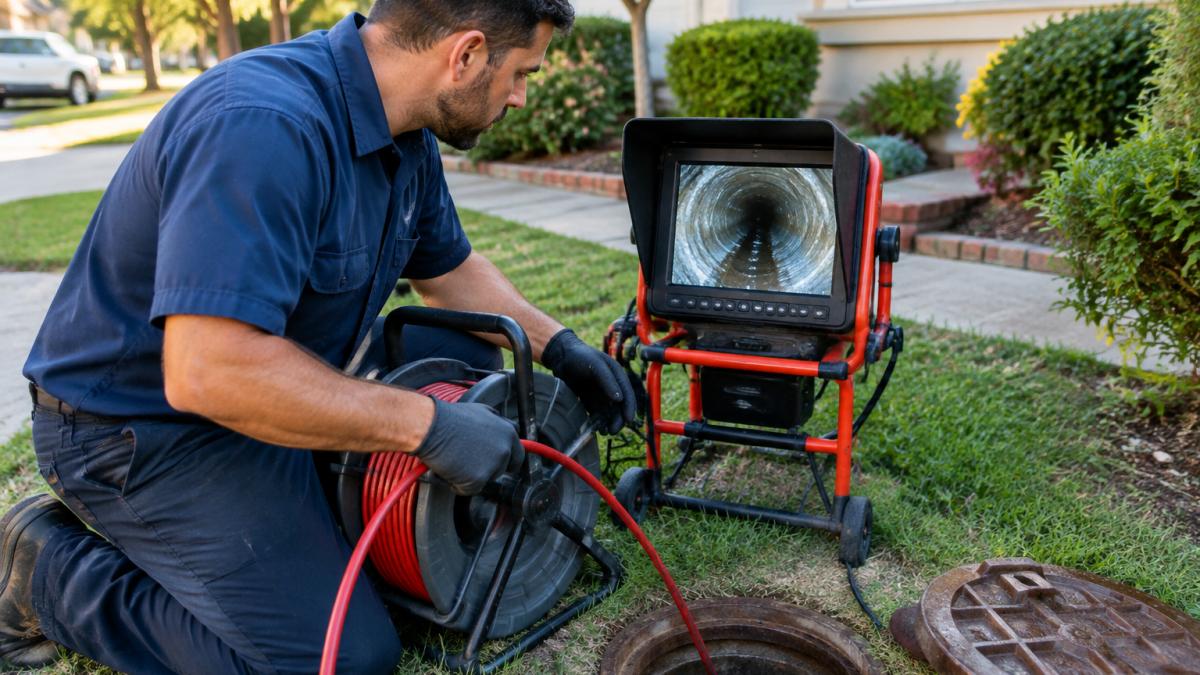
Reading the footage is where experience matters. Here is what the different findings mean:
| Camera Finding | What It Means | Likely Repair Path |
|---|---|---|
| Hairline crack, one spot | Isolated damage | Spot repair or sleeve |
| Root mass at a joint | Intrusion, not structural failure | Cutting plus spot repair |
| Offset or collapsed section | Structural failure | Lining or replacement |
| Corrosion along the whole run | End-of-life pipe | Full replacement |
A video inspection also confirms the pipe material, which narrows your repair method choices. To see what a camera inspection can uncover, book a sewer camera inspection and get the footage explained before anyone quotes a repair.
Sewer Spot Repair: Fixing One Isolated Break
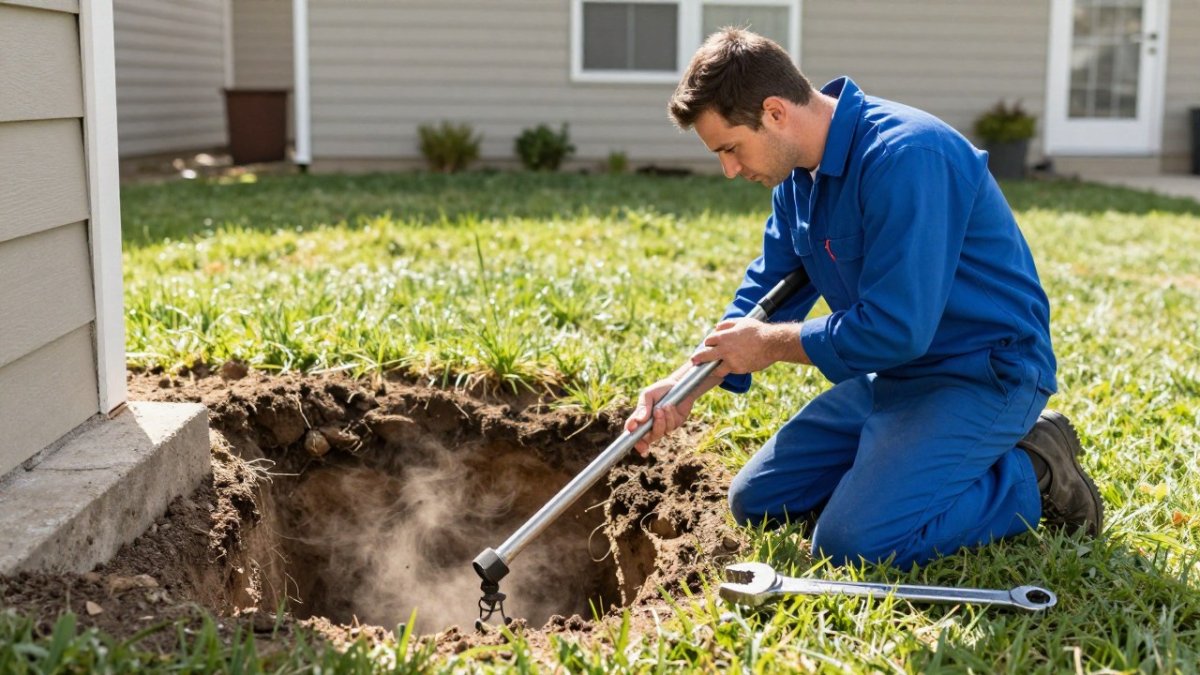
Sewer spot repair is the right call when the camera shows one damaged section and the rest of the line is sound. A crew digs down to that single point, cuts out the failed piece, and splices in new pipe.
This is often the most straightforward sewer repair route.
A common mistake is approving spot repair based on a symptom instead of footage. Always see the camera evidence first. If a contractor quotes a spot fix without an inspection, ask why.
Sewer Line Repair Without Digging: Lining and the Sewer Pipe Repair Sleeve
Sewer line repair without digging covers a family of trenchless methods that avoid tearing up your yard, driveway, or landscaping. The two most common are cured-in-place pipe lining, often called CIPP, and the sewer pipe repair sleeve used for shorter damaged sections.
How a Sewer Pipe Repair Sleeve Works
A repair sleeve is a resin-saturated liner inserted at the damaged point and inflated against the pipe wall. Once the resin cures, it forms a new structural layer inside the old pipe.
Trenchless methods suit pipes that are still structurally intact but cracked or jointed. They do not fix a collapsed or badly offset line, and they reduce the pipe’s inner diameter slightly, which matters on already-tight lines.
If you are weighing lining against digging, a pipe lining versus replacement cost comparison shows how the two stack up, and the case for trenchless sewer repair benefits covers what you avoid by staying out of the yard.
Pipe Bursting and Open-Trench Replacement
Pipe bursting pulls a bursting head through the old line while dragging new pipe behind it. The old pipe fractures outward into the soil, and the new sewer line takes its place at the same or a larger diameter.
Traditional excavation, also called open-trench repair, digs a full trench along the line and replaces the pipe outright.
When each method fits:
- Pipe bursting: same-path replacement, line still has shape, minimal surface disruption wanted
- Open-trench replacement: collapsed line, grade problems, or a path change is needed
Both are full sewer line replacement jobs. Neither is a patch, and neither should be sold as one.
Sewer Line Replacement Cost and What Drives It
You will not get a reliable sewer line replacement cost from a phone call, and any contractor who quotes one without seeing the line is guessing. Understand the mechanics well enough to sanity-check a quote and choose between methods on more than sticker price.
The Cost Drivers, and Why Each One Moves the Number
- Length of pipe, priced per linear foot, so a 30-foot lateral and a 90-foot lateral are different projects even with identical damage.
- Depth of the line, deeper pipe means more excavation, shoring, and spoil removal, and can push a spot repair toward a trenchless method.
- Pipe material and diameter, cast iron, clay, and PVC cut and join differently, and larger diameters need larger fittings, liners, and equipment.
- Access, a line under a lawn is cheap to reach; a line under a finished driveway, slab, or mature landscaping adds demolition and restoration.
- Permits and utility locating, permit fees, right-of-way approvals, and private locating are real line items, not overhead the contractor absorbs.
- Labor and restoration, crew time, backfill, compaction, and surface restoration (sod, concrete, pavers) are frequently underestimated.
The lowest headline quote often omits restoration, permit fees, or the inspection, and the gap shows up as a change order mid-job. Ask every bidder to itemize the same six drivers.
Relative Cost by Method
Exact costs depend on quantity, access, and site conditions. Your on-site assessment and written quote will provide current pricing.
A Decision Matrix for Choosing a Method
Use the camera findings and your site conditions to narrow the options before you compare prices:
| Situation | Best-Fit Method | Disruption | Durability | Main Limitation |
|---|---|---|---|---|
| One isolated crack, rest of line sound | Spot repair or sleeve | Low, single dig or no dig | Good for that point only | Does not address other weak points |
| Root intrusion at a joint, pipe intact | Root cutting plus spot repair or sleeve | Low | Good if roots are managed | Roots return if the entry point is not sealed |
| Cracks and joint gaps along a run, pipe still has shape | CIPP lining | Very low, no excavation | Long service life | Slightly reduces inner diameter; not for collapsed pipe |
| Collapsed or badly offset section | Pipe bursting or open-trench replacement | Moderate to high | Full new pipe | Highest cost; bursting needs a path and access pits |
| Line lost grade or needs a path change | Open-trench replacement | High | Full new pipe, corrected grade | Most disruptive; restoration cost |
| Corrosion along the entire run | Full replacement | High | Full new pipe | Spot fixes will fail again elsewhere |
Published third-party ranges exist as a reference point. If you want to know how long the work itself takes once you pick a method, this stage-by-stage repair timeline walks through each phase.
Watch out: approving the cheapest method without camera evidence is how homeowners pay twice, a spot repair on a line that needed lining fails within a season, and the second job costs more than doing it right the first time.
Permits, Insurance, and Who Pays for the Repair
This is where sewer repair projects most often stall, and the part most homeowners never ask about until a contractor says “we can’t start yet.” Three questions decide your timeline and out-of-pocket cost: who owns the pipe, what approvals are required, and what your insurance covers.
Who Is Responsible for Which Stretch of Pipe
Responsibility splits at a defined point that varies by jurisdiction. In most setups, the homeowner owns and maintains the service line, the lateral from the house foundation to the property line or the connection at the public main.
Before authorizing any work, confirm the boundary in writing with the utility or local public works department. A leak on the utility side is their repair; a leak on your side is yours, even if the wet spot appears in the parkway.
Permit and Approval Checklist
Permit requirements for sewer line replacement and for repairs that disturb the public right-of-way, the sidewalk, or the street vary by local jurisdiction. Repair-only work inside private property may or may not need one. Work through this list before scheduling:
- Confirm the permit requirement with the local building or plumbing department, ask whether a spot repair, a lining job, and a full replacement each need separate approval.
- Request utility locating before any digging (811 Before You Dig). Utility locating services mark public utility lines before digging; private locating may still be needed for lines on your property.
- Check right-of-way rules if the line runs under a sidewalk, driveway apron, or street. Many jurisdictions require a separate encroachment or right-of-way permit and a traffic or pedestrian control plan.
- Ask about inspection milestones. Replacement and lining jobs typically require an inspection before backfill or before the liner is cured, and a missed inspection can mean reopening the work.
- Confirm restoration obligations. Some permits require the contractor to restore pavement, curb, or landscaping to a specified standard, and that cost belongs in the quote.
- Get the permit pulled in the licensed contractor’s name. A homeowner-pulled permit can shift liability and complicate warranty claims.
Watch out: skipping utility locating to save a day is the single most common cause of a project turning into an emergency, a struck gas or electric line stops work immediately and can add thousands in damage and delay.
Insurance, Service-Line Coverage, and Warranties
Read your homeowner policy’s exclusions section carefully to understand what it covers for underground pipe failure and resulting damage. Confirm coverage details directly with your insurer.
Ask your insurer whether service-line coverage is available and what its limits and conditions are.
On warranties, get three things in writing: the workmanship warranty term, the manufacturer warranty on pipe or liner material, and whether either transfers if you sell the house. Keep the camera footage, the permit number, and the written scope, insurers and future buyers ask for them. A verbal “lifetime guarantee” is not a warranty.
Frequently Asked Questions
How much does a sewer leak repair cost?
Pricing depends on the method, access, and extent of damage. Alpha Rooter & Plumbing offers upfront pricing with no hidden fees; contact us for a quote based on your specific situation.
Can a sewer line be repaired without digging?
Yes, in many cases. Trenchless methods like cured-in-place pipe lining and pipe bursting repair or replace the line through existing access points, often the sewer cleanout. A sewer line repair without digging works best when the pipe is still structurally sound enough to hold a liner and when there are few bends or collapses. A camera inspection confirms whether your line qualifies before anyone commits to a method.
Does homeowners insurance cover sewer line replacement?
Review your homeowners policy or call your insurance agent before the repair to understand what is covered. Ask the contractor for documentation of the failure so a claim is easier to support.
When should a sewer line be repaired instead of replaced?
Repair makes sense when damage is isolated: one cracked section, a single root intrusion, or a joint offset in an otherwise sound pipe. Replacement is the better call when the line is corroded throughout, has repeated backups, or is made of old cast iron or clay that keeps failing. A sewer camera inspection shows the condition along the whole run, which is what separates a spot repair from a full replacement.
