
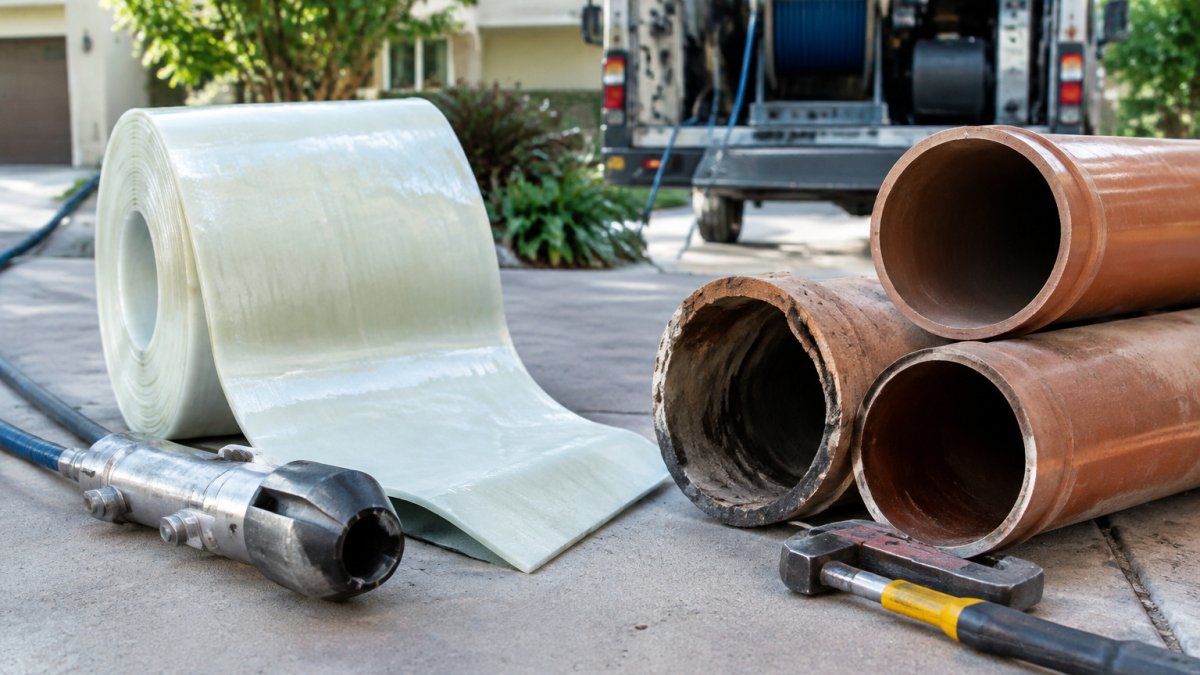
Last Updated: November 6, 2026
Quick Summary
Pipe lining cost is usually lower upfront than sewer line replacement, and lining requires minimal to no excavation. However, lining only works on structurally sound pipes, so collapsed, offset, or badly root-damaged lines need full replacement, which costs more but resets the entire line.
- Lining is a repair that bonds a liner inside the pipe; replacement removes the old pipe entirely.
- A quote that excludes camera inspection and cleaning may not reflect the full price.
- Pipe bursting needs excavation pits at each end rather than a continuous trench.
- Lining reduces internal diameter and cannot fix collapsed pipe or severe offset joints.
- Divide all-in project cost by expected years of service to compare long-term value.
Table of Contents
- Pipe Lining vs Sewer Line Replacement: The Cost Trade-Off
- Side-by-Side Comparison: Lining vs Replacement
- Sewer Pipe Lining Cost per Foot: What Drives the Number
- Trenchless Sewer Line Replacement Cost: Pipe Bursting and Beyond
- Pipe Lining Disadvantages: When the Cheaper Option Costs More
- Sewer Pipe Lining vs Replacement Lifespan: Long-Term Value
- Get an Upfront Quote from Alpha Rooter & Plumbing
- Frequently Asked Questions
Pipe Lining vs Sewer Line Replacement: The Cost Trade-Off
When a sewer line fails, the cost comparison between pipe lining and replacement usually comes down to one question: do you pay less now, or pay less over the life of the pipe?
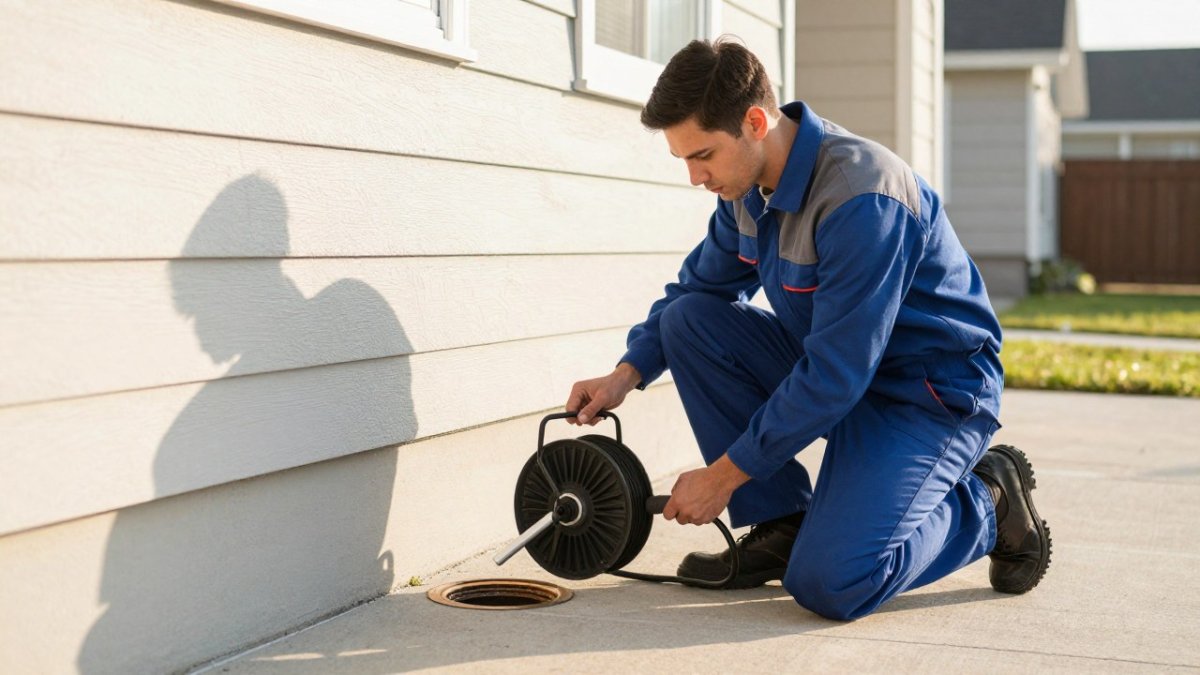
Below, we break down what actually drives each number, where lining quietly costs more than homeowners expect, and how to read a quote so you are not comparing apples to oranges.
Side-by-Side Comparison: Lining vs Replacement
Here is the short version before we get into the details. Pipe lining is less invasive and usually cheaper upfront, but it only works on pipes that still hold their shape. Replacement costs more and disrupts more, but it resets the clock on the entire line.
| Factor | Pipe Lining | Sewer Line Replacement |
|---|---|---|
| Upfront cost | Lower | Higher |
| Excavation | Minimal to none | Requires digging |
| Landscaping damage | Rarely | Common |
| Project timeline | Usually faster | Longer |
| Pipe condition required | Structurally sound | Any condition |
| Handles collapsed pipe | No | Yes |
| Handles root intrusion | Limited | Fully resolved |
| Typical lifespan | Decades, depending on liner | Decades, depending on material |
| Best for | Cracked but intact pipe | Collapsed, offset, or badly root-damaged pipe |
The pattern is clear: lining is a repair, replacement is a rebuild. If your line is a candidate for lining, you get most of the benefit for less money and far less mess. If it is not a candidate, lining is money spent on a pipe that will still fail.
Sewer Pipe Lining Cost per Foot: What Drives the Number
Sewer pipe lining cost per foot is not a single number, and any contractor who quotes one flat rate before inspecting your line is guessing. The price of cured-in-place pipe (CIPP) lining varies widely, and the spread is explained by four variables.
- Pipe diameter. A small residential lateral costs far less per foot than a larger commercial line, because the liner material scales with circumference.
- Access. Lining needs entry points. If the crew can reach the cleanout easily, the job is straightforward. If access requires digging a pit, that excavation shows up in the price.
- Pipe condition and prep. The line must be cleaned and inspected before lining. Heavy root intrusion or scale adds cleaning time and equipment.
- Liner type and length. Epoxy and CIPP liners differ in cost, and a longer run means more material.
Watch out: some quotes exclude the pre-lining camera inspection and cleaning. Those are not optional steps, and a quote that leaves them out may not reflect the full price.
How the Per-Foot Number Actually Adds Up
A per-foot range is only useful if you know which foot you are on. The same 40-foot lateral can quote very differently depending on five inputs, and a transparent estimate shows each one as a line item rather than folding them into a single rate.
- Linear length. Material and labor scale roughly with the run, but setup, inspection, and mobilization are fixed costs that do not shrink on a short line. That is why a 20-foot lining job often prices higher per foot than a 60-foot job.
- Pipe diameter. A 4-inch residential lateral is the baseline most homeowners see. Moving to a 6-inch line increases liner material and resin volume, and the per-foot price climbs with it.
- Access and entry. A cleanout in the yard or basement keeps the job simple. If the crew must cut a pit through a driveway, patio, or finished floor to reach the pipe, that excavation and its restoration are added to the lining price, not hidden inside it.
- Pre-lining prep. High-pressure jetting, root cutting, and descaling are billed by time and equipment. A line with heavy scale or grease can add hours before the liner ever goes in.
- Restoration. Lining itself rarely disturbs landscaping, but any access pit still needs backfill and surface repair. Ask whether restoration is included or listed as an exclusion.
A like-for-like comparison means asking each contractor to quote the same five inputs on the same inspected line. If one bid is dramatically lower, the difference is usually an excluded step, a shorter liner, or a smaller diameter than the pipe requires.
A Simple Way to Sanity-Check a Lining Quote
You do not need a contractor’s cost sheet to spot an unrealistic number. Ask for the linear footage, the pipe diameter, whether camera inspection and cleaning are included, and whether any access pit and restoration are in scope. Multiply the quoted per-foot rate by the footage and compare that subtotal to the all-in price. A large gap between the two is your cue to ask what the extra covers.
Trenchless Sewer Line Replacement Cost: Pipe Bursting and Beyond
EPA guidance on trenchless pipe rehabilitation methods describes trenchless technologies as a way to rehabilitate underground pipe with reduced surface disruption, which is the core reason homeowners ask about them.
Pipe bursting projects generally require excavation pits at each end rather than a continuous trench. That means less landscaping and driveway damage than traditional excavation, but it is not excavation-free. Labor, equipment, and restoration still drive the final number, and a longer run or deeper pipe raises all three.
Pipe Lining Disadvantages: When the Cheaper Option Costs More
Pipe lining disadvantages matter most when the pipe is already past saving. Lining works by bonding a new liner to the inside of a pipe that still has structural integrity. If the pipe has lost its shape, the liner inherits the problem.
- It cannot fix a collapsed pipe. A liner needs a round, continuous host pipe.
- It reduces the internal diameter. A liner takes up space inside the pipe, which slightly reduces flow capacity.
- It does not resolve severe offset joints. A liner bridges small gaps but not major misalignment.
- It hides problems if the prep work is skipped. Skipping the camera inspection means lining over damage nobody saw.
Homeowners with aging cast iron lines face this decision most often. Repairing cast iron pipes in old homes covers when repair methods like lining fail and replacement becomes the better call, which is worth reading before you commit to a liner on a 1950s line.
Sewer Pipe Lining vs Replacement Lifespan: Long-Term Value
Sewer pipe lining vs replacement lifespan is where the cheaper option often wins on total cost, but only if you run the math honestly. A properly installed liner can last decades.
Average lifespan of residential sewer lines gives a useful benchmark for how long different pipe materials last, which helps you judge whether a liner is buying you ten years or forty.
The calculation that matters: divide total project cost by expected years of service. A liner on a sound pipe usually wins that math. A liner on a failing pipe does not, because you will pay for the same repair again sooner.
The Ownership Math Competitors Skip
Upfront price is only half the comparison. The other half is what you spend between installation and the next failure, and that is where lining and replacement diverge in ways a per-foot table cannot show.
- Expected service life. A new pipe is a new pipe, and its lifespan tracks the material: cast iron, clay, PVC, and HDPE each carry different expected service lives. A liner inherits the remaining life of the host pipe, so a liner in a sound 30-year-old line and a liner in a 70-year-old line are not the same purchase even at the same price.
- Maintenance. Both methods still require periodic jetting to clear grease, roots, and debris. Lining does not eliminate root intrusion at joints outside the lined section, and replacement does not eliminate it at the connection to the municipal main. Budget for maintenance either way.
- Warranty terms. Ask what the warranty covers, how long it runs, and whether it is prorated or transferable to a new owner. A long warranty on a liner installed in a marginal host pipe is worth less than a shorter warranty on a full replacement.
- Likely future repairs. A liner that bridges a small crack may need a second repair if the surrounding pipe continues to deteriorate. Replacement removes that risk for the length of the new pipe.
- Cost per year. Divide the all-in price, including inspection, prep, access, and restoration, by the expected years of service. Run the same math for replacement. The lower number is the better value, and it is not always the lower upfront price.
When the Long-Term Math Flips
A liner is the better long-term buy when the host pipe is structurally sound, the defect is localized, and the liner is installed with proper cleaning and inspection.
5 benefits of trenchless sewer repair for homeowners explains why the less invasive route appeals to homeowners weighing that payback, and Repairing cast iron pipes in old homes covers when lining fails and replacement becomes the better call on aging lines.
Get an Upfront Quote from Alpha Rooter & Plumbing
The most useful cost comparison is the one written on a quote for your actual pipe. Alpha Rooter & Plumbing offers upfront pricing with no hidden fees, so you can review the price before work begins.
- Upfront pricing with no hourly or overtime charges
- Under 90-minute response time for urgent backups
- Licensed plumbers and diagnostic tools
Cost of plumbing service call fees explains what a service call covers so you can read a quote with confidence. Call Alpha Rooter & Plumbing and get a clear, written price before any work begins.
Frequently Asked Questions
Is pipe relining cheaper than replacement?
In many cases, yes. Lining is often less expensive per foot than full replacement, though costs vary by pipe. But the gap narrows when lining requires heavy surface restoration or when the pipe is too damaged to reline. A camera inspection and a written quote are the only way to know which option is cheaper for your specific line.
How much does sewer pipe lining cost per foot?
Lining costs depend on pipe depth, diameter, and surface restoration, and each job is priced individually after inspection. Alpha Rooter & Plumbing provides upfront pricing after inspecting the pipe, with no hourly or overtime charges.
What are the disadvantages of trenchless pipe lining?
Lining reduces the pipe’s internal diameter, so it is not suitable for lines that are already undersized. It cannot fix a collapsed or severely offset pipe, and it does not repair the structural cause of root intrusion. The finished liner also depends on proper surface preparation. If the host pipe is too far gone, replacement is the only reliable option, which is why an inspection comes first.
Can every damaged sewer pipe be relined?
No. Pipe lining works best on pipes that are still structurally sound but corroded, cracked, or root-intruded. A collapsed pipe, a line with major bellies or offsets, or a pipe that has lost too much of its wall thickness cannot hold a liner. A camera inspection determines eligibility. If lining is not an option, trenchless replacement methods like pipe bursting can still avoid a full dig-and-replace excavation.
How long does pipe lining last compared with replacement?
A properly installed CIPP or epoxy liner can last for decades. The difference is that lining extends the life of the existing host pipe, while replacement gives you a completely new line. Lifespan depends on installation quality, pipe preparation, and what goes down the drain. Both options are long-term fixes when the pipe is a good candidate.
The real risk in this decision is not picking the wrong method. It is approving a liner on a pipe that was never a candidate for one. Get the pipe inspected first, get the quote in writing, and compare total cost against years of service. Alpha Rooter & Plumbing will inspect your line, explain your options in plain language, and give you an upfront price with no surprises. Call now to schedule your inspection.

Comments are closed