
Table of Contents
- Why Homeowners Are Moving Away From Copper Piping
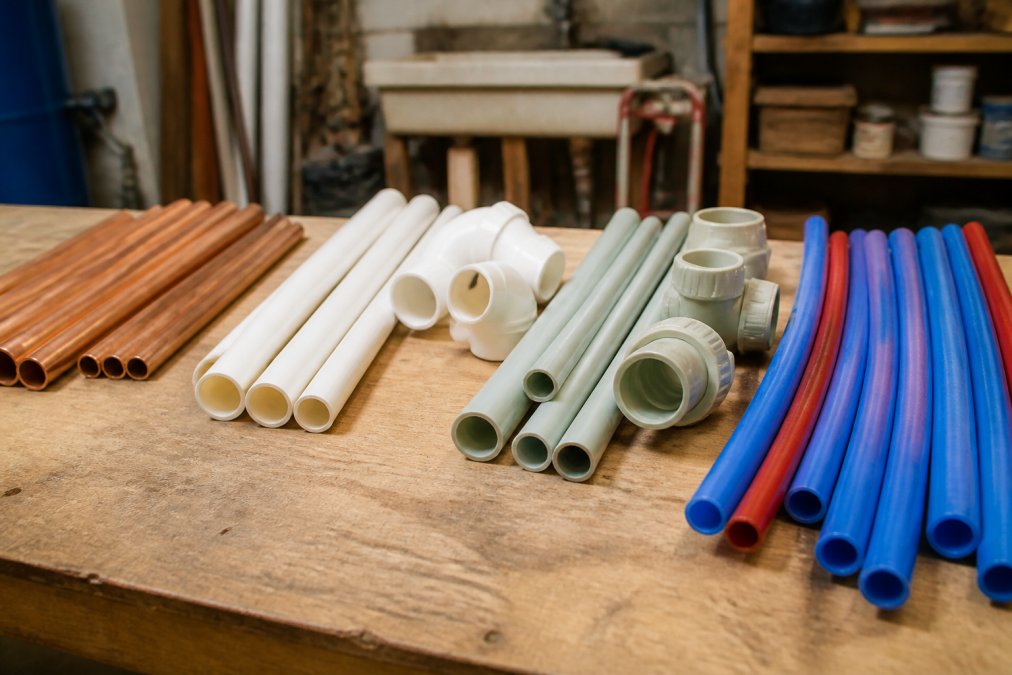
- Alternatives to Copper Piping: A Comparison Overview
- PEX Piping: The Flexible Modern Standard
- PEX vs Copper Cost Comparison: Material and Labor
- PVC and CPVC: Rigid Plastic Options for Specific Applications
- Lifespan of PEX vs Copper Pipes: What to Expect
- Plumbing Code Requirements for Residential Piping Materials
- Water Quality and Leaching: What You Need to Know
- Frequently Asked Questions
Last Updated: September 26, 2026
Why Homeowners Are Moving Away From Copper Piping
Copper has dominated residential plumbing for decades, but that era is ending. Homeowners renovating older properties face rising costs, specialized installation requirements, and unexpected material problems. At Alpha Rooter & Plumbing, we’ve worked with hundreds of Los Angeles homeowners discovering that alternatives to copper piping now offer comparable or superior performance at a fraction of the cost.
Modern alternatives address real pain points copper creates: corrosion in aggressive water conditions, pinhole leaks that develop silently behind walls, and thermal expansion issues. Flexible piping systems eliminate dozens of fittings. Rigid plastic options handle drains more efficiently. The technology has matured, code approvals are solid, and labor costs are dramatically lower.
This guide breaks down your realistic options for alternatives to copper piping during renovation, with honest comparisons on cost, lifespan, installation difficulty, and where each material actually makes sense.
Alternatives to Copper Piping: A Comparison Overview
PEX (cross-linked polyethylene) dominates new installations and whole-home repiping projects. It’s flexible, corrosion-resistant, and installs 40-50% faster than copper.
PVC (polyvinyl chloride) handles drain, waste, and vent systems. It’s rigid, lightweight, and excels in wastewater applications.
CPVC (chlorinated polyvinyl chloride) bridges the gap between PVC and metal. It handles hot water where standard PVC fails, making it useful for specific supply-line scenarios in older homes with tight spaces.
Uponor PEX-a represents the premium end of flexible piping. Its expansion fitting system and shape-memory properties appeal to homeowners willing to pay more for maximum reliability.
Quick Comparison Table
| Material | Best For | Key Strength | Main Limitation |
|---|---|---|---|
| PEX | Whole-home repiping, new construction | Low cost, fast installation, freeze-resistant | Fittings can restrict flow slightly |
| PVC | Drain/waste/vent systems | Durable for wastewater, lightweight | Cannot handle hot water supply lines |
| CPVC | Hot water supply in tight spaces | Handles higher temperatures than PVC | Can become brittle over extended periods |
| Uponor PEX-a | Premium reliability, complex layouts | Superior durability, expansion fittings | Requires specialized installation tools |
PEX Piping: The Flexible Modern Standard
PEX has become the default choice for residential water distribution. Its flexibility means fewer connection points and fewer places for leaks to develop. Installation speed cuts labor costs by 40-50% compared to soldered copper.
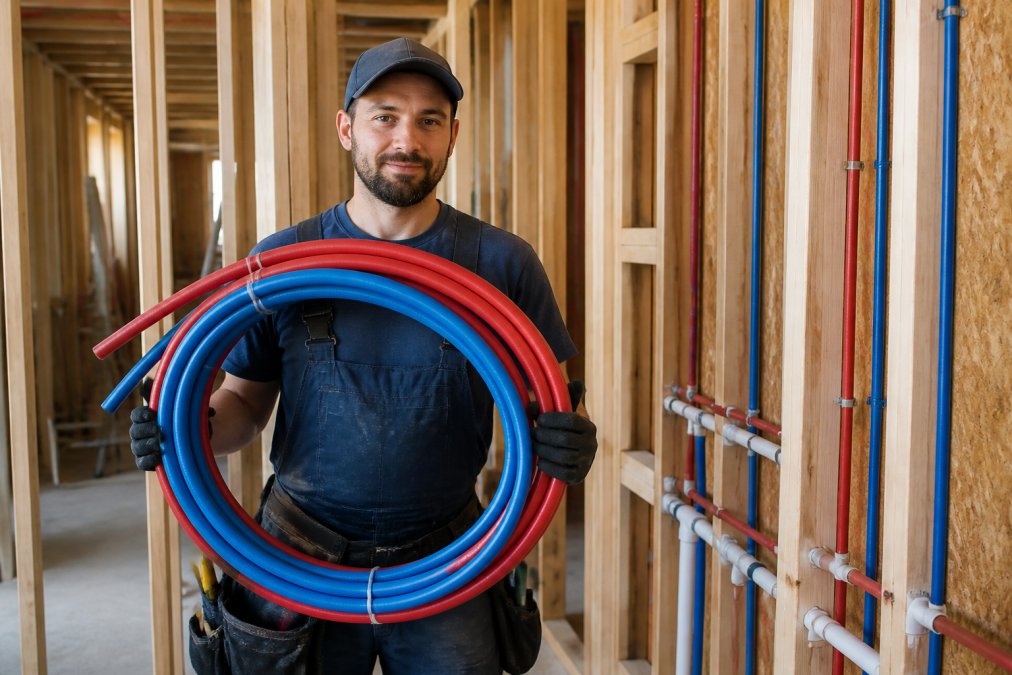
PEX resists corrosion in ways copper cannot match. It won’t pit, scale, or degrade from aggressive water chemistry, offering liberation from the pinhole leak cycle that plagues copper systems.
Freeze resistance is another real advantage. PEX can expand and contract without cracking, which matters in older homes where pipes run through uninsulated spaces. Copper becomes brittle in extreme cold and can split catastrophically. PEX flexes.
Connector systems matter significantly. Expansion fittings (used in premium PEX-a systems) create a mechanical seal that tightens as the fitting cools, showing lower failure rates in high-temperature applications. Crimp connections are cheaper but less reliable under thermal stress. Both are code-approved.
One drawback: fitting geometry can restrict water flow slightly compared to copper. For most residential applications, this difference is imperceptible. High-demand scenarios occasionally require upsizing to 3/4-inch PEX.
PEX vs Copper Cost Comparison: Material and Labor
This is where the financial argument becomes undeniable. Material costs alone favor PEX by a significant margin. Labor costs amplify the difference dramatically.
Copper requires soldering or brazing every connection by a licensed plumber with specialized tools. A single joint takes 10-15 minutes; a whole-home project involves 50-150 connections.
PEX connections use crimp rings or expansion fittings, installed with hand tools in 2-3 minutes each.
PEX runs roughly 60-70% less per linear foot than copper. The gap widens when factoring in fitting costs, copper requires significantly more fittings due to its rigidity.
Labor represents the largest cost component. Copper repiping requires 40-60 hours of skilled labor; PEX requires 20-30 hours, a difference of several thousand dollars.
The cost advantage of PEX vs copper often becomes the deciding factor: comparable or better performance, half the installation time, and substantially lower cost.
Ask your plumber about the connector system before committing to PEX. Expansion fittings cost more upfront but show superior performance in high-temperature applications. For cold-water supply lines and drain systems, crimp connections work fine and save money.
PVC and CPVC: Rigid Plastic Options for Specific Applications
PVC dominates drain, waste, and vent systems. It resists wastewater chemistry, handles solvent-weld joints reliably, and costs less than alternatives.
CPVC solves a specific problem: PVC softens above 140°F. CPVC adds chlorine to the polymer chain, increasing heat tolerance to 180°F for residential hot water distribution.
In renovation scenarios, CPVC might fit tight spaces where PEX cannot (though PEX’s flexibility usually solves space constraints better). For new drain systems, PVC is the obvious choice.
CPVC’s solvent-weld process requires primer and cement at each joint, creating a chemical bond. It’s faster than soldering but requires precision, improper technique creates weak joints. The margin for error is tighter than with PEX expansion fittings.
CPVC can become brittle over decades with repeated thermal cycling. PEX handles this cycle more gracefully, making it the safer bet for 50-year lifespan supply lines.
PVC remains the standard for drain systems because alternatives don’t make sense. Cast iron (common in older homes) corrodes and requires replacement. Copper is overkill and costs far more. PVC is durable, code-approved, and reliable. When you see a DWV system in modern homes, it’s PVC.
Lifespan of PEX vs Copper Pipes: What to Expect
This question reveals a fundamental misunderstanding many homeowners have. Copper doesn’t last forever, it fails in ways people don’t always recognize until catastrophe strikes.
Copper’s theoretical lifespan in ideal conditions is 50-70 years. That assumes neutral water chemistry, moderate water pressure, and no corrosive elements. Reality rarely matches that assumption. Aggressive water chemistry (high chlorine, low pH, high mineral content) accelerates pinhole corrosion dramatically. Homes with problematic water see copper failures within 20-30 years.
PEX has a documented lifespan of 50+ years based on accelerated aging tests and field installations dating back to the 1980s. The material doesn’t corrode. It doesn’t pit. It doesn’t degrade from normal water chemistry. Its failure mode is different: UV degradation if exposed to direct sunlight (which never happens in walls) or degradation from certain chemicals (which don’t appear in potable water systems).
The practical distinction: copper fails from environmental factors you can’t control. PEX fails from installation defects or extreme conditions you can avoid. That’s a meaningful difference.
CPVC has a similar lifespan to PEX when used for its intended purpose (hot water supply). It’s more vulnerable to thermal cycling stress than PEX, but still reliable for 50 years in typical residential applications.
PVC in drain systems lasts 50-70 years without significant degradation. It doesn’t corrode, doesn’t scale, and resists the chemical environment of wastewater better than any metal alternative.
The lifespan conversation matters most when deciding whether to replace all piping during renovation or selectively upgrade. If your copper is already showing pinhole leaks or water discoloration, replacement makes sense. If it’s still performing without visible problems, you have options, but understand that problems often develop suddenly. A proactive approach to whole-home repiping prevents emergency failures down the road.
Pinhole leaks in copper develop silently behind walls. By the time you notice water damage, the problem has been spreading for months. If your home is over 30 years old with hard or acidic water, budget for copper replacement now rather than facing emergency repairs later.
Plumbing Code Requirements for Residential Piping Materials
Code compliance isn’t optional, and it varies by jurisdiction. What’s approved in one area might be restricted in another. Understanding your local requirements prevents expensive mistakes.
Most municipalities follow the International Plumbing Code (IPC) or the Uniform Plumbing Code (UPC), which both approve PEX, PVC, CPVC, and copper for their appropriate applications. PEX is approved for water supply. PVC and CPVC are approved for specific applications (drain systems, hot water supply respectively). Copper is approved everywhere but increasingly rare due to cost.
The nuance is in installation requirements. PEX must be protected from UV exposure and physical damage. It cannot be installed in outdoor above-ground applications without UV-rated jacketing. PVC has similar restrictions. CPVC follows PVC guidelines. Copper has no UV restrictions but requires support every 6 feet for horizontal runs.
Pressure rating is a code consideration. Residential water supply systems operate at 40-80 PSI.
International Plumbing Code requirements for residential piping materials
Water Quality and Leaching: What You Need to Know
This concern surfaces frequently in renovation discussions, and it deserves a straightforward answer.
Frequently Asked Questions
What can you use instead of copper piping?
The most common alternatives to copper piping are PEX (cross-linked polyethylene), PVC (polyvinyl chloride), and CPVC (chlorinated polyvinyl chloride). PEX is ideal for both hot and cold water supply lines due to its flexibility and freeze resistance. PVC works well for drain, waste, and vent systems but cannot handle hot water. CPVC handles hot water temperatures and offers corrosion resistance. Each material has different strengths depending on your specific plumbing needs and renovation goals.
How does the cost of PEX compare to copper for a whole-house repipe?
PEX typically costs less than copper for both materials and labor. The labor savings can be significant because PEX’s flexibility reduces the number of fittings required and speeds up installation time. Exact pricing depends on your home’s layout, pipe diameter, and local labor rates, so contact a licensed plumber for a specific quote.
Is PEX tubing a reliable substitute for copper in home renovations?
Yes, PEX is a highly reliable alternative to copper for residential water distribution. It resists corrosion, freeze damage, and scale buildup better than copper in many conditions. PEX has been used successfully in residential plumbing for over 30 years. However, some fittings can slightly restrict water flow compared to copper, and certain installations require expansion fitting technology for leak-proof connections. PEX-a systems like Uponor’s expansion fitting design are often considered for premium renovations.
Are there specific building codes that restrict the use of certain piping materials?
Yes, plumbing codes vary by jurisdiction and application. Most building codes approve PEX and CPVC for potable water supply, but some older codes or specific municipalities may have restrictions. PVC is limited to drain, waste, and vent systems only. Your local plumbing inspector determines which materials are permitted in your area. Before starting a renovation, consult with a licensed plumber who knows your regional plumbing code requirements to ensure your material choice is compliant and will pass inspection.
Comments are closed