
Table of Contents
- Emergency Plumbing vs. General Maintenance: What Sets Them Apart
- What Qualifies as a Plumbing Emergency
- Signs of Burst Pipe Emergency You Cannot Ignore
- Issues That Can Wait for a Scheduled Appointment
- Emergency Plumbing Response Time Expectations
- The Cost Difference Between Emergency and Routine Services
- Preventative Plumbing Maintenance Checklist to Avoid Emergencies
- How to Minimize Damage Before Help Arrives
- Frequently Asked Questions
Last Updated: October 2, 2026
Emergency Plumbing vs. General Maintenance: What Sets Them Apart
Emergency plumbing maintenance addresses urgent, life-threatening issues requiring immediate response. General maintenance covers routine inspections and preventative work that can wait days or weeks. Understanding which you’re facing saves money and prevents catastrophic property damage.
| Aspect | Emergency Plumbing | General Maintenance |
|---|---|---|
| Response Time | Under 90 minutes | Scheduled weeks ahead |
| Availability | 24/7 | Standard business hours |
| Cost Structure | Higher per-call, no overtime charges | Standard hourly or flat rate |
| Trigger Events | Active flooding, sewage backup, gas leaks | Routine inspections, minor leaks, drain cleaning |
| Urgency Level | Immediate action required | Can be planned |
| Property Risk | High damage potential | Minimal damage risk |
What Qualifies as a Plumbing Emergency
A plumbing emergency involves active water damage, sewage exposure, or safety hazards. If water is flowing where it shouldn’t be, you smell gas, or raw sewage is backing up, call immediately.
Active Flooding and Water Damage
Active flooding means water is actively entering your home from burst pipes, ruptured water lines, or failed water heater tanks. Water pooling on floors, walls, or ceilings requires immediate emergency response.
Water damage escalates fast, mold develops within 24 hours, structural damage within 48 hours. Every minute counts. Alpha Rooter & Plumbing’s under 90-minute response time helps prevent extensive restoration costs.
Water backing up from fixtures when using others, toilet backing into shower, washing machine causing sink overflow, indicates a main drain line blockage requiring immediate professional assessment.
Sewage Backup and Gas Leaks
Sewage backup is both an emergency and health hazard. Raw sewage surfacing through drains, toilets, showers, or yards indicates a blocked sewer line requiring immediate professional response.
Sewage contains harmful pathogens creating serious health risks, especially for children and immunocompromised individuals (the CDC). Delayed response increases infrastructure damage.
Gas leaks from water heaters or gas lines are safety emergencies. If you smell gas, leave immediately and call your gas company and emergency plumber. Do not attempt repair, gas leaks cause explosions and carbon monoxide poisoning.
Signs of Burst Pipe Emergency You Cannot Ignore
Sudden pressure drops across multiple fixtures indicate a major leak in the main line. If your water meter runs when all fixtures are off, water is escaping in your system.
Watch for wet spots on ceilings, walls, or floors with no obvious source, running water sounds when nothing is on, or water pooling outside in winter.
Yard burst pipes create soggy patches, unusually green grass, or sinkholes. These require immediate excavation and replacement, longer delays increase soil erosion and repair costs.
If you suspect a burst pipe, shut off your main water supply immediately and call an emergency plumber. Every hour of delay increases property damage.
Issues That Can Wait for a Scheduled Appointment
Slow drains, dripping faucets, and continuously running toilets are routine maintenance unless water is actively overflowing. Schedule these at your convenience.
Minor leaks under sinks, slow hot water recovery, or reduced pressure at a single fixture are maintenance issues that can be addressed within weeks.
Rust stains, mineral buildup, or water discoloration warrant professional assessment but don’t require emergency response. Schedule during normal business hours.
The rule: if water is actively damaging your property or creating safety hazards, it’s an emergency. If it’s annoying, wasteful, or slowly degrading your system, it’s maintenance.
Emergency Plumbing Response Time Expectations
Alpha Rooter & Plumbing guarantees response within 90 minutes.
Response time means arrival within 90 minutes for assessment and stabilization. Complex repairs may take hours or require multiple visits.
Alpha Rooter & Plumbing charges no overtime fees, upfront pricing covers service 24/7.
During peak seasons, response times may extend slightly, but true emergencies are prioritized.
The Cost Difference Between Emergency and Routine Services
General maintenance costs less because it’s predictable and scheduled during business hours. Pricing is straightforward, hourly labor plus materials or flat rates.
Emergency plumbing costs more due to unpredictability, after-hours availability, and rapid response requirements. Diagnostic work takes longer and materials must be sourced quickly.
The real cost comparison is emergency service versus property damage. An emergency plumber stopping the leak in 90 minutes helps prevent catastrophic costs.
Delaying emergency response always backfires. Calling immediately costs less than calling after significant water damage occurs.
Preventative Plumbing Maintenance Checklist to Avoid Emergencies
The best emergency is one that never happens. Preventative maintenance catches problems before they become crises.
Inspect your water shut-off valve annually.
Check under sinks and around water heaters monthly for leaks. Small drips are early warning signs.
Inspect exposed pipes for corrosion, especially in older homes. Corroded pipes are burst pipes waiting to happen.
Maintain your water heater according to manufacturer recommendations. Flush sediment annually to extend lifespan and prevent failure.
Keep drains clear by avoiding grease, hair, and debris. Use drain screens. Have professional drain cleaning done annually if you have recurring clogs.
Test your sump pump if you have one. Pour water into the pit to confirm the pump activates.
Insulate exposed pipes in unheated areas. Frozen pipes burst. In winter, keep cabinet doors under sinks open so warm air circulates around pipes.
Document your plumbing system. Note pipe material (copper, PVC, cast iron), water heater age, and location of shut-off valves. Take photos.
| Maintenance Task | Frequency | Why It Matters | Prevention Impact |
|---|---|---|---|
| Test water shut-off valve | Quarterly | Ensures you can stop water flow in emergencies | Prevents water damage escalation |
| Check for leaks under sinks | Monthly | Catches small problems before they worsen | Prevents burst pipes |
| Inspect pipes for corrosion | Annually | Identifies aging infrastructure | Prevents sudden failures |
| Flush water heater | Annually | Removes sediment that reduces efficiency | Extends equipment life, prevents failure |
| Professional drain cleaning | Annually or as needed | Clears buildup before blockages occur | Prevents sewage backup |
| Insulate pipes in winter | Before freezing season | Protects against freeze damage | Prevents burst pipes |
| Document your system | Once, then update | Helps emergency response | Speeds diagnosis and repair |
How to Minimize Damage Before Help Arrives
When an emergency happens, the minutes before the plumber arrives matter enormously. Smart immediate action prevents damage from escalating.
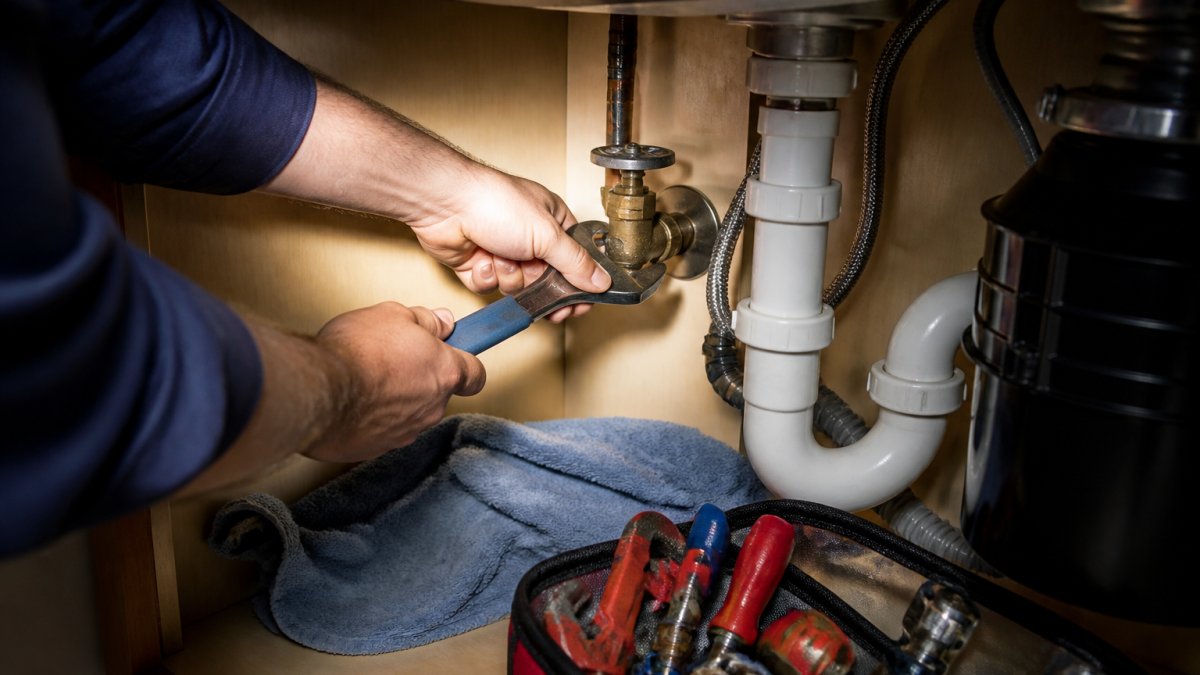
Immediate Stabilization Steps
Your first action: shut off water. Locate your main water shut-off valve and turn it clockwise until water stops flowing. This single action stops active flooding immediately.
If the leak is from a specific fixture, you may be able to shut off just that line. Most sinks, toilets, and water heaters have individual shut-off valves underneath or nearby.
Open all faucets and drains to release pressure in the lines. This prevents additional water from being forced out through the leak.
If sewage is backing up, stop using all water-using fixtures immediately. Every drain you use adds to the backup.
Document the damage with photos and video. This helps your insurance claim and gives the plumber visual context.
Move valuable items away from affected areas if safe to do so. Wet electronics, documents, and furniture should be relocated. Do not enter areas with active electrical hazards or sewage exposure.
DIY Temporary Mitigation Techniques
While waiting for the plumber, you can minimize ongoing damage with basic supplies.
Place towels, buckets, or plastic sheeting under active leaks to contain water and direct it away from valuables and structural elements.
For burst pipes that you can access, wrap the damaged section tightly with waterproof tape or a pipe repair clamp.
If a pipe is frozen, do not use a blowtorch or open flame.
For minor drain backups, do not use chemical drain cleaners.
Ventilate areas affected by sewage backup. Open windows and doors to reduce odor and health hazards. Do not touch sewage directly.
Turn off your water heater if there’s a major leak to prevent additional water from entering the system.
These temporary measures buy time and reduce damage while you wait for professional help.
When a plumbing crisis hits, the difference between emergency and routine service becomes crystal clear.
Frequently Asked Questions
What qualifies as a plumbing emergency?
A plumbing emergency involves active water damage, burst pipes, sewage backup, gas leaks, or situations where water is actively flooding your property. These require immediate professional response to prevent property damage and safety hazards. Issues like slow drains, minor leaks under cabinets, or non-functional fixtures that don’t cause immediate damage typically qualify as routine maintenance and can wait for a scheduled appointment.
What are the signs of a burst pipe emergency?
Signs include sudden water pooling in walls or ceilings, a dramatic drop in water pressure, discolored water, visible cracks in exposed pipes, and water spraying from pipe joints. You may also notice wet patches on floors or foundations, unusual sounds in your plumbing system, or a sudden spike in your water bill. Any visible burst requires immediate professional assessment to prevent extensive water damage and system failure.
How quickly can an emergency plumber respond?
Some providers guarantee response within 90 minutes. During off-hours or weekends, availability may vary, but true emergencies like active flooding or sewage backup typically receive priority dispatch. Call ahead to confirm exact response time expectations for your area.
Can routine maintenance prevent emergency plumbing calls?
Yes. Regular inspections, drain cleaning, leak detection, and maintenance of plumbing fixtures significantly reduce emergency risk. A preventative maintenance schedule that includes checking water shut-off valves, inspecting pipes for corrosion, and cleaning drains can catch small issues before they become system failures. Homeowners who follow routine maintenance typically experience fewer costly emergencies and longer-lasting plumbing infrastructure.
What should I do while waiting for an emergency plumber?
Shut off your main water supply at the water shut-off valve to stop active flooding. For sewage backup, avoid using fixtures. Move valuables away from affected areas and place towels or buckets to contain water. Document damage with photos for insurance purposes. Do not attempt major repairs yourself unless you have plumbing experience. Keep the area accessible for the plumber and have your address clearly marked for quick emergency dispatch.
Comments are closed