
Table of Contents
- What Is a Sewer Cleanout and Why You Need to Find Yours
- Step-by-Step: How to Find Your Sewer Cleanout
- Common Locations for Sewer Cleanouts
- Signs of a Clogged Sewer Line You Should Know
- Understanding Sewer Lateral Responsibility and Your Cleanout
- Sewer Cleanout Installation Cost and When You Need One
- What to Do If Your Cleanout Is Buried or Missing
- Frequently Asked Questions
Last Updated: September 23, 2026
What Is a Sewer Cleanout and Why You Need to Find Yours
A sewer cleanout is an access point in your drainage system that allows plumbers to reach your sewer line for inspection, cleaning, and repairs. It’s typically a pipe with a removable cap buried in your yard or near your home’s foundation. Finding your sewer cleanout is essential because it’s the fastest way to address blockages, perform maintenance, and prevent costly backups.
Your sewer cleanout connects your home’s interior plumbing to the municipal sewer line or septic system. Without access to it, clearing a clogged sewer line becomes expensive and invasive. Most homes have at least one cleanout, though properties with complex drainage systems may have multiple access points.
When you know where your sewer cleanout is, you’re prepared for drain problems before they become disasters. A blocked sewer line can back up into your home within hours, causing damage that costs thousands to repair.
Mark your cleanout location on a property map or take a photo with GPS coordinates. Share this information with family members and keep it handy for emergencies. When a plumber arrives, you’ll save time by pointing them directly to the access point.
Step-by-Step: How to Find Your Sewer Cleanout
Finding your sewer cleanout takes patience and systematic checking. Most homeowners can locate theirs without professional help by following these five steps.
Step 1: Check Your Property Records and Plumbing Plans
Start indoors by gathering documentation about your home’s plumbing system. Your property records often include a site plan or plumbing diagram showing where the sewer cleanout is buried.
Check these sources first:
- Your home’s original construction blueprints
- Property deed or title documents
- County assessor’s records (available online for most jurisdictions)
- Previous inspection reports or home sale disclosures
- Plumbing permits filed with your local building department
If you have a site plan, it typically shows the cleanout’s distance from your house and its location relative to property lines. Write down these measurements before you start searching outside.
Step 2: Inspect Common Cleanout Locations
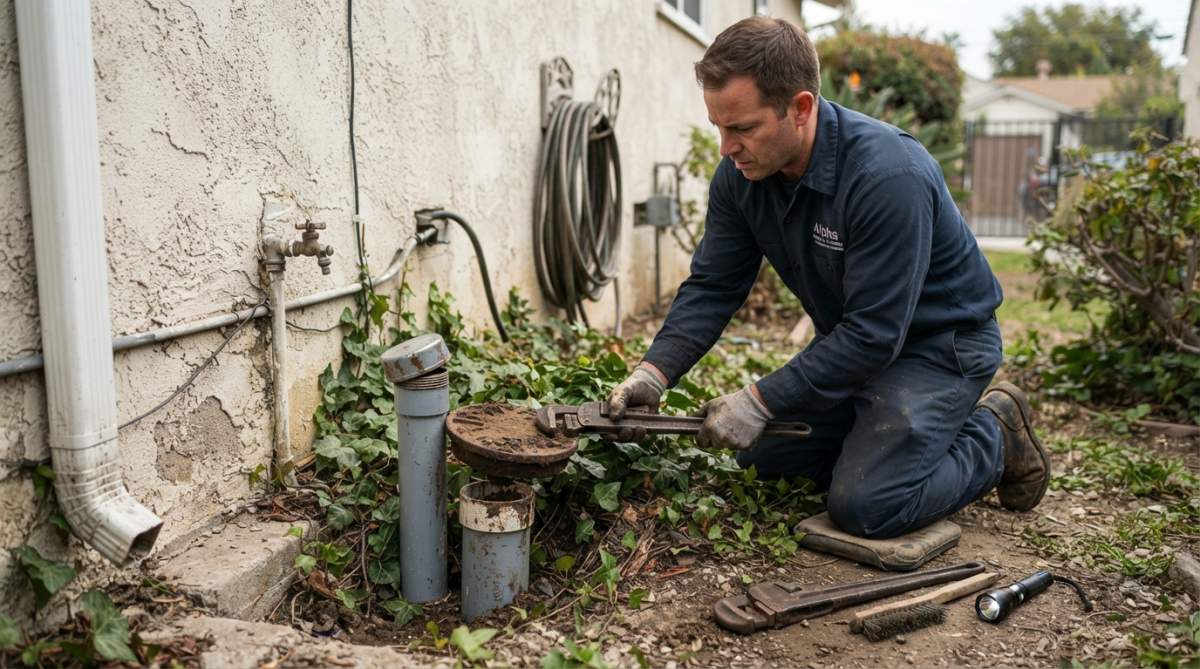
Most sewer cleanouts are buried 12 to 24 inches underground. They appear as small caps (typically 4 to 6 inches in diameter) made of plastic, metal, or cast iron. Look in these typical locations:
- Along the path from your home to the street (usually in a straight line)
- Near the front property line or curb
- In the basement or crawl space (for older homes)
- Under the foundation (accessible from outside)
- In the backyard near the main drainage line
Walk slowly across these areas. The ground may be slightly sunken or raised above the buried pipe. Cleanout caps are often green, white, or black plastic, though older ones may be corroded metal.
Step 3: Look for the Cleanout Cap
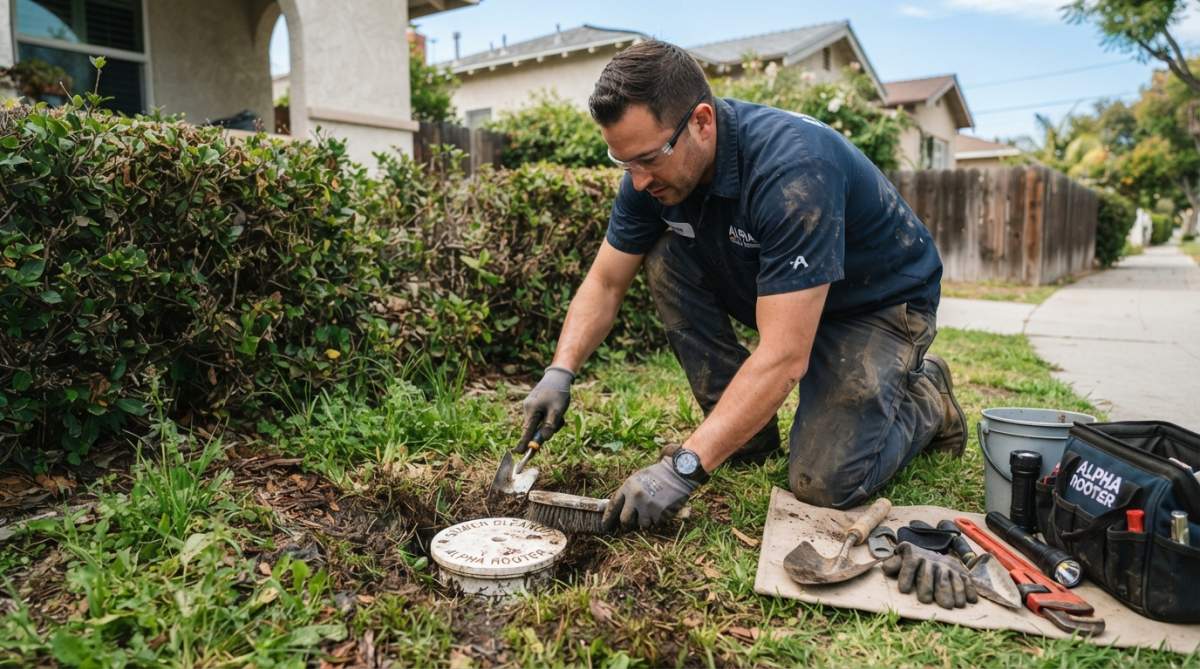
Once you spot a potential cleanout, confirm it’s the right one. A sewer cleanout cap has specific features you can identify visually.
The cap sits flush or slightly raised from the ground. It’s typically round with a threaded or twist-off design. You may see a small square or rectangular cleanout cover in older homes. Some caps have a handle or ridge for grip.
Try gently turning or lifting the cap. Don’t force it, a stuck cap may be corroded or frozen. If it won’t budge, stop and call a professional. Forcing it can crack the pipe beneath.
Look for markings on the cap itself. Many have “sewer,” “cleanout,” or the plumber’s company name stamped into the plastic. This confirms you’ve found the right access point.
Step 4: Trace Your Sewer Line from the House
If you can’t find a cleanout using the previous steps, trace the sewer line manually. Your home’s main drainage pipe exits the foundation at a specific point. Follow this line underground toward the street or septic system.
Mark your starting point at the house. Walk in a straight line toward the property boundary, watching for sunken areas or raised ground that might indicate buried piping. The sewer line typically runs at a slight downward angle toward the municipal connection.
In older neighborhoods, sewer lines may not run straight. They may curve around trees or follow property boundaries.
Never dig without calling 811 first (811 Before You Dig). Underground utility lines (gas, electric, water) can be dangerous. Free locating service marks safe digging areas before you excavate.
Step 5: Call a Professional if You Can’t Locate It
If you’ve checked all common locations and reviewed your property records without success, contact a licensed plumber. A professional has tools and experience to locate buried cleanouts quickly.
Common Locations for Sewer Cleanouts
Sewer cleanout placement follows building codes but varies by property age and design. Understanding typical locations helps you narrow your search.
Newer homes (built after 1990):
- Front yard near the property line, 5 to 15 feet from the foundation
- Buried 12 to 18 inches deep
- Usually a single cleanout serving the entire house
Older homes (built before 1970):
- Basement floor or crawl space
- Multiple cleanouts at different points (kitchen, bathroom, main line)
- Cleanouts may be 24 to 36 inches deep
- Sometimes located under concrete slabs
Commercial or multi-unit buildings:
- Multiple cleanouts serving different drainage zones
- Often located in utility areas or alleys
- Clearly marked with property identification numbers
Sloped properties:
- Cleanout positioned at the lowest point of the drainage system
- May be located downhill from the main structure
- Often near the property’s lowest grade level
The most common sewer cleanout location is the front yard between your foundation and the street, buried about 12 to 18 inches deep. If you find nothing there, check your property records next.
Signs of a Clogged Sewer Line You Should Know
A clogged sewer line creates distinct warning signs. Recognizing them early prevents backups and water damage.
Inside your home:
- Slow drains in multiple fixtures (sinks, showers, toilets)
- Gurgling sounds coming from drains or toilets
- Sewage smell inside the house
- Toilet backups or water pooling in the shower
- Sewage backing up into the basement or lowest-level fixtures
Outside your home:
- Soggy patches in the yard with no rain
- Unusually green grass or lush vegetation over the sewer line
- Sewage odor in the yard or near the cleanout
- Visible sewage pooling near the foundation
- Sinkholes or settling ground above the buried line
Timing patterns:
- Problems worsen after heavy rain
- Multiple drains clog simultaneously
- Issues return despite repeated plunging
Understanding Sewer Lateral Responsibility and Your Cleanout
Your responsibility for the sewer lateral, the pipe from your home to the municipal sewer main, depends on local codes and your property deed. Understanding this matters because it determines who pays for repairs.
Typical responsibility breakdown:
Call your city’s public works or sewer department to confirm your property’s responsibility. Get this in writing. It affects insurance coverage and repair costs if your sewer line fails.
Sewer Cleanout Installation Cost and When You Need One
Installing a new sewer cleanout is necessary if yours is missing, damaged, or inaccessible. Pricing depends on location, depth, and whether you need trenching or directional drilling.
When you need a new cleanout:
- Your existing cleanout is cracked or corroded
- You have no cleanout access (older homes sometimes lack one)
- The cap is broken or missing
- The cleanout is buried too deep to access safely
- You’re adding a new drainage system or septic field
Factors affecting installation cost:
- Depth of the sewer line (deeper = more expensive)
- Distance from the house to the connection point
- Soil type and digging difficulty
- Whether trenching or trenchless methods are used
- Local permit and inspection fees
What to Do If Your Cleanout Is Buried or Missing
A buried or missing cleanout creates serious problems. You can’t access your sewer line for cleaning or inspection. Water and sewage can back up with no way to clear the blockage quickly.
If your cleanout is buried:
If your cleanout is missing:
- Locating your sewer line
- Digging down to the pipe
- Installing a cleanout fitting and cap
- Restoring the ground above
Prevention going forward:
Frequently Asked Questions
How do I know if I’ve found my sewer cleanout?
A sewer cleanout is typically a plastic or metal cap 4 to 6 inches in diameter, usually found at ground level. It may be labeled with the word ‘sewer,’ ‘cleanout,’ or ‘CO.’ The cap unscrews or pops off to reveal access to your drainage line. If you find a pipe fitting with a removable cap along your sewer lateral, that’s your cleanout. Some older homes have cast iron or clay pipe cleanouts that look like small metal plates or fittings.
What are signs of a clogged sewer line I should watch for?
Multiple drains in your home backing up simultaneously, slow drainage from toilets and showers, frequent gurgling sounds in pipes, sewage odors inside or outside your home, and patches of unusually lush grass over your sewer line are all warning signs. These indicate a blockage in your mainline sewer, not just a single drain. If you notice these issues, locating your cleanout allows a professional to perform a sewer inspection or hydro-jetting to clear the blockage.
Who is responsible for sewer lateral repairs, me or the city?
Your sewer lateral responsibility typically extends from your home to the municipal main sewer line. You own and maintain the private lateral on your property; the city maintains the public main line. However, local codes vary, and some municipalities share responsibility at certain points. Check your property records or contact your local public works department to confirm the exact boundary. Understanding this distinction helps you know whether to call a private plumber or report the issue to the city.
What should I do if I can’t find my sewer cleanout?
Start by checking your property deed, plumbing plans, or inspection reports for documentation of its location. Ask neighbors where theirs are located, as patterns often repeat in older neighborhoods. If it’s still missing, it may be buried under landscaping, concrete, or soil. A licensed plumber can assess your situation and determine next steps.
Comments are closed