
Last Updated: October 28, 2026
Quick Summary
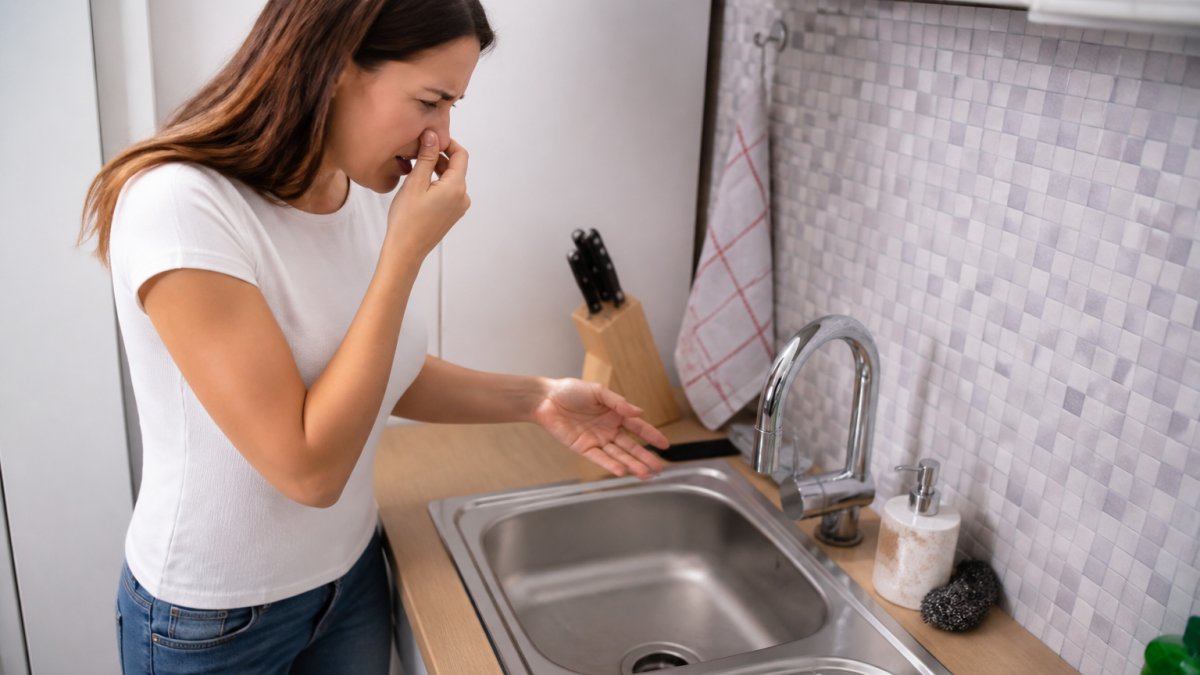
A kitchen sink smell like sewage usually comes from a dry P-trap letting sewer gas back into the room, or from biofilm and food waste rotting inside the pipe. The odor is hydrogen sulfide, produced when bacteria digest food scraps, grease, and soap scum without oxygen. If buildup is the cause you can clean it yourself, but a failed trap seal or vent issue needs repair.
- Running hot water for about 30 seconds refills a dry trap and restores the seal.
- Gurgling after water runs, followed by the smell, points to siphoning rather than evaporation.
- Never pour bleach or drain cleaner into a trap or disposal to chase the smell.
- The dishwasher drain hose should loop up high under the counter before connecting to the disposal or drain.
- Call a plumber when the smell returns after cleaning or more than one drain in the home smells.
Table of Contents
- Why Your Kitchen Sink Smells Like Sewage: The Short Answer
- How to Get Rid of Sewer Smell in Kitchen Sink: Step-by-Step
- P-Trap Sewer Gas Smell: Dry Traps and Broken Seals
- Garbage Disposal Smells Like Sewage: Causes and Fixes
- Smell Under Kitchen Sink: Leaks, Cabinets, and Dishwasher Lines
- Food Waste, Grease, and Biofilm: The Buildup Behind Drain Odor
- Vent Pipe and Trap-Seal Troubleshooting
- When to Call a Plumber for a Sewer Smell
- Frequently Asked Questions
Why Your Kitchen Sink Smells Like Sewage: The Short Answer
That rotten egg smell usually comes from one of two places: a dry P-trap letting sewer gas back into the room, or biofilm and food waste rotting inside the pipe.
A kitchen sink smell that resembles sewage is almost always trapped organic matter breaking down in the drain, or a broken seal that should keep gas out.
That distinction matters. If the problem is buildup, you can clean it yourself.
How to Get Rid of Sewer Smell in Kitchen Sink: Step-by-Step
Getting rid of sewer smell in a kitchen sink starts with locating the source, then physically removing the buildup that feeds it. Cleaning products alone rarely solve a persistent odor: they kill surface bacteria without removing the food and grease those bacteria feed on.
Step 1: Confirm Where the Odor Is Coming From
Smell the drain opening first, then the cabinet below, then the room. Strongest at the drain means the problem is inside the pipe; strongest in the cabinet suggests a leak or loose connection; filling the whole room points to the trap or vent. Note the timing: a smell only after the dishwasher points to that drain line, and one after heavy rain can point to a main line or vent issue.
Step 2: Clean the Drain and Remove Buildup
Remove the sink stopper and strainer, then pull out hair, food, and grease with a gloved hand or bent wire, most kitchen odors start in this top few inches. Next, scrub the pipe walls with a drain brush or plumbing snake; if you snake it yourself, read how to use a plumbing snake effectively first, because forcing a cable can crack older pipes.
Step 3: Flush and Recheck
Run hot water for two to three minutes, then smell the drain again. If the odor fades, you solved a buildup problem; if it returns within a day, the cause is structural, move on to the trap and vent checks below. Before any DIY cleaning, know when DIY drain cleaning is safe versus when to call a professional; standing water or repeated backups are better handled by a licensed plumber.
P-Trap Sewer Gas Smell: Dry Traps and Broken Seals
A P-trap sewer gas smell comes from a trap that has lost its water seal, letting gas travel up from the sanitary sewer into your kitchen. The P-trap is the curved pipe under the sink; it holds a few inches of water that blocks gas from rising. The seal can fail in three distinct ways, each pointing to a different fix.
1. Evaporation (the most common and easiest fix)
Water in the trap slowly evaporates when the fixture is not used, a kitchen sink in a vacation home, guest suite, basement bar, or rental unit that sits empty for weeks is the classic case. The water level drops below the trap’s dip, the seal breaks, and sewer gas rises freely. The tell: the smell appears after non-use and disappears once you run the tap.
2. Siphoning (the seal is pulled out, not dried out)
Siphoning happens when a slug of water moving through the drain creates a pressure difference that pulls the trap seal down the pipe. The trap looks wet but is empty of its protective water column. Common kitchen triggers:
- A partially clogged drain that drains slowly, then gulps
- A dishwasher draining into the sink drain line with an improperly looped hose
- A vent that is blocked, so the drain pulls air through the trap instead of the vent
The tell: gurgling right after water runs, followed by the smell. If you refill the trap and the smell returns within a day or two without the sink sitting unused, suspect siphoning and check the vent and dishwasher hose (see the vent section below).
3. A shallow or improperly installed trap
A trap must hold enough water depth to resist pressure changes. A trap installed too shallow, or a flexible corrugated trap that sags and drains itself, will not hold a reliable seal. Older metal traps can also corrode through and leak the seal out slowly.
The tell: water under the trap, a trap that never seems to hold water, or a persistent smell after refilling. Look for:
- Cracks in the trap body or at the joints
- Loose slip nuts that let water seep out
- A trap installed too shallow to hold water
If you see water under the trap or a persistent smell after refilling it, the trap likely needs repair or replacement. A recurring odor can also point to a drain line problem; our guide on signs you need a drain line repair helps you judge whether a repair is the real fix.
Before you replace anything, run the tap for 30 seconds and smell again. If the odor clears, you had evaporation, not a broken trap. If it returns within a day, move to the siphoning and vent checks.
Do not pour bleach or chemical drain cleaner into a trap to chase the smell. It does not restore a water seal, and it can damage rubber washers and plastic trap parts, turning a cheap fix into a repair.
Garbage Disposal Smells Like Sewage: Causes and Fixes
A garbage disposal that smells like sewage is holding food residue where you cannot see it: under the rubber splash guard, inside the grinding chamber, and in the drain elbow below.
Unplug the unit, pull back the splash guard, and scrub both sides with a brush and dish soap, that flap traps a surprising amount of food.
Never pour bleach or drain cleaner into a disposal to kill odor, it can damage the seals and does nothing about the rotting food.
Smell Under Kitchen Sink: Leaks, Cabinets, and Dishwasher Lines
A smell under the kitchen sink usually means one of three things: a slow leak feeding mold in the cabinet, a loose drain connection, or a dishwasher drain line that loops incorrectly and traps dirty water.
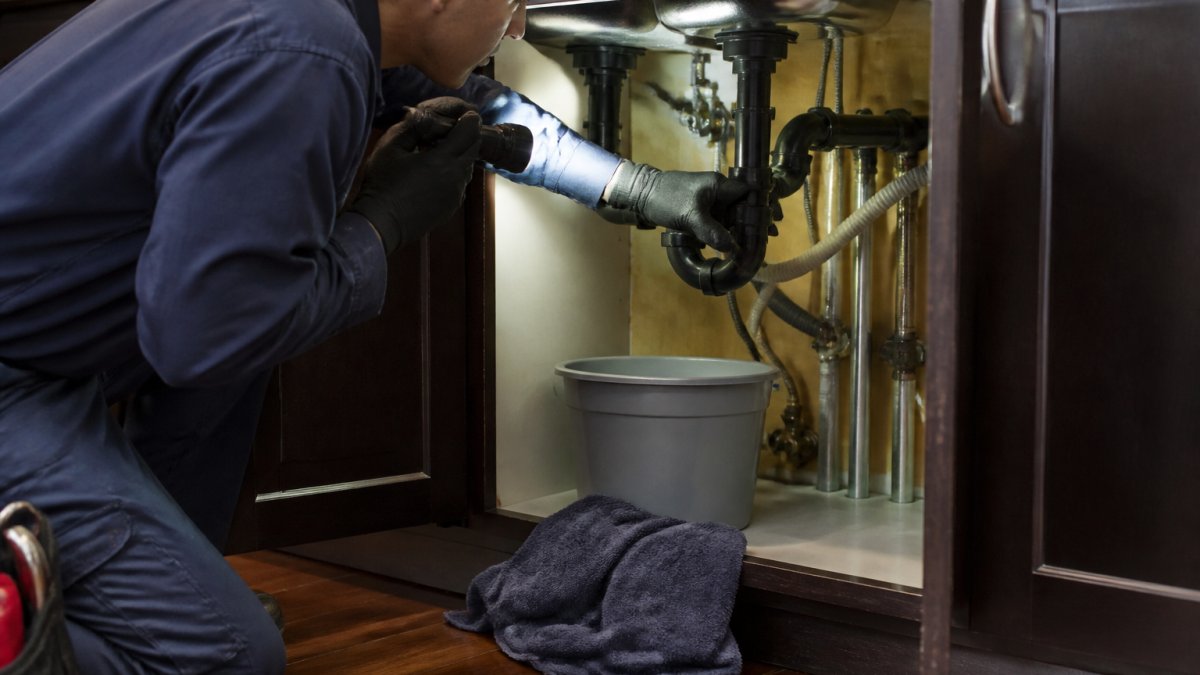
Open the cabinet and look for staining, soft wood, or white crust on the pipes, signs of a slow leak. A musty, sour smell mixed with the sewage odor points to mold on damp wood.
Food Waste, Grease, and Biofilm: The Buildup Behind Drain Odor
Biofilm, a slimy layer of bacteria on the inside walls of a drain pipe, is the single most common cause of a kitchen sink smell. It feeds on grease, food particles, and soap residue that coat the pipe.
Grease is the worst offender: it goes down warm and liquid, then cools and sticks to the pipe wall. Food waste catches on that sticky layer, and bacteria break it down without oxygen, releasing hydrogen sulfide, your rotten egg smell.
Prevention is better: scrape plates into the trash instead of the sink, never pour cooking oil down the drain, and run hot water for a few seconds after each use. Our guide on natural ways to keep kitchen drains clear covers low-cost habits that slow buildup between cleanings.
Vent Pipe and Trap-Seal Troubleshooting
A plumbing vent pipe runs from your drain system up through the roof, equalizing pressure so water flows and trap seals hold. When a vent clogs, the trap can gurgle, drain slowly, and lose its seal, letting sewer gas into the kitchen.
Water moving down a drain displaces air. If the vent is open, air flows in through the roof stack and pressure stays balanced.
Kitchen-specific signs of a vent problem
- Gurgling sounds from the drain after the sink or dishwasher empties
- Water in the trap that disappears without the sink being used
- Smells that appear in multiple fixtures, not just the sink
Check the dishwasher connection first, it is kitchen-specific and easy to rule out. The drain hose should loop up high under the counter before connecting to the disposal or drain. If it sags, dirty water sits in the low point, and the drain can siphon the trap seal when the dishwasher empties. Re-loop the hose so the high point is above the disposal inlet, and the gurgle-and-smell pattern often stops.
How to tell vent trouble from a trap problem
Run this quick sequence before calling anyone:
- Refill the trap with 30 seconds of hot water and smell again. If the odor clears and stays gone, the problem was evaporation, not the vent.
- Run the dishwasher and listen at the sink. Gurgling plus a returning smell points to the dishwasher hose loop or a vent issue.
- Check other fixtures. If a bathroom sink or tub also gurgles or smells, the vent or main line is the likely culprit, not the kitchen trap.
- Look for water under the trap. A leaking trap loses its seal regardless of the vent, so fix the leak first.
What clearing a vent actually involves
Vent clogs are often caused by bird nests, leaves, or debris at the roof stack. Clearing a vent is a roof-level job with real fall risk, so most homeowners should not attempt it; a licensed plumber can clear it safely and confirm whether the trap itself is shallow or damaged. If the trap holds water and the vent is clear, the remaining suspect is a crack or failed joint hidden in a wall or floor, a camera-inspection job, not a DIY one.
A recurring sewer smell that comes back after you refill the trap is a pressure problem, not a cleaning problem. Check the dishwasher hose loop first, then the vent. Cleaning the drain will not fix a siphoning trap.
If the smell is strong, persistent, or accompanied by headaches, nausea, or dizziness, ventilate the area and leave. Sewer gas contains hydrogen sulfide and methane, and in a closed space it can build to unsafe levels. Do not keep investigating, get professional help.
When to Call a Plumber for a Sewer Smell
Also call if you notice any of these:
- Sewage backing up into the sink or other drains
- A smell that appears after every heavy rain
- Corroded pipes in an older home
That last point is a safety issue.
If the smell signals an actual backup, act fast. Learn emergency sewer backup cleaning steps and how to document the damage for insurance.
At Alpha Rooter & Plumbing, we handle 24/7 emergency calls with licensed plumbers, upfront pricing, and no hourly or overtime charges. We serve homeowners, property managers, and restaurant owners across the area.
| Problem | Likely Cause | DIY Fix? | When to Call |
|---|---|---|---|
| Smell at the drain only | Biofilm and food buildup | Yes | If it returns in 1-2 days |
| Smell in the cabinet | Leak or loose joint | Sometimes | If a joint keeps leaking |
| Smell after dishwasher runs | Drain hose loop | Yes | If the hose is damaged |
| Gurgling plus slow drain | Clogged vent pipe | No | Always |
| Smell in multiple drains | Main line or vent issue | No | Always |
| Backup with standing water | Blocked sewer line | No | Immediately |
A sewage smell in your kitchen is a warning, not a cosmetic problem.
Alpha Rooter & Plumbing sends licensed plumbers with the diagnostic tools to find the real source, not just mask the odor.
Frequently Asked Questions
Can a bad sewage smell from my kitchen sink make me sick?
A persistent sewer smell usually means hydrogen sulfide and other gases are escaping into the room. At the low levels found in a typical kitchen, the main risk is irritation and headaches rather than serious illness. The bigger concern is what the smell signals: a dry trap, a cracked pipe, or a blocked vent can also let methane and sewer gas into the home. If the odor is strong, constant, or comes with dizziness or nausea, open windows, leave the area, and call a licensed plumber to inspect the plumbing.
Why does my kitchen sink smell like sewage even after cleaning?
Cleaning the basin and strainer only addresses the surface. If the odor returns, the source is usually deeper in the drain pipe, inside the P-trap, or in the garbage disposal and dishwasher drain connection. A dry trap, a biofilm layer on the pipe walls, or a blocked vent pipe will keep producing a sewer smell no matter how often you scrub. Checking the trap seal is the next step before assuming the problem is fixed.
How can I tell if the smell is coming from the drain or the garbage disposal?
Run water in the sink for a minute and note whether the odor fades or strengthens. Then run the disposal briefly with water flowing. If the smell spikes when the disposal runs, the buildup is likely inside the disposal chamber or the dishwasher drain line feeding into it. If the smell comes from the drain opening even with the disposal off, the source is more likely the P-trap or the drain pipe below it. A flashlight and a quick sniff at each opening usually settles it.
When should I call a plumber about a sewer smell from my kitchen sink?
Call a plumber if the smell returns within a few days of cleaning, if you see slow drainage or gurgling, if water backs up in the sink, or if the odor is strong enough to smell in other rooms. Those signs point to a blocked vent pipe, a broken trap seal, or a crack in the pipe that a homeowner cannot safely fix. A licensed plumber can inspect the plumbing and confirm whether the issue is in your drain or the sanitary sewer.
