
Last Updated: October 30, 2026
Quick Summary
An unlicensed plumber carries no verified insurance, pulls no permit, and answers to no licensing board, so you pay out of pocket for water damage and have no recourse. The cheap quote rarely stays cheap; it just moves the cost to a later date.
- Checking a plumber’s license takes about five minutes on your state’s public license lookup.
- Confirm the license status reads active and the classification actually covers plumbing work.
- A license and insurance are two different protections, and you need both.
- When unlicensed work causes damage, the homeowner usually pays, with civil court the only path.
- If unlicensed work is done, get a written inspection report from a licensed plumber and call your building department.
Table of Contents
- Why Unlicensed Plumbing Services Cost More Than They Save
- How to Check a Plumber’s License Before You Hire
- Plumber License and Insurance: Why You Need Both
- Questions to Ask Before Hiring a Plumber
- Unlicensed Plumbing Work Liability: Who Pays When Things Go Wrong
- Permits, Inspections, and Home Value: The Paper Trail That Matters
- Already Hired an Unlicensed Plumber? Steps to Take Now
- Book a Licensed Plumber You Can Verify
- Frequently Asked Questions
Why Unlicensed Plumbing Services Cost More Than They Save
An unlicensed plumber is a person who performs plumbing work without the license your state or city requires.
Cheap plumbing work often leads to costly repairs later.
Unlicensed work is risky for four reasons:
- No insurance means you pay for water damage, flooding, and ruined floors out of pocket.
- No permit means no inspection, so hidden leaks and code violations go unnoticed.
- No recourse means you cannot recover damages or file a complaint with a licensing board.
The cheap quote rarely stays cheap. It just moves the cost to a later date.
Here is what you give up when you hire an unlicensed plumber, and what it can cost you later.
| Risk | What it means for you |
|---|---|
| No insurance | You pay for water damage, flooding, and ruined floors out of pocket |
| No permit | No inspection, so hidden leaks and code violations go unnoticed |
| No recourse | You cannot recover damages or file a complaint with a licensing board |
| No guarantee | Workmanship problems come back on your dime |
How to Check a Plumber’s License Before You Hire
Checking a plumber’s license takes about five minutes, and it is the most important five minutes in the whole hiring process. Most states run a public license lookup, usually through a contractor licensing board or a department of professional regulation. You can search by name or license number, then confirm the status is active and the classification covers plumbing.
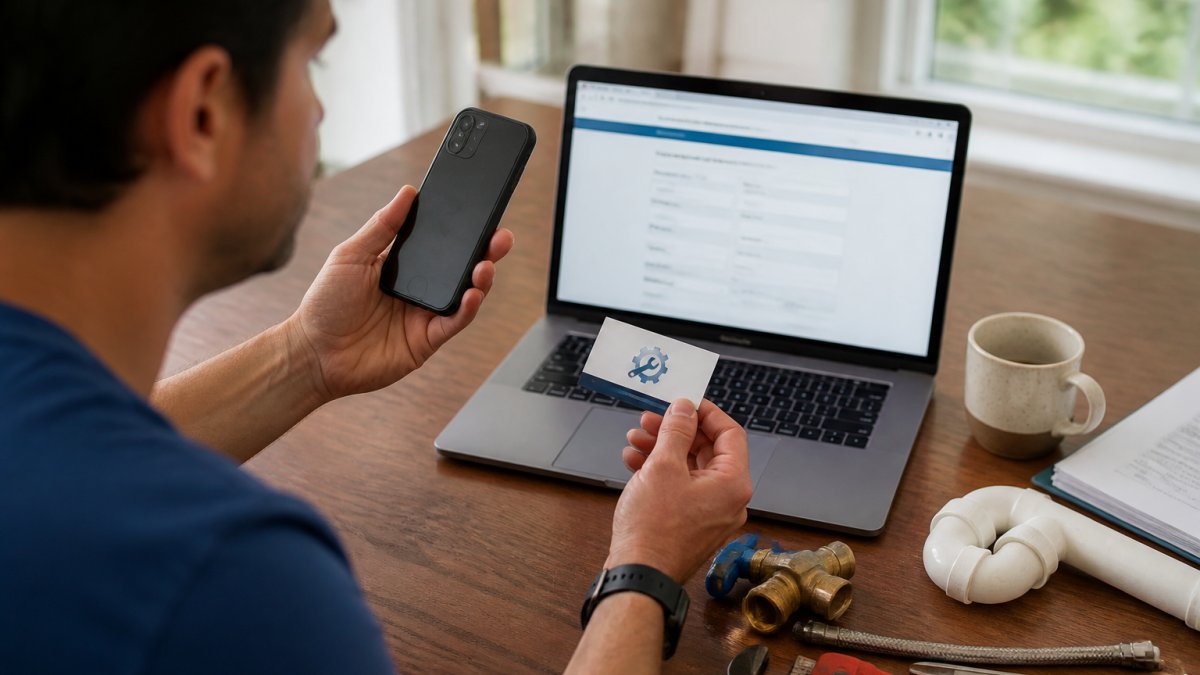
Here is the checklist we would use:
- Ask for the license number in writing, not just a logo on a truck
- Search the number on your state’s official licensing board website
- Confirm the status reads “active,” not “expired” or “suspended”
Where the license record actually lives
Licensing is not federal. It is run by states, and in some states by counties or cities, so the lookup tool you use depends on where you live. Most states publish a searchable database through a contractor licensing board, a department of professional regulation, or a consumer affairs office. A few states delegate plumbing licensing to local jurisdictions, which means the city or county issues the credential and keeps the record.
How to read status and classification
A license record usually shows four things you need to read carefully:
- Status. Active is what you want. Expired, suspended, revoked, and “inactive” all mean the person cannot legally perform the work right now.
- Classification or scope. Many states issue separate credentials for plumbing, gas piping, drain cleaning, and general contracting. A general contractor license does not automatically authorize plumbing work. Confirm the classification matches the job.
- Business affiliation. The record often lists the qualifying individual and the business entity. If the name on the license does not match the company on your contract, ask why before you sign.
- Expiration date. A license that expires next week is still valid today, but confirm it will be current through the job.
Match the license holder to the person doing the work
This is the step most homeowners skip. The license belongs to a person or a business, not to a truck. Ask who will actually perform the work and whether that person is an employee of the licensed contractor or a subcontractor. If a subcontractor is involved, ask for that subcontractor’s license number too. A common pattern is a licensed qualifier who lends their number to an unlicensed operator; if the person on site cannot explain their relationship to the license holder, treat it as a red flag.
Requirements vary by state and by job type
Do not assume the rules where you live match what you read online. States differ on which plumbing tasks require a license, when a permit is required, what exemptions exist for minor repairs, and what penalties apply to unlicensed work. A faucet swap, a toilet rebuild, and a water heater replacement can fall on different sides of the line depending on jurisdiction.
Some unlicensed operators borrow a licensed friend’s number. If the name on the license does not match the company on your contract, walk away.
Our guide on how to verify a plumber’s license and insurance walks through each step so you can do the check yourself before anyone touches a pipe.
Plumber License and Insurance: Why You Need Both
A license and insurance are two different protections, and you need both. The license proves the plumber met your state’s training and testing requirements. Insurance covers the damage when something goes wrong anyway, because even good plumbers have bad days.
Liability insurance is what pays for property damage, water damage, and flooding caused by the work. Without it, that bill can land on you and your homeowner’s policy.
Workers’ compensation matters too. If an uninsured helper gets hurt in your home, you could be exposed to a claim.
Watch out: a plumber who says “I’m insured” but cannot produce a certificate is not insured in any way that helps you.
Questions to Ask Before Hiring a Plumber
Ask these questions before you sign anything, and ask them out loud on the phone. The answers tell you more than any advertisement.
- “What is your license number, and what classification does it carry?”
- “Can you send a certificate of insurance before the visit?”
- “Will you pull the permit, or am I expected to?”
A legitimate plumber answers all seven without hesitation. Vague answers, pressure to decide fast, or a demand for cash upfront are red flags. If you want a deeper walkthrough of what to ask and what to watch for, our guide on vetting a residential plumbing contractor covers the full list.
Unlicensed Plumbing Work Liability: Who Pays When Things Go Wrong
When unlicensed work causes damage, the homeowner usually pays. That is the hard truth of unlicensed plumbing work liability. There is no insurer standing behind the work and no licensing board to complain to.
The legal consequences stack up:
- Permits: work done without a permit may need to be reviewed or redone.
- Code compliance: failed inspections can mean paying again for the same job.
- Insurance claims: an insurer may question a water damage claim tied to unpermitted work.
The line between handyman territory and licensed work is drawn by state law and local regulations, so confirm the rules where you live before you start.
Permits, Inspections, and Home Value: The Paper Trail That Matters
Permits and inspections are the paper trail that protects your home value. A permit triggers an inspection, and an inspection confirms the work meets building codes.
Unpermitted work creates a gap in that record. When you sell, a buyer’s inspector may spot rough-in work that never had a sign-off.
Building permit guidance from the International Code Council explains how code compliance ties to inspections and safety. For plumbing specifically, our guide on sewer line repair permit requirements breaks down when a permit is required and why skipping it endangers your resale.
Already Hired an Unlicensed Plumber? Steps to Take Now
If unlicensed work is already complete, act quickly. The sooner you document and correct it, the smaller the problem stays. The goal is not to punish anyone yet; it is to create a record, get a qualified opinion, and bring the work into compliance before a small leak becomes a structural or insurance problem.
- Stop all further work and get the arrangement in writing. Ask the contractor to confirm in a text or email what was done, when, and by whom. If they refuse, note the refusal.
- Photograph and document everything. Take dated photos of the work area, any exposed piping, the water heater or fixture labels, and any damage. Save the original quote, invoices, receipts, and every message. If water damage occurred, photograph it before cleanup and keep any damaged materials until your insurer says otherwise.
- Hire a licensed plumber for an independent inspection. Ask for a written report that lists what was done, what is noncompliant, and what needs correction. This report becomes the backbone of an insurance claim, a licensing complaint, or a civil claim.
- Contact your local building department about legalizing the work. Ask whether a permit can be pulled after the fact, what inspection is required, and whether the work must be opened up for review. Rules differ by jurisdiction, so get the answer in writing or note the name of the person you spoke with.
- Notify your homeowner’s insurer before filing a claim. Explain what happened and ask whether the policy covers the damage. Many policies exclude or limit damage tied to unpermitted or unlicensed work, so confirm coverage before you authorize repairs.
- Contact the state or local licensing authority. File a complaint if the person held themselves out as licensed. The board can confirm whether any credential existed and may investigate unlicensed practice.
- Keep every receipt and message for a possible claim against the contractor. If the contractor is uninsured, your only recovery path may be civil court, and a documented file is what makes that path viable.
Separate the license problem from the insurance and warranty problems
A license, liability insurance, workers’ compensation, and a workmanship warranty are four different protections, and fixing one does not fix the others. An unlicensed plumber may still carry a general liability policy, or may carry none. A licensed plumber may still exclude the specific damage from their warranty. When you assess the situation, ask four separate questions: Was the person licensed? Were they insured for this work?
Know when to escalate
If the work involves gas piping, sewer line replacement, or a water heater installation, do not wait for a leak to appear. Those systems fail in ways that can injure people or damage the structure, and an inspection is the only reliable way to know whether the work is safe. For minor fixture work, a licensed plumber’s inspection may be enough to confirm the job is sound.
The fastest way to shrink an unlicensed-work problem is a written inspection report from a licensed plumber plus a call to your local building department. Those two documents drive every other remedy.
Our guide on avoiding hidden fees in plumbing quotes shows how lowball bids turn expensive, which is exactly how most unlicensed jobs start.
Book a Licensed Plumber You Can Verify
The safest move is to hire a plumber whose license you can check before they arrive. Alpha Rooter & Plumbing holds License #874454. We are licensed, and we offer upfront pricing with no hidden fees.
You should never have to guess whether the person at your door is qualified. You can hire emergency plumbing services with a company that shows its credentials first.
Frequently Asked Questions
What are the risks of hiring an unlicensed plumber?
The biggest risks are water damage, code violations that fail inspection, and no insurance to cover the damage. An unlicensed plumber may cut corners on rough-in work or skip permits, leaving leaks, flooding, or sewer backups behind walls. You may also be unable to recover repair costs, and your homeowners insurance can deny a claim tied to unpermitted work. Any savings upfront are usually wiped out by expensive rework and legal consequences.
How do I verify a plumber’s license and insurance?
Ask for the license number in writing, then look it up yourself through your state or local licensing board’s online lookup. Confirm the license is active, matches the company name, and covers the type of work you need. For insurance, request a certificate of insurance directly from the insurer, not just a copy from the plumber, and check that general liability and workers’ compensation coverage are current. A licensed plumber will share these details without hesitation.
Can unlicensed plumbing work affect my homeowners insurance?
Yes. Most policies cover sudden water damage, but insurers can deny a claim if the damage stems from unpermitted or unlicensed work. If a burst pipe or flooding traces back to a non-compliant installation, you may be left with uncovered costs for repairs and mold remediation.
What should I do if I already hired an unlicensed plumber?
Stop further work and document everything: photos, receipts, messages, and the contract. Have a licensed plumber inspect the work and put findings in writing, then ask your local building department whether permits and inspections are needed to legalize it. If there is property damage, contact your insurer and keep records of every conversation. For significant losses, a consultation with an attorney can clarify whether you can recover damages.
The risk of unlicensed plumbing is not the price you pay today. It is the water damage, failed inspection, and resale headache you inherit later. Get started with Alpha Rooter & Plumbing and get licensed, insured work with pricing you can see before the job begins.
