
Table of Contents
- Signs of Failing Cast Iron Pipes
- Understanding Cast Iron Pipe Damage
- Cast Iron Pipe Replacement vs. Lining: Which Method Wins
- Step-by-Step Repair Process for Cast Iron Pipes
- Trenchless Sewer Repair Cost and Factors
- When to Call a Professional Plumber
- Preventative Maintenance for Cast Iron Plumbing
- Conclusion
Last Updated: August 28, 2026
Signs of Failing Cast Iron Pipes
Cast iron pipes that fail create obvious warning signs. Persistent rust staining around joints, discolored water from faucets (reddish or brownish tint), and slow drains unresponsive to plunging all signal corrosion. Gurgling sounds from drains indicate trapped air from partial blockages or root intrusion. Sewage backups into lower-level fixtures represent critical failure requiring immediate attention. Outside, watch for soft or sunken yard patches suggesting a collapsed sewer main, or unusually lush grass indicating a leak. Multiple fixtures backing up simultaneously points to a main sewer line problem.
Visual indicators of corrosion and deterioration
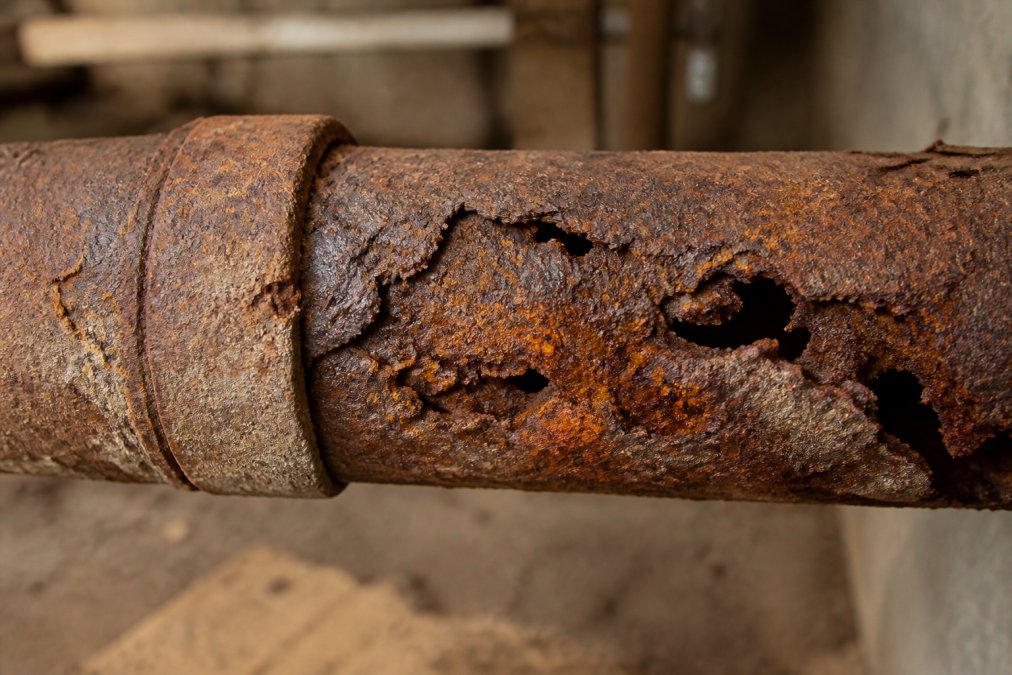
Inspect exposed cast iron pipes for rough, pitted surfaces where the protective layer has eroded. Advanced corrosion creates deep pits that weaken wall thickness. The pipe may feel brittle, and tapping it with a wrench produces a dull sound rather than a clear ring. Mineral deposits appear as crusty white, orange, or reddish encrustations. In severe cases, actual holes or perforations indicate corrosion has eaten completely through the pipe wall.
Drainage and backup problems
Slow drainage affecting multiple fixtures simultaneously signals a main sewer line problem rather than a single branch. Cast iron corroded from the inside creates rough surfaces where grease, soap, and debris accumulate, progressively narrowing the pipe diameter. Sewage backups, the worst-case scenario, occur when a collapsed section, severe blockage, or root intrusion completely obstructs flow. Waste backs up into your lowest-level fixtures first, typically basement drains or the lowest bathroom.
Understanding Cast Iron Pipe Damage
Cast iron was the standard drainage material from the 1920s through the 1980s, chosen for durability and heat resistance. However, cast iron fails through two primary mechanisms: corrosion from the inside and structural damage from external pressure or root intrusion.
How corrosion and root intrusion develop
Corrosion begins when water inside the pipe attacks the iron, creating iron oxide (rust). Unlike galvanized steel pipes with protective zinc coating, cast iron relies on a thin passive layer that deteriorates over decades. Once this layer breaks down, rust accelerates exponentially. The interior becomes rough and pitted, trapping debris and reducing flow capacity. Over 50+ years, corrosion can reduce the effective pipe diameter by 30-50%, creating chronic slow drains and eventual blockages (peer-reviewed research).
Root intrusion occurs when tree roots seek moisture from your sewer line. Roots exploit existing cracks, loose joints, or small perforations created by corrosion. Once inside, roots create a mat that catches paper, grease, and solids, forming blockages. Roots can break apart pipe sections and collapse laterals entirely.
Pipe wall thickness and structural integrity
New cast iron pipes typically have wall thickness of 0.25 to 0.375 inches (astm.org). As corrosion progresses, this thickness decreases. A pipe that has lost 50% of its wall thickness becomes structurally compromised and cannot safely support surrounding soil load. Professional plumbers assess structural integrity using sewer camera inspection. Pipes with less than 0.125 inches of remaining wall thickness typically require replacement rather than lining.
Cast Iron Pipe Replacement vs. Lining: Which Method Wins
When repairing cast iron pipes, you face a fundamental choice: replace the entire pipe or use trenchless lining technology. Each approach has distinct advantages, costs, and applications.
Traditional replacement and re-piping
Full replacement involves excavating the damaged pipe section and installing new material, typically PVC, copper, or cast iron. This method guarantees a new pipe with full structural capacity and is the only option when pipes are severely collapsed, when multiple sections are damaged, or when damage extends across the entire run.
The drawback is disruption. Excavation tears up your yard, driveway, or landscaping. Trenches must be dug 4-8 feet deep depending on frost line and slope. The process takes days to weeks depending on pipe length and soil conditions.
Cured-in-place pipe lining and epoxy restoration
Cured-in-place pipe (CIPP) lining is a trenchless technology that restores damaged pipes without excavation. A flexible tube saturated with epoxy resin is inserted into the damaged pipe, inflated, and cured in place, creating a new pipe wall inside the old one. This method works well for pipes with isolated corrosion, pinhole leaks, or moderate root damage.
CIPP lining reduces the pipe’s internal diameter slightly, typically 1-2 inches for larger sewer lines, but maintains adequate flow capacity for residential use (peer-reviewed research). The epoxy creates a smooth, non-corrosive interior surface that resists future corrosion and prevents root intrusion. A properly installed lining lasts 50+ years.
The advantage is minimal disruption. No excavation means your yard stays intact and work completes in days rather than weeks. However, CIPP lining works best for localized damage. If the pipe is severely collapsed or has multiple large breaks, replacement becomes necessary.
Trenchless technology vs. excavation
Trenchless methods include CIPP lining, pipe bursting, and spot repairs using epoxy patches. Pipe bursting involves pulling a new pipe through the old one while simultaneously breaking the old pipe apart. This method works well for severely damaged pipes and requires only access points at each end.
Trenchless restoration preserves your property with no excavation, no disruption to landscaping or utilities, and faster completion in 1-3 days. Trenchless methods typically cost less than full excavation and replacement.
Excavation becomes necessary when pipes are completely collapsed, when damage spans too great a length for lining, or when pipe layout makes trenchless access impossible.
Step-by-Step Repair Process for Cast Iron Pipes
The repair process follows a logical sequence: diagnose the problem, determine the best repair method, prepare the pipe, and execute the repair.
Step 1: Inspect with sewer camera inspection
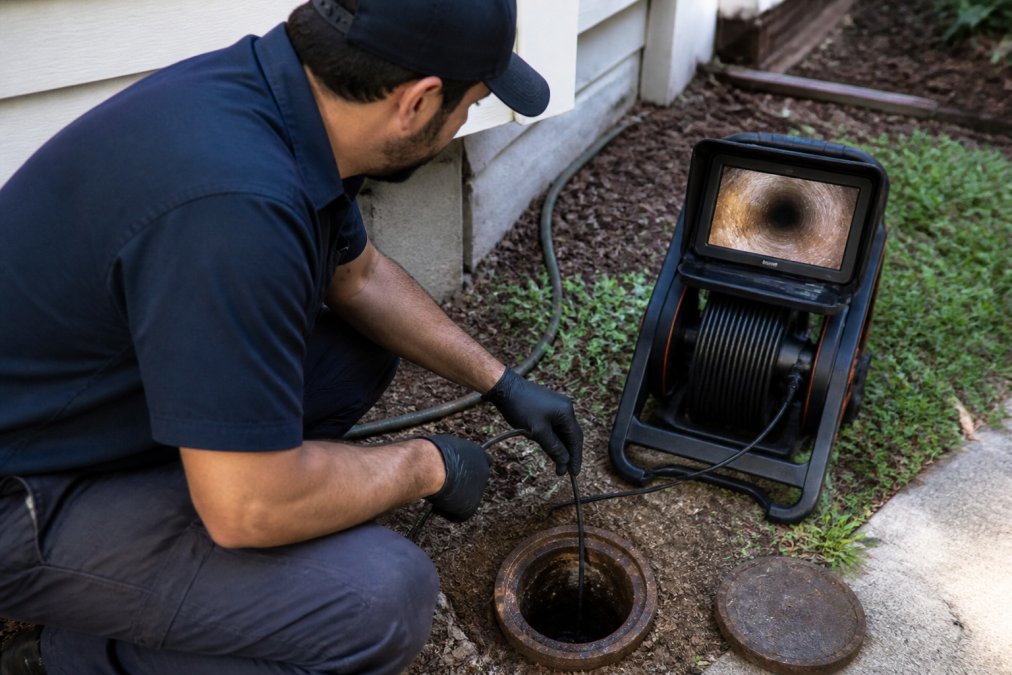
A sewer camera inspection is the essential first step. A waterproof camera attached to a flexible cable is fed through your drainage system, revealing internal condition, corrosion patterns, root intrusion, cracks, and structural integrity. The camera produces video footage and still images that document damage and allow the plumber to make accurate repair recommendations.
Step 2: Determine repair vs. replacement
Based on camera inspection findings, the plumber assesses whether the pipe can be repaired or must be replaced. Pipes with isolated corrosion, minor root intrusion, or small cracks are candidates for trenchless repair. Pipes that are severely collapsed, have multiple large breaks, or show extensive wall thickness loss require replacement.
The decision also considers practical factors: can the plumber access the damaged section for trenchless work, or does excavation become necessary? What’s the total length of damaged pipe?
Step 3: Clean and prepare the pipe
Before any repair, the pipe must be cleaned thoroughly. Hydrojetting uses high-pressure water, typically 3,000-4,000 PSI, to blast away scale buildup, grease deposits, and debris. This cleaning removes material that would prevent epoxy lining from adhering properly and allows the camera to see the true extent of structural damage.
Step 4: Apply spot repair or full lining
For isolated damage, small cracks, pinhole leaks, or localized corrosion affecting less than 10% of the pipe, spot repair using epoxy patches may be sufficient. A specialized epoxy compound is applied directly to the damaged area, creating a waterproof seal.
For more extensive damage, CIPP lining restores the entire pipe section. The epoxy-saturated liner is inserted, positioned, inflated, and cured. Once cured, the new epoxy interior provides a smooth, corrosion-resistant surface and seals small cracks throughout the pipe length.
Trenchless Sewer Repair Cost and Factors
Pricing for trenchless sewer repair varies significantly based on multiple factors.
What affects your repair bill
Pipe length is the primary cost driver. Longer pipes require more materials and labor time. Pipe diameter matters too; larger diameter pipes require more epoxy and complex equipment setup. Most residential sewer lines are 4 inches in diameter.
The extent of damage influences pricing. A pipe with isolated corrosion costs less to line than one with severe damage requiring extensive cleaning. Root intrusion adds cost because roots must be cleared mechanically before lining. Multiple access points increase labor and equipment costs. Your location, soil conditions, and accessibility also affect pricing.
Hydrojetting and descaling expenses
Hydrojetting is often billed separately from lining work. The high-pressure equipment rental and operator time add to project cost. For severely clogged pipes, aggressive hydrojetting at 4,000+ PSI may be necessary, which costs more than standard cleaning at 3,000 PSI.
When to Call a Professional Plumber
Repairing cast iron pipes in old homes requires professional expertise and specialized equipment. Call a professional immediately if you experience sewage backups, multiple slow drains, or persistent water damage. Sewer camera inspection requires equipment most homeowners don’t own, and interpretation requires experience.
If you’ve had recurring plumbing problems in an older home, a professional inspection is worthwhile. Early identification allows you to plan repairs strategically rather than facing emergency situations.
Alpha Rooter & Plumbing provides 24/7 emergency plumbing services with a guaranteed response time under 90 minutes. Our licensed plumbers use state-of-the-art sewer camera equipment and trenchless technology to diagnose and repair cast iron pipe problems efficiently. We offer upfront pricing with no hidden fees.
Preventative Maintenance for Cast Iron Plumbing
While you can’t stop cast iron from aging, preventative maintenance extends pipe lifespan and prevents emergency failures.
Avoid pouring grease down drains; it solidifies as it cools, coating pipe interiors and accelerating blockages. Use drain screens to catch hair, food particles, and debris. Run hot water periodically to flush accumulated material.
Have your drainage system professionally inspected every 5-10 years if you have cast iron pipes. A sewer camera inspection costs far less than emergency repairs and allows you to catch problems early. Avoid planting large trees near your sewer line, as roots exploit any weakness to enter the system.
Be mindful of what goes down your drains. Avoid flushing "flushable" items, which don’t break down in cast iron pipes. Don’t use chemical drain cleaners, which can corrode weakened cast iron. Use a plunger first for slow drains, then call a professional for hydrojetting if needed.
Cast iron drainage pipes fail predictably, but you don’t have to face the problem alone. If you’re dealing with slow drains, backups, or sewage odors in an older home, Alpha Rooter & Plumbing offers professional sewer camera inspection and trenchless repair solutions. Our team uses epoxy lining, hydrojetting, and pipe bursting technology to restore failing cast iron pipes without excavating your yard. Contact us for an upfront quote and get your drainage system restored with our state-of-the-art diagnostic tools and guaranteed service.
Frequently Asked Questions
What are the main signs that cast iron pipes are failing?
Common signs include slow drains, sewage backups, gurgling sounds from fixtures, visible corrosion or rust stains on exterior pipes, and persistent odors near cleanouts or basement areas. A sewer camera inspection confirms the extent of damage inside the pipe.
How much does trenchless sewer repair cost compared to full replacement?
Trenchless methods like cured-in-place pipe lining typically cost less than full excavation and replacement because they avoid digging up your yard and foundation. However, pricing depends on pipe diameter, the length of affected sewer line, and the extent of corrosion or root intrusion. Contact a licensed plumber for an upfront quote based on your specific situation.
Is cast iron pipe replacement vs. lining the better choice for old homes?
Lining works well for pipes with moderate corrosion and good structural integrity, while full replacement is necessary if the pipe wall thickness is severely compromised or if multiple sections are failing. Trenchless lining preserves your landscaping and costs less upfront, but replacement guarantees a fresh 50+ year lifespan. A professional inspection determines which method solves your problem most effectively.
How long do cast iron pipes typically last in older homes?
Cast iron pipes generally last 75-100 years, though corrosion, water chemistry, and soil conditions affect actual lifespan. Regular maintenance and prompt repairs extend their life.
This article was written using GrandRanker
Comments are closed