
Table of Contents
- Why Reliable Plumbing for Retail Spaces Matters
- Essential Commercial Plumbing Maintenance Checklist
- Emergency Commercial Plumbing Services: Response and Prevention
- Understanding the Cost of Commercial Plumbing Repairs
- Plumbing Code Compliance for Retail Environments
- Drain Cleaning and Sewer Line Inspection for High-Traffic Spaces
- Water Efficiency and Sustainability in Retail Plumbing
- Conclusion
- Frequently Asked Questions
Last Updated: August 31, 2026
Why Reliable Plumbing for Retail Spaces Matters
Retail businesses operate on thin margins and tight schedules. A single plumbing failure can shut down operations, drive customers away, and create liability issues that ripple through your month. Reliable plumbing for retail spaces isn’t a luxury, it’s the foundation that keeps your business running.
High-traffic restrooms, frequent water usage, and aging infrastructure create stress points that develop into emergencies without warning. A slow drain becomes a backed-up restroom. A minor leak becomes water damage in your stockroom. These aren’t minor inconveniences in retail; they’re operational disasters.
At Alpha Rooter & Plumbing, we’ve worked with many retail properties. The pattern is consistent: businesses that invest in preventative maintenance avoid costly emergency calls that derail operations. This guide covers what you need to know about maintaining reliable plumbing for retail spaces, from routine maintenance to emergency response protocols, code compliance, and cost-effective upgrades.
Essential Commercial Plumbing Maintenance Checklist
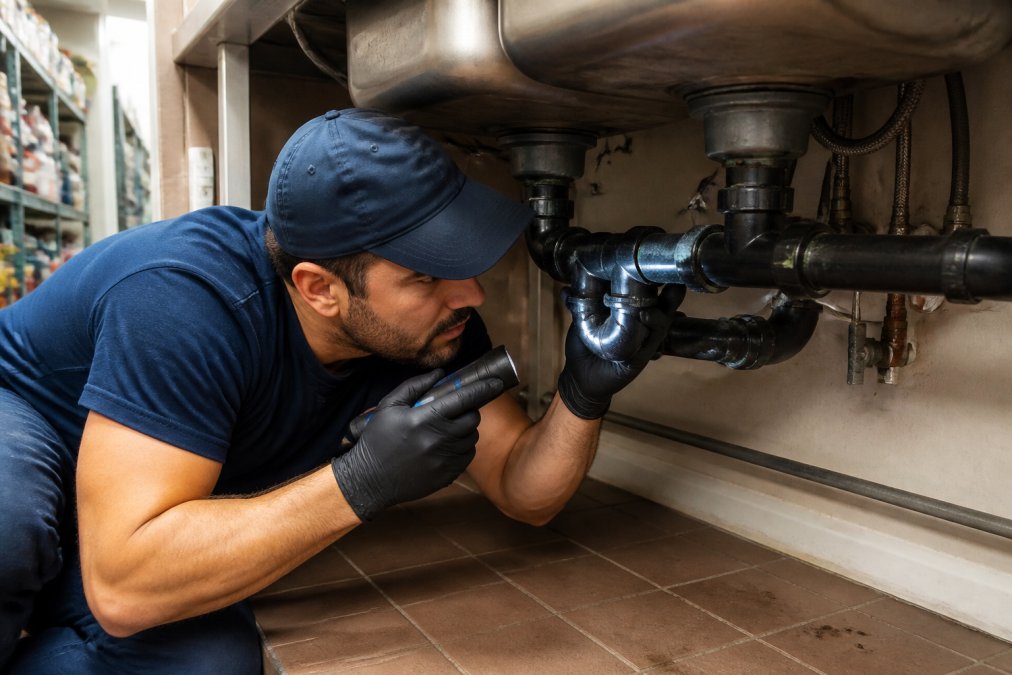
Preventative maintenance is the most cost-effective approach to reliable plumbing for retail spaces. A structured maintenance program catches problems before they become emergencies and extends the lifespan of your entire plumbing infrastructure.
Here’s what a solid commercial plumbing maintenance program includes:
-
Monthly visual inspections of visible pipes, fixtures, and connections for signs of corrosion, water stains, or drips.
-
Quarterly drain cleaning in high-use areas like employee restrooms and break rooms.
-
Annual water heater inspection and flushing to remove sediment buildup that reduces efficiency.
-
Backflow prevention testing (required annually in many jurisdictions) to ensure contaminated water doesn’t flow backward into your supply line.
-
Grease trap pumping and inspection if your retail space includes food service or a break room kitchen.
-
Pressure relief valve testing to confirm your system isn’t operating at dangerously high pressures.
-
Sump pump testing (if applicable) to verify it activates properly during heavy water events.
-
Fixture replacement of worn washers, cartridges, and aerators before they fail.
The cost of routine checks is minimal compared to emergency repairs. A single emergency service call for a burst pipe or backed-up sewer line costs significantly more than a year’s worth of preventative maintenance. Most retail owners find that a structured maintenance agreement pays for itself within the first emergency it prevents.
Alpha Rooter & Plumbing offers preventative maintenance programs tailored to retail spaces, with scheduled visits that fit your operating hours and documented inspections that create a record of system health over time. This documentation also protects you if a plumbing issue causes property damage, you can demonstrate that you maintained the system properly.
Emergency Commercial Plumbing Services: Response and Prevention
When a plumbing emergency hits a retail space, every minute of downtime costs money. A backed-up restroom drives customers out. A burst pipe floods inventory. A water heater failure disrupts operations. Emergency commercial plumbing services need to be fast, reliable, and capable of handling complex commercial systems.
Commercial plumbing systems operate under higher demand, use larger pipes and fixtures, and often include specialized equipment like grease traps, backflow preventers, and industrial water heaters. A plumber experienced only with residential work may not diagnose or repair these systems quickly.
Response time matters in an emergency. A plumbing failure can create secondary damage, water spreading through the building, electrical hazards, slip-and-fall liability, that compounds the initial problem. Getting a qualified technician on-site within 90 minutes prevents these cascading failures.
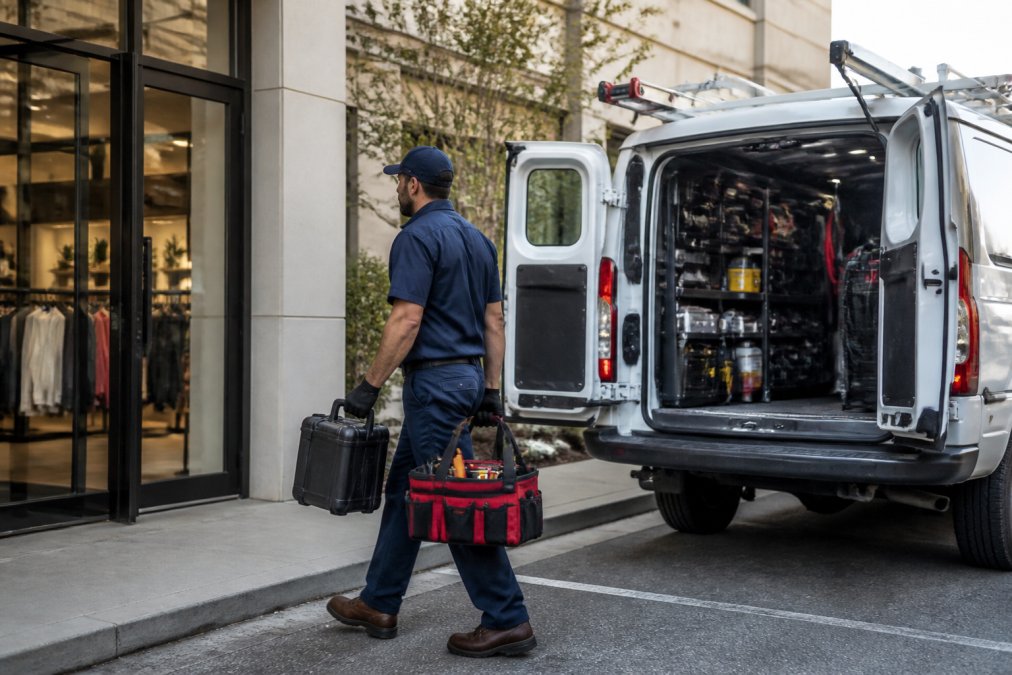
Emergency services need rapid diagnostics using specialized equipment like camera inspection systems and pressure gauges to identify the exact problem so the repair is accurate the first time.
Prevention is more valuable than emergency response. A plumbing emergency prevention strategy includes:
- Regular drain cleaning in high-traffic areas to prevent backups
- Sewer line inspection with camera diagnostics to catch root intrusion or structural damage early
- Water heater maintenance to prevent failure during peak-demand periods
- Grease trap monitoring to prevent overflow
- Backflow prevention testing to ensure water supply safety
Alpha Rooter & Plumbing provides 24/7 emergency commercial plumbing services with a response guarantee, ensuring qualified technicians arrive equipped to diagnose and repair problems immediately.
Understanding the Cost of Commercial Plumbing Repairs
Cost uncertainty is one of the biggest frustrations retail owners face with plumbing repairs. You call for an estimate, the plumber arrives, discovers something unexpected, and suddenly the price doubles. This uncertainty makes budgeting impossible.
The cost of commercial plumbing repairs depends on several factors: a simple fixture replacement costs far less than replacing a corroded main line. A drain cleaning takes hours; a sewer line replacement takes days. Emergency calls cost more than scheduled repairs. Repairs in accessible locations cost less than work requiring wall opening or concrete cutting.
Commercial plumbing repairs are more expensive than residential work because of scale and complexity. Commercial pipes are larger, fixtures are industrial-grade, and systems operate under higher pressure and volume. A commercial water heater is bigger, more expensive, and requires specialized installation.
Upfront pricing with no hidden fees is essential. When a service provider quotes a repair, you need to know the final bill matches the estimate, or you understand exactly what changed. Some repairs uncover secondary problems, a drain cleaning reveals a cracked pipe, and those discoveries should be quoted separately before work proceeds.
Alpha Rooter & Plumbing provides upfront pricing on all commercial plumbing repairs, with detailed explanations of what’s included and what might change if additional issues are discovered during work.
Plumbing Code Compliance for Retail Environments
Retail spaces operate under specific plumbing codes that differ from residential requirements. These codes address water safety, waste management, accessibility, and safety standards that protect customers and employees. Non-compliance creates liability exposure and can result in failed inspections, fines, or forced closures.
The primary plumbing codes governing retail spaces are the International Plumbing Code (IPC) and local amendments. These codes specify requirements for:
-
Backflow prevention devices on water supply lines to prevent contaminated water from flowing backward into the municipal supply.
-
Grease trap installation and maintenance for any space with food preparation, specifying trap size, pumping frequency, and disposal methods.
-
Accessible plumbing fixtures including wheelchair-accessible sinks, toilets, and drinking fountains. The ADA specifies fixture heights, clearances, and operation requirements.
-
Proper venting and drainage to prevent sewer gases from entering the building.
-
Water heater sizing and safety based on the number of fixtures and expected hot water demand.
-
Trap seals and cleanouts positioned to allow access for maintenance and inspection.
Code violations discovered during inspection create immediate pressure to correct them. A failed inspection can restrict operations or force temporary closure. Correcting violations after the fact costs more than building code compliance into initial system design.
Retail owners should verify that any plumbing work performed meets current code requirements. A licensed plumber familiar with commercial code ensures work passes inspection and protects your business from compliance liability.
Drain Cleaning and Sewer Line Inspection for High-Traffic Spaces
Drain problems in retail spaces develop faster than in residential properties due to higher water volume and usage patterns. A retail restroom used by dozens of customers daily experiences more stress on drainage than a home bathroom. Without regular drain maintenance, backups become inevitable.
Commercial drains often need hydro-jetting, a high-pressure water system that clears buildup from pipe walls and removes grease, mineral deposits, and debris that accumulate in high-use systems.
Sewer line inspection using camera diagnostics reveals problems that simple drain cleaning can’t address. A camera system displays what’s happening inside the line: root intrusion, cracks, collapsed sections, or blockages. This diagnostic information determines whether cleaning solves the problem or whether the line needs repair or replacement.
Common sewer line problems in retail spaces include:
-
Root intrusion from trees that penetrate the sewer line seeking moisture.
-
Pipe corrosion in older buildings with cast iron or clay sewer lines.
-
Grease accumulation in lines serving food-prep areas.
-
Structural damage from ground settling, freeze-thaw cycles, or external pressure.
Regular drain cleaning on a quarterly or semi-annual schedule prevents most backup problems. Sewer line inspection on an annual or biennial basis catches structural problems before they cause backups. This preventative approach is far more cost-effective than dealing with emergency backups that flood the building.
Water Efficiency and Sustainability in Retail Plumbing
Water consumption in retail spaces directly affects utility costs and environmental impact. A retail building with multiple restrooms, break rooms, and cleaning operations uses significant water daily. Small efficiency improvements compound into substantial savings over time.
Water-efficient fixtures reduce consumption without sacrificing performance. Modern low-flow toilets use 1.28 gallons per flush compared to older models that used 3-5 gallons per flush (the EPA). Over a year, a single toilet replacement saves thousands of gallons of water and reduces sewer fees proportionally.
Leak detection and repair is the fastest way to reduce water consumption. A dripping faucet wastes 3,000 gallons per year (usgs.gov). A running toilet wastes up to 200 gallons per day (the EPA). Regular inspections catch leaks early, and prompt repair eliminates waste.
Water heater efficiency affects both energy costs and water usage. A water heater operating at the right temperature minimizes heat loss. Proper insulation on hot water lines reduces energy loss. Regular maintenance keeps the heater operating at peak efficiency.
Grease trap efficiency is both an environmental and operational issue. A properly maintained grease trap captures grease and solids before they enter the sewer system, reducing strain on municipal treatment plants and preventing environmental contamination.
Sustainability in retail plumbing aligns with cost reduction and environmental responsibility. Efficient systems use less water and energy, reducing operating costs while minimizing environmental impact.
Conclusion
Reliable plumbing for retail spaces requires preventative maintenance, rapid emergency response, and code compliance that keeps your operations running smoothly. The difference between a business that invests in plumbing reliability and one that reacts to emergencies shows up in downtime, unexpected costs, and operational disruption.
Alpha Rooter & Plumbing specializes in commercial plumbing solutions for retail spaces, with 24/7 emergency response, preventative maintenance programs, and upfront pricing that eliminates surprises. Our licensed plumbers understand the specific demands of retail environments and deliver solutions that minimize downtime and protect your business. Get started with Alpha Rooter & Plumbing and ensure your retail space has the reliable plumbing infrastructure your operations depend on.
Frequently Asked Questions
Q: What are the most common plumbing issues in retail spaces?
A: Retail spaces experience unique plumbing challenges due to high foot traffic and constant water use. The most common issues include clogged drains from food debris and grease buildup, low water pressure from mineral deposits in older pipes, leaking fixtures that waste water and increase utility costs, and sewer backups in spaces with aging plumbing infrastructure. Grease trap overflow is especially problematic in food-service retail environments. Regular inspections and preventative maintenance catch these problems before they disrupt operations and cost thousands in emergency repairs.
Q: How does a plumbing emergency impact retail business operations?
A: A plumbing emergency in a retail space can halt operations immediately. A burst pipe or sewer backup forces you to close the restrooms, stop food preparation, or evacuate the space entirely, directly reducing revenue and damaging customer trust. The longer the downtime, the greater the financial loss. Emergency commercial plumbing services with fast response times minimize this impact. Alpha Rooter & Plumbing guarantees under 90-minute response times and upfront pricing so you know costs before repairs begin, helping you avoid both operational chaos and unexpected expenses.
Q: How much does commercial plumbing maintenance cost per square foot?
A: The cost of commercial plumbing repairs and maintenance varies based on your space size, pipe age, usage intensity, and local code requirements. Rather than a fixed per-square-foot rate, pricing depends on the specific services needed, drain cleaning, leak detection, fixture replacement, or preventative maintenance programs. Alpha Rooter & Plumbing provides upfront pricing with no hidden fees so you understand costs before work begins. Contact them for a quote tailored to your retail space’s actual needs and condition.
Q: Are there specific plumbing codes for retail and commercial buildings?
A: Yes. Retail and commercial spaces must comply with the International Plumbing Code (IPC) and local amendments adopted by your jurisdiction. Requirements differ from residential plumbing: commercial spaces need larger drain lines, backflow prevention devices, grease traps in food-service areas, and specific fixture counts based on occupancy. Restroom renovations and new installations must meet these standards or face code violations, fines, and forced closure. Licensed plumbers familiar with commercial code compliance ensure your plumbing infrastructure meets all legal requirements and functions safely for customers and staff.
This article was written using GrandRanker
Comments are closed