
Table of Contents
- Why Early Diagnosis Matters for Your Sewer Line
- Common Signs of Sewer Line Failure
- What Causes Sewer Line Damage
- The Sewer Camera Inspection Process
- Signs of a Collapsed Sewer Line
- DIY vs. Professional Diagnostic Tools
- Sewer Line Repair vs Replacement: When to Choose Each
- When to Call a Professional Plumber
Why Early Diagnosis Matters for Your Sewer Line
Catching sewer line problems early saves thousands in repair costs and prevents serious property damage. Small issues often become major structural problems within months. Early intervention lets you plan repairs on your timeline rather than face an emergency demanding premium pricing. Understanding how to diagnose sewer line issues puts you in control.
Common Signs of Sewer Line Failure
The most reliable way to diagnose sewer line issues is recognizing physical signs that something has gone wrong. These indicators appear in your home and yard and are often the first clue your main sewer line needs attention.
Slow Drains and Gurgling Toilets
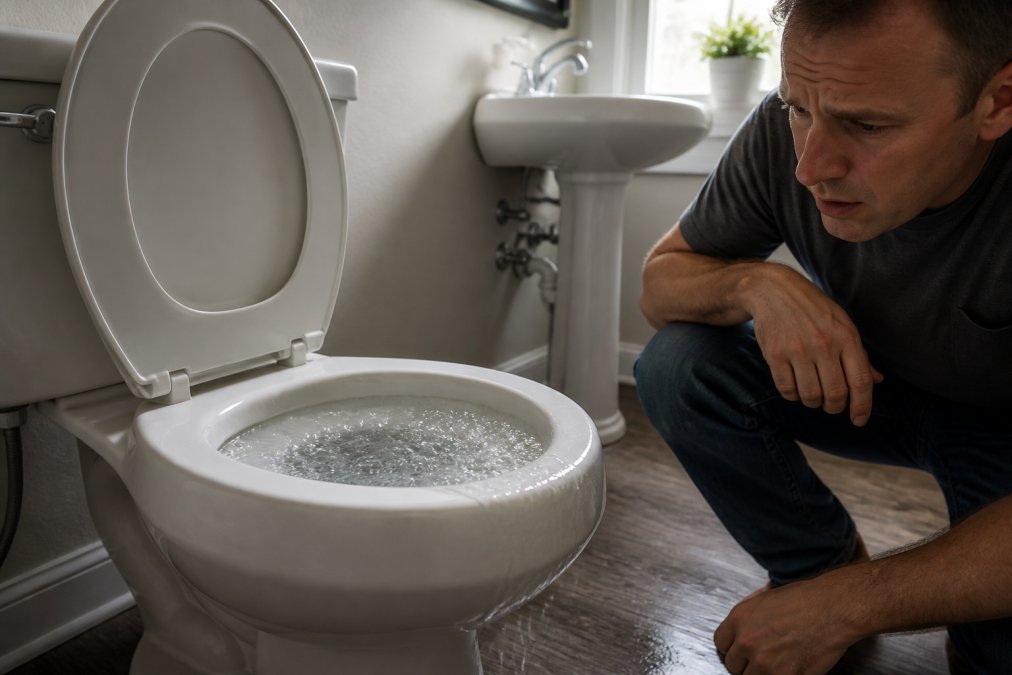
Slow drains throughout your home, especially when multiple fixtures are affected simultaneously, signal a blockage or structural problem in your main sewer line. Gurgling toilets are particularly telling, this sound occurs when air becomes trapped in your drainage system because water can’t flow freely. If you hear gurgling when using other fixtures, air is being forced back up through the drainage system due to a partial blockage or structural damage restricting flow.
A common mistake is treating these symptoms with drain cleaners or plungers. While those tools help with localized clogs, they won’t solve a main line problem. If the issue persists after plunging or drain cleaner, it likely extends to your sewer line.
Sewage Odors and Backup Issues
Foul sewage smells inside or around your home indicate wastewater isn’t flowing properly away from your property. The smell typically worsens after heavy rain or when you run multiple water-using appliances simultaneously. Actual sewage backup, where raw wastewater appears in your lowest-level drains, means your sewer line has severe blockage or structural failure, this is a health hazard requiring immediate professional attention (the CDC).
If you notice sewage odor around your cleanout access point (a capped pipe in your yard or basement), that’s a direct indication of a main line problem.
Yard Signs: Lush Patches and Soggy Spots
A persistently soggy area of lawn, especially one that stays wet during dry weather, suggests sewage is leaking from your sewer line into the soil. This creates an unusually nutrient-rich environment where grass grows thicker and greener than surrounding areas. You might also notice an unusually lush patch of weeds or moss concentrated in a line running from your home toward the street, this pattern often follows your buried sewer line’s path.
Soggy spots appearing after rain or irrigation suggest your sewer line has cracked and is allowing groundwater infiltration or leaking sewage into surrounding soil. Either situation requires professional diagnosis.
What Causes Sewer Line Damage
Understanding what damages your sewer line helps you recognize why the problem occurred and whether it’s likely to happen again.
Tree Root Intrusion
Tree roots are attracted to sewer lines because they contain moisture and nutrients. Roots seek out even tiny cracks or loose joints, working their way inside where they continue growing. Over time, roots fill the pipe, restricting flow and eventually causing complete blockages or structural damage. This problem is particularly common in older neighborhoods where mature trees have had decades to grow and older sewer pipes have deteriorated enough to develop cracks.
Tree root intrusion develops gradually as roots slowly expand inside the pipe. The first signs are typically slow drains and gurgling toilets, followed eventually by backups if unaddressed. Professional sewer camera inspections confirm whether roots are the culprit.
Pipe Corrosion and Material Lifespans
Different sewer pipe materials have different expected lifespans. Cast iron pipes, common in homes built between the 1920s and 1970s, typically last 50-75 years before corrosion becomes severe. Clay pipes last roughly 50-100 years depending on soil conditions. Concrete pipes last 40-75 years (aspe.org). Modern PVC pipes, installed since the 1980s, are expected to last 100+ years (aspe.org).
If your home was built in the 1950s or earlier, your sewer line may be approaching or past its expected lifespan. Corrosion creates rough interior surfaces that trap debris, reducing flow capacity, and cracks that allow tree roots to enter and groundwater to infiltrate. Acidic soil conditions accelerate corrosion.
Foundation Settling and Ground Movement
Your home’s foundation naturally settles over decades, and ground around your property shifts due to soil compaction, water drainage patterns, and seasonal moisture changes. These movements can stress your buried sewer line. Uneven foundation settling can cause the sewer line to develop kinks or breaks. Expansive soil that swells when wet and shrinks when dry creates cyclical stress on buried pipes. In areas with significant seasonal temperature changes, freeze-thaw cycles can shift soil and damage pipes.
The Sewer Camera Inspection Process
A sewer camera inspection is the most accurate diagnostic tool for determining what’s wrong with your sewer line. This non-invasive process uses fiber optic technology to see inside your pipe without digging.
How Fiber Optic Cameras Work
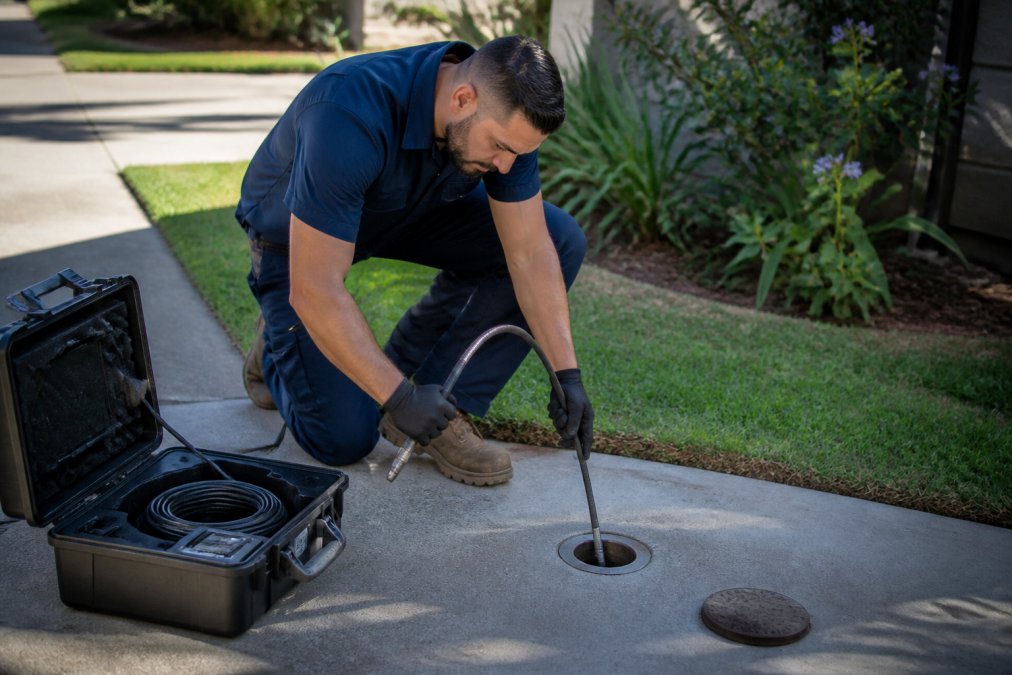
A fiber optic camera system consists of a flexible cable with a small camera head, a monitor displaying the feed, and a locating transmitter. The camera head is pushed through your sewer line from an access point, typically your cleanout. As it travels through the pipe, it sends live video to the monitor above ground. The locating transmitter marks the exact location of problems on the ground surface, essential for planning repairs.
Modern systems have high-resolution cameras revealing even small cracks or developing problems. Some include measurement capabilities documenting the exact distance from the access point to each problem area.
What the Inspection Reveals
A sewer camera inspection reveals your entire sewer line’s condition from your home’s connection point to the municipal system. The technician identifies the specific problem: tree root intrusion, cracks, corrosion, offset joints, or complete collapse. The inspection shows whether problems are localized or distributed throughout the line and reveals your sewer line’s diameter and material, affecting repair options.
Based on what the camera reveals, the technician recommends the appropriate next step: hydro-jetting to clear blockages, trenchless repair methods for structural damage, or full replacement if the pipe is severely compromised.
Signs of a Collapsed Sewer Line
A collapsed sewer line is the most severe form of failure. Complete collapse means the pipe has broken into pieces or crushed entirely, preventing any wastewater flow. This is a true emergency requiring immediate repair. Complete collapse typically produces dramatic symptoms: raw sewage backing up into your home, severe odors, or large sinkholes in your yard.
If your sewer line has collapsed, replacement is the only solution. Cleaning or trenchless repair methods cannot restore a collapsed pipe. Modern trenchless replacement methods can often be completed without extensive digging, reducing disruption to your yard.
DIY vs. Professional Diagnostic Tools
You can perform preliminary diagnosis using observation, checking for soggy spots, slow drains affecting multiple fixtures, and sewage odors. However, professional diagnostic tools provide definitive answers. DIY observation can indicate a problem exists but can’t tell you what the problem is or where it’s located.
Professional diagnostic tools include sewer camera inspection, which provides visual confirmation of the problem’s nature and location. A professional inspection from Alpha Rooter & Plumbing provides the certainty you need to make informed repair decisions.
| Diagnostic Method | What It Reveals | Cost Range | Professional Required |
|---|---|---|---|
| Visual yard inspection | Surface signs of problems | Free | No |
| Drain testing (multiple fixtures) | Whether main line is affected | Free | No |
| Sewer camera inspection | Exact problem type and location | Varies | Yes |
| Hydro-jetting trial | Whether blockage can be cleared | Varies | Yes |
| Acoustic leak detection | Location of leaks | Varies | Yes |
Sewer Line Repair vs Replacement: When to Choose Each
Once you know what’s wrong, the next decision is whether to repair or replace. Cleaning is appropriate when your sewer line has a blockage, tree roots, grease buildup, or debris, but the pipe itself is structurally sound. Hydro-jetting uses high-pressure water to clear blockages without chemicals or mechanical damage.
Trenchless repair methods are used when your sewer line has structural damage like cracks or small breaks but hasn’t completely collapsed. These methods involve inserting new pipe material inside the existing pipe or sealing cracks without digging. Trenchless methods are significantly less disruptive and often cost less.
Full replacement is necessary when your sewer line has collapsed, damage is extensive throughout the line, or the pipe material has reached the end of its lifespan. Modern materials like PVC last much longer than original cast iron or clay pipes.
When to Call a Professional Plumber
Call a professional plumber if you notice any warning signs: slow drains affecting multiple fixtures, gurgling toilets, sewage odors, or soggy patches in your yard. Early professional diagnosis prevents small problems from becoming emergencies.
Don’t wait for sewage backup to occur. Backup is a health hazard and a sign your problem has become severe. If you’ve tried basic troubleshooting and the problem persists, professional diagnosis is necessary.
Alpha Rooter & Plumbing offers 24/7 emergency service with a response time under 90 minutes. We provide upfront pricing with no hidden fees. Our licensed plumbers use state-of-the-art diagnostic equipment including sewer camera inspection to accurately diagnose your problem and recommend the most cost-effective solution.
If you’re experiencing any signs of sewer line problems, call Alpha Rooter & Plumbing today. We’ll diagnose the issue accurately and explain your repair options clearly. Our team has extensive experience with sewer line diagnosis and repair for residential and commercial properties throughout the area. Don’t let a small problem become a major emergency, professional diagnosis gives you the information you need to make the right decision.
Early diagnosis of sewer line issues prevents costly emergencies and property damage. When you recognize warning signs like slow drains, sewage odors, or soggy yard patches, professional inspection becomes essential. Alpha Rooter & Plumbing provides comprehensive sewer camera inspections with state-of-the-art diagnostic tools and experienced technicians who can pinpoint exactly what’s wrong. Get started with Alpha Rooter & Plumbing and protect your home’s plumbing system before a small problem becomes a major repair.
Frequently Asked Questions
How do plumbers check sewer lines?
Plumbers use fiber optic camera inspections to diagnose sewer line issues. The technician inserts a small, flexible camera into the main sewer line through a cleanout access point. The camera transmits real-time video to a monitor, revealing blockages, cracks, tree root intrusion, pipe corrosion, and structural damage. This non-invasive method is the most accurate way to assess the condition of your wastewater system without digging.
What are signs of a collapsed sewer line?
A collapsed sewer line typically shows multiple warning signs: persistent sewage backups into your home, severe gurgling from toilets and drains, foul odors in the yard or inside, multiple slow drains throughout the house, and foundation settling or cracks. You may also notice unusually lush patches of grass, soggy soil, mold growth, or rodent activity near the line. These indicate pipe collapse, which requires immediate professional assessment and likely replacement rather than repair.
When is sewer line repair better than replacement?
Repair is suitable for localized damage: single cracks, small blockages from tree roots, or minor corrosion in one section. Trenchless repair methods like hydro-jetting or spot repairs cost less and require minimal excavation. Replacement is necessary when the pipe has multiple cracks, extensive corrosion, complete collapse, or when the line is nearing the end of its material lifespan. Your plumber will recommend replacement if damage is widespread or the structural integrity is severely compromised.
How often should you have a sewer line inspection?
Most homeowners should have a sewer line camera inspection every 3-5 years as preventive maintenance. If your home has older cast iron or clay pipes, or if you've experienced recurring drainage issues, annual inspections are recommended. Properties with large trees nearby should inspect more frequently due to root intrusion risk. Early detection of blockages, corrosion, or structural problems prevents costly emergency repairs and sewage backups.
This article was written using GrandRanker
Comments are closed