
Table of Contents
- Why Kitchen Drains Clog and What Causes Buildup
- How to Unclog a Kitchen Sink Naturally
- Best Natural Drain Cleaner for Grease
- How Often to Clean Kitchen Drains Preventatively
- Daily Habits That Keep Drains Flowing
- What Not to Put Down Your Kitchen Drain
- Drain Care for Garbage Disposals and Septic Systems
- When to Call a Professional Plumber
- Frequently Asked Questions
Last Updated: September 20, 2026
Why Kitchen Drains Clog and What Causes Buildup
Kitchen drains clog because they trap a mix of food particles, grease buildup, and soap residue. Over time, these materials accumulate inside your drainpipe and slow water flow. Understanding what causes clogs helps you prevent them before they become emergencies.
The biggest culprits are grease and oil. When you pour hot water with dish soap down the drain, the grease stays liquid temporarily. As it cools inside the pipes, it solidifies and sticks to the pipe walls. Food particles get trapped in this grease layer, and the clog grows thicker.
Hair, coffee grounds, and vegetable scraps also contribute. Small bits pass through initially but collect in the drain trap where water flow slows. Over weeks and months, these residues build up into a serious blockage.
Standing water is a sign your drain needs attention. If water drains slowly or backs up into your sink, grease and food debris are restricting flow. This is the time to act with natural solutions before calling a professional plumber.
The best time to clean your kitchen drains is before you have a problem. Many homeowners wait until water backs up, but preventative maintenance takes 15 minutes and costs nothing.
How to Unclog a Kitchen Sink Naturally
Natural methods work best for minor clogs caused by grease buildup and food particles. These approaches are safe for your plumbing system and won’t damage pipe integrity like caustic chemicals do.
Baking Soda and Vinegar Method
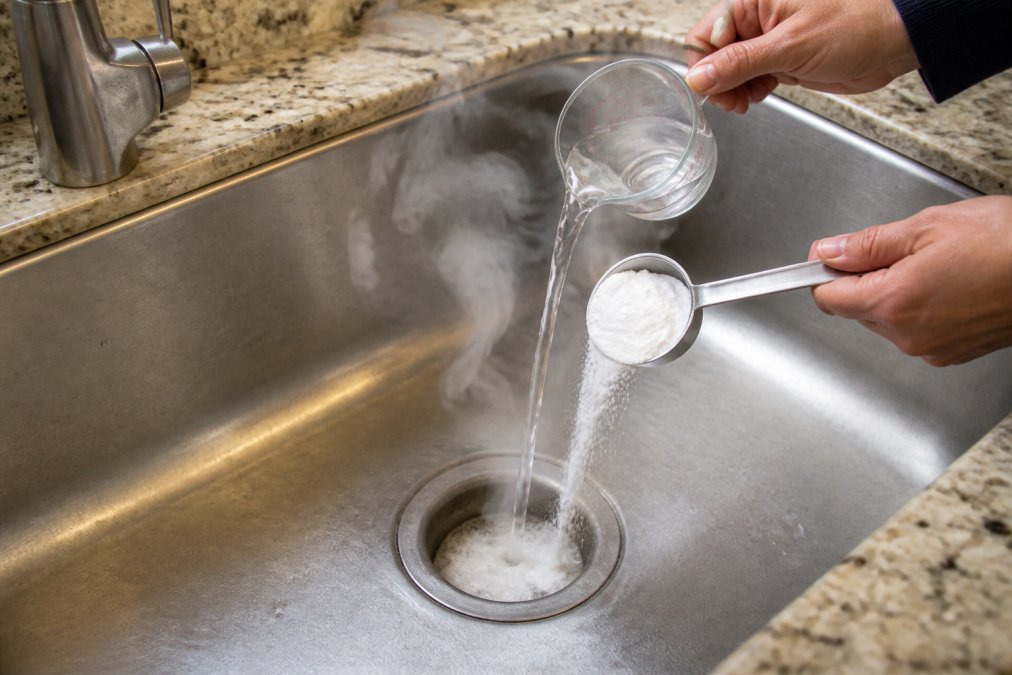
The baking soda and vinegar method creates an effervescent reaction that breaks apart minor clogs. This natural solution works by generating pressure inside the drain to dislodge debris.
Here’s how to do it:
- Remove standing water from your sink using a cup or small bucket
- Pour one cup of baking soda directly down the drain
- Follow immediately with one cup of white vinegar
- Cover the drain opening with a plug or wet cloth
- Wait 15-30 minutes while the mixture fizzes and works
- Flush with boiling water to clear loosened debris
The reaction between baking soda and vinegar creates carbon dioxide bubbles. These bubbles push against the clog and help break it apart. You’ll hear fizzing and bubbling inside the pipe, that’s the reaction working.
This method works best for slow drains and minor clogs. For severe blockages, you may need to repeat the process two or three times. Allow at least one hour between attempts to let the drain clear.
Boiling Water and Salt Flush
A boiling water and salt flush is one of the simplest ways to keep kitchen drains clear. The combination works by dissolving grease buildup and flushing away loosened debris.
Follow these steps:
- Heat one gallon of water until it reaches a rolling boil
- Mix in half a cup of table salt
- Slowly pour the hot salt water down the drain
- Wait 5-10 minutes
- Flush with another pot of boiling water
The heat softens accumulated grease so it flows through the pipe instead of sticking to walls. Salt acts as a mild abrasive to help scrub the interior surfaces. This method is especially effective for grease-heavy clogs from cooking.
Repeat this process weekly as preventative maintenance. Many homeowners find that a weekly salt and hot water flush prevents clogs from forming in the first place.
Mechanical Removal with Wire Hangers
When natural solutions don’t work, mechanical removal using a wire coat hanger removes clogs physically. This method is safe for your pipes and costs nothing.
Create a drain snake from a wire coat hanger:
- Unwind a wire coat hanger completely
- Bend one end into a small hook shape
- Keep the other end straight to use as a handle
- Remove the drain cover or stopper
- Insert the hooked end into the drain
- Push down slowly, then twist and pull upward repeatedly
- You’ll feel resistance when you hit the clog
- Work the hook around to catch hair and debris
- Pull out the accumulated material
- Flush the drain with hot water
This mechanical approach works for clogs near the drain opening. If the blockage is deeper in the plumbing system, you may not reach it with a wire hanger. In those cases, a professional plumber with a drain snake can access the entire drainpipe.
Do not force the wire hanger deeper if you feel strong resistance. Pushing too hard can damage the drain trap or scratch the pipe interior. Stop and try a different method if you encounter serious blockage.
Best Natural Drain Cleaner for Grease
Grease is the most common reason kitchen drains slow down and clog. Natural cleaners break apart grease buildup without harming your plumbing system or the environment.
Dish Soap and Hot Water Technique
Dish soap is designed to break apart grease, making it an effective natural drain cleaner. When combined with hot water, soap penetrates grease deposits and helps them flow through the pipe.
Use this method:
- Heat two to three quarts of water until very hot (not quite boiling)
- Squirt a generous amount of dish soap down the drain
- Pour the hot water slowly down the drain
- Let it sit for 5-10 minutes
- Flush with cold water to rinse
The hot water softens grease so soap can break it apart into smaller particles. These particles then wash away with the cold water rinse. This technique is gentle enough to use weekly without damaging your pipes.
For stubborn grease buildup, repeat the process. Many restaurant kitchens use this method daily to maintain clear drains. The combination of heat and soap removes residue before it accumulates into a serious clog.
Why Caustic Chemicals Damage Your Pipes
Commercial drain cleaners contain caustic chemicals that eat through clogs but also damage your plumbing system over time. These toxic products corrode pipe walls and can cause leaks years later.
Caustic chemicals work by generating extreme heat inside the pipe. This heat dissolves organic material, but it also weakens the pipe itself. Repeated use with chemical cleaners accelerates pipe deterioration, especially in older plumbing systems.
Chemical drain cleaners also pose safety risks to your family. If mixed with other cleaning products, they create toxic fumes. Splashes can burn skin and eyes. Fumes can irritate your respiratory system.
Natural solutions protect your pipes while solving the problem.
Choose natural drain cleaners over commercial products. They’re safer for your family, better for the environment, and protect your pipes from long-term damage.
How Often to Clean Kitchen Drains Preventatively
Preventative maintenance keeps your kitchen drains clear without emergency repairs. The frequency depends on your household’s usage and what goes down the drain.
Daily Habits That Keep Drains Flowing
Your daily kitchen habits determine whether drains stay clear or develop clogs. Small changes prevent the buildup that causes emergency drain problems.
What Not to Put Down Your Kitchen Drain
Certain items cause serious clogs and should never enter your drain system. Knowing what to avoid protects your pipes and prevents emergency repairs.
Never put these items down the drain:
- Cooking grease and oil
- Coffee grounds
- Eggshells
- Pasta and rice
- Vegetable peels
- Meat bones
- Dairy products
- Flour and baking ingredients
- Paper towels and napkins
- Plastic or rubber items
Your garbage disposal is not a trash can. Just because your disposal can grind something doesn’t mean it should go down the drain. The drain system can’t handle what the disposal produces.
Drain Care for Garbage Disposals and Septic Systems
Garbage disposals and septic systems require special drain care. What you put down these systems affects their function and longevity.
Garbage Disposal Care:
Septic System Safety:
When to Call a Professional Plumber
Some drain problems require professional attention. Knowing when to call a plumber saves money and prevents pipe damage.
Frequently Asked Questions
How can I keep drains from clogging naturally without harsh chemicals?
Prevent drain clogs by using a combination of methods: flush your drains weekly with boiling water, pour a mixture of baking soda and vinegar down the drain monthly, and scrape food particles from dishes before washing. These natural solutions protect your pipe integrity while removing grease buildup and residue. Avoid putting oils, fats, and food scraps down the drain, and use a drain strainer to catch debris before it enters your plumbing system.
What is the best natural drain cleaner for grease buildup in kitchen drains?
Dish soap combined with boiling water is highly effective for grease removal. Pour a tablespoon of dish soap down the drain, followed by a kettle of boiling water. The heat melts grease while the soap breaks it down, allowing residue to flush away. For heavier grease buildup, use the baking soda and vinegar method first, then follow with hot dish soap and water. This eco-friendly approach avoids the safety risks to your pipes or the environment.
How often should I clean my kitchen drains to prevent clogs?
Clean your kitchen drains weekly with boiling water and monthly with baking soda and vinegar to maintain optimal flow. If you have a garbage disposal, run it weekly with cold water and ice cubes to keep it sharp and clear. For homes with septic systems, avoid using chemical cleaners and stick to natural methods, as caustic chemicals can disrupt the bacterial balance in your tank. Adjust frequency based on usage, households that cook frequently or have multiple people may benefit from weekly baking soda treatments.
Are natural drain cleaners safe for all types of pipes?
Yes, natural methods like baking soda, vinegar, boiling water, and dish soap are safe for all pipe types, including older cast iron drainpipes and modern PVC systems. Unlike caustic chemicals that can corrode pipes and cause long-term damage, these eco-friendly solutions work gently. They also won’t harm your plumbing system’s integrity or create toxic fumes, making them ideal for preventative care in any home.
Kitchen drains don’t have to be a constant problem. Start with preventative maintenance using natural methods like baking soda, vinegar, and hot water. Most clogs never develop when you follow daily habits that protect your pipes. When professional help is needed, Alpha Rooter & Plumbing provides fast, reliable drain cleaning service with upfront pricing and no hidden fees. Keep your kitchen drains flowing smoothly by taking action today.
Comments are closed