
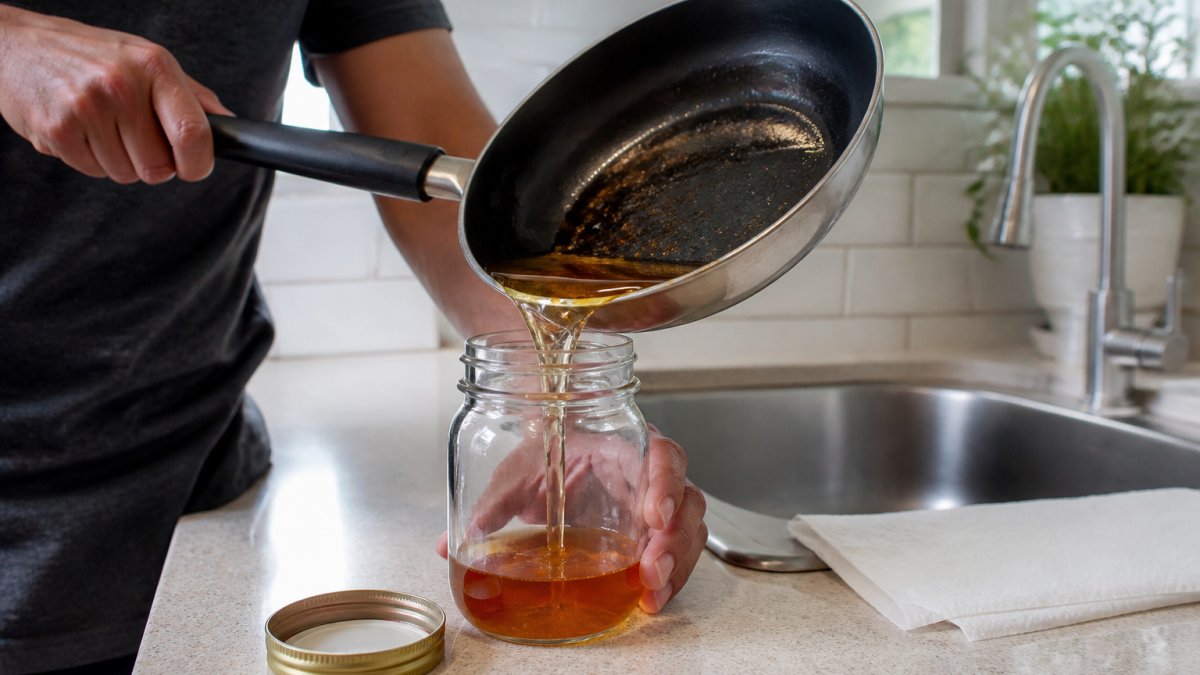
Table of Contents
- Why Cooking Oil Disposal Matters for Your Pipes and Sewer
- Can You Pour Cooking Oil Down the Drain?
- Step-by-Step: How to Cool and Contain Used Oil Safely
- Cooking Oil Disposal in Garbage: Small Amounts vs. Large Quantities
- Used Cooking Oil Recycling and Drop-Off Options
- Restaurant Used Cooking Oil Disposal: Rules and Pickup
- Reusing and Storing Oil That’s Still Good
- Conclusion
- Frequently Asked Questions
Last Updated: October 20, 2026
Why Cooking Oil Disposal Matters for Your Pipes and Sewer
Grease is the quiet killer of household plumbing. Every year, fats, oils, and grease build up inside sewer lines until water has nowhere to go.
Learning how to properly dispose of cooking oil protects your home and your city’s sewer system at the same time.
Here is the part most people miss. Hot oil feels liquid when you pour it. Ten minutes later it hardens like candle wax.
The EPA’s guidance on fats, oils, and grease treats grease as a leading cause of residential sewer backups.
A blocked drain is not just an inconvenience.
Pouring even a small amount of oil down the drain each week adds up. Grease coats pipe walls in layers, and each layer narrows the flow path. By the time you notice slow drains, the blockage is often deep in the line.
Can You Pour Cooking Oil Down the Drain?
No. You should never pour cooking oil down the drain, sink, or toilet.
The damage does not stop at your property line.
Liquid oils like canola or olive oil are just as harmful as solid fats. They only seem harmless because they stay liquid at room temperature.
Small amounts matter too. A few tablespoons rinsed down the sink with hot water still settle and stick once they cool.
So the answer to “can you pour cooking oil down the drain” is a firm no, every time.
Step-by-Step: How to Cool and Contain Used Oil Safely
The safe method has four steps: cool it, contain it, seal it, and dispose of it correctly. Skipping any step risks a burn, a spill, or a mess you will be cleaning for an hour. The details below are where most guides stay vague and most kitchen accidents actually happen.
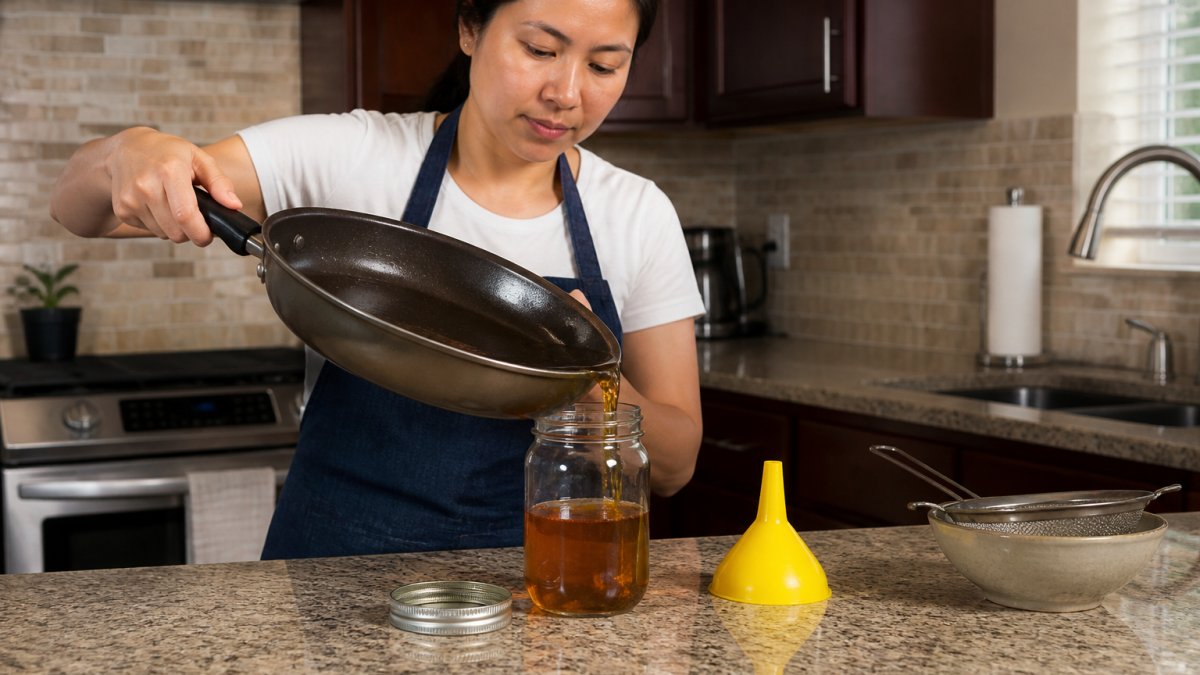
Cooling Oil Without a Mess
Let the oil cool completely before you touch it. Move the pan off the heat and leave it somewhere safe, away from children and pets. Never pour hot oil into a plastic container or a trash bag.
If you are in a hurry, let the pan sit until it is warm, not hot, then move it. Patience here prevents kitchen burns, which are far more common than people expect.
Choosing a Sealed, Leak-Resistant Container
Pick a container that will not break or leak. A sturdy glass jar with a screw lid, a metal coffee can, or the original oil bottle all work well. Avoid thin plastic tubs that soften with heat.
Match the container to the oil volume and temperature:
- Still slightly warm oil: use glass, metal, or the original high-density polyethylene oil bottle. Skip thin deli containers and foam.
- Fully cooled oil: a heavy-duty resealable bag placed inside a rigid container adds a second layer against leaks.
- Large batches: the original jug or a dedicated metal container with a tight lid is easiest to carry to a drop-off.
Preparation details that prevent leaks:
- Use a funnel to avoid drips down the outside of the container.
- Leave an inch or two of headroom so the lid seals cleanly and the container does not pressurize.
- Wipe the outside with a paper towel before storage so the container is not slippery.
- Label it clearly with the contents and date so nobody mistakes it for something else.
What to Do If the Oil Is Still Warm
If you must move oil before it is fully cool, pour it into a heat-safe metal or glass container, not plastic, and set it aside to finish cooling with the lid off. Do not seal a warm container tightly; trapped heat and steam can loosen the lid or warp plastic. Once it reaches room temperature, seal and label it.
Handling Spills and Drips
Small drips on the counter or floor are a slip hazard. Wipe them with paper towels and dispose of the towels in the trash, not the sink. For a larger spill, sprinkle an absorbent material such as kitty litter or cornstarch, let it sit, then scoop it into a bag and trash it. Never rinse oil residue down the drain with hot water; that is the same mistake in a smaller package.
Once sealed, the container can go in the trash or to a collection point, depending on quantity.
Cooking Oil Disposal in Garbage: Small Amounts vs. Large Quantities
Small amounts of household cooking oil can go in the regular trash once cooled and sealed. Large quantities need a different route, because a full pot of oil will leak, smell, and attract pests in your bin. The useful question is not just how much oil you have but what kind it is and how it was used.
Decide by Quantity and Type
Use this decision path before you reach for a container:
- Is it cooking oil, grease, or animal fat? Cooking oil (vegetable, canola, olive, peanut) behaves differently from pan grease or rendered animal fat. Animal fat solidifies at room temperature and can go in the trash once cooled and wrapped; it should never go down the drain.
- How much is there? A pan residue or a few tablespoons is a trash problem. A full fryer batch is a recycling or drop-off problem.
- Is the oil still usable? If it is clean and not degraded, consider straining and reusing it before you dispose of it.
Here is how the cases compare:
| Situation | Approximate Amount | Best Method | Container |
|---|---|---|---|
| Pan-fried dinner | Under 1 cup | Trash after cooling | Sealed jar or foil pouch |
| Small deep fry | 1-2 cups | Trash or absorbent material | Sealed jar |
| Full fryer batch | Several cups to a few gallons | Recycling or drop-off | Original bottle or jug |
| Commercial fryer | Large volume | Licensed pickup service | Commercial grease bin |
Small Amounts: Absorb, Bag, Trash
For tiny amounts, you can soak the oil into absorbent material like paper towels, kitty litter, or sawdust, then bag it and put it in the trash. This is often easier than finding a jar for a few tablespoons.
A common mistake is rinsing a pan with hot water and soap directly into the sink after cooking. That sends a thin film of oil into the drain, where it cools and sticks. Wipe the pan with a paper towel first, then wash it.
Large Quantities: Keep It Out of the Kitchen Bin
Large quantities should never go in your kitchen bin. A full container of oil is heavy, leaks easily, and can attract pests or cause odors. Use a recycling program or a collection service instead. If you have no drop-off nearby, a licensed disposal provider can often handle household quantities for a fee; request a quote based on volume before you commit.
Mixed and Awkward Cases
- Oil mixed with food scraps: strain out solids first, then treat the oil by quantity. Solids go in the trash or compost according to local rules.
- Oil-soaked absorbents: bag them and trash them; do not compost oil-soaked paper or litter.
- Outdoor frying: let the oil cool completely outdoors, then transfer it to a sealed container before bringing it inside or to a drop-off.
When in doubt, treat it as a large quantity and take it to a collection point. That is the safer default for your pipes and your bin.
Used Cooking Oil Recycling and Drop-Off Options
Used cooking oil recycling turns a waste problem into a resource. Many communities collect used oil and process it into biodiesel, animal feed, or industrial products.
Finding a collection point takes a little effort. Start with your city’s waste management or public works department.
The Department of Energy’s biodiesel overview explains how used oils become renewable fuel. That gives your sealed jug a second life instead of a landfill sentence.
A few practical tips for drop-off:
- Call ahead to confirm the site accepts cooking oil
- Keep oil in a sealed, labeled container
- Do not mix oil with other chemicals or water
- Ask about limits on quantity per visit
If no drop-off exists nearby, a licensed disposal provider can often handle household quantities for a fee.
Restaurant Used Cooking Oil Disposal: Rules and Pickup
Restaurant used cooking oil disposal follows stricter rules than home kitchens. Commercial kitchens generate large volumes, and most jurisdictions regulate how that grease is stored and hauled away.
The standard approach is a scheduled pickup with a licensed rendering or grease collection company. They supply sealed bins, empty them on a set schedule, and document each pickup. That paper trail matters during inspections.
Grease traps and interceptors are part of the same system. They capture fats before they reach the sewer.
Keep your grease trap cleaning log where an inspector can find it. A documented schedule shows compliance and protects you if a backup is ever traced to your line.
For property managers and restaurant owners, a reliable plumbing partner matters here. Alpha Rooter & Plumbing handles grease-related drain issues and can advise on keeping traps and lines clear. Our licensed team responds fast when a backup threatens your operating hours.
Reusing and Storing Oil That’s Still Good
Good oil can be reused, which saves money and reduces waste. The trick is knowing when oil is still usable and when it has gone bad.
Strain the oil through a fine mesh or cheesecloth to remove food particles. Store it in a sealed container in a cool, dark place, or refrigerate it for longer storage.
Watch for signs of deterioration:
- A rancid or sour smell
- Dark color or foamy surface
- Thick, sticky texture
- Heavy smoking at normal cooking temperatures
Oil that shows these signs should be disposed of, not reused. Reusing oil too many times affects flavor and can create harmful compounds. A common mistake is stretching oil well past its useful life to save a few dollars.
Strain, seal, cool, and label. Oil stored this way lasts longer and stays safe to cook with. Oil that smells off or smokes early is done.
Conclusion
Grease in your drains is one of the most preventable causes of plumbing emergencies, and the fix starts in your kitchen. Cool the oil, seal it in a leak-resistant container, and send it to the trash, a recycling point, or a licensed collector.
If a grease blockage has already slowed your drains or backed up your sewer, do not wait for it to worsen. Alpha Rooter & Plumbing offers 24/7 emergency service with a response time under 90 minutes, upfront pricing with no hidden fees, and licensed plumbers who handle everything from drain cleaning to full sewer line repair.
Frequently Asked Questions
Can you pour cooking oil down the sink if you run hot water?
No. Hot water only moves the oil farther into the pipe before it cools and hardens. Once it solidifies, it coats the pipe walls, narrows the opening, and traps food scraps, which leads to blockages and sewer backups. Even small amounts add up over time. Scrape pans into the trash or a container instead, wipe greasy residue with a paper towel, and wash with soapy water only after most of the oil is gone.
Where can you recycle or drop off used cooking oil?
Many municipal waste programs and recycling facilities accept used cooking oil at designated collection points, and some grocery stores and household hazardous waste sites take small quantities. For larger volumes, a licensed disposal provider can arrange scheduled pickup. Check your local waste management website for collection-point lookup tools, since rules vary by area. Never mix oil with other recyclables, and keep it in a sealed, leak-resistant container during transport.
How should restaurants store used cooking oil before pickup?
Restaurants should store used frying oil in a dedicated, sealed, leak-resistant container, ideally a covered drum or tote kept away from food prep areas and drains. Strain out food particles, keep the lid closed to prevent spills and pests, and never pour oil into sinks, storm drains, or general garbage. A licensed rendering or disposal provider handles scheduled pickup and proper recycling, which keeps the kitchen compliant and protects the grease trap from overload.
What should you do if cooking oil clogs a drain?
Stop using the drain immediately and avoid chemical drain cleaners, which can damage pipes and rarely clear grease fully. Boiling water may loosen a thin film but won’t fix a solid clog. If water backs up or drains slowly across multiple fixtures, call a licensed plumber to clear the line with professional equipment. Recurring backups in older pipes often signal a larger grease buildup that needs hydro-jetting or camera inspection.