
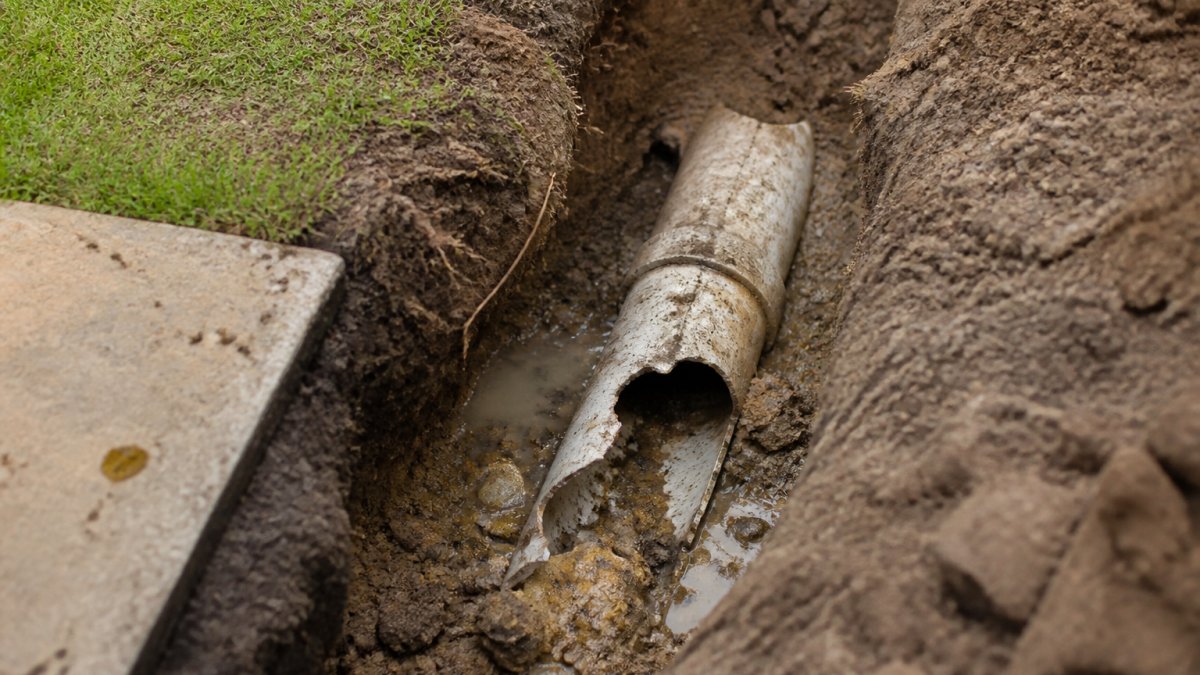
Table of Contents
- Signs of a Broken Sewer Line You Cannot Ignore
- Clogged Pipe vs. Broken Pipe: How to Tell the Difference
- What a Sewer Line Camera Inspection Reveals
- Broken Sewer Pipe Repair Methods: Your Options
- Immediate Steps to Take if You Suspect a Broken Sewer Line
- Common Causes of Sewer Line Failure
- Frequently Asked Questions
Last Updated: October 19, 2026
Signs of a Broken Sewer Line You Cannot Ignore
A broken sewer line is one of the most serious plumbing problems a homeowner can face: sewage backs up into your home, creates health hazards, and damages your property.
Many homeowners miss early warning signs because they don’t know how to tell if sewer line is broken. Here are the seven most important indicators.
Sewage Backups in Drains and Toilets
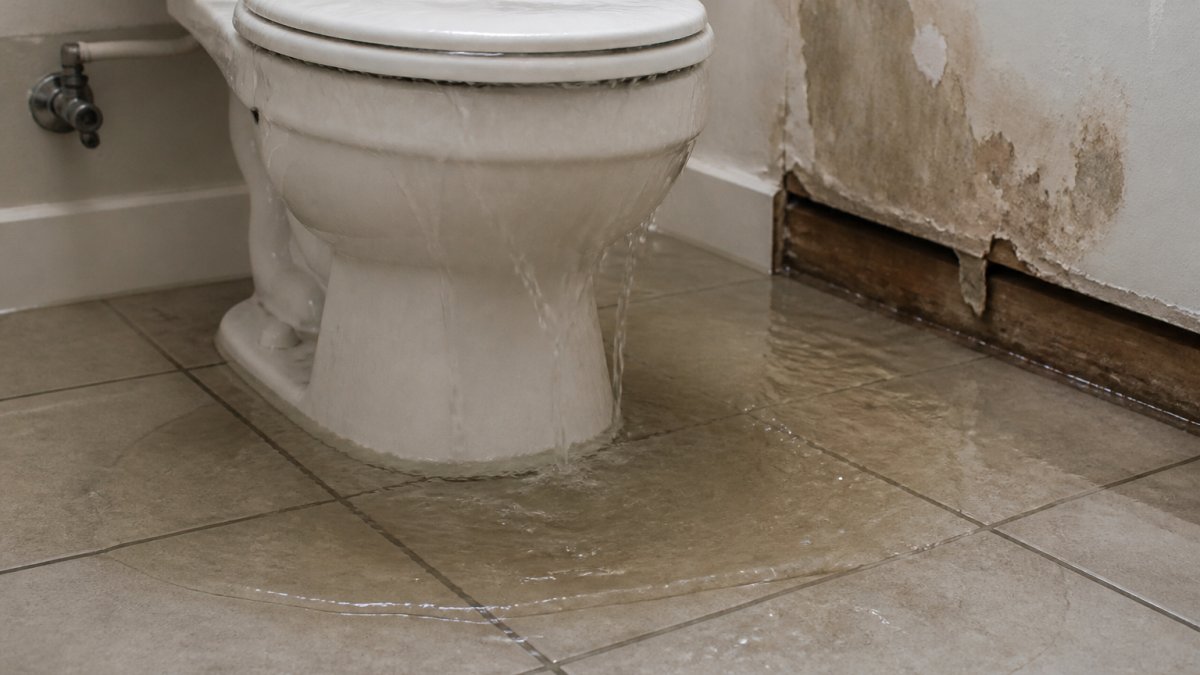
Sewage backing up into your home is the clearest sign of a broken sewer line. When the line fails, wastewater has nowhere to go except back into your house.
You’ll notice it first in the lowest drains: basement drains, showers, and toilets fill with dark, foul-smelling water, usually during or right after heavy water use, and multiple fixtures back up at once.
This is a health emergency. Sewage contains harmful bacteria and pathogens (the CDC). Never ignore a sewage backup. Call a licensed plumber immediately to diagnose the problem.
Slow Drains Across Multiple Fixtures
Slow drains in one bathroom might be a simple clog. But slow drains across multiple fixtures point to a broken sewer line.
When your main sewer line is cracked or collapsed, water drains slowly from everywhere, kitchen sink, bathroom sinks, showers, and toilets, even after plunging.
A single clogged pipe affects only that fixture; a broken sewer line affects your entire drainage system.
Gurgling Sounds from Toilets and Drains
When a sewer line is broken, air gets trapped in the pipes and creates gurgling noises as water moves through.
You’ll hear it repeatedly when you flush the toilet or run the sink, a distinctive, unsettling noise from the bowl or drain.
Gurgling alone doesn’t always mean a broken sewer line, but combined with other signs it’s a strong indicator something is wrong with your main drainage system.
Foul Sewer Odors Inside and Outside
A broken sewer line releases sewer gas, unmistakable, unpleasant, like rotten eggs or raw sewage, into your home and yard.
Inside, you smell it near drains, in the bathroom, or in the basement; outside, it’s strongest along the sewer line’s path through your yard.
Sewer gas contains toxic methane and hydrogen sulfide (Hydrogen Sulfide Carbonyl Sulfide | Toxic Substances | Toxic Substance Portal).
Yard Changes: Soggy Ground and Unusually Lush Grass
A broken sewer line leaks sewage into the soil around it, and your yard shows it.
Look for these yard changes:
- Soggy patches that stay wet even when it hasn’t rained
- Unusually lush or green grass in one area (sewage acts as fertilizer)
- Sunken spots or depressions in the ground
- Standing water or pools that appear without rain
- Soft, spongy ground when you walk on it
These signs mean sewage is leaking into your yard. Keep children and pets away from affected areas.
Mold Growth and Moisture Damage
Moisture from a broken sewer line lets mold grow quickly in damp basements and crawl spaces.
Look for black, green, or white spots on walls, floors, or pipes, musty basement odors, and water stains on basement walls.
Mold causes health problems, especially for people with allergies or asthma, and constant moisture weakens wood beams and foundations (the CDC).
Clogged Pipe vs. Broken Pipe: How to Tell the Difference
A clogged pipe and a broken sewer line produce nearly identical symptoms, so homeowners often misdiagnose the problem and pay for the wrong fix.
A clogged pipe is blocked by grease, hair, wipes, or roots that entered through a joint without cracking the pipe, and usually affects one fixture, branch line, or section.
A broken sewer line has a crack, collapse, offset joint, or separation.
A practical decision guide
Use this sequence and stop at the first step that matches your situation.
- Count the affected fixtures. One slow or backed-up fixture points to a local clog or branch line. Two or more backing up at once, especially on the lowest level, points to the main line and raises the odds of a break.
- Check the timing. A clog backs up during or right after heavy use and clears slowly. A break backs up unpredictably, sometimes with no water use, because groundwater is entering the pipe.
- Try a plunger on a single fixture. If it clears and stays clear, a local clog is likely. If plunging has no effect or the problem returns within hours, stop and skip chemical drain cleaner.
- Look at the yard. Soggy patches, sunken soil, lush grass, or standing water along the sewer path strongly suggest a break; a clog does not wet the yard.
- Smell the air. A musty drain odor near one fixture suggests a clog; a strong rotten-egg or raw-sewage odor inside or in the yard suggests escaping sewer gas and a likely break.
- Listen for gurgling in other fixtures. Gurgling in a toilet when you run a sink elsewhere means air is being pulled through the system, common with a partial blockage or a break.
Do not pour chemical drain cleaner into a line you suspect is broken. If the pipe is cracked, caustic cleaner can leak into soil, damage the pipe further, and create a splash hazard when the line is later opened. Mechanical snakes can also damage a brittle or collapsed pipe. Stop and call a licensed plumber.
Why the symptoms overlap
Both restrict flow, so both cause slow drains and backups. The difference is where the water goes: in a clog it stays inside the pipe; in a break it enters the soil, which is why yard symptoms and sewer odors are the clearest differentiators. A camera inspection is the only reliable way to confirm the diagnosis.
What to do while you wait
If you suspect a break, stop using the affected fixtures, avoid flushing, and keep children and pets away from soggy yard areas. Document symptoms with photos and timing notes, then tell the plumber which fixtures back up, when, and what the yard looks like.
A plunger or drain snake might clear a clog, but on a broken sewer line these tools won’t help and can worsen the damage.
What a Sewer Line Camera Inspection Reveals
A sewer camera inspection is the only reliable way to confirm whether a sewer line is broken, clogged, or collapsed, and it determines which repair method makes sense.
How the inspection works
A plumber feeds a small, waterproof camera on a flexible cable into the line through an access point, most commonly:
- The exterior cleanout, usually a capped pipe near the foundation or at the property line.
- A roof vent stack, used when no cleanout is accessible.
- A toilet flange, with the toilet temporarily removed, when interior access is the only option.
The camera travels the line while transmitting video to a monitor. Many systems also emit a locator signal so the technician can mark the exact depth and position of a defect on the surface.
A typical residential inspection takes 30 minutes to an hour, depending on line length and access. The plumber should provide a video recording or written report with the location and severity of any defects.
What the camera can reveal
- Cracks and fractures in the pipe wall, from hairline to full breaks.
- Collapsed or crushed sections where the pipe has caved in and flow is blocked.
- Offset or separated joints where pipe sections have shifted apart and soil can enter.
- Tree root intrusion entering through joints or cracks and expanding inside the pipe.
- Grease, scale, or debris buildup that narrows the pipe without structural damage.
How to interpret the findings
The report should tell you what the defect is, where it is, and how severe it is. Ask the plumber to explain:
- Whether the line is structurally sound or failing.
- Whether the defect is localized or extends along a length of pipe.
- Whether the pipe can be repaired in place or must be replaced.
- Whether the location affects the repair method, for example under a slab, driveway, or mature tree.
Ask for the video file or a link to it. A second opinion from another licensed plumber is far easier when you can share the footage and the locator marks rather than a verbal description.
What it costs and why it matters
A camera inspection is a modest expense compared with excavating the wrong section of yard or replacing a line that only needed a spot repair. Many plumbers apply the fee toward the repair if you hire them, so ask before scheduling.
A camera inspection fixes nothing by itself; its value is diagnostic, so the repair decision rests on evidence, not symptoms.
Broken Sewer Pipe Repair Methods: Your Options
Once you know your sewer line is broken, the best repair choice depends on damage location, severity, and budget.
Traditional excavation and replacement is the most common method: the plumber digs up the damaged section and replaces it with new pipe.
Trenchless pipe repair is newer and less invasive. Two main methods exist:
Pipe bursting breaks apart the old pipe and pulls new pipe through in one motion. It suits complete replacements but requires access points.
Cured-in-place pipe (CIPP) lining inserts a resin-coated flexible tube into the damaged pipe; the resin hardens into a new pipe inside the old one.
Trenchless methods cost more upfront but save on restoration, run faster, and cause less damage to your property.
Immediate Steps to Take if You Suspect a Broken Sewer Line
If you think your sewer line is broken, act quickly:
Stop using water if sewage is backing up into your home. Every gallon makes it worse, so don’t flush toilets or run showers until a plumber inspects the line.
Document the signs. Photograph soggy yard areas, backed-up toilets, or mold growth, and note when problems started.
Call a licensed plumber immediately. A broken sewer line gets worse every day; early diagnosis prevents damage to your home’s foundation and structure.
Don’t attempt DIY fixes. Drain snakes and chemical cleaners won’t fix a broken sewer line, they waste time and money.
Alpha Rooter & Plumbing responds to sewer emergencies within 90 minutes.
Common Causes of Sewer Line Failure
Understanding why sewer lines break helps prevent future problems.
Tree root intrusion is the most common cause.
Pipe corrosion affects older pipes.
Pipe blockages from grease, hair, and debris build pressure that can crack the pipe.
Freezing temperatures can crack sewer pipes in cold climates when water inside freezes and expands.
Poor installation or low-quality materials cause early failure, which is why using a licensed plumber matters.
Age is the simplest cause.
A broken sewer line demands fast action. Don’t delay: a camera inspection identifies the exact problem and guides the right repair.
Frequently Asked Questions
Can a broken sewer line cause sewage to back up into the house?
Yes. A broken or collapsed sewer line prevents wastewater from flowing away from your home. Sewage backs up into drains, toilets, showers, and sinks, creating health hazards and property damage. The severity depends on the break’s location and size. If you notice sewage backing up into multiple fixtures, stop using water and contact a plumber immediately to diagnose whether the sewer line is broken or clogged.
What’s the difference between a clogged pipe and a broken sewer line?
A clogged pipe blocks flow in one or two fixtures and often clears with a plunger or drain cleaning. A broken sewer line affects multiple drains simultaneously, causes recurring backups even after cleaning, and produces foul odors. A sewer camera inspection can definitively distinguish between them. Clogs are typically temporary; breaks require excavation and repair or replacement of the damaged pipe section.
How does a sewer line camera inspection work?
A plumber feeds a small, waterproof camera attached to a flexible cable into your sewer line through a cleanout or toilet. The camera transmits live video to a monitor, showing the pipe’s interior condition. Technicians look for cracks, collapses, tree root intrusion, corrosion, and blockages. The inspection identifies the exact location and nature of the problem, guiding repair decisions and cost estimates.
Should you stop using water if you suspect a broken sewer line?
Yes, limit water use until a plumber inspects the line. Continued water flow can worsen backups, increase sewage exposure in your home, and cause additional property damage. Use water only for essential needs like drinking and hygiene. Avoid running showers, doing laundry, or running the dishwasher. This precaution protects your health and prevents further damage while you arrange for professional diagnosis and repair.