
Table of Contents
- What You’ll Need Before Starting
- Safety Gear and Precautions
- Step-by-Step: Using a Plumbing Snake to Clear Your Drain
- Troubleshooting a Stuck Plumbing Snake
- Plumbing Snake vs. Drain Auger: Which Should You Use?
- When to Call a Professional Plumber
- How to Prevent Future Drain Clogs
- Frequently Asked Questions
Last Updated: September 24, 2026
What You’ll Need Before Starting
Before you attempt to clear a clogged drain with a plumbing snake, gather the right tools and materials. A manual plumbing snake, also called a drain auger, is the core tool you’ll need. Most homeowners find that a 25-foot cable works for standard household drains. You’ll also need a bucket to catch water and debris, old towels or rags, and a flashlight to see inside the drain. We recommend having a pair of slip-joint pliers nearby for removing the drain strainer or P-trap if needed.
Check your snake’s condition before you start. Look for rust, kinks, or damage to the cable. A damaged cable can break inside the pipe and create a worse problem. If your plumbing snake shows signs of wear, it’s better to replace it than risk getting stuck.
Different drain types require different approaches. Kitchen sinks have a P-trap underneath. Bathroom sinks are similar. Shower drains may be harder to access. Toilet clogs sometimes need a specialized toilet auger instead of a standard plumbing snake. Know which type of drain you’re working on before you begin.
Keep your plumbing snake stored in a dry location. Moisture causes rust on the cable, which weakens it over time and makes it harder to feed through tight spaces.
Safety Gear and Precautions
Protecting yourself is essential when using a plumbing snake. Wear safety goggles to keep splashing water and debris out of your eyes. Old drain water carries bacteria and contaminants you don’t want on your skin or in your eyes (the CDC).
Work gloves are non-negotiable. Heavy-duty work gloves protect your hands from sharp edges on the cable and from the dirty water in the pipe. The crank handle on a plumbing snake can pinch skin if you’re not careful, so gloves add an extra layer of safety.
Wear old clothes you don’t mind getting wet or dirty. Drain water splashes unpredictably. You’ll likely get wet during the process.
Make sure you have good lighting in the work area. A flashlight or headlamp helps you see what you’re doing inside the drain. Poor lighting leads to mistakes and safety risks.
Never rush the process. Take your time feeding the cable into the pipe. Forcing a plumbing snake can cause it to kink or break. It can also damage the pipe if you push too hard.
Do not use a plumbing snake on a drain that has chemical drain cleaner in it. The chemical can splash onto your skin or eyes when the snake breaks up the clog. If you’ve already used drain cleaner, flush the drain thoroughly with water first and wait at least an hour before snaking.
Step-by-Step: Using a Plumbing Snake to Clear Your Drain
Prepare the drain area and remove the strainer
Start by clearing the area around the drain. Remove any items stored under the sink or around the drain opening. Lay down old towels to catch water that will spill when you remove the strainer or P-trap.
For a kitchen or bathroom sink, you’ll need to remove the drain strainer first. Look under the sink and locate the slip nuts holding the P-trap in place. Use your slip-joint pliers to loosen these nuts. The P-trap is the curved section of pipe directly below the drain. Once you remove it, you’ll have direct access to the drain pipe.
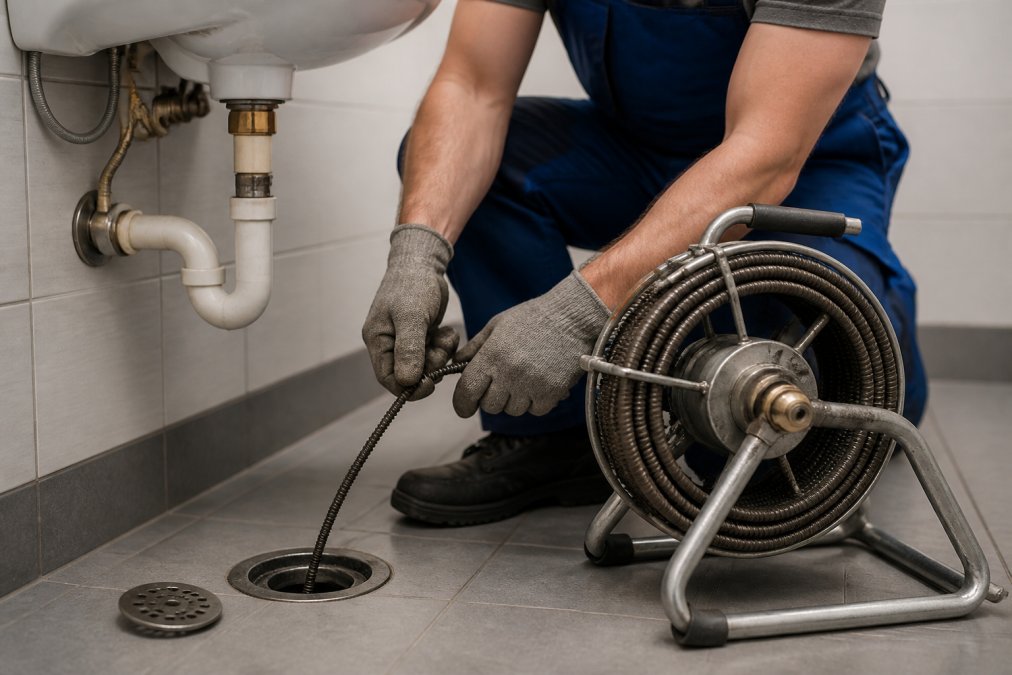
For a shower drain, you may only need to remove the drain cover or strainer. Some shower drains pop out easily. Others are screwed down. Check what type you have before you start.
Place your bucket under the opening to catch water. Even if you think the drain is just clogged with hair, there’s usually standing water trapped above the clog.
Feed the cable into the pipe
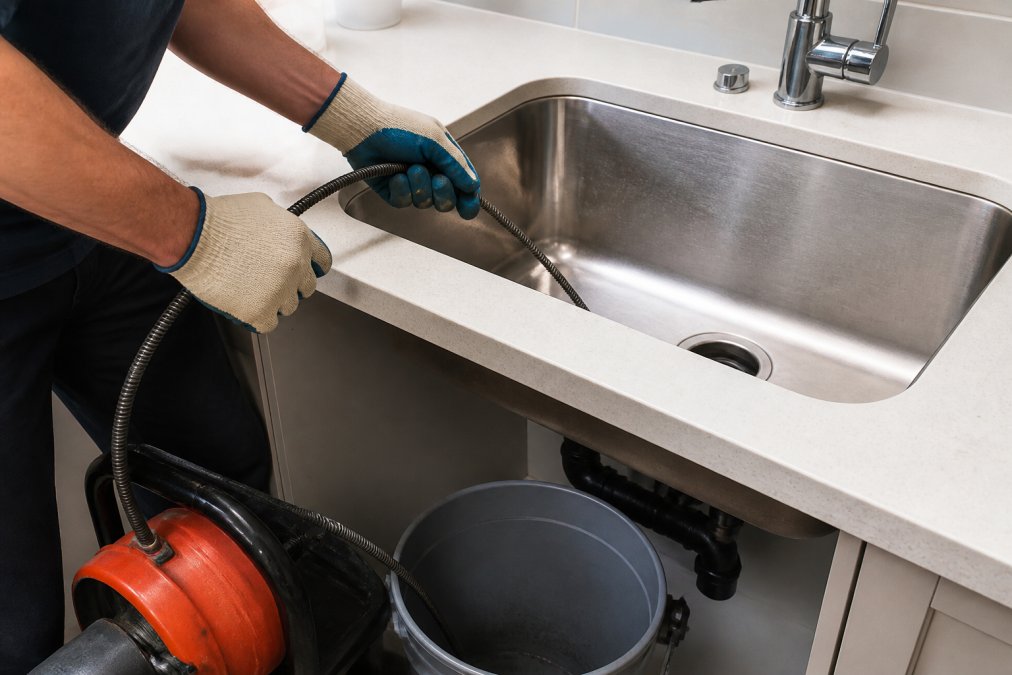
Insert the tip of the plumbing snake cable into the drain opening. Feed it slowly at first. Don’t force it. The cable should slide in smoothly if you’re going the right direction.
As you feed the cable into the pipe, keep one hand on the crank handle and guide the cable with your other hand. This gives you control and helps you feel what’s happening inside the pipe. You want to maintain steady, even pressure.
Most household drain pipes have a diameter of 1.5 to 2 inches. Your plumbing snake cable should fit through without jamming. If it’s catching or resisting, you may be hitting a bend in the pipe rather than the clog.
Feed the cable until you feel resistance. This is usually the clog. Don’t push past it yet. You need to work the snake into the obstruction first.
Work the snake through the clog
Once you feel the cable hit the clog, start turning the crank handle. Rotate it slowly and steadily. The rotating motion helps the spring head on the end of the cable break apart the debris.
As you crank, continue feeding more cable into the pipe. Work the plumbing snake deeper into the clog. You’ll feel the resistance change as the cable works through the material. Hair clogs feel different from soap buildup or food debris.
Keep turning and feeding for 30 seconds to a minute. Then pull back slightly and feed more cable in. This back-and-forth motion helps dislodge stubborn material.
You may feel the cable wrap around something inside the pipe. This is common with hair clogs. The cable naturally grabs hair and pulls it out. Keep cranking to break the hair apart.
Handle resistance and tension properly
Resistance is normal when using a plumbing snake. The key is learning the difference between hitting the clog and hitting a bend in the pipe. A pipe bend will feel like a smooth resistance. The cable will slide through if you keep steady pressure. A clog feels more like hitting something solid that doesn’t move.
If you feel heavy resistance, stop pushing. Back the cable out slightly and try again. Forcing the plumbing snake can bend or kink the cable. A kinked cable is harder to retrieve and can damage the pipe wall.
Never crank the handle so hard that your hands hurt. Steady, moderate pressure works better than brute force. The cable does the work, not your muscles.
If the cable suddenly becomes very tight, you may have hit something solid like a pipe joint or a major blockage.
The most common mistake is pushing too hard too fast. Let the plumbing snake do the work. Slow, steady pressure clears most clogs without damaging pipes.
Retrieve the snake and debris
Once you’ve worked through the clog, start pulling the cable back out of the drain. Crank the handle in reverse or pull by hand, depending on your snake’s design. Pull slowly and steadily.
Troubleshooting a Stuck Plumbing Snake
Sometimes a plumbing snake gets stuck inside the pipe. This happens when the cable wraps around itself or gets caught on something inside the drain. The key is staying calm and working methodically to free it.
Plumbing Snake vs. Drain Auger: Which Should You Use?
The terms “plumbing snake” and “drain auger” are often used interchangeably, but there are slight differences. A drain auger typically refers to a powered version with a motor. A plumbing snake usually means the manual hand-crank version.
When to Call a Professional Plumber
Some clogs are beyond what a plumbing snake can handle. Knowing when to stop and call a professional saves time and prevents pipe damage.
DIY snaking works best for simple clogs in kitchen or bathroom sinks that you’ve caused recently, like hair or soap buildup. Professional service is better for old pipes, main line clogs, or clogs you can’t identify.
How to Prevent Future Drain Clogs
The best way to deal with clogs is to prevent them. Simple maintenance habits keep your drains flowing freely.
| Prevention Method | Best For | Frequency |
|---|---|---|
| Drain strainers | Hair and debris | Continuous |
| Hot water flush | General maintenance | Weekly |
| Avoid grease | Kitchen drains | Always |
| Main line inspection | Old pipes | Every 2-3 years |
Frequently Asked Questions
What are common mistakes to avoid when using a drain snake?
The most frequent errors include applying excessive force that can damage the pipe wall, especially with older cast iron or PVC pipes. Feeding the cable too quickly without feeling for resistance, skipping the drain strainer removal, and not wearing work gloves or safety goggles are also common oversights. Many homeowners also fail to secure the crank handle properly before rotating, which can cause the snake to slip or bind unexpectedly. Testing water flow before fully retrieving the snake can also lead to backup issues.
Can a plumbing snake damage PVC or older metal pipes?
Yes, aggressive snaking can damage both materials. PVC pipes are particularly vulnerable to punctures or cracks if you apply too much rotational force or push too hard. Older cast iron and galvanized steel pipes are corroded and weaker, making them susceptible to perforation. The key is using steady, controlled pressure and stopping immediately if you feel unusual resistance. If your home has older pipes or you’re unsure of your pipe material, this is a strong signal to call a professional plumber who can assess the situation and use appropriate techniques.
Should you run water while using a plumbing snake?
No. Keep the drain dry while snaking. Running water adds pressure, makes it harder to feel what the snake is contacting, and can push debris further down the pipe. After you’ve broken through the clog and retrieved the snake, then flush the drain with hot water to clear remaining debris and test the drainage flow. This two-stage approach gives you better control and clearer feedback on whether the clog is actually cleared.
Why is my sink still clogged after using a snake?
Several causes are possible: the clog may be further down the drain system than your snake can reach, you may have broken through the obstruction without fully removing it, or the blockage could be caused by something the snake cannot grip (like hardened grease or tree roots). If the P-trap itself is clogged, you may need to remove and clean it manually. Persistent clogs after snaking often indicate a more complex drainage issue that requires professional equipment like hydro-jetting or a camera inspection to diagnose the root cause.
Comments are closed