
Table of Contents
- When a Sewer Line Repair Permit is Required
- Understanding Sewer Jurisdiction and LADBS Authority
- Plumbing Permit Cost and Fee Structure
- Licensed Contractor Requirements and C-36 Licensing
- How to Apply for a Sewer Line Repair Permit
- Sewer Line Replacement Inspection Process and Timeline
- Emergency Sewer Repair Regulations and Expedited Permits
- Consequences of Skipping the Permit Process
- Frequently Asked Questions
Last Updated: September 27, 2026
When a Sewer Line Repair Permit is Required
A sewer line repair permit is required whenever you plan to repair, replace, or alter the sewer lateral connecting your property to the municipal sewer system. The sewer lateral, also called the building drain or house connection sewer, is the underground pipe that carries wastewater from your home or business to the public sewer infrastructure. Any work on this line requires a sewer line repair permit from the Department of Building and Safety (LADBS) before you begin.
The requirement applies whether you’re fixing a small crack, replacing a corroded section, or conducting a full sewer line replacement. Even emergency repairs typically need a permit, though expedited processes exist for true emergencies. The only exception is minor maintenance work like cleaning or jetting to clear blockages, those usually don’t require permits. But the moment you’re cutting into the pipe, replacing sections, or altering the sewer connection, you need approval.
Why does this matter? Working without a permit exposes you to fines, liability issues, and problems when you sell the property. More importantly, unpermitted work can damage the sewer system, create backups for neighboring properties, and fail inspection when future buyers get a home inspection. A licensed contractor knows exactly when a permit is required and handles the application process so you stay compliant.
Understanding Sewer Jurisdiction and LADBS Authority
Before you can apply for a sewer line repair permit, you need to verify which authority has jurisdiction over your sewer lateral. This is critical because the requirements, fees, and processes differ depending on whether you’re in the City of Los Angeles or unincorporated county areas.
The Los Angeles Department of Building and Safety (LADBS) oversees sewer permits for properties within the City of Los Angeles. If you’re outside the city limits, the Los Angeles County Department of Public Works (DPW) or a local sanitation district may have jurisdiction instead. You can verify sewer jurisdiction by checking your property address on the LADBS website or calling your local district office.
Sewer jurisdiction also determines whether a sewer stub is available at your property line. A sewer stub is the connection point where your sewer lateral attaches to the public sewer main. If no stub exists, you’ll need to petition the city or county to install one, a process that can take months and require additional permits. Verifying stub availability early prevents costly delays.
The jurisdiction authority also enforces sewer connection regulations specific to your area. These regulations cover pipe materials, slope requirements, depth specifications, and how the connection must be made. Working with a licensed contractor ensures compliance with the exact standards your jurisdiction requires.
Plumbing Permit Cost and Fee Structure
Sewer line repair permit fees vary based on the scope of work and your jurisdiction. The cost structure typically includes the permit application fee, plan check fee, and inspection fees, though the exact amounts depend on whether you’re in the City or County.
Understanding the fee breakdown helps you budget accurately. The permit application fee covers the administrative cost of processing your request. The plan check fee applies when LADBS needs to review your contractor’s plans and specifications, this is mandatory for most sewer line work. Inspection fees cover the cost of the city or county inspector visiting your property to verify the work meets code.
Most jurisdictions charge based on the scope of work. A simple repair might cost less than a full sewer line replacement, but the difference isn’t always dramatic because plan check and inspection fees apply regardless. Getting an upfront estimate from your contractor before you apply gives you clarity on total costs.
Alpha Rooter & Plumbing provides upfront pricing with no hidden fees, so you know exactly what the repair work will cost before we begin. This transparency helps you budget and avoid surprises when additional work is discovered.
Licensed Contractor Requirements and C-36 Licensing
Sewer line repair work must be performed by a licensed plumber holding a C-36 license (plumbing license) or a C-42 license (sanitation system license). These licenses are issued by the California Department of Consumer Affairs and are mandatory, you cannot legally hire an unlicensed person to do this work, and doing so voids your permit and creates liability.
A C-36 licensed plumber is qualified to install, repair, and maintain plumbing systems, including sewer laterals. A C-42 sanitation system license covers specialized work on septic systems and alternative sewer solutions. For standard municipal sewer line repairs, a C-36 license is what you need.
When you hire a contractor, verify their license number with the Contractors State License Board (CSLB). This takes two minutes online and confirms the license is active and in good standing. Many contractors display their license number on their website or truck.
The licensed contractor is responsible for pulling the permit, submitting plans if required, and ensuring all work meets code. They also handle scheduling inspections and coordinating with LADBS or the county. This is why hiring a licensed, experienced contractor matters: they know the process, manage the paperwork, and ensure the work passes inspection the first time.
How to Apply for a Sewer Line Repair Permit
Step 1: Verify Sewer Jurisdiction and Stub Availability
Start by confirming which agency has jurisdiction over your sewer lateral. Visit the LADBS website or contact your local district office to verify whether you’re in the City of Los Angeles or County jurisdiction. You’ll need your property address and assessor’s parcel number (APN).
While verifying jurisdiction, ask whether a sewer stub exists at your property line. The stub is the connection point where your lateral attaches to the public sewer main. If no stub is present, you’ll need to apply for a separate stub installation permit before your repair permit can be approved. This can add weeks to your timeline, so finding out early is essential.
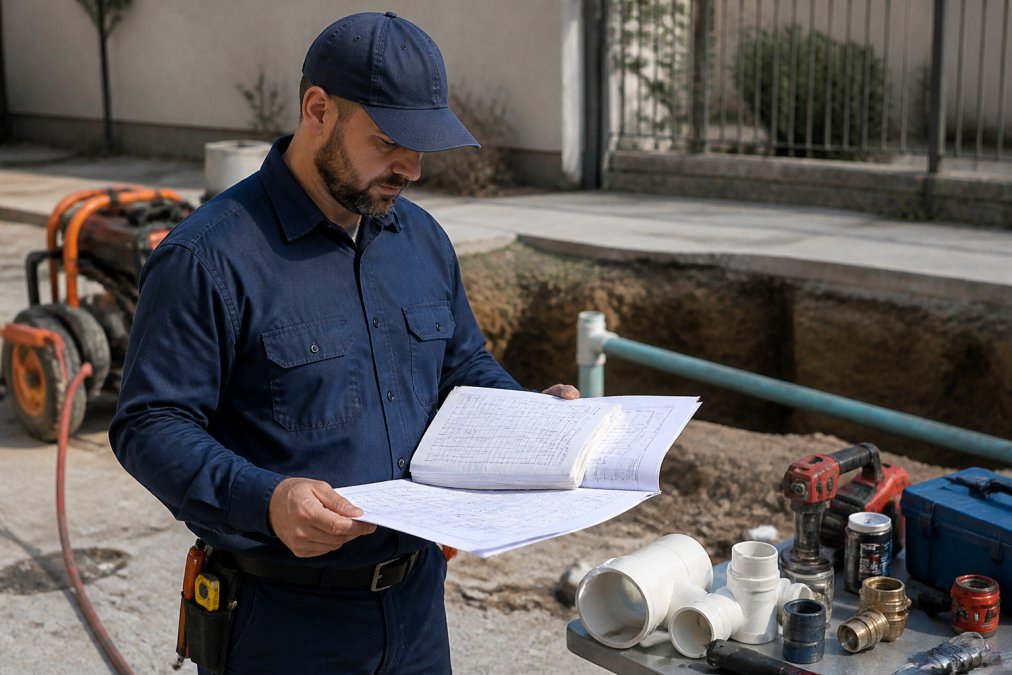
Your contractor should handle these verification steps.
Step 2: Submit Your Permit Application Through EPIC-LA
The City of Los Angeles uses EPIC-LA (ePlan Check and Issuance Center for Los Angeles) as its online permit application portal. Your licensed contractor will submit the permit application through EPIC-LA, including details about the repair scope, materials to be used, and contractor information.
For most sewer line repairs, you’ll need to submit plans showing the existing sewer lateral, the proposed repair or replacement, and how the work connects to the public sewer main. The plans must show the pipe material, slope, depth, and connection details. If you’re replacing the entire lateral, plans are mandatory. For smaller repairs, plan requirements vary by jurisdiction.
The application fee is due when you submit. Processing times typically range from 5 to 10 business days, though complex projects may take longer. You’ll receive a permit number once your application is approved, and that number must be displayed at the job site during work.
Step 3: Plan Check and Code Compliance Review
If your project requires plan review, LADBS will examine your contractor’s plans to ensure they comply with the Los Angeles Plumbing Code and sewer connection regulations. The plan check process verifies that pipe materials meet code, slopes are correct, and the connection to the public sewer main is proper.
If the plans have deficiencies, LADBS will issue a “plan check correction notice” listing what needs to be changed.
Step 4: Inspection and Final Approval
A city or county inspector will visit your property to verify the work meets code before you can close the permit. The final inspection checks that the pipe material is correct, connections are secure, slopes are proper, and the sewer lateral is properly connected to the public sewer main.
Sewer Line Replacement Inspection Process and Timeline
A full sewer line replacement inspection process is more involved than a simple repair because the entire lateral is being removed and replaced. The inspection verifies that the new pipe is the correct material, properly sloped, correctly connected, and free of defects.
Emergency Sewer Repair Regulations and Expedited Permits
Emergency sewer repair regulations allow for expedited permitting when a sewer line failure creates an immediate health or safety hazard. A burst sewer lateral causing sewage to back up into your home, or a collapsed pipe creating a sinkhole, qualifies as an emergency.
Consequences of Skipping the Permit Process
Working on a sewer lateral without a permit creates multiple serious consequences. The most immediate is a fine from LADBS or the county, unpermitted sewer work fines can range significantly depending on the scope of work and your jurisdiction’s enforcement practices. Beyond fines, you’re liable if the unpermitted work damages your neighbor’s sewer connection or causes backups on adjacent properties.
Frequently Asked Questions
Do I need a permit to repair a sewer line?
Yes. Any sewer line repair, replacement, or alteration in Los Angeles requires a permit from LADBS (Los Angeles Department of Building and Safety). The only exception is emergency repairs to stop active sewer damage, which must be followed by a permit application within a specific timeframe. Performing sewer work without a permit can result in fines, forced removal of the work, and liability issues if something goes wrong.
What is the difference between a standard plumbing permit and a sewer connection permit?
A standard plumbing permit covers indoor plumbing fixtures and building drains within your property. A sewer connection permit specifically authorizes work on the sewer lateral (the line connecting your building drain to the public sewer system) and any connection to the municipal sewer infrastructure. Sewer work requires more rigorous inspection because it affects public sewer capacity and system integrity.
How much does a sewer line repair permit cost?
Plumbing permit cost varies based on the scope of work, estimated project value, and whether the repair involves a simple lateral fix or full sewer line replacement. LADBS charges plan check fees, permit fees, and inspection fees separately. For accurate pricing on your specific project, contact LADBS directly or work with a licensed contractor who can provide a detailed fee estimate as part of your project quote.
What happens if I do a sewer repair without a permit?
Unpermitted sewer work can trigger code violations, fines from LADBS, mandatory removal of the work, and denial of future permits or certificate of occupancy for other projects. If something goes wrong during unpermitted work, you lose liability protection and may face personal liability for damage to the public sewer system. When selling your property, unpermitted sewer repairs can create title issues and reduce property value.
Comments are closed