
Last Updated: October 29, 2026
Quick Summary
If your landlord ignores water damage, document everything with dated photos and video, then report the problem in writing and set a firm repair deadline. Keep a paper trail, escalate to local housing or code enforcement if needed, and check your state’s rules before withholding rent or making repairs yourself.
- Photograph and video the damage with dates before cleaning up or discarding anything.
- Report the problem in writing by email or text, and send it through any method your lease requires.
- Include photos, the date you first noticed the damage, and a deadline for a written response.
- Escalate to local housing or code enforcement if there is no reply after a follow-up and a formal demand letter.
- Check your state’s rules before withholding rent or repairing the damage yourself.
Table of Contents
- Why Water Damage Gets Worse When a Landlord Ignores It
- Step 1: Document the Damage Before Anything Else
- How to Report Water Damage to Landlord in Writing
- Water Damage Repair Request Letter to Landlord: What to Include
- Who Is Responsible for Water Damage in a Rental?
- Landlord Water Damage Repair Timeline and Escalation Steps
- Protecting Your Health, Belongings, and Lease Rights
- Next Step: Get Your Water Damage Looked at Today
- Frequently Asked Questions
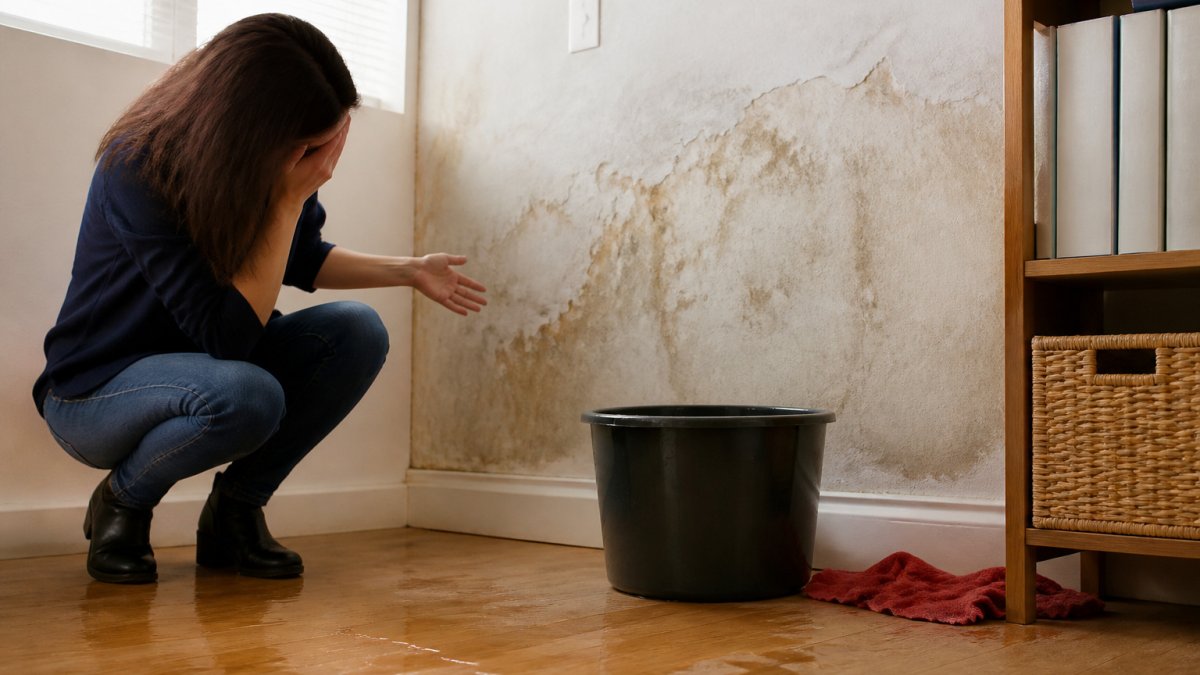
If your landlord ignores water damage, the problem usually gets worse with each passing week. If a pipe is actively bursting, see emergency steps for a burst main water pipe for what to do while you wait on the landlord.
This guide walks through what to do, in order, from documenting the damage to escalating if repairs still don’t happen.
Why Water Damage Gets Worse When a Landlord Ignores It
Water keeps spreading after it first shows up. A small leak can soak into drywall, subfloors, and insulation before you see any stain.
Waiting also creates bigger problems:
- Mold starts growing within a day or two in damp areas.
- Wood and flooring warp, which can make the unit harder to live in.
- Drain and sewer lines fail when water finds its way into the building’s plumbing.
Old pipes in older buildings make this worse. For a closer look at the dangers of broken sewer pipes and contamination, see broken sewer pipe health risks. For tips on preventing sewer backups in older homes, see Prevent Sewer Backups in Older Homes: 7 Essential Steps.
Step 1: Document the Damage Before Anything Else
Take photos and videos before you clean up or move belongings. Your records are the proof that the damage happened and how bad it was.
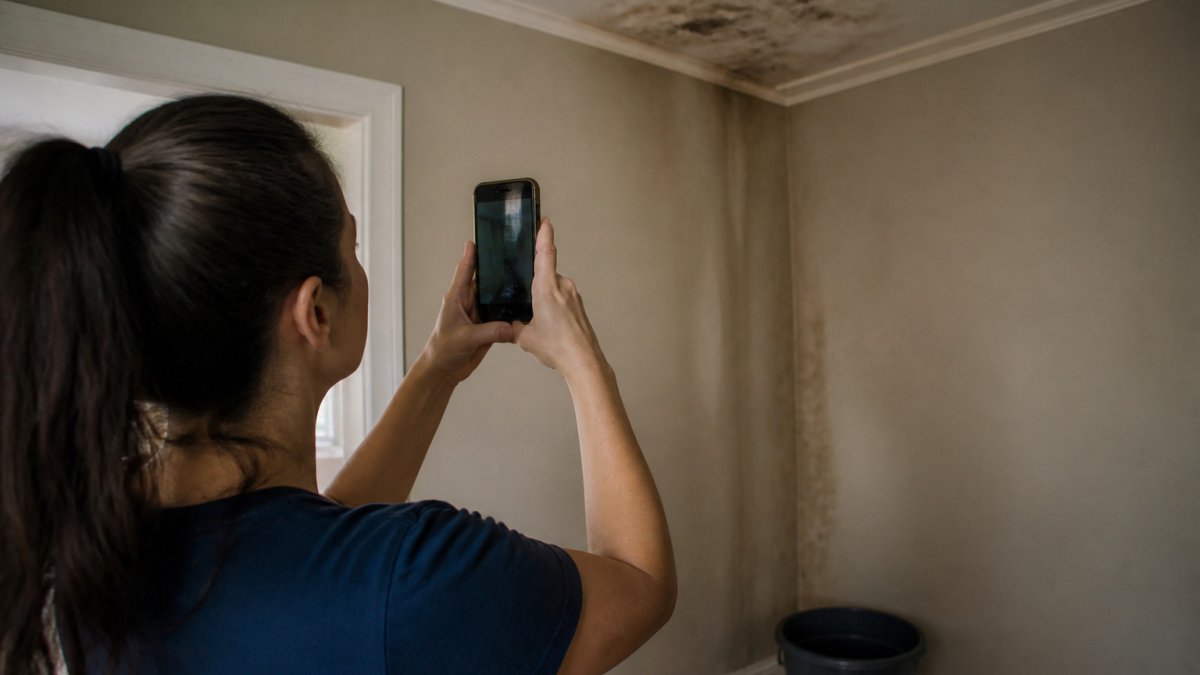
- Photograph the leak source, stains, and wet materials.
- Record a short video showing the water and the area around it.
- Note the date and time next to each photo.
Keep the original files on your phone or cloud storage so they can’t be lost.
Watch out: Don’t throw away damaged items until you’ve photographed them. Your landlord may later argue the damage was smaller than it was.
How to Report Water Damage to Landlord in Writing
A verbal call is not enough. Put every report in writing so you have a record.
- Send an email or text message, and keep a copy.
- Describe the problem, where it is, and when you first noticed it.
- Attach your photos.
Many leases also require written notice through a specific method, such as certified mail. Check your lease for the exact notice requirements.
Water Damage Repair Request Letter to Landlord: What to Include
A clear letter is harder to ignore. Include these details:
- Your name, address, and unit number.
- The date you first noticed the damage.
- A specific description of the problem and its location.
Keep a copy of the letter with your photos. A simple template works well:
“On 2026, I discovered water damage in [location] caused by [source, if known]. I have attached photos. Please arrange repairs by 2026 and confirm in writing. Thank you.”
Who Is Responsible for Water Damage in a Rental?
Responsibility turns on three things: the cause of the damage, what your lease says, and the habitability rules in your state. Most disputes are won or lost on the first item, so document the source before anyone repairs it.
The default split
- Landlord: building systems and structural failures, roof leaks, failed supply or drain lines inside walls, water heaters, sewer backups from the building’s main line, and windows that leak because of failed seals.
- Tenant: damage caused by your own actions or neglect, an overflowing tub, a clogged toilet you kept flushing, a supply line to your washer that burst because it was never replaced, or a pipe that froze because you left the heat off in winter.
- Shared or unclear: condensation, slow leaks behind walls, and damage from a neighboring unit. These often require an inspection to assign fault, which is why a written report from a licensed plumber is valuable.
Habitability standards
Nearly every state has an implied warranty of habitability or a statutory repair-and-maintain duty that requires landlords to keep plumbing, hot water, and weather-tight walls and roofs in working order. Those duties generally cannot be waived by a lease clause, even one that says the tenant accepts the unit “as is.” Check your state’s statute for the exact list, the wording and the remedies differ, and some states require you to give written notice and a specific number of days before any remedy is available.
Lease clauses to read closely
- Notice method: many leases require written notice to a specific address or portal. Follow it in addition to email.
- Repair-and-deduct limits: some leases prohibit it outright; in states that allow it, the statute usually overrides a blanket prohibition, but the procedural steps still apply.
- Renters insurance requirement: most leases require it, and it is your main route to recovering damaged belongings.
How insurance actually splits
The landlord’s property policy covers the building, drywall, flooring, cabinets, and the landlord’s fixtures. It generally does not cover your furniture, electronics, or clothing. Your renters policy covers your personal property and may include loss-of-use coverage for hotel or temporary housing costs if the unit is uninhabitable. Report the claim promptly, photograph each damaged item before discarding it, and keep receipts or an inventory list.
Before you argue about who pays, get the cause in writing from a licensed plumber. A one-page report identifying the source is the single most useful document in a responsibility dispute, and it is far harder for a landlord to dismiss than photos alone.
Landlord Water Damage Repair Timeline and Escalation Steps
If the landlord doesn’t respond, escalate in a fixed sequence. The timeline below is a practical default, not a legal rule, many states set their own notice periods and repair deadlines, so confirm the numbers against your state’s landlord-tenant statute or a local tenant resource before you rely on them.
| Day | Action | What to keep |
|---|---|---|
| Day 0 | Send written notice (email plus a mailed copy if your lease requires it). Photograph everything first. | Sent email, certified-mail receipt, photo set |
| Day 3 | Send a short follow-up if there is no reply. Restate the deadline. | Follow-up email or text |
| Day 7-10 | Send a formal demand letter with a firm repair date. | Copy of letter, delivery confirmation |
| Day 10-14 | Report the condition to your local housing or code enforcement office. | Complaint number, inspector name |
| Day 14+ | Consult a tenant rights group or attorney about remedies. | Consultation notes |
Treat these as business days and compress them for urgent issues. A burst pipe, sewage backup, or water touching electrical fixtures is an emergency, call a licensed plumber the same day and notify the landlord in writing immediately after.
Copyable follow-up message
Subject: Second request, water damage at [address, unit]
On 2026 I reported water damage in [location] caused by [source, if known] and attached photos. I have not received a repair date. Please confirm in writing by 2026 when repairs will begin. If I do not hear back, I will report the condition to [local housing/code office] and seek guidance on my options under [state] law.
Copyable demand letter
[Date]
Dear [Landlord name],
This is my formal demand for repair of water damage at [address, unit], first reported on 2026. The damage affects [rooms/areas] and includes [mold, sagging ceiling, wet flooring, etc.]. Photos are attached. Please complete repairs by 2026 and confirm the schedule in writing. If repairs are not scheduled by that date, I will report the condition to the local code enforcement office and consult a tenant rights attorney about remedies available under [state] law.
Sincerely,
[Name]
What counts as urgent
Most state habitability statutes treat the following as emergencies that require a faster response: no running water, no hot water, a sewage backup, a roof leak that lets water into living space, and any water intrusion near electrical panels or outlets. If you are unsure whether your issue qualifies, call your local code enforcement office and ask, they will tell you how they classify it.
Do not withhold rent or repair-and-deduct without checking your state’s rules first. Many states require a specific written notice, an escrow account, or a licensed contractor, and getting the procedure wrong can support an eviction. A single consultation with a tenant rights attorney is usually cheaper than a missed rent payment.
If your lease names a specific notice method, certified mail, a portal, or a management company address, use it in addition to email. Courts and housing agencies often weigh the lease-required method most heavily.
Protecting Your Health, Belongings, and Lease Rights
Water damage can create health risks, so take precautions while you wait for repairs.
- Stay away from standing water if it touches electrical outlets or appliances.
- Keep the area ventilated and use fans to dry it out.
- Watch for mold and avoid cleaning large mold areas yourself without protective gear.
Your renter’s insurance may cover damaged belongings. Report the claim promptly and keep a list of what was lost. If the unit becomes unsafe to live in, ask your local housing authority about temporary housing or rent reduction.
Next Step: Get Your Water Damage Looked at Today
Water damage doesn’t wait, and neither should you. If sewage has backed up, emergency sewer backup cleaning can get the damage assessed and cleaned right away. If the leak is active, call a licensed plumber now to stop the water and find the source. Alpha Rooter & Plumbing provides 24/7 emergency plumbing and drain service in Los Angeles, with upfront pricing and licensed professionals. For multi-unit buildings where water damage spans several apartments, see emergency plumbing for multi-unit buildings.
Frequently Asked Questions
Who pays for water damage in a rental property?
In most cases the landlord is responsible for repairing water damage caused by building defects, such as a failing roof, a broken pipe inside the walls, or a faulty water heater, because the landlord must keep the unit habitable under state law. Tenants are usually responsible when the damage results from their own negligence, such as leaving a tap running or blocking a drain with grease. Your lease may spell out additional details, but it cannot waive the landlord’s basic duty to maintain safe, habitable premises. Check your state’s landlord-tenant statute and your renter’s insurance policy, since personal belongings damaged by leaks may be covered by your own policy.
How long does a landlord have to fix water damage?
There is no single national deadline. Many states set a reasonable time for repairs, and some specify a number of days after written notice for urgent conditions such as active leaks, loss of hot water, or sewage backups. Serious conditions that make a unit unsafe generally call for a faster response than cosmetic damage. Your written request starts the clock, so keep proof of the date you sent it. If the landlord still does nothing after a reasonable period, contact your local housing or code enforcement office to learn which deadlines apply where you live.
What should I do if my landlord ignores a water leak?
Stop the leak if you safely can by closing the main shutoff valve or placing containers under the drip, and move valuables out of the affected area. Document the damage with dated photos and video, then send a written repair request by email or certified mail that describes the problem and asks for a specific fix. If nothing happens within a reasonable time, file a complaint with your local code enforcement or housing inspection office. Avoid withholding rent or paying a plumber and deducting the cost until you confirm your state allows those remedies, because doing it incorrectly can expose you to eviction.
Can I withhold rent if my landlord does not fix water damage?
Rent withholding and repair-and-deduct remedies exist in some states and cities but are not available everywhere, and they carry real risk if you use them incorrectly. Many jurisdictions require specific written notice, a defined waiting period, a cap on the amount you can deduct, and proof of the repair costs. Before you withhold anything, consult your local tenant rights organization, legal aid office, or an attorney to confirm the exact steps required where you live. Keep paying rent into a record-keeping method, such as a dated letter or receipt, while you pursue the process.
