
Last Updated: November 5, 2026
Quick Summary
To handle plumbing emergencies in rental properties, first decide whether water is actively damaging the unit or threatening safety, then shut off the water at the fixture valve or main shutoff. Contain the leak, document the damage with photos and a written timeline, and notify the landlord in writing so the repair clock starts.
- A plumbing emergency is any water problem that is active, spreading, or threatening safety.
- Turn fixture valves clockwise until they stop, and go to the main shutoff if a valve will not budge.
- Photograph and label the main shutoff valve and show tenants the fixture valves at move-in.
- Test shutoff valves during routine inspections, since old gate valves seize after years of disuse.
- Notify the landlord in writing even after calling, because a text or email creates a record.
Table of Contents
- Step 1: Assess the Situation and Identify the Problem
- Step 2: Shut Off the Water to Limit Further Damage
- What to Do When a Pipe Bursts in a Rental Property
- Step 3: Contain the Leak, Document the Damage, and Notify the Landlord
- How Quickly Landlords Must Fix Emergency Plumbing
- The Plumbing Emergency Checklist for Landlords
- Tenant Emergency Maintenance Request Template
- Call Alpha Rooter & Plumbing for 24/7 Emergency Response
- Frequently Asked Questions
Step 1: Assess the Situation and Identify the Problem
Plumbing emergencies in rental properties start with one fast decision: is water actively damaging the unit, or is this a slow drip you can schedule? That single call shapes everything that follows.
First, find the water. Look for pooling on the floor, bubbling paint, a sagging ceiling, or water running where it should not. Then answer three questions:
- Is water flowing right now, or has it stopped?
- Is it clean water, or is it sewage?
- Is there any risk to electrical outlets, wiring, or a gas appliance?
A plumbing emergency is any water problem that is active, spreading, or threatening safety. Clean water rising near outlets is an emergency. A slow drain in one sink is not.
The Emergency-vs-Routine Decision Tree
Use this sequence to classify the report before anyone dispatches a truck. It works for tenants filling out a request and for property managers triaging a call.
- Is water actively flowing or spreading right now? If yes, treat it as an emergency and move to shutoff. If no, continue.
- Is the water sewage, or is there a sewage smell? If yes, emergency, sewage carries pathogens and requires protective equipment. If no, continue.
- Is water within a few feet of an outlet, breaker panel, appliance cord, or ceiling fixture? If yes, emergency, kill power only if the panel is reachable on dry footing, then evacuate the room. If no, continue.
- Is the ceiling sagging, bulging, or dripping? If yes, emergency, a ceiling can collapse under trapped water. If no, continue.
- Is there no hot water at all, or is the water heater leaking from the tank itself? A leaking tank is an emergency; a pilot light out is usually routine. If leaking, emergency.
- Is the problem a single slow drain, a running toilet, or a drip under one sink? These are routine maintenance requests unless they are worsening.
- Is the tenant without any working toilet in the unit? A single working toilet is generally a habitability issue; treat a total loss of toilet function as urgent.
If every answer lands on the routine side, submit a standard maintenance request with photos and a preferred access window. If any answer lands on the emergency side, shut off the water and call the emergency line.
When Tenants Should Evacuate or Stop Work
Some plumbing emergencies are also safety emergencies. Tell tenants to leave the unit and call from a dry area when any of these are true:
- Sewage backup: Raw sewage in a tub, floor drain, or toilet overflow exposes occupants to bacteria and viruses. Do not wade in it, do not run a wet/dry vacuum through it, and do not try to snake the line yourself. Keep children and pets out of the affected area.
- Water near electrical: Standing water touching an outlet, cord, power strip, or the panel itself is a shock and fire risk. Do not flip a wet breaker. Leave and call.
- Ceiling damage: A bulging or sagging ceiling can hold gallons of water. Do not stand under it, do not poke a hole to drain it, and move furniture out from below.
Watch out: never stand in standing water near outlets, a breaker panel, or an appliance cord. If the water is near electrical fixtures, leave the room and call for help from a dry area.
Step 2: Shut Off the Water to Limit Further Damage
Shutting off the water is one of the most effective actions anyone can take early in a leak. Every minute water runs adds to the damage and the repair bill.
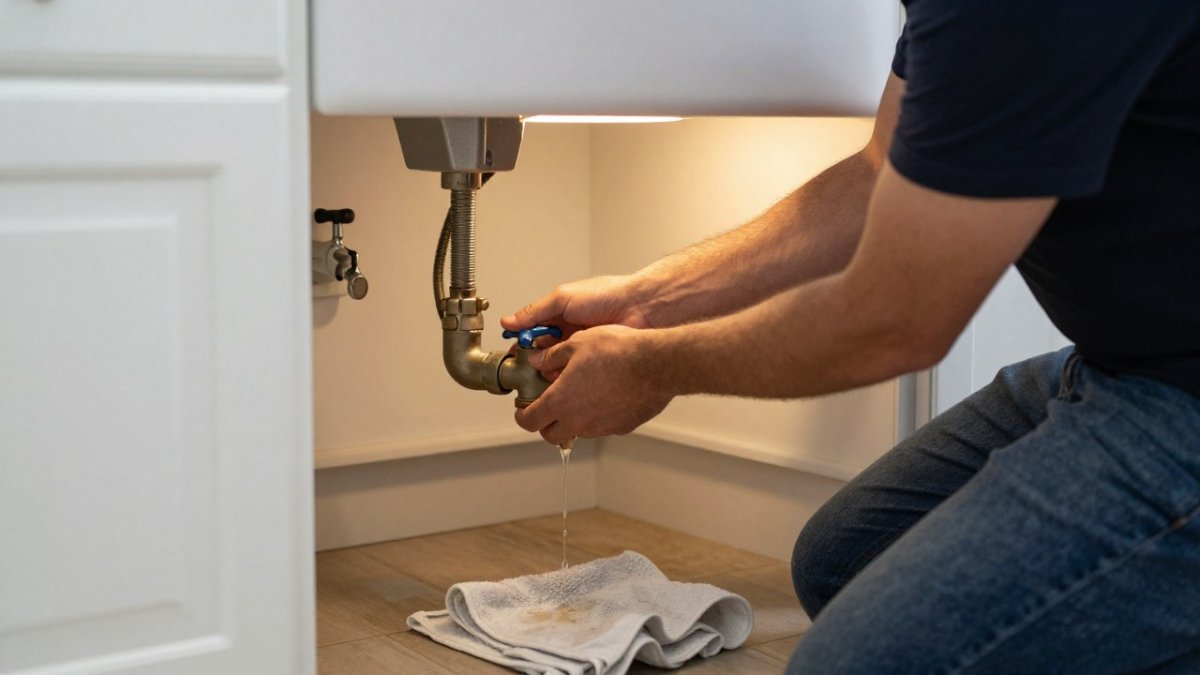
Turn the valve clockwise until it stops. If it will not budge, go to the main shutoff valve. Do not force a stuck valve with pliers; a snapped stem turns a leak into a flood.
Locating the Main Shutoff Valve and Fixture Valves
The main shutoff valve usually sits where the water line enters the building, near the meter, in a basement, utility closet, or exterior box. Fixture shutoff valves sit directly behind or below each toilet, sink, and washing machine.
Here is what to tell every tenant before an emergency happens:
- Photograph the main shutoff valve and text it to the tenant at move-in
- Label the valve with a bright tag
- Show tenants the fixture valves under each sink and behind each toilet
A common mistake is assuming the valve works. Old gate valves seize after years of disuse. Test them during routine inspections, not during a flood.
What to Do When a Pipe Bursts in a Rental Property
A burst pipe needs the same first move as any other leak: shut off the water, then open a low faucet to drain the remaining pressure.
Burst pipes often hit supply lines and rubber supply hoses behind toilets and washing machines. Those hoses fail with age, and they are cheap to replace.
For a full walkthrough of the first moves in a unit, see our guide on how to stop a burst pipe in an apartment.
Step 3: Contain the Leak, Document the Damage, and Notify the Landlord
Containment buys time. Use towels, buckets, and a wet/dry vacuum if one is handy. Move furniture and electronics off wet flooring.
Then document everything:
- Photos and short videos of the leak, the damage, and the shutoff valve
- A written timeline with times for discovery, shutoff, and notification
- Receipts for any towels, fans, or emergency supplies
Notify the landlord or property manager in writing, even if you also call. For tenants whose landlord is not responding, our article on what to do if your landlord ignores water damage lays out the next steps.
For multi-unit buildings, the shutoff, tenant communication, and response steps differ from a single-family home. Our emergency plumbing guide for multi unit buildings covers that playbook.
How Quickly Landlords Must Fix Emergency Plumbing
Response speed matters a great deal in a plumbing emergency, and the legal standard is not one national clock. Habitability duties come from state statutes, local housing codes, and in some places case law, and they set different deadlines for different problems. A landlord who quotes a single ‘reasonable time’ rule to a tenant is usually oversimplifying.
Where the Deadlines Actually Come From
Most states impose an implied warranty of habitability on residential leases, and plumbing that supplies hot and cold water, a working toilet, and sanitary sewer service is core to that warranty. The enforcement mechanism varies:
- State landlord-tenant statutes set repair obligations and notice procedures. Many require written notice from the tenant before the clock starts, and some allow the tenant to make repairs and deduct the cost, or to terminate the lease, if the landlord fails to act.
- Local housing and building codes add inspection and correction deadlines. A code enforcement officer can cite a property for an uncorrected leak or sewage backup even when the tenant has not complained.
- Emergency repair provisions in some statutes shorten the notice period for conditions that threaten health or safety, such as no heat, no water, or a sewage backup.
Because the specifics differ by state and municipality, landlords should keep the relevant statute and local code section in the maintenance file and confirm the current text with counsel rather than rely on a blog summary. The practical takeaway is consistent: active leaks and sewage backups are treated as urgent, and documented notice starts the clock.
Notice, Access, and the Paper Trail
The repair obligation and the tenant’s right to remedies both depend on notice. A phone call is not enough in most disputes. Landlords should require written notice by text, email, or portal, acknowledge it with a timestamp, and log the time the plumber was dispatched and arrived.
What we recommend in practice:
- Acknowledge the report promptly
- Dispatch a licensed plumber for active leaks and sewer backups as soon as possible
- Provide the tenant a written repair timeline once the scope is known
For a realistic picture of arrival windows and what slows them down, read our breakdown of emergency plumbing response time.
The Plumbing Emergency Checklist for Landlords
A plumbing emergency checklist for landlords turns panic into a repeatable process. Keep it printed in the maintenance binder and posted in the management office.
| Phase | Action | Who Owns It |
|---|---|---|
| First contact | Log the report, time-stamp it, ask if water is active | Front desk or manager |
| Triage | Classify as emergency or routine using the three questions above | Property manager |
| Dispatch | Call the emergency plumber and confirm arrival window | Property manager |
| Tenant care | Send written instructions and shutoff location | Leasing staff |
| On site | Document damage with photos before and after repair | Plumber and manager |
| Follow-up | File the claim, schedule preventive maintenance | Manager |
Prevention belongs on the same checklist. A maintenance plan with annual valve checks, hose replacement, and water heater flushes prevents most of the emergencies on this list. Our property management plumbing maintenance services guide covers checklists, emergency protocols, and vendor coordination in detail.
Tenant Emergency Maintenance Request Template
A clear request template gets a faster response. Tenants should copy this and fill in the blanks:
Emergency Maintenance Request
Property address and unit: ______
Tenant name and callback number: ______
Date and time the problem started: ______
What is happening: ______
Is water actively flowing right now? Yes / No
Is the water clean or sewage? Clean / Sewage / Not sure
Have you shut off the water? Yes / No / Could not find the valve
Location of the main shutoff valve: ______
Photos attached? Yes / No
Any safety concern, such as water near outlets or a gas smell? ______
Landlords should accept this by text, email, or a portal, and reply with a time-stamped acknowledgment. That reply is the start of the repair timeline record.
Call Alpha Rooter & Plumbing for 24/7 Emergency Response
Water damage gets worse by the minute, and the difference between a small repair and a full restoration often comes down to how fast someone arrives. Alpha Rooter & Plumbing provides 24/7 emergency plumbing and drain cleaning services. Our licensed plumbers handle burst pipes, sewer backups, and everything in between.
Get started with Alpha Rooter & Plumbing and stop the damage before it spreads. Call now.
Frequently Asked Questions
Are renters responsible if pipes burst?
Usually not for the pipe itself. In most cases the landlord covers repairs to the plumbing system, since burst pipes typically stem from age, corrosion, or freezing. Tenants can be held responsible when damage comes from neglect, such as failing to report a known leak or leaving a unit unheated. Renters insurance still matters, because it covers the tenant’s personal belongings and any temporary housing costs, which the landlord’s policy does not.
What counts as a plumbing emergency in a rental property?
A plumbing emergency is any issue that threatens habitability, causes active water damage, or shuts off an essential service. That includes burst pipes, sewer backups, overflowing toilets that will not stop, no hot water in winter, and a total loss of water. A slow drip under a sink or a single clogged drain is usually a routine repair request. When in doubt, report it immediately and let the landlord or property manager decide the urgency.
How long does a landlord have to fix plumbing in California?
California law requires landlords to maintain habitable plumbing. Check current California statutes and your lease for the repair timelines that apply, including shorter windows for conditions that materially affect health and safety, such as no water or a sewage backup. Many leases spell out specific emergency response windows, so check the rental agreement and document every request in writing.
Should tenants call a plumber directly during an emergency?
Tenants should call the landlord or property manager first, following the after-hours emergency contact in the lease. If the landlord cannot be reached and water is actively flooding the unit, calling a licensed emergency plumber is reasonable to stop the damage, and the tenant should keep the receipt. Never authorize major repairs without approval. A 24/7 service like Alpha Rooter & Plumbing can shut off water and stabilize the problem while the landlord is contacted.

Comments are closed