
Table of Contents
- What Constitutes a Plumbing Emergency
- Signs of Burst Pipe Emergency and Other Critical Issues
- Average Emergency Plumber Arrival Time and Industry Standards
- What to Do During a Plumbing Emergency While Waiting for Help
- Digital Tracking and Real-Time Communication
- Cost Transparency for Emergency Dispatch Services
- How to Choose a Reliable Emergency Plumbing Service
- Frequently Asked Questions
Last Updated: September 1, 2026
What Constitutes a Plumbing Emergency
A plumbing emergency is any situation where water damage is actively occurring or imminent, sewage is backing up into your home, or loss of water service creates an immediate health or safety risk. This isn’t about a slow drip under the sink or a running toilet. A true emergency demands immediate professional intervention to prevent structural damage, contamination, or costly repairs.
How you respond in the first minutes determines whether you’re looking at a $500 repair or a $15,000 water damage claim. Common scenarios include burst pipes flooding your home, sewage backing up into basements or bathrooms, complete loss of water pressure, or water actively pouring from ceiling fixtures. If water is flowing where it shouldn’t be or raw sewage is appearing indoors, you’re in emergency territory.
Don’t confuse “urgent” with “emergency.” A leaky faucet is urgent and should be fixed soon. A [burst pipe](/signs-of-burst-pipe-emergency/) actively flooding your basement is an emergency. Response time expectations are completely different.
Signs of Burst Pipe Emergency and Other Critical Issues
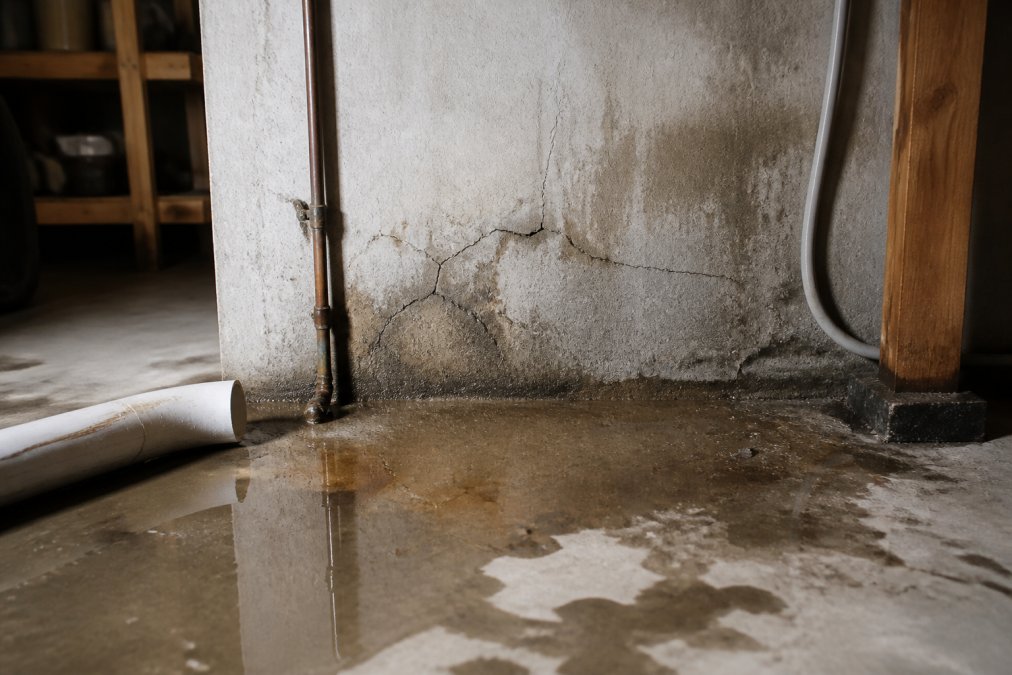
A burst pipe is one of the most damaging plumbing emergencies because damage compounds by the minute. Water spreads rapidly through walls, under flooring, and into structural elements. You’ll typically notice a sudden drop in water pressure throughout the house, or water actively spraying from a visible pipe. Hidden burst pipes may show water stains on ceilings or walls before you find the actual break.
Other critical indicators include:
- Sewage backing up into drains, toilets, or showers (immediate health hazard)
- Water heater leaking actively or making unusual noises
- Frozen pipes with water backing up or pressure building dangerously
- Gas smell near water lines (potential safety issue requiring immediate attention)
- Water gushing from walls or ceilings
- Multiple fixtures losing pressure simultaneously
A burst pipe can cause thousands of dollars in damage in just hours (fema.gov). A sewer backup creates immediate health risks. These situations don’t improve on their own, they get worse.
If you suspect a gas line issue near your water pipes, evacuate immediately and call your gas company before calling a plumber. Do not attempt to locate the source yourself.
Average Emergency Plumber Arrival Time and Industry Standards
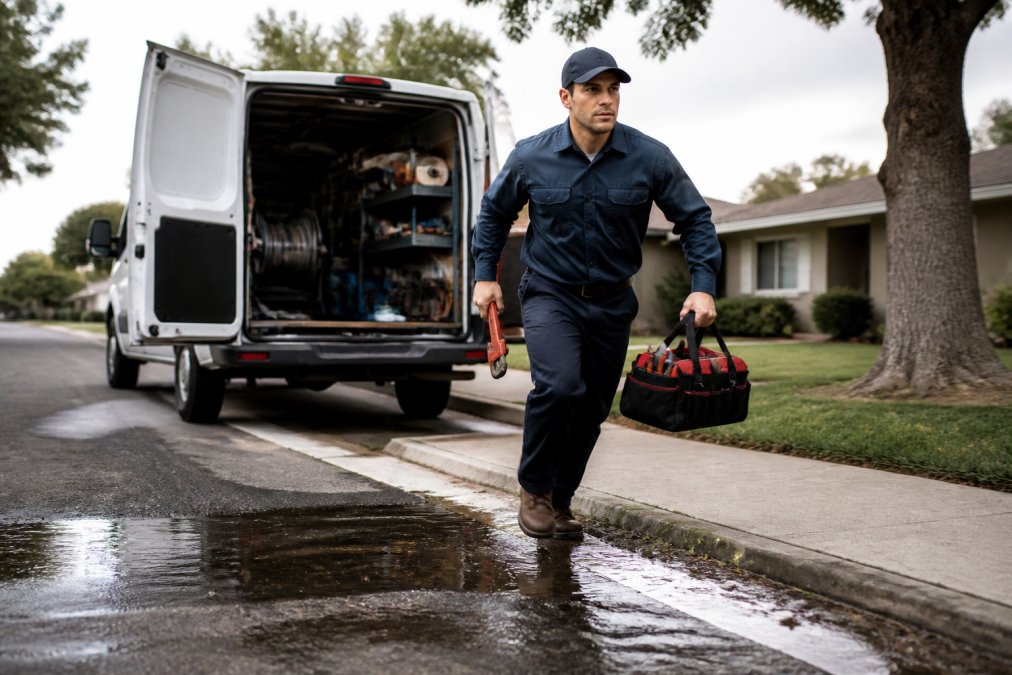
The industry standard for emergency plumbing response has shifted to defined service level agreements. Most professional emergency services now commit to arrival windows, typically ranging from 30 to 90 minutes depending on call volume, time of day, and geographic location.
Alpha Rooter & Plumbing guarantees a response time of under 90 minutes for emergency calls. This commitment reflects the reality of emergency dispatch logistics: technicians must be available, equipped, and able to navigate to your location. A 90-minute window is aggressive without being unrealistic. It accounts for dispatch time, travel, and geographic variability.
The industry standard balances speed with quality. A properly trained, licensed plumber arriving in 90 minutes is more valuable than an unlicensed contractor arriving in 45 minutes and making the problem worse. A professional emergency dispatch operation tracks technician location in real time, prioritizes calls by severity, and provides realistic arrival estimates.
Factors Influencing Plumber Arrival Speed
Technician availability is the primary driver. If a plumber is already on another emergency call, you’ll wait longer. During peak hours or weekends, multiple emergencies may be in queue. A well-organized emergency service staggers technician availability to handle volume.
Geographic proximity matters significantly. Urban areas have more technicians available and shorter average distances. Rural or suburban locations may have longer travel times simply because the nearest available plumber is 20 minutes away. Local emergency services often beat national chains in response time.
Call complexity affects dispatch decisions. A simple water shut-off question might be handled by dispatch staff, potentially saving you 30 minutes. A complex diagnostic requiring specific equipment might require waiting for the right technician.
Time of day and day of week create predictable patterns. Weekday afternoons typically have longer waits than weekend mornings. Late-night calls often get faster response because fewer emergencies are happening.
Geographic and Seasonal Variance
Emergency plumbing response times vary dramatically by season and location. Winter is the peak emergency season in most climates (iii.org). Frozen pipes account for a massive surge in emergency calls between December and February. During these months, response times often lengthen because emergency volume exceeds normal capacity.
Summer brings different patterns. Sewer line issues often emerge during heavy rain periods when groundwater pressure increases. Response times during these seasonal peaks reflect the reality that even 24/7 services have finite technician capacity.
Urban areas typically have better emergency response infrastructure with multiple plumbers and optimized road networks. Rural areas may have longer response times simply due to distance. Climate also influences response time, areas with aging infrastructure and older pipes generate more emergencies and often maintain ready capacity.
What to Do During a Plumbing Emergency While Waiting for Help
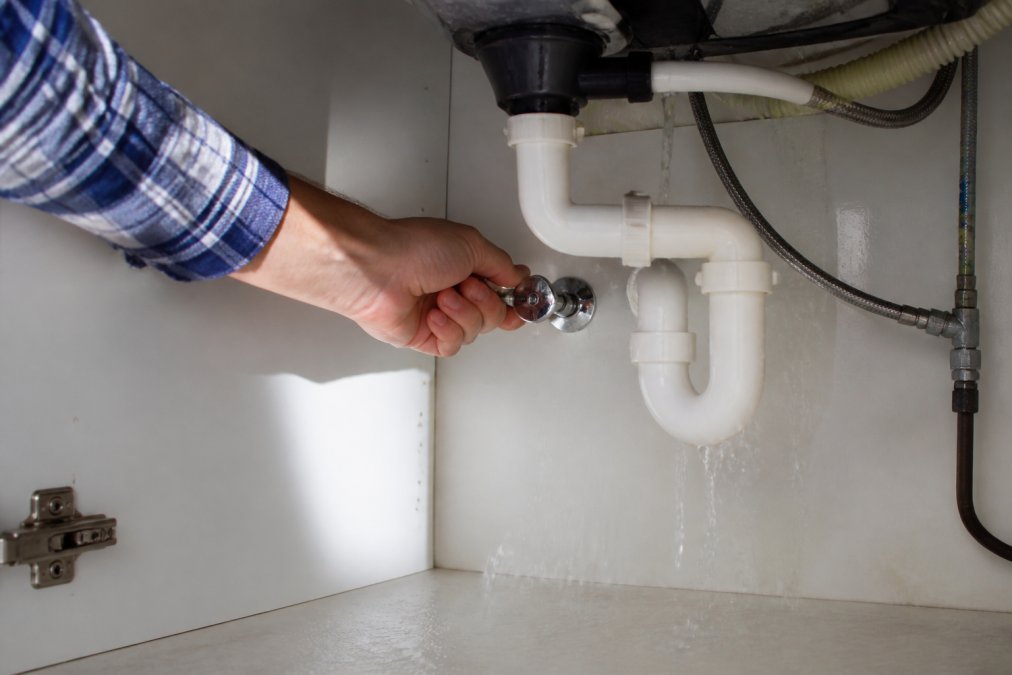
The actions you take in the first 10 minutes after discovering an emergency often determine the final damage bill. Water damage accelerates exponentially.
Your first priority is stopping the flow of water. If you can safely reach the source of the leak, turn it off at the shut-off valve specific to that fixture. Most sinks, toilets, and water heaters have individual shut-off valves nearby. A quarter-turn clockwise typically closes them. If you can’t locate the fixture-specific valve or if water is coming from multiple sources, move to the main water shut-off valve for your entire house, usually located in the basement, under the kitchen sink, or outside near the foundation.
Locate your main water shut-off valve now, before an emergency happens. Practice turning it off so you’re not fumbling during an actual emergency.
Immediate Steps to Minimize Water Damage
Once you’ve stopped the water flow, move valuables, electronics, and important documents away from the water. Use towels, buckets, or a wet vacuum to remove standing water. Every minute of standing water increases damage to flooring, walls, and structural elements.
Open windows and doors to increase air circulation. Wet environments breed mold quickly, often within 24-48 hours (the CDC). Air movement slows mold growth and helps moisture evaporate.
Take photographs and video of all water damage, wet areas, and the source of the leak. This documentation is critical for insurance claims. Contact your insurance company as soon as you’ve contacted the plumber. Most homeowner policies cover sudden water damage from burst pipes or internal plumbing failures.
Do not attempt to repair the plumbing yourself unless you have genuine expertise. Let a licensed professional diagnose and repair the actual problem.
How to Communicate with Your Dispatcher
When you call an emergency plumbing service, be clear and direct about what’s happening. Instead of “my pipes are leaking,” say “water is actively spraying from a burst pipe in my basement” or “sewage is backing up into my shower.” Provide your exact address and clearest directions to your home. Mention any hazards the technician should know about: aggressive dogs, icy walkways, or difficult access.
Ask for a realistic arrival time estimate. A professional dispatcher will give you a window, not a specific minute. If they promise “we’ll be there in 20 minutes” during peak hours, that’s a red flag about their reliability.
Digital Tracking and Real-Time Communication
Modern emergency plumbing services increasingly offer real-time tracking and communication tools. You can see where your assigned technician is located, receive updates on estimated arrival time, and communicate directly through text or app notifications. This transparency eliminates anxiety about when help will arrive.
Real-time tracking also holds services accountable to their response time commitments. Digital communication reduces back-and-forth phone calls and prevents miscommunication. The best emergency services integrate tracking with dispatch optimization to minimize travel time based on current traffic, weather, and call priority.
Cost Transparency for Emergency Dispatch Services
Emergency plumbing typically costs more than standard service calls because of 24/7 availability requirements and the need to maintain ready capacity. However, “costs more” doesn’t mean surprise bills. Transparent pricing means you understand what you’re paying for before the technician arrives.
Professional emergency services provide upfront pricing information. You should know before work begins whether there’s a service call charge, whether after-hours surcharges apply, and how the actual repair is priced. Alpha Rooter & Plumbing offers upfront pricing with no hidden fees, so you get a clear estimate before work begins.
Compare the cost of emergency response to the cost of inaction. A burst pipe that floods your home for 8 hours instead of 2 hours can add tens of thousands of dollars in water damage, mold remediation, and structural repair.
How to Choose a Reliable Emergency Plumbing Service
The time to choose an emergency plumber is before you need one. When a pipe bursts at 2 AM, you won’t have time to research options. Making that decision in advance, while you’re calm and can evaluate carefully, ensures you get quality service when you’re panicked.
Verify licensing and insurance. A licensed plumber has met professional standards and carries liability insurance. Ask for proof. Check response time commitments in writing. A service that advertises “fast response” without a specific guarantee is making a vague promise. Alpha Rooter & Plumbing’s under-90-minute commitment is specific and measurable.
Read recent reviews from homeowners who used the service during actual emergencies. Look for patterns about response time, professionalism, and pricing accuracy. Ask about their dispatch technology and communication methods. Services offering real-time tracking typically have better-organized operations.
Confirm their service area. Some emergency services cover only certain neighborhoods or zip codes. Know your service area before an emergency strikes.
The best emergency plumbing service is one you’ve already identified and vetted before crisis hits. Make that choice now, while you can think clearly. When a pipe bursts at 2 AM, you’ll be grateful you already know who to call.
When a plumbing emergency strikes, every minute matters. Water damage escalates quickly, and the difference between a contained problem and a catastrophic one often comes down to response speed and professional expertise. Alpha Rooter & Plumbing maintains 24/7 emergency availability with a guaranteed under-90-minute response time, upfront pricing with no hidden fees, and state-of-the-art diagnostic equipment to identify and resolve issues quickly. Your home’s plumbing infrastructure is too important to leave to chance. Contact Alpha Rooter & Plumbing now to ensure you have a reliable emergency service ready when you need it most.
Frequently Asked Questions
What is the industry standard for emergency plumbing response times in 2026?
Industry standards typically target arrival within 60 to 90 minutes from the time of dispatch. However, response times vary significantly based on call volume, technician availability, traffic conditions, and your location. Many 24/7 emergency plumbing services now use real-time GPS tracking and digital dispatch systems to improve reliability. Alpha Rooter & Plumbing guarantees a response time of under 90 minutes, backed by their commitment to maintaining adequate technician availability and efficient dispatch logistics.
What should you do while waiting for an emergency plumber to arrive?
First, locate and shut off your main water supply at the meter or shut-off valve to stop water flow and prevent further damage. If the emergency is isolated to one fixture, shut off that fixture’s individual valve. Move valuables and furniture away from the affected area, and place towels or buckets to catch dripping water. Document the damage with photos for insurance purposes. Keep the area accessible for the technician and have your address clearly visible. Avoid using other plumbing fixtures if possible to prevent additional pressure on damaged pipes.
How do I recognize the signs of a burst pipe emergency?
A burst pipe typically produces sudden, visible water spraying from pipes, rapid pooling of water in your basement or crawl space, or water stains appearing on ceilings and walls. You may hear hissing or whistling sounds from walls, notice a sudden drop in water pressure, or see wet spots in your yard. If water is actively flooding your home, the main shut-off valve is malfunctioning, or sewage is backing up into your fixtures, these are critical emergencies requiring immediate dispatch. Any of these signs of burst pipe emergency warrant calling a 24/7 emergency plumbing service immediately.
What factors affect how quickly an emergency plumber can arrive?
Response time depends on call volume, technician availability, traffic conditions, distance from the dispatch center, time of day, and your location. Peak hours, weekends, and nights typically see longer wait times due to higher call volume. Seasonal factors like winter freeze events or spring thaw flooding can overwhelm dispatch systems. Geographic variance also plays a role: rural areas may have longer response times than urban centers. Real-time tracking systems and modern digital dispatch logistics help companies optimize routes and reduce wait times, but external factors like traffic and weather remain significant variables affecting arrival windows.
This article was written using GrandRanker
Comments are closed