
Last Updated: November 6, 2026
Quick Summary
To unclog pipes safely, start with hot water and dish soap before reaching for tools or chemicals. Pour the hot water in slow, steady stages, and skip this method on older or fragile pipes. If water still will not move, use a cup plunger with the overflow hole sealed with a wet rag.
- Let boiled water cool for two to three minutes before pouring it down the drain.
- Bail standing water down to about an inch before plunging a local clog.
- Use a cup plunger for sinks and push down firmly ten to fifteen times.
- Hair does not dissolve, so pull it out with a hair snake or hooked coat hanger.
- Very hot water above about 140°F can be risky for plastic traps.
Table of Contents
- Start With the Least Invasive Method: Hot Water and Dish Soap
- How to Clear a Clogged Drain With Standing Water
- Plunging Correctly: Seal the Overflow Hole and Use the Right Plunger
- Using a Drain Snake Safely on Deep Clogs
- How to Clear a Drain Clogged With Hair
- When the Clogged Drain Sits Deep in the Pipe: P-Traps and Main Lines
- Pipe Materials, Boiling Water, and Chemical Safety
- Call Alpha Rooter & Plumbing When DIY Unclogging Stops Working
- Frequently Asked Questions
Start With the Least Invasive Method: Hot Water and Dish Soap
Most clogged drains do not need a tool at all when you unclog pipes.
Here is a safe order to try for unclogging pipes without damaging plumbing:
- Boil a full kettle of water. Let it cool for two to three minutes.
- Add a squirt of dish soap to the drain opening.
- Pour the hot water in slow, steady stages.
- Wait ten minutes, then run the tap to check flow.
The heat softens grease. The dish soap helps it slide down the pipe instead of re-coating the walls. This works best on kitchen sink drains and bathroom sinks where soap scum builds up over time.
Watch out: Skip this method entirely on older pipes or any drain you know is fragile. Very hot water can stress old seals and cast iron joints.
How to Clear a Clogged Drain With Standing Water
Standing water means the clog is holding firm and the drain cannot move anything past it. Do not pour more water in. Do not add chemicals.
Start with a diagnosis, because standing water in one fixture and standing water in several fixtures are different problems.
Follow these steps to clear a local clog with standing water:
- Bail out the standing water with a cup or small bowl. Get the level down to about an inch. A turkey baster works well for a sink; a wet/dry shop vac is faster on a tub or laundry sink if you have one.
- Try the hot water and dish soap method again, poured in stages. Sometimes the clog is soft grease or soap scum and just needs a nudge.
- If the water still will not move, switch to a plunger. Standing water actually helps here, because it gives the plunger something to push against. A plunger on a dry drain is pushing air, and air compresses instead of moving the clog.
- Seal the overflow hole with a wet rag before you plunge, or the pressure escapes there instead of at the clog.
- Never mix a plunger with a chemical drain cleaner. If you already poured chemicals in, stop and call a plumber.
That last point matters more than people think. Chemical drain cleaners can be harsh on pipes and dangerous to splash back on you.
Watch out: if the water level in the fixture rises when you plunge instead of dropping, stop.
Plunging Correctly: Seal the Overflow Hole and Use the Right Plunger
A plunger only works if it seals. Most failed plunging attempts come down to one thing: air escaping through the overflow hole instead of pushing on the clog.
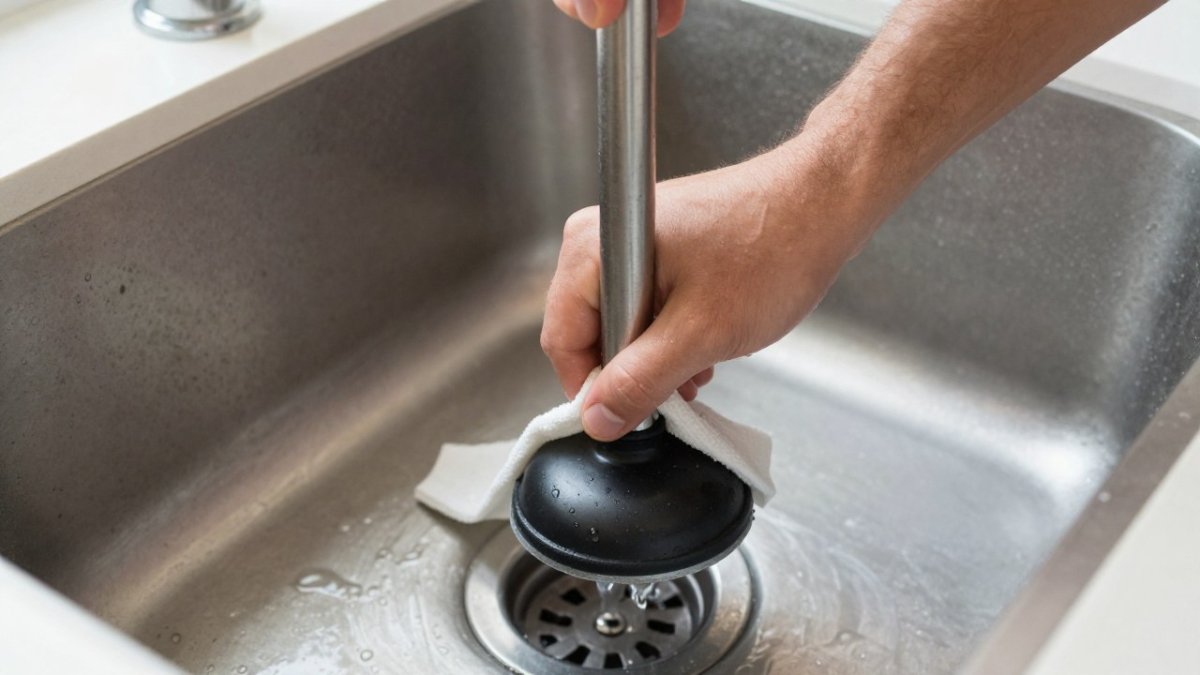
Here is how to plunge a sink drain the right way:
- Stuff a wet rag into the overflow hole. This is the step almost everyone skips. Without it, you are pushing air, not water.
- Use a cup plunger for sinks. A flange plunger is built for toilets. The flat cup is what you want on a sink drain.
- Cover the drain completely. The rubber lip needs to sit flat against the surface.
- Push down firmly, then pull up sharply. Do this ten to fifteen times without breaking the seal.
- Check the flow after each round. If it improves, keep going. If nothing changes after three rounds, the clog is deeper than a plunger can reach.
Plunging is generally considered safe for most household drains, but it is not advisable on a drain suspected of being badly corroded, because the pressure can damage a weak joint.
Using a Drain Snake Safely on Deep Clogs
A drain snake, also called a cable auger, reaches clogs a plunger cannot touch. The trick is knowing how much force to use, and when to stop. For a full walkthrough of technique, see our guide on how to use a plumbing snake effectively.
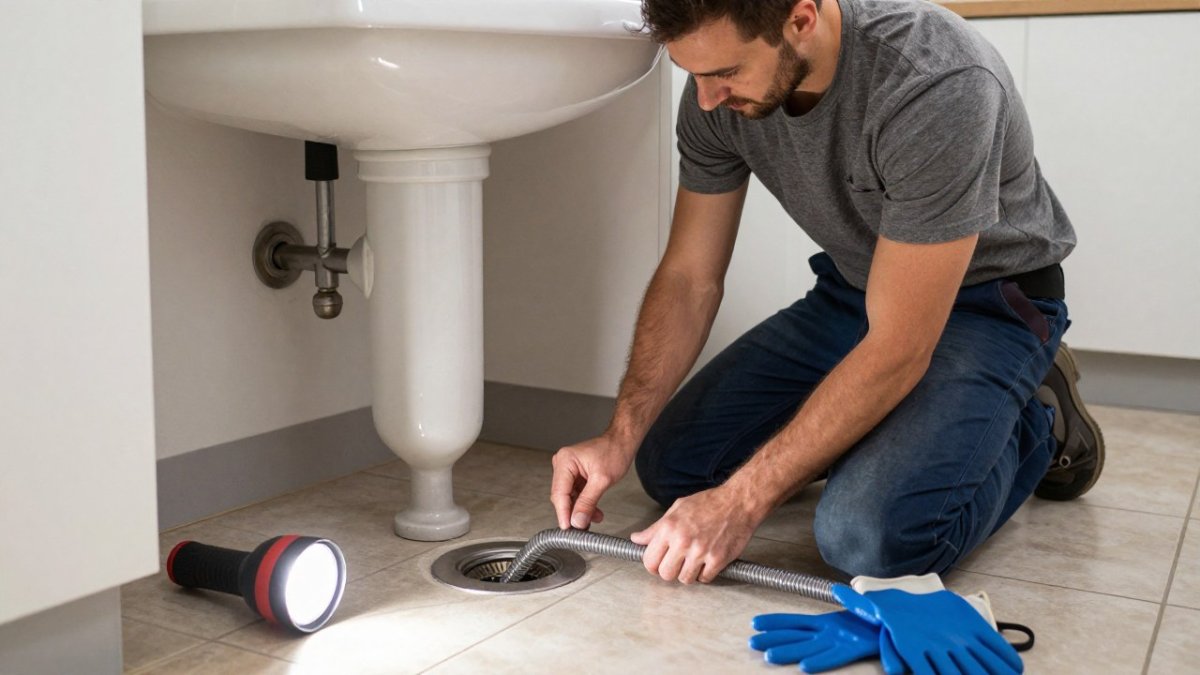
Follow these rules to snake a drain without harming the pipe:
- Remove the strainer or stopper first.
- Feed the cable in slowly by hand. Do not force it.
- When you feel resistance, crank the handle to hook the clog.
- Pull back gently. Yanking is how people scratch pipe walls or snap cables.
- Run hot water after you pull the clog out to flush the line.
Watch out: Never run a powered auger at full speed into a drain you have not diagnosed. On old cast iron or fragile pipe, a fast spinning cable can crack the wall. Hand snakes are the safer choice for homeowners.
How to Clear a Drain Clogged With Hair
Hair is the number one cause of bathroom drain clogs, and it does not dissolve in water, vinegar, or anything else you pour down the drain. It has to be pulled out. If you want a side-by-side look at the tools that work best, our comparison of how to remove hair clogs covers the options.
For a quick fix, try these tools in order:
- A hair snake or drain zip tool. These are cheap, plastic, and made for exactly this job. Feed it down, twist, and pull the hair clump out.
- A wire coat hanger with a small hook bent at the end. Free, and it works. Be gentle so you do not scratch the pipe.
- Tweezers for hair caught right at the drain opening. Sometimes the clog is closer than you think.
Once the hair is out, run hot water for a minute to clear the soap residue left behind. A drain strainer costs very little and stops the next clog before it starts.
When the Clogged Drain Sits Deep in the Pipe: P-Traps and Main Lines
If plunging and snaking both fail, the clog is deep in the pipe, and you have two likely spots to check. For a broader look at stubborn clogs, our guide to clearing stubborn drain clogs walks through every method in order.
The P-trap is the curved pipe under your sink. It catches debris on purpose. You can remove it safely:
- Put a bucket under the trap.
- Unscrew the slip nuts by hand. No wrench needed on plastic.
- Pull the trap off and clean it out.
- Reassemble and run water to check for leaks.
The main drain line is a different story. Warning signs that the clog is in the main line, not a single fixture:
- Multiple drains backing up at once
- Water rising in a floor drain or tub when you run the sink
- Gurgling sounds from other fixtures
- Sewage smell in the house
Those signs mean stop. A main line clog needs a professional camera inspection, not a homeowner with a hand snake.
Pipe Materials, Boiling Water, and Chemical Safety
Not every pipe can take the same treatment. If your home has older pipes and you want to know which methods are risky before you start, read our guide on the dangers of DIY drain cleaning for aging pipes.
The reason heat matters is simple: hot water raises the temperature of the pipe and everything sealed to it. Plastic softens, rubber gaskets and slip-joint washers lose their grip, and old solvent-welded joints can weep.
Here is how pipe materials change the plan:
| Pipe Material | Hot Water | Chemical Cleaner | Snake | Notes |
|---|---|---|---|---|
| PVC plastic | Warm only | Avoid | Safe, gentle | Softens and can warp above roughly 140°F; solvent-welded joints are the first to fail |
| Copper | Warm only | Avoid | Safe, gentle | Soldered joints weaken with repeated heat cycling; thin walls dent under force |
| Cast iron | Warm only | Avoid | Careful, hand tools only | Corrodes from the inside; cracks under plunger pressure or a fast-spinning cable |
| Galvanized steel | Warm only | Avoid | Careful | Narrows over time from mineral buildup; scale can break loose and re-clog downstream |
On boiling water: bring it to a boil, then let it sit for two to three minutes before pouring. Water straight off the stove can soften plastic and stress old joints. As a general guideline, very hot water above about 140°F can be risky for plastic traps, so pouring in stages rather than all at once gives the pipe time to shed heat. Warm is safer than scalding in every case, and if you do not know what the pipe is made of, warm water is the only defensible choice.
Watch out: a kettle poured directly onto a PVC trap or a rubber slip-joint washer can deform the plastic or shrink the gasket, and the leak often shows up days later rather than immediately.
On chemicals: never mix two drain cleaners, and never mix a cleaner with vinegar or baking soda. The reaction can produce heat and fumes in a closed pipe. Baking soda and vinegar is a fine natural solution on its own, but only on its own.
Exposure safety matters as much as pipe safety. Wear gloves and eye protection when handling any cleaner, keep the room ventilated, and never lean over the drain while a product is reacting.
Call Alpha Rooter & Plumbing When DIY Unclogging Stops Working
Some clogs are telling you something.
That is the point to stop pouring and start calling.
If you have tried the safe methods above and the water still will not move, book professional drain unclogging and let us clear it without risking your pipes.
A clog that keeps coming back is a warning, not bad luck. If plunging, snaking, and hot water have all failed, the pipe needs a proper look before the next backup turns into water damage.
Frequently Asked Questions
How can I unclog pipes without damaging the plumbing?
Start with the gentlest method: pour a pot of hot, not boiling, water mixed with a few drops of dish soap down the drain and wait 10 to 15 minutes. If that fails, use a cup plunger with the overflow hole sealed by a wet rag. A hand-cranked drain snake handles deeper blockages. Avoid chemical drain cleaners, which generate heat and can corrode older pipes, and never force a snake past resistance. If water still backs up after two or three attempts, stop and call a licensed plumber.
How do you clear a clogged drain with standing water?
Standing water means the clog is holding pressure, so remove as much water as possible first with a cup or sponge to avoid a mess when you break the seal. Then plunge with a cup plunger, keeping the rubber fully submerged and the overflow hole covered with a wet rag. If the water drains slowly, follow with a drain snake. Do not pour chemical cleaner into standing water, because it dilutes, sits against the clog, and can splash back when the blockage finally releases.
How do you remove hair from a clogged drain?
Pull the stopper or strainer out and use a hair snake or a bent wire hook to grab the mat of hair near the surface. For bathroom sinks and tubs, a zip-it style hair tool reaches several inches down the drain and costs little. Once the visible hair is out, flush with hot water and dish soap. Avoid chemical cleaners on hair clogs, because they rarely dissolve the full mat and can damage older pipes in the process.
When should I stop trying to unclog a drain myself and call a plumber?
Call a professional if multiple fixtures back up at once, if water rises in a floor drain when you run the washer, if you smell sewer gas, or if a snake hits solid resistance well before the main line. Repeated clogs in the same spot usually point to a deeper problem such as root intrusion, a collapsed pipe, or heavy grease buildup that a hand tool cannot clear. A licensed plumber has a cable auger and camera inspection to find the actual cause.

Comments are closed