
Last Updated: November 14, 2026
Quick Summary
A tankless water heater typically lasts about 15 to 20 years with proper care, compared with 8 to 12 years for a traditional tank model. Lifespan depends heavily on water quality, correct sizing, professional installation, and annual descaling. Replacement is worth considering when repairs repeat, hot water flow drops after cleaning, or the unit nears 15 years old.
- Tankless units typically last 15 to 20 years; tank heaters last 8 to 12 years.
- Hard water causes mineral scale that forces the unit to work harder and wear out sooner.
- Descale the heat exchanger once a year, or more often with very hard water.
- An undersized unit runs at full output constantly, which shortens its life.
- Replace when the unit is 15 or more years old and flow drops even after descaling.
Table of Contents
- How Long a Tankless Water Heater Lifespan Compares to a Tank Model
- Factors That Shorten or Extend Tankless Water Heater Lifespan
- Tankless Water Heater Maintenance and Descaling Schedule
- Electric Tankless Water Heater Lifespan and Replacement
- Natural Gas Tankless Water Heater Lifespan and Replacement
- Tankless Water Heater Replacement Cost and Lifecycle Economics
- Scheduling Your Tankless Water Heater Replacement
- Frequently Asked Questions
How Long a Tankless Water Heater Lifespan Compares to a Tank Model
A tankless water heater typically lasts about 15 to 20 years with proper care. Tank heaters usually last around 8 to 12 years before the storage tank starts leaking or heating poorly. That gap is the main reason many homeowners choose tankless units, even though the upfront cost is higher.
Here is the short version. A tankless unit heats water only when you turn on a tap, so it has no standing tank to corrode from the inside.
But lifespan depends on how the unit is treated. Two identical units can last very different lengths of time depending on water quality, maintenance, and installation. Learn how space and placement affect tankless water heater setup for practical guidance on layout.
| Water Heater Type | Typical Lifespan | Maintenance Needs | Common Failure Point |
|---|---|---|---|
| Tankless (gas or electric) | 15 to 20 years | Annual descaling and inspection | Heat exchanger scale buildup |
| Traditional tank | 8 to 12 years | Yearly flushing | Corroded storage tank |
Factors That Shorten or Extend Tankless Water Heater Lifespan
Water quality matters most. Hard water leaves mineral scale inside the heat exchanger, which forces the unit to work harder and wear out sooner. Homes with hard water often need descaling every year, while softer water may go longer between cleanings.
Installation quality matters just as much. A poorly sized unit, weak venting, or incorrect gas or electrical connections can shorten its life. Watch out: a unit that is undersized for household hot water demand runs at full output constantly, which wears it down.
Usage also plays a role. A household with several showers running at once puts more strain on the unit than a single-person home. Steady, heavy demand shortens lifespan compared with light, occasional use.
- Hard water increases scale and speeds wear
- Correct sizing prevents constant full-power operation
- Professional installation protects warranty coverage
- Regular servicing catches small problems early
Tankless Water Heater Maintenance and Descaling Schedule
Descaling is an important maintenance task. Many manufacturers recommend flushing the heat exchanger with a descaling solution once a year, though homes with very hard water may need it more often.
A basic schedule looks like this:
- Every month: Check for leaks, error codes, and changes in hot water temperature
- Every 6 months: Clean the inlet water filter screen
- Every year: Descale the heat exchanger and inspect venting or electrical connections
- Every 2 to 3 years: Have a licensed plumber perform a full safety and performance check
A common mistake is skipping descaling because the unit still produces hot water. Scale builds quietly, and by the time hot water flow drops noticeably, the heat exchanger may already be damaged.
Electric Tankless Water Heater Lifespan and Replacement
Electric tankless models are often the more compact option, and they usually last in the 15 to 20 year range when properly sized. Their heating elements are sensitive to scale, so descaling matters just as much as it does for gas units.
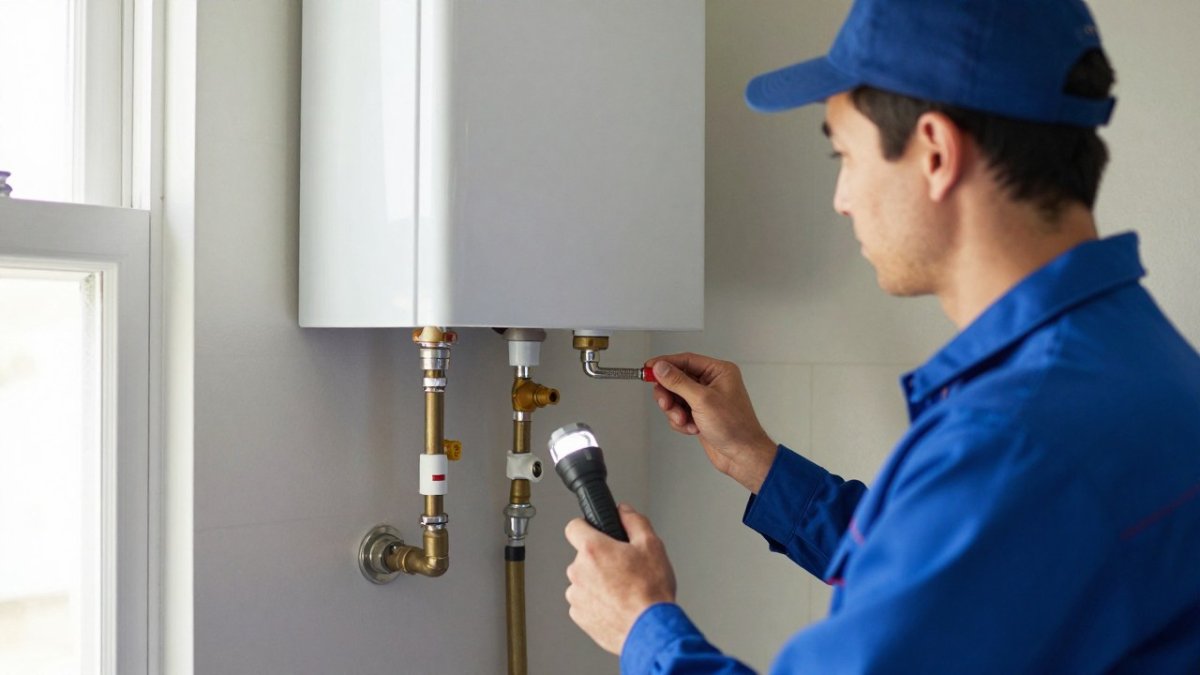
Electric units also depend heavily on the home’s electrical capacity. An undersized circuit can overheat, trip breakers, and damage the unit over time. If you notice flickering lights when hot water runs, have an electrician check the circuit.
Replacement is worth considering when the unit trips breakers repeatedly, produces lukewarm water despite cleaning, or shows visible leaks at the connections.
Natural Gas Tankless Water Heater Lifespan and Replacement
Natural gas tankless units generally last 15 to 20 years as well, though they carry added safety considerations. Gas combustion produces condensation and byproducts that must vent correctly, so venting problems are a common cause of early failure.
Look for these signs that a gas unit may be nearing the end of its life:
- Yellowing or soot around the burner or vent
- Unusual popping or rumbling during operation
- Frequent error codes that persist after reset
- Hot water temperature swings that cleaning does not fix
If you smell gas or see soot near the unit, shut off the gas supply and call a licensed professional right away.
Tankless Water Heater Replacement Cost and Lifecycle Economics
Replacement cost for a tankless water heater depends on unit type, capacity, fuel source, and installation complexity. For current pricing, request a written quote for your specific home from Alpha Rooter & Plumbing’s website. See a full tankless water heater installation cost guide before you compare bids. The table below shows the cost components you will typically see on a quote so you can compare bids line by line.
| Cost Component | What It Covers | Typical Share of Total |
|---|---|---|
| Unit | Tankless heater, venting kit, valves | 40-60% |
| Labor | Removal, installation, connections | 25-40% |
| Permits and inspection | Local permit fees, inspection | 5-10% |
| Upgrades | Gas line, electrical panel, venting | 0-30% |
Typical Share of Total
Lifecycle economics matter as much as the upfront price. Find out whether a tankless unit makes sense for a small apartment based on your living situation. A longer-lived unit spreads its cost over more years, and the total cost of ownership depends on both unit life and operating energy use.
Here is how to weigh repair versus replace:
- Repair may make sense when the unit is relatively young, the problem is a single part, and the repair is inexpensive compared with replacement.
- Replacement may make sense when repairs repeat, the heat exchanger is badly scaled, or the unit is near the end of its expected life.
Ask for a written breakdown of parts, labor, and any recommended upgrades before you commit.
If you are weighing a repair, ask for a clear breakdown first.
Scheduling Your Tankless Water Heater Replacement
Plan replacement before the unit fails completely. Check sewer line repair permit requirements if your replacement project in Los Angeles involves related plumbing work. A sudden failure can leave a home without hot water for days, and emergency installs often cost more. The steps below walk through a replacement from decision to installation so you can avoid surprises.
Step 1: Confirm it is time to replace. Use this symptom-based checklist to separate fixable issues from end-of-life signs:
- The unit is 15 or more years old
- Hot water flow has dropped even after descaling
- Error codes return soon after repairs
- Visible corrosion or leaks appear at the connections
- Energy bills have climbed without a clear reason
If you check three or more of these boxes, call for an evaluation. If you check fewer, a repair or a thorough descaling may still be the right call.
Step 2: Size the new unit correctly. Sizing is based on peak hot water demand, not house size. Count the fixtures you expect to run at once, note their flow rates, and match the unit’s capacity to that peak. An undersized unit runs at full output constantly and wears out sooner; an oversized unit costs more and may cycle inefficiently.
Step 3: Check fuel and venting compatibility. A gas unit needs a gas line sized for its input and a venting route that meets manufacturer and local code requirements. An electric unit needs enough electrical capacity, often a dedicated circuit. Upgrading a gas line, electrical panel, or venting route is a common hidden cost, so confirm compatibility before you buy.
Step 4: Confirm permits and inspection. Most jurisdictions require a permit for water heater replacement, and the work must pass inspection. Ask your installer who pulls the permit and who schedules the inspection. A quote that skips permits is a red flag.
Step 5: Choose an installer carefully. Compare at least two written quotes that itemize the unit, labor, permits, and any upgrades. Confirm the installer is licensed and insured, ask whether the manufacturer warranty requires professional installation, and ask for the model number and warranty terms in writing.
Step 6: Plan the installation day. Expect the water to be off for several hours. Clear access to the unit, the gas or electrical connection, and the venting route. Confirm disposal of the old unit is included in the quote.
Step 7: Keep records for warranty. Save the installation receipt, model and serial numbers, and maintenance records. Many manufacturers require documented maintenance to honor warranty coverage, so keep service records.
Alpha Rooter & Plumbing offers 24/7 emergency service in the Los Angeles area, which can help when a failing unit leaves you without hot water. Our licensed plumbers can inspect the unit and explain your options. Call Alpha Rooter & Plumbing today to get your questions answered.
Frequently Asked Questions
Why are plumbers against tankless water heaters?
Most plumbers are not against tankless water heaters. Complaints usually come from installations that were sized wrong, vented improperly, or paired with hard water that was never treated. Those problems shorten service life and cause repair calls that get blamed on the unit itself. A properly sized, correctly installed tankless heater with scheduled descaling performs well for 15 to 20 years. Ask any installer to confirm the flow rate and gas or electrical capacity match your household demand before you buy.
How often should you replace a tankless water heater?
A tankless water heater typically lasts 15 to 20 years with proper care, compared with roughly 8 to 12 years for a traditional tank model. Replacement timing depends on maintenance history, water quality, and how often the unit has been repaired. If the heater is past 15 years and needs repeated repairs, budget for replacement rather than another major repair. Checking the manufacturer’s warranty and service records helps you decide before a failure forces the choice.
What are the signs a tankless water heater needs to be replaced?
Common end-of-life signs include reduced hot water flow even after descaling, temperature fluctuations, error codes that return after reset, visible leaks or corrosion on the heat exchanger, and unusual noises from scale buildup. Frequent ignition failures on a gas unit also point toward replacement. If you see these symptoms on a unit older than 15 years, get a professional inspection to confirm whether a repair is worthwhile before committing to a new install.
Does a gas tankless water heater last longer than an electric one?
Gas tankless water heaters often run longer because they handle higher flow rates and heat more efficiently, but both types commonly reach 15 to 20 years with maintenance. Gas units require venting and combustion checks, while electric units depend more on electrical capacity and the heating elements. Hard water shortens the life of either type, so descaling on a regular schedule matters more than fuel type for most households.
