
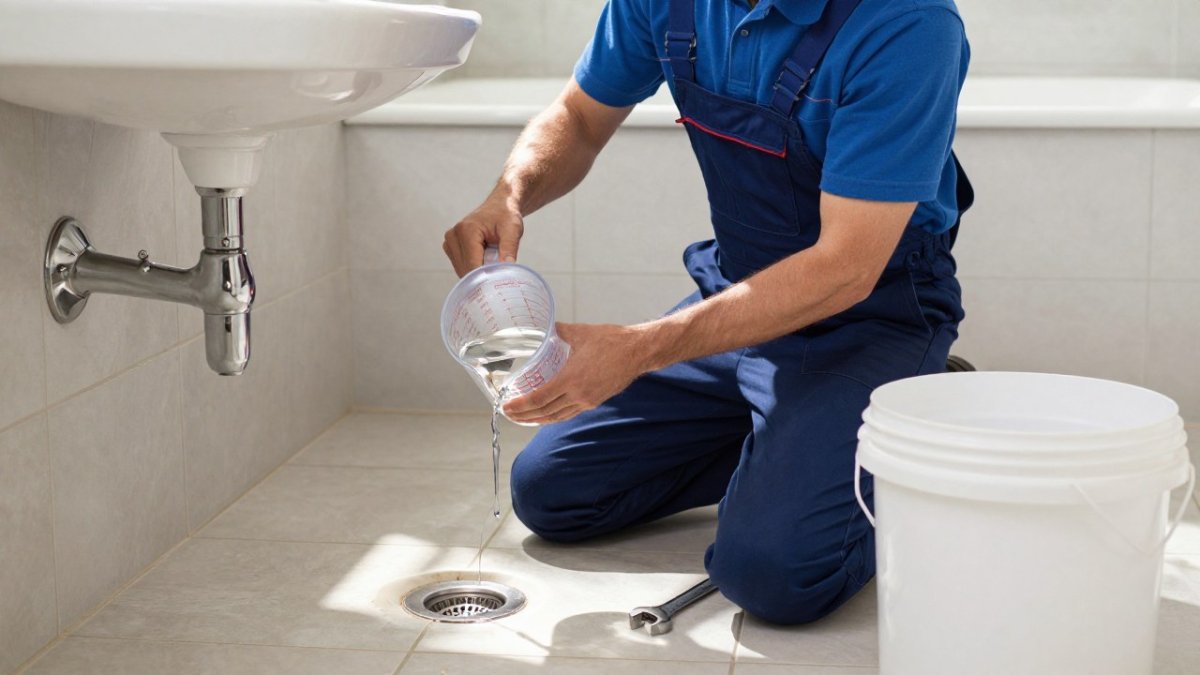
Last Updated: November 19, 2026
Quick Summary
The safest way to fix a slow drain is to start with mechanical methods like a plunger, drain stick or hand auger, and avoid harsh chemicals that can corrode older pipes. Pipe-safe solutions depend on your pipe material, so check the material before using any cleaner. If the drain stays slow or several fixtures back up, call a licensed plumber.
- Most slow drains are caused by buildup of hair, soap scum and grease.
- Clean the stopper and strainer first, since hair is the most common cause.
- Avoid caustic and acid cleaners on cast iron and galvanized steel pipes.
- Never mix drain cleaners or combine chemicals with vinegar, baking soda or bleach.
- If multiple fixtures are slow at once, the problem is likely the main line or vent.
Table of Contents
- Why Slow Drains Happen and What Pipe-Safe Really Means
- Choosing a Method: A Safe Decision Tree
- Best Drain Cleaner for Old Pipes: What Works and What to Avoid
- Kitchen Sink Not Draining but Not Clogged? Check the Vent and Trap First
- How to Clear a Clogged Drain With Standing Water
- When a Clog Sits Deep in the Pipe and Needs a Professional
- Booking a Drain Assessment With Alpha Rooter & Plumbing
- Frequently Asked Questions
Why Slow Drains Happen and What Pipe-Safe Really Means
Most slow drains come from a buildup of hair, soap scum and grease, not from a single dramatic blockage. Most plumbers see the same pattern in homes, especially in older houses. A drain that drains slowly is a warning, and the wrong fix can turn a small clog into a costly repair.
Pipe-safe means a method clears the blockage without weakening or corroding the pipe. That depends on the pipe material. Older homes often have cast iron or galvanized steel lines, which can be damaged by harsh chemical cleaners. Copper and PVC handle a wider range of treatments, but no pipe is immune to repeated abuse. EPA guidance on household drain cleaning and safe disposal
Read the label before you pour anything. Before trying any product, learn the specific risks DIY drain cleaning poses to aging pipes. Many products warn against use on certain pipes or after another cleaner has been applied.
Choosing a Method: A Safe Decision Tree
Start with the least aggressive option and move up only if it fails.
- Is only one fixture slow? Clean the stopper and strainer first. Hair is the most common cause.
- Is the water standing for more than a few minutes? Try a plunger or drain stick before any product.
- Are multiple fixtures slow at once? Stop. This points to the main line or vent, and a chemical will not fix it.
- Has the clog returned within weeks? The problem is likely deeper in the pipe. Call a licensed plumber.
This order protects your pipes and your budget.
Best Drain Cleaner for Old Pipes: What Works and What to Avoid
Chemical drain cleaners are the option most homeowners reach for first, but they can damage older plumbing. The right choice depends less on brand and more on what your pipes are made of and what has already been poured down the drain.
Match the cleaner to the pipe material
- Cast iron and galvanized steel: These older metal lines are the most vulnerable. Caustic cleaners can accelerate corrosion at joints and thin walls, and the heat some products generate can stress already-weakened fittings. Caution is generally advised against caustic and acid-based cleaners in these systems, with mechanical methods as the usual alternative.
- Copper: Copper resists many cleaners better than cast iron, but acid-based products can etch the interior over repeated use. Use them sparingly and flush thoroughly afterward.
- PVC and ABS plastic: These handle most household cleaners, but the heat generated by some caustic products can soften joints if the drain is fully blocked and the product sits. Follow the label’s dwell time exactly.
- Corroded or unknown pipe: If you do not know the material, treat it as fragile. A drain stick or hand auger is the safer first move.
Product types and what they actually do
- Caustic (lye-based) gels and liquids such as generate heat as they dissolve grease and hair. Because they can sit in and damage the pipe, they should not be used in a drain that is completely blocked, and they are a poor fit for old metal lines.
- Acid-based cleaners are stronger and faster but carry the highest risk to pipes and skin.
- Enzyme and bacterial products work slowly by digesting organic matter. They are generally gentler on pipes and are better suited to maintenance than to a fully clogged drain.
Chemical interaction warnings
Watch out: never mix drain cleaners, and never combine a chemical cleaner with vinegar, baking soda, bleach, or another household product. Mixing can generate heat, fumes, or a violent reaction inside the pipe. If a product has already been used and failed, do not pour a second product on top. Flush the drain with plenty of water, wait as long as the label advises, and switch to a mechanical tool rather than another chemical. Never apply a chemical to a drain you plan to open by hand, and never use a plunger or auger immediately after a chemical treatment without flushing first.
Septic-safe considerations
If the home uses a septic system, caustic and acid cleaners can disrupt the bacterial balance in the tank. Enzyme products are the safer choice, and mechanical clearing is safer still. Whatever you use, check the label for a septic-safe statement before pouring.
Read the label’s pipe-compatibility and dwell-time instructions every time before use.
The right drain cleaner depends on your pipe material, so compare the main product types before you pour anything.
| Pipe or product | Key concern | Guidance |
|---|---|---|
| Cast iron and galvanized steel | Corrosion at joints and thin walls | Avoid caustic and acid cleaners; use mechanical methods |
| Copper | Acid etching over repeated use | Use acid products sparingly and flush well |
| PVC and ABS | Joint softening from heat | Follow the label’s dwell time exactly |
| Caustic (lye-based) cleaners | Heat and damage when a drain is fully blocked | Poor fit for old metal lines |
| Acid-based cleaners | Highest risk to pipes and skin | Strongest and fastest, but riskiest |
| Enzyme and bacterial products | Slow action on organic matter | Gentler; best for maintenance |
Kitchen Sink Not Draining but Not Clogged? Check the Vent and Trap First
Sometimes the sink is draining slowly, but nothing is physically blocking the pipe. In that case, check the vent. Plumbing vents let air into the drain system so water flows smoothly. A blocked vent creates suction and gurgling sounds.
Next, inspect the P-trap under the sink. Place a bucket underneath, unscrew the trap and clear any sludge. If the trap is clean and the sink still drains poorly, the problem may lie farther down the line. That is a job for a professional.
How to Clear a Clogged Drain With Standing Water
When water is standing in the sink, do not add chemicals. Find methods that clear standing-water clogs without damaging your plumbing. Remove as much water as you can with a cup or small bucket first. Chemicals diluted by standing water are less effective and more likely to splash.
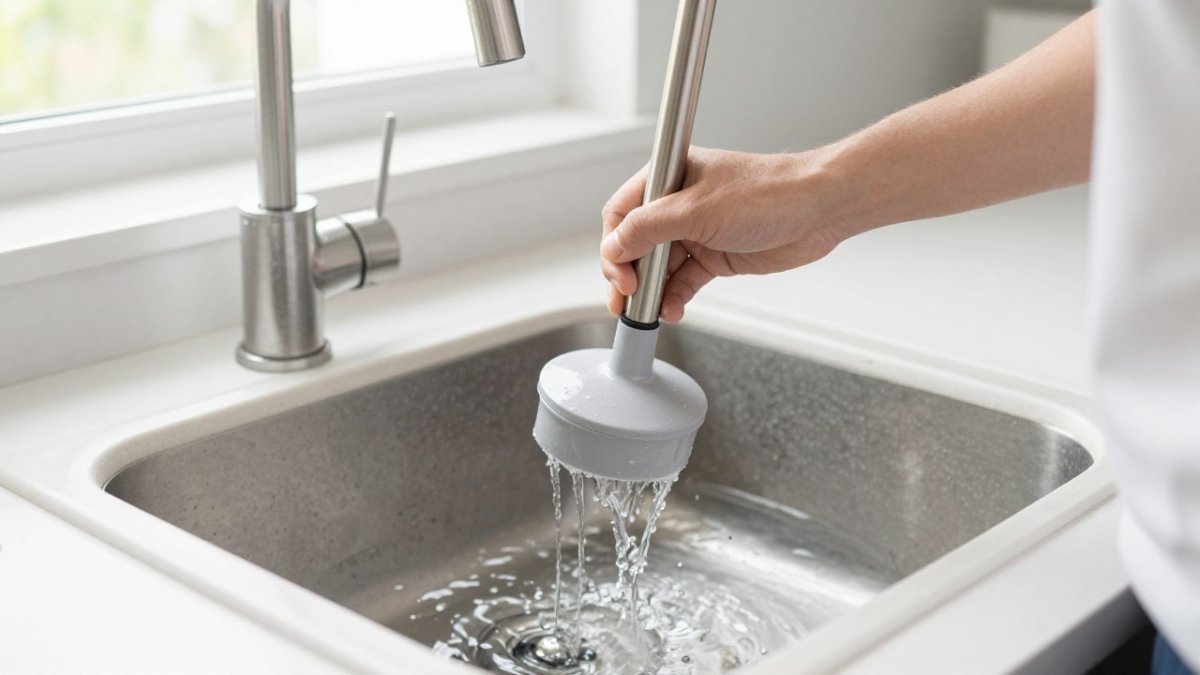
Then use a plunger. Cover the overflow hole with a damp cloth, create a tight seal and push firmly several times. Repeat until the water drains.
Mechanical Tools: Plunger, Drain Stick and Hand Auger
Mechanical tools are generally the safest option for most clogs. Compare the best tools for removing hair clogs. Flexible drain sticks and pipe cleaners can pull out hair and debris, and a hand auger reaches a little deeper. Used gently, they are a common first choice for older systems.
Pros of mechanical tools:
- No chemical exposure
- Safe for most pipe materials
- Inexpensive
Cons:
- Requires physical effort
- Less effective on deep clogs
Hot Water, Baking Soda and Vinegar: Limits and Timing
Hot water can help dissolve light grease, but avoid boiling water on PVC joints or older fittings. Baking soda followed by vinegar produces fizzing that loosens some buildup, but it rarely clears a serious clog. Give any home remedy about 15 to 30 minutes before flushing with warm water. If the drain has not improved after two attempts, stop and move to a mechanical tool.
When a Clog Sits Deep in the Pipe and Needs a Professional
If the clog persists after mechanical and gentle methods, or if the same drain keeps backing up, the blockage is likely deep in the line. Professional drain cleaning typically involves specialized equipment. Ask for an upfront price before work begins.
Call a professional right away if you notice sewage odors, water backing up in several fixtures or wet spots in the yard.
Booking a Drain Assessment With Alpha Rooter & Plumbing
Alpha Rooter & Plumbing offers 24/7 emergency service with a response time under 90 minutes, and it provides upfront pricing with no hidden fees or hourly charges. Its plumbers are licensed. For a clog that won’t clear or a drain you can’t safely fix yourself, book a drain assessment with Alpha Rooter & Plumbing.
Frequently Asked Questions
What do plumbers recommend for slow drains?
Most plumbers start with mechanical methods before any chemical product. A plunger, a drain stick to pull out hair and debris, and a hand auger for deeper blockages are the usual first steps. Plumbers also check the stopper and strainer, since many slow drains are caused by buildup there. If the drain stays slow after these steps, or several fixtures drain slowly at once, they recommend a professional inspection rather than repeated chemical treatments that can stress older pipes.
What is the safest way to clear a slow drain in an older home?
In an older home, start with the gentlest method that could work: remove the stopper and clean out visible hair and debris, then try a hand-operated drain stick. Avoid strong caustic chemical cleaners if you have galvanized or cast iron pipes, because they can corrode already weakened walls. Hot water and enzyme-based maintenance products are lower-risk options. If the problem repeats within days, have a licensed plumber scope the line before trying anything stronger.
Can chemical drain cleaners damage old pipes?
They can. Caustic chemical cleaners generate heat and can weaken or corrode older metal pipes, including galvanized steel and aging cast iron, and they may damage seals on plastic fittings. Never combine different chemical cleaners or follow a chemical treatment with a plunger, because the mixture can splash and cause burns. If you have used a chemical cleaner and the drain is still slow, do not keep adding more. Contact Alpha Rooter & Plumbing for a quote on a professional inspection, and check our website for current pricing details.
When should I call a plumber for a slow drain?
Call a plumber if the slow drain persists after basic mechanical cleaning, if more than one fixture drains slowly, if water backs up into another fixture, or if you notice gurgling sounds or sewage smells. These signs can point to a blockage deeper in the main line. A licensed plumber can scope the pipe with a camera and recommend the right method for the pipe material. Alpha Rooter & Plumbing offers 24/7 service with a response time under 90 minutes and upfront pricing, so you know the cost before work begins.
