
Last Updated: November 13, 2026
Quick Summary
The cost to replace old drain pipes depends mainly on the scope of the job, so two quotes for the same work can differ by thousands of dollars. Four scopes are common: a single section, the interior network, an under-slab line, and the exterior lateral. Compare total project cost rather than the per-foot rate.
- Scope drives price more than the per-foot rate, so compare the four scopes before comparing bids.
- Interior PVC or ABS in accessible areas runs roughly $15 to $35 per linear foot.
- Trenchless lateral replacement runs roughly $60 to $150 per linear foot, bundling method and smaller excavation.
- Bids quoting a low rate but excluding restoration can cost more than higher all-in bids.
- A camera inspection of the line lets the scope rest on actual pipe condition rather than a guess.
Table of Contents
- What Drain Pipe Replacement Typically Costs
- Cost to Replace Drain Pipes in a House: Whole-System vs. Partial Replacement
- Cost to Replace Old Drain Pipes per Square Foot and per Linear Foot
- Pipe Materials Compared: Cast Iron, PVC, and ABS
- Factors That Raise or Lower the Total Project Cost
- Does Homeowners Insurance Cover Replacing Cast Iron Pipes?
- Estimating Your Project and Comparing Contractor Quotes
- Scheduling Your Drain Pipe Replacement With Alpha Rooter & Plumbing
- Frequently Asked Questions
What Drain Pipe Replacement Typically Costs
Replacing old drain pipes is one of the bigger plumbing projects a homeowner can face, and the price varies widely with the scope of work. The single biggest reason two quotes for the “same” job differ by thousands of dollars is that they are not actually the same job.
To make estimates comparable, separate the work into four scopes. The figures below are starting points for reading a bid, not a quote for your property.
- Single section or spot repair. Replacing one short run, a cracked length under a bathroom, a failed section near a cleanout, or a corroded joint, is usually the least costly scope. Access and whether a finished floor must be cut and restored are the main factors in its price.
- Interior drain network. Replacing the drain, waste, and vent lines that serve the fixtures inside the house usually involves opening walls or ceilings and patching them afterward, which raises the price relative to a single section.
- Under-slab line. A drain line buried beneath a concrete slab requires the slab to be cut, the line replaced, and the concrete and flooring restored. Slab thickness, finished flooring, and how much of the run is affected all shape the cost.
- Exterior sewer lateral. Replacing the pipe from the house to the municipal main depends on length, depth, and whether the municipal connection and sidewalk or driveway restoration are included. Trenchless methods and traditional excavation are priced differently.
Scopes overlap in cost: a short under-slab repair can cost less than a long interior network, and a deep lateral in a dense neighborhood can cost more than a full interior replacement. That is why the scope, not the per-foot rate, should drive your comparison.
Because every home is different, a fixed price for this work is difficult to state in general.
Upfront pricing with no hidden fees matters most on a project like this, where a surprise can change the bill significantly. Ask any contractor to explain what is included in the quote, labor, materials, permits, and any access or restoration work, and to state which of the four scopes above the bid covers.
Watch out: a bid that quotes a low per-foot rate but excludes concrete removal, flooring, or landscaping restoration can end up costing more than a higher all-in bid, so compare total project cost, not the headline rate.
Cost to Replace Drain Pipes in a House: Whole-System vs. Partial Replacement
A common question is whether to replace one section of drain pipe or the whole system. Partial replacement targets a damaged run, such as a single cracked line under a bathroom or a section near a clogged cleanout. Before committing to new pipe, you can compare the alternative of lining the existing sewer line instead. It usually costs less and disrupts fewer areas of the home.
Whole-system replacement makes sense when several lines are failing at once or the pipes are old enough that repairs keep recurring. Many older homes have aging cast iron or galvanized lines throughout, and patching one section often leaves the rest vulnerable. To understand why cast iron pipes keep backing up, see this homeowner’s guide. In those cases, replacing the full system can be more economical over time, even though the upfront figure is higher.
Watch out: a partial repair on an aging system can lead to repeated emergency calls, which often cost more in total than one planned replacement.
Cost to Replace Old Drain Pipes per Square Foot and per Linear Foot
Contractors often estimate drain work by the linear foot of pipe, since the length of the run drives both material and labor. Some also reference square footage of the floor or excavation area, especially when slab or trench work is involved. Neither method is a standard published price, so treat any per-foot figure as a starting point rather than a quote.
As a rough guide, most practitioners report the following installed cost per linear foot, including material and labor but excluding major restoration:
- PVC or ABS drain line, accessible: roughly $15 to $35 per linear foot.
- PVC or ABS under slab or in a trench: roughly $30 to $60 per linear foot, because cutting, excavation, and backfill are included.
- Cast iron replacement: roughly $30 to $70 per linear foot, reflecting the heavier removal labor and disposal.
- Trenchless lateral (pipe bursting or lining): roughly $60 to $150 per linear foot, which bundles the method, equipment, and smaller excavation footprint into a higher per-foot rate.
A worked example makes the math concrete. A 40-foot interior PVC run at $25 per foot is about $1,000 in pipe and labor; add wall openings and drywall patching at several hundred to a few thousand dollars, and the same job lands in the $3,000 to $6,000 range. A 60-foot cast iron lateral at $50 per foot is about $3,000 before excavation, municipal connection fees, and driveway or sidewalk restoration, which is why the same 60 feet can be quoted anywhere from $4,000 to $12,000.
When you compare estimates, make sure each contractor measures the same things: total length of pipe, number of fixtures connected, pipe depth, and whether excavation, permits, and wall or floor restoration are included. A low headline rate with excluded restoration can end up costing more than a higher rate that covers the full job.
Per-foot rates vary by pipe type and installation method, as summarized below.
| Installation type | Approx. cost per linear foot | Note |
|---|---|---|
| PVC or ABS, accessible | $15 to $35 | Material and labor, excludes major restoration |
| PVC or ABS, under slab or in trench | $30 to $60 | Includes cutting, excavation, and backfill |
| Cast iron replacement | $30 to $70 | Heavier removal labor and disposal |
| Trenchless lateral | $60 to $150 | Bundles method, equipment, and smaller excavation |
Approx. cost per linear foot
Pipe Materials Compared: Cast Iron, PVC, and ABS
The pipe material you choose affects both the upfront cost and how long the system lasts.
- Cast iron: Very durable, but heavy and often corroded in older homes. Replacement usually involves more labor, and it is the material most often associated with recurring backups in older Los Angeles neighborhoods.
- PVC: Lightweight, widely used, and generally easier to install. Its main limitation is that it is not always approved for every application, so confirm local code requirements with your plumber.
- ABS: Similar in cost and installation to PVC, with a slightly different chemical makeup. It is common in residential drain, waste, and vent lines.
Many homeowners ask about pipe material when they compare quotes. The right choice depends on the existing system, local code, and how accessible the pipes are.
Factors That Raise or Lower the Total Project Cost
Several factors drive the final figure. Knowing them helps you read a quote and ask the right questions.
- Pipe material and condition. Corroded cast iron often takes more labor to remove than newer plastic.
- Total length of the run. More linear feet means more material and more time.
- Pipe depth and location. Pipes under a slab or deep underground require excavation, which adds cost.
- Accessibility. Pipes behind finished walls or under tile need more demolition and restoration.
- Number of fixtures connected. Each connected sink, tub, or toilet affects the layout.
- Permits and code requirements. Some projects require permits and inspections, which add fees and time.
- Restoration work. Repairing drywall, flooring, or landscaping after the job is often a separate line item.
Because a lot of this cost sits in access and restoration, it is worth asking a contractor to break those items out on the estimate.
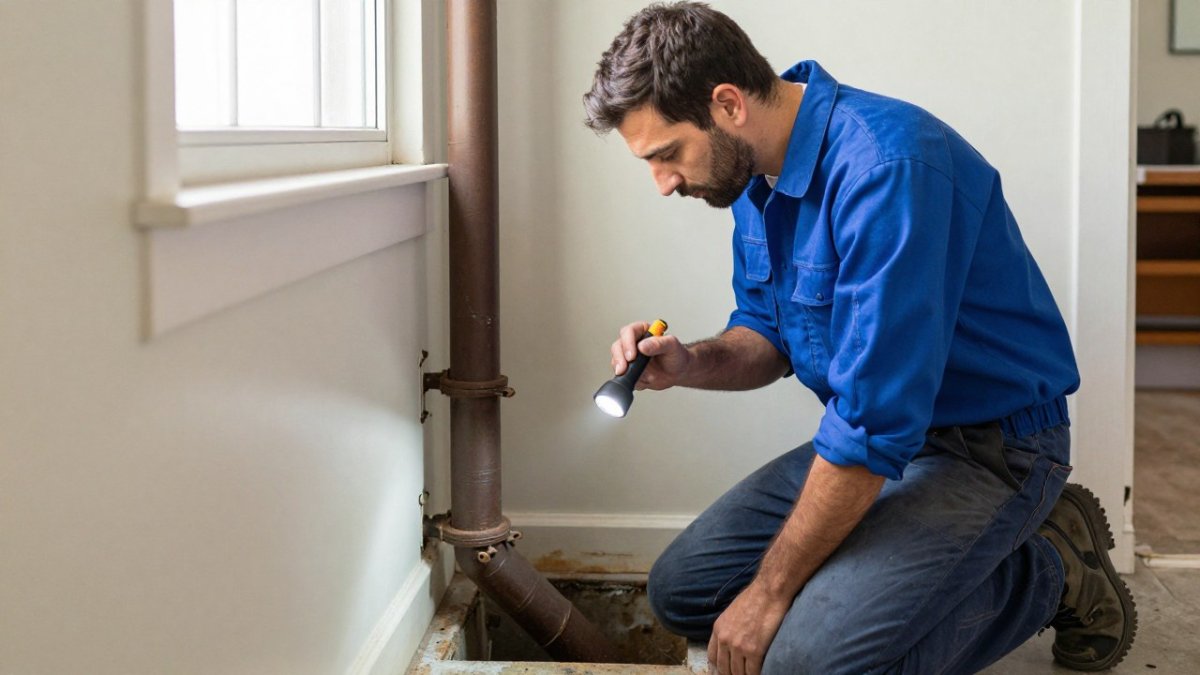
!A licensed plumber in work clothes kneels beside an open floor access point in an older Los Angeles home, examining a corroded cast iron drain pipe with a flashlight
Does Homeowners Insurance Cover Replacing Cast Iron Pipes?
Homeowners insurance generally covers sudden, accidental damage, such as a pipe that bursts and floods a room. Coverage for a pipe that failed from age, wear, or gradual corrosion varies by policy, so check your policy terms with your insurer.
Coverage varies by policy and by insurer, so read your policy carefully and ask your agent specific questions about pipe failure, water damage, and any exclusions. Keep records of inspections and repairs, since they can help support a claim if damage occurs.
Estimating Your Project and Comparing Contractor Quotes
Before you accept any estimate, compare the scope of work line by line. A useful quote should state the pipe material, the approximate length of the replacement, whether excavation is included, what restoration is covered, and whether permits are part of the price.
When you compare contractors, look for:
- A written, itemized estimate
- Clear language on what is and is not included
- Confirmation of licensing and insurance
- A stated timeline for the work
- Explanation of any contingency costs
If you want to understand what professional drain service pricing usually looks like before you request quotes, our Professional Drain Cleaning Services Cost: 2026 Pricing Guide explains the common pricing models and what drives your bill. For help judging provider quality and whether a repair estimate is reasonable, see our Residential Plumbing Services: 2026 Guide to Choosing a Pro.
Scheduling Your Drain Pipe Replacement With Alpha Rooter & Plumbing
Once you have the scope of work clear, scheduling is the next step. Alpha Rooter & Plumbing offers 24/7 emergency and scheduled plumbing service across the Los Angeles area, with a response time of under 90 minutes for urgent calls. We are licensed (License #874454), and we provide upfront pricing with no hourly or overtime charges.
If you are dealing with active backups or water damage, you can hire emergency plumbing services in Los Angeles and get help quickly. For a planned replacement, reach out for an on-site evaluation and a written quote before any work begins.
Replacing aging drain pipes protects your home from repeated failures and costly water damage. Call Alpha Rooter & Plumbing to schedule an inspection and get a clear, upfront quote for your project.
Frequently Asked Questions
How much does it cost to replace drain pipes in a house?
Cost depends on how much pipe needs replacing, the material, and how hard the pipe is to reach. A single section repaired from a cleanout may cost far less than a whole-house replacement that requires trenching under a slab or excavating the yard. Because pricing varies by project scope, the most reliable number comes from an on-site inspection and a written estimate. Alpha Rooter & Plumbing provides upfront pricing with no hidden fees, so you can review the total before work begins.
Does homeowners insurance cover replacing cast iron pipes?
Standard homeowners policies usually cover sudden, accidental damage such as a burst pipe that causes water damage to the home. They generally do not cover replacement of a pipe that simply wore out from age or corrosion, because that is considered maintenance. Coverage can differ by policy and insurer, so review your declarations page and ask your agent specifically about gradual deterioration and sewer or drain backup endorsements before filing a claim.
Can old drain pipes be replaced without digging?
In some cases, yes. Trenchless methods such as pipe bursting or cured-in-place lining can install a new pipe or liner through the existing line with only small access pits. Whether this works depends on pipe diameter, material, length, and obstructions. A camera inspection is needed to determine whether a trenchless option is practical for your specific drain.
How can I get an accurate estimate for replacing drain pipes?
Ask for a camera inspection so the contractor can see the actual pipe condition, length, and location. Request a written quote that itemizes labor, materials, permits, and restoration such as drywall, flooring, or landscaping repair. Compare quotes on the same scope of work, and confirm the contractor is licensed and insured. Alpha Rooter & Plumbing is licensed (License #874454).
