
Table of Contents
- Step 1: Know What You Are Dealing With: Trap Grease vs. Fryer Oil vs. Food Scraps
- Step 2: Follow Local Grease Trap Waste Disposal Regulations
- Step 3: Hire a Licensed Grease Trap Pumping Service and Verify the Hauler
- Step 4: Set the Right Trap Cleaning Schedule: How Often to Clean a Restaurant Grease Trap
- Step 5: Collect and Store Used Cooking Oil and Trap Waste Separately
- Step 6: Keep Your Grease Trap Waste Manifest and Disposal Records
- Step 7: Handle Spills, Missed Pickups, and Suspected Illegal Disposal
- Frequently Asked Questions
Last Updated: October 14, 2026
Step 1: Know What You Are Dealing With: Trap Grease vs. Fryer Oil vs. Food Scraps
Learning how to dispose of restaurant grease trap waste legally starts with one fact: not all kitchen grease is the same, and each type has its own disposal path.
Here is how the three streams differ:
- Trap grease: The brown, rancid mix of fats, oils, and grease (FOG) that collects inside a grease interceptor. It also holds food particles and wastewater solids.
- Used cooking oil: The cleaner yellow oil left in the fryer after service. It stays in a dedicated collection container.
- Food scraps: Solids scraped from plates and prep areas. These belong in the trash or a compost stream, never the sink.
Trap grease is a waste product; fryer oil is a commodity recyclers pay for or collect free. Treating them as one stream costs money and creates compliance problems.
Why Grease Cannot Go Down the Drain
Grease cools as it travels through pipes, sticking to the walls and hardening.
That buildup causes most restaurant sewer blockages. A blocked line can back raw sewage into your kitchen, and the city can hold your business responsible for cleanup.
Many municipalities treat grease discharges as a violation of their sewer use rules. The EPA’s guidance on fats, oils, and grease explains why FOG is one of the leading causes of sanitary sewer overflows nationwide.
Pouring grease down the drain, even with hot water, does not make it disappear. It cools a few feet down the pipe and hardens. The result is a sewer blockage, a backup, and a repair bill you did not plan for.
Step 2: Follow Local Grease Trap Waste Disposal Regulations
Grease trap waste disposal regulations come from three layers of government, all applying at once.
- Federal: The EPA sets the framework for keeping FOG out of sewers.
- State: State rules set pretreatment standards and hauler requirements.
- Local: Your city or county sewer authority issues permits and inspects interceptors.
The strictest rule wins. If your city requires pump-outs every 90 days and the state only says “as needed,” you follow the city.
How to Check Your Municipal and State Requirements
Start with your local sewer authority or public works department and ask for the FOG ordinance and permit conditions for your address.
Then confirm the state layer through your state environmental agency. Most publish pretreatment rules online.
Keep a simple record of what you find:
- The pump-out frequency your permit requires
- The manifest or receipt format your city accepts
- The list of approved haulers, if one exists
Rules vary widely by jurisdiction, so verify your own requirements rather than relying on another operator’s setup. The EPA’s National Pretreatment Program overview is a good starting point for understanding how local limits are set.
Step 3: Hire a Licensed Grease Trap Pumping Service and Verify the Hauler
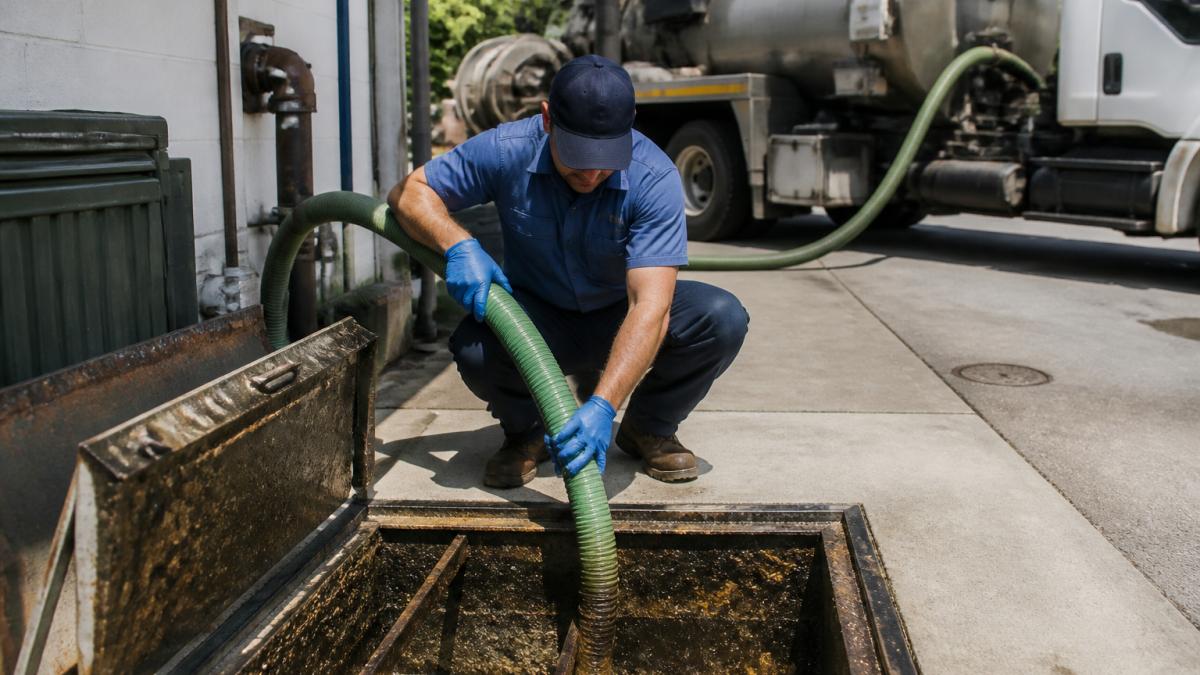
A grease trap pumping service is only as good as its paperwork. Anyone with a vacuum truck can empty your interceptor, but only a permitted hauler can prove where the waste went, and only you can confirm the permit is real and the destination authorized.
How to Verify a Hauler Before You Sign
Verification takes no special software, most of it is a phone call or website visit.
- Pull the permit number and check it at the source. Ask the hauler for the permit or license number issued by your state environmental agency or local sewer authority, then call that agency directly, not the hauler’s reference line, to confirm it is active, matches the company name on the truck, and covers your waste type.
- Confirm the disposal facility is authorized to receive trap grease. Ask for the facility name and address, then check it against your state’s list of permitted treatment works, transfer stations, or recycling processors. If it is not on the list, the waste is not going to a legal destination, no matter what the manifest says.
- Match the truck to the paperwork. On pickup day, note the truck’s company name, license plate, and any state-issued hauler decal; these should match the permit you verified. An unmarked subcontractor truck is a common pattern in illegal dumping cases.
What to Ask Before You Sign a Service Contract
Use this checklist in the conversation:
- Are you permitted to haul grease waste in this jurisdiction, and what is your permit number?
- Which approved facility receives the waste, and what is its permit or registration number?
- What does the manifest include, and who signs it, the driver, the facility, or both?
A legitimate hauler answers all of these without hesitation. If they dodge the disposal facility question, cannot produce a permit number, or refuse to name the receiving facility, walk away.
Red Flags That Suggest Illegal Disposal
Most illegal dumping is not obvious. Watch for these patterns:
- The hauler cannot or will not name the disposal facility.
- The manifest lists a facility that is not on your state’s authorized list.
- The truck has no company markings, no permit decal, or out-of-state plates with no local registration.
If you suspect illegal dumping, report it to your state environmental agency and local sewer authority. Keep your manifests, they protect you from being treated as a co-conspirator.
Photograph the interceptor before and after every pump-out and keep the images with the manifest. If an inspector questions your maintenance, dated photos settle the issue fast. Also photograph the truck and any visible permit decal on the first visit.
A low price is not a bargain if the waste ends up in a storm drain or vacant lot. Under many state and local rules, the generator of the waste, your restaurant, can be held responsible for illegal disposal even when a hauler did the dumping. Verifying the hauler and the facility is your legal protection, not just good practice.
Step 4: Set the Right Trap Cleaning Schedule: How Often to Clean a Restaurant Grease Trap
There is no single answer to how often to clean a restaurant grease trap; frequency depends on interceptor size, menu, and daily volume. A fry-heavy menu fills a trap faster than a salad-focused one, and small interceptors fill sooner than large ones.
| Kitchen Type | Typical FOG Load | Common Pump-Out Cycle |
|---|---|---|
| Fast food, heavy frying | High | Monthly |
| Full-service restaurant | Medium | Every 1-3 months |
| Cafe or bakery | Low | Quarterly |
These are starting points only; your permit sets the real requirement. Add a mid-cycle check to catch a fast fill before it becomes a backup.
Step 5: Collect and Store Used Cooking Oil and Trap Waste Separately
Separate waste streams keep you compliant and your recycler interested. Used cooking oil has value; trap grease does not.
Set up your kitchen like this:
- A sealed grease collection bin for fryer oil, kept away from the back door and storm drains.
- A locked or screened access point for the grease interceptor, so staff and customers cannot tamper with it.
- A labeled collection container for food scraps, emptied daily.
Train staff to scrape plates into the trash before washing, small habits keep solids out of the trap and reduce pump-out frequency.
Never pour fryer oil into the interceptor or the drain. Never put trap grease in the trash. Each stream leaves through its own door.
The cleanest kitchens separate three streams at the source: fryer oil, trap grease, and food scraps. Separation at the source is cheaper than separation after a blockage.
Step 6: Keep Your Grease Trap Waste Manifest and Disposal Records
Your grease trap waste manifest and disposal records are your proof of legal disposal. Without them, an inspector cannot know your waste did not go into a storm drain.
What Each Record Should Contain
Not every receipt is a valid record; a document lacking the right fields will not satisfy an inspector. Each type should include:
- Service receipt or invoice: Date of service, hauler company name and permit number, your restaurant’s name and service address, volume removed (in gallons), and a signature from the driver and a restaurant representative.
- Manifest or waste tracking form: Everything on the receipt, plus the name, address, and permit number of the disposal facility, and the facility’s receiving signature or stamp confirming the waste arrived.
- Interceptor maintenance log: Date of each inspection, the measured depth of FOG and solids, whether a pump-out was triggered by the 25 percent rule, and the name of the employee who checked it.
How Long to Keep Records
Retention rules vary by jurisdiction, so confirm your local requirement rather than guessing. A common pattern:
- Local sewer authority: Often 2 to 3 years for manifests and pump-out records.
- State environmental agency: Frequently 3 to 5 years for waste tracking documents, depending on the state’s pretreatment program.
- Federal pretreatment framework: The EPA’s general pretreatment regulations set a baseline of 3 years for monitoring records, and states and localities can require longer.
The safe rule: keep everything at least 5 years, or longer if your permit or local ordinance requires it. Storage is cheap; a missing manifest during an inspection is not.
How to Organize Records So They Survive an Inspection
Paper folders get lost. A simple system prevents that:
- One folder per calendar year, labeled with your restaurant name and service address.
- File in chronological order by service date, not by the date you received the document.
- Keep a digital backup. Scan or photograph every manifest and receipt the day it arrives and store it in a cloud folder. If paper records are damaged or misplaced, the digital copy still counts.
- Cross-reference the maintenance log. Each pump-out entry in the log should note the matching manifest number or service date so an inspector can trace the chain from interceptor to facility.
- Retain fryer oil records separately from trap grease records so the two waste streams are never confused during a review.
A complete record answers three questions an inspector will ask: What was removed? Who removed it? Where did it go? If any of those three is missing, the record is incomplete.
If you recycle fryer oil, keep those receipts too. A rebate check or free collection slip shows the oil went to a recycler, not a drain, separating a legal commodity stream from a regulated waste stream in your files.
Step 7: Handle Spills, Missed Pickups, and Suspected Illegal Disposal
Problems happen. What matters is how fast you respond and how well you document it.
After a missed pickup: Call the hauler immediately and log the call.
Grease trap compliance is not glamorous, but it protects your kitchen, sewer line, and license to operate.
If a grease blockage or backed-up sewer line is threatening your service hours, do not wait for it to get worse.
Frequently Asked Questions
Can restaurant grease trap waste go in the trash or down a drain?
No. Pouring grease trap waste down a drain is illegal in most municipalities and causes sewer blockages that can lead to fines and backup liability. Putting it in the trash is also prohibited because liquid grease leaks, attracts pests, and violates solid waste rules. Trap grease must be pumped by a licensed hauler and transported to an approved disposal or recycling facility.
Who is allowed to haul and dispose of grease trap waste?
Only a licensed and permitted waste hauler can legally transport grease trap waste. Before hiring, ask for their current permit number, the name of the approved disposal facility they use, and proof of insurance. Your city or county environmental health department can confirm whether a hauler is authorized to operate in your area. Never use an unpermitted hauler, even if they offer a lower rate.
What records should a restaurant keep after grease trap service?
Keep every grease trap waste manifest and disposal record for at least three years, or longer if your local rules require it. Records should include the service date, volume pumped, hauler name and permit number, and the approved facility where waste was delivered. Inspectors may ask to see these documents during routine health or environmental checks. Missing records can result in fines even if your trap was serviced on time.
How often should a restaurant grease trap be cleaned?
Most restaurants need grease trap cleaning every four to twelve weeks, but the right frequency depends on your kitchen volume, trap size, and menu. High-volume fryer operations may need monthly or more frequent pump-outs, while smaller kitchens can go longer. A common rule is to clean when fats, oils, and grease reach 25 percent of the trap’s depth. Your hauler can recommend a schedule after the first inspection.