
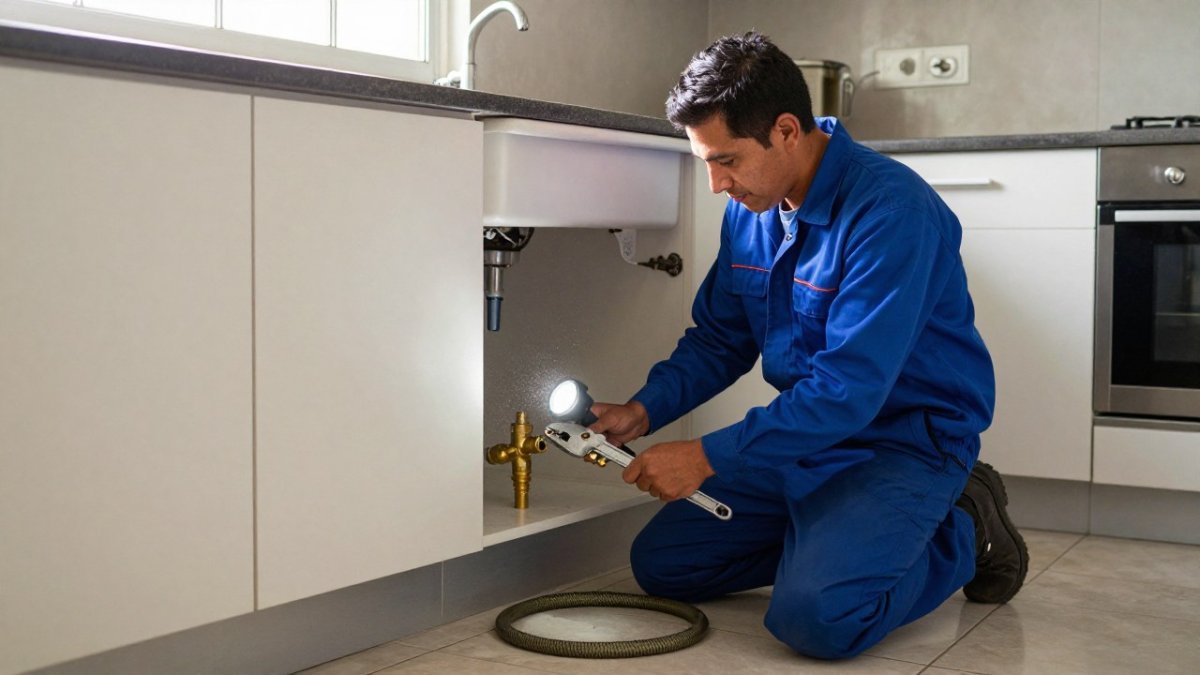
Last Updated: November 9, 2026
Quick Summary
The fastest way to screen out a bad plumber when hiring a plumber is to verify three things before discussing the job: license, insurance, and bond. Ask for the license number in writing and look it up on your state’s contractor licensing board, then request certificates of insurance sent directly from the insurer. A cheap quote from an unlicensed worker is a liability transfer, not a bargain.
- Request the license number by text or email so you have it in writing.
- Confirm the legal business name on the license matches the estimate and invoice.
- Ask for both liability insurance and workers’ compensation certificates, not just one.
- Ask whether the company pulls permits when the job requires one.
- Three red flags end the conversation: full cash upfront, skipping permits, and refusing to put anything in writing.
Table of Contents
- Start With License, Insurance, and Bond Verification
- Questions to Ask a Plumber in an Interview
- Probe Their Experience With Your Specific Plumbing Problem
- Plumbing Estimates and Upfront Pricing: What to Ask
- How to Compare Plumbing Quotes Apples to Apples
- Plumber Warranty and Workmanship Guarantee Questions
- Red Flags, References, and Preparing for the Visit
- Booking a Licensed Plumber You Can Actually Trust
- Frequently Asked Questions
Start With License, Insurance, and Bond Verification
The fastest way to screen out a bad plumber when hiring a plumber is to check three things before you talk about the job at all: license, insurance, and bond. Treat this as the first filter, not an afterthought. A cheap quote from an unlicensed worker is not a bargain. It is a liability transfer, and you are on the receiving end.
How to Check a License Number Yourself
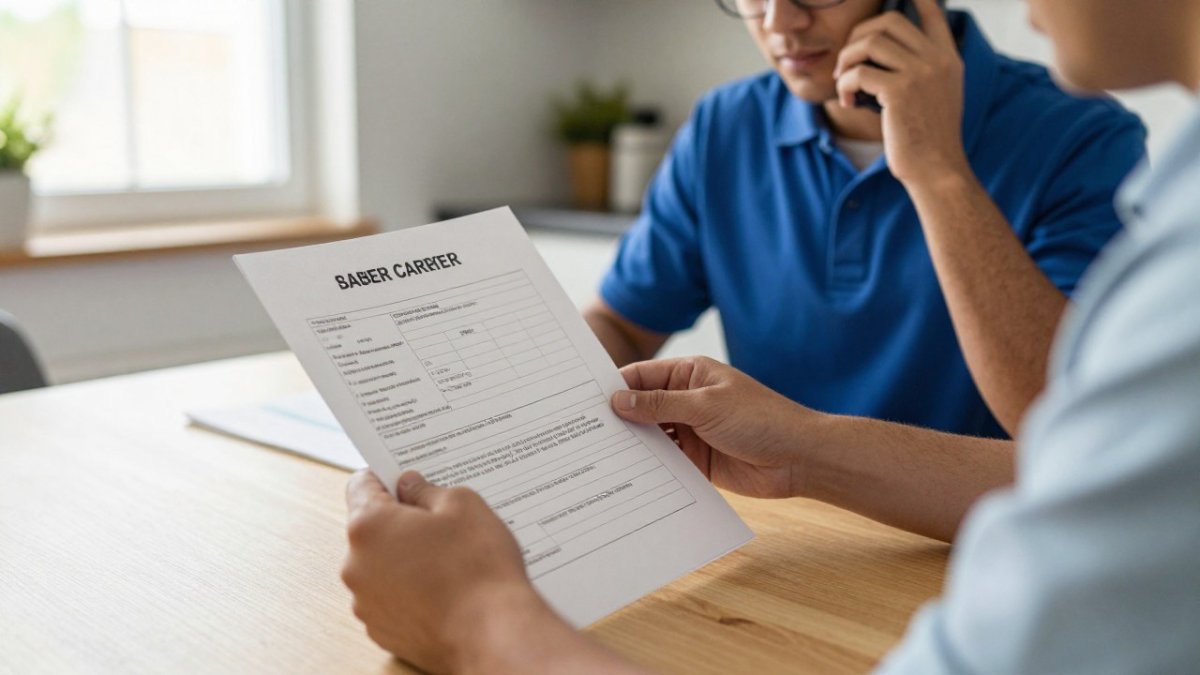
Ask for the license number in writing, then look it up. Many states run a public license lookup through their contractor licensing board, and a legitimate plumber will hand the number over without hesitation. Check that the name on the license matches the company quoting you, and that the license is active, not expired or suspended.
A practical verification sequence:
- Request the license number by text or email so you have it in writing.
- Search the number on your state’s contractor licensing board lookup page.
- Confirm the legal business name on the license matches the name on the estimate and the invoice.
- Check the license status, expiration date, and any disciplinary actions listed.
- Ask whether the license covers the type of work you need, since some states issue separate licenses for plumbing, drain cleaning, and gas piping.
Watch out: a license number that belongs to a different company name is one of the most common tricks. The crew shows up under one business and bills under another. If the name on the license does not match the name on the quote, stop and ask why before any work begins.
What Insurance and Bonding Actually Cover
Ask for a certificate of insurance sent directly from the insurer. A photocopy proves nothing. The certificate should list the policyholder’s legal name, the policy effective dates, and the coverage limits. Call the insurer’s number on the certificate to confirm the policy is active and that the plumber’s name matches.
A common pattern is for a company to carry liability insurance but no workers’ compensation, which leaves you exposed if a crew member is injured on your property. Ask for both certificates, not just one.
For a step-by-step walkthrough, see our guide on how to verify a plumber’s license and insurance, and if you are weighing a cheaper unlicensed option, read is an unlicensed plumber worth the risk first.
Questions to Ask a Plumber in an Interview
Before you book, run a short interview. These are the questions to ask a plumber in an interview that separate a professional operation from a guy with a truck:
- What is your license number, and who is the license holder?
- Can your insurer email me a certificate of insurance today?
- Who will actually do the work, your employee or a subcontractor?
- What is your service call or diagnostic fee, and does it apply to the repair?
- Do you pull permits when the job requires one?
- What is your warranty on workmanship, and how long does it last?
- How do you handle payment, and do you take a deposit?
- What is your emergency availability and typical appointment window?
A good plumber answers all eight without flinching. Evasive answers on any of them are your signal to move on.
Probe Their Experience With Your Specific Plumbing Problem
A licensed plumber is not automatically the right plumber for your job. A technician who handles new construction rough-ins all week may be lost in a 1950s house with cast iron drains. Ask directly: how many jobs like mine have you done in the last year, and what usually goes wrong with this type of system?
Old Pipes, Sewer Lines, and Water Heaters
Older homes bring their own set of problems. Cast iron drains corrode and scale. Galvanized supply lines narrow over time. Clay sewer laterals crack at the joints. Ask what diagnostic tools the company uses, whether that is a camera inspection for the sewer line or pressure testing for a hidden leak.
For homes with aging plumbing, our guide on licensed plumbers for older homes covers what to ask and how to check the answers.
Plumbing Estimates and Upfront Pricing: What to Ask
Ask for a written estimate before any work starts, and ask what is included in it. A detailed quote should list labor, parts and materials, permits, and the scope of work in plain language. It should also state the payment terms and whether a deposit is required.
The key question: is this a flat-rate price for the whole job, or an hourly rate plus materials? Flat-rate pricing protects you from a bill that grows with every hour on site. Hourly billing can be fair, but only when the estimate includes a realistic job timeline.
Ask what happens if the job turns out bigger than expected. A trustworthy company explains how change orders work before the work begins, not after. Our breakdown of what is included in upfront pricing walks through every line item.
How to Compare Plumbing Quotes Apples to Apples
Two quotes for the same job are rarely the same quote. One includes the permit, the other does not. One covers cleanup and haul-away, the other leaves the old water heater on your curb. To compare fairly, put every quote into the same format:
| What to Compare | Question to Ask | Why It Matters |
|---|---|---|
| Scope of work | What exactly is included and excluded? | Prevents surprise add-ons |
| Permit | Is the permit pulled and included in the price? | Unpermitted work fails inspection |
| Parts and materials | What brand and grade of parts? | Cheap parts fail early |
| Labor and fees | Flat rate, hourly, or diagnostic fee? | Determines final bill |
| Warranty | How long on workmanship and parts? | Your protection after the job |
| Payment terms | Deposit, milestones, final payment? | Cash-flow and risk |
| Timeline | Start date and expected completion? | Plans your downtime |
The lowest number is often not the lowest total cost. A quote that skips the permit or the warranty is cheaper because it leaves you holding the risk. Our guide on how to avoid hidden fees in plumbing quotes shows where fees hide.
Normalize Every Quote Before You Compare
A line-by-line comparison only works if each quote describes the same job. Before you compare totals, rewrite each quote into a single worksheet with these columns: scope item, included or excluded, brand and model of parts, labor hours or flat rate, permit status, warranty length, and payment schedule. If a quote does not state a category, mark it as ‘not specified’ rather than assuming it is included.
A practical pattern is to ask each plumber to quote the same written scope. Send the same description of the problem and the same access conditions to every company, then compare their responses to that identical scope. This removes the advantage of a vague quote that looks cheaper only because it covers less.
What to Do When Quotes Disagree
When two quotes differ by a wide margin, ask each plumber to explain the difference in writing. Common explanations include a different repair method, a different grade of parts, a permit that one company includes and the other does not, or a diagnostic step one company skips. A plumber who cannot explain the difference in plain language is a risk.
Watch out: a quote that lists a single lump-sum price with no breakdown of labor, parts, and permit is hard to compare and easy to inflate later. Ask for the breakdown before you sign.
Contingencies and Change Orders
Ask each plumber what happens if the job turns out bigger than expected. A written quote should state how change orders are priced, who approves them, and whether the plumber will stop work to get your approval before proceeding. Compare those terms across quotes, not just the headline price.
Plumber Warranty and Workmanship Guarantee Questions
Ask what the warranty covers and who honors it. A workmanship guarantee covers the labor if the repair fails, while a parts warranty covers the fixture or component itself. These are two different promises, and you want both in writing.
Ask how long each one lasts, whether it transfers if you sell the house, and how you file a claim.
Red Flags, References, and Preparing for the Visit
Three red flags should end the conversation: a demand for full cash payment upfront, a pressure to skip the permit, and a refusal to put anything in writing.
Before the visit, clear access to the work area, note where the main water shutoff is, and write down what you have observed, like when the drain backs up or where the leak appears. A prepared homeowner gets a faster, more accurate diagnosis.
Booking a Licensed Plumber You Can Actually Trust
The questions above take ten minutes and save you from the most expensive mistake in home repair: hiring a plumber who is wrong for the job. Verify the license, confirm the insurance, get the estimate in writing, and compare quotes line by line.
Alpha Rooter & Plumbing provides licensed plumbing and drain cleaning services, from a leaking fixture to a backed-up sewer line. We offer 24/7 emergency service, a response time of under 90 minutes, and upfront pricing with no hidden fees, with no hourly or overtime charges. Our plumbers use diagnostic and repair tools to find the problem and fix it.
Contact Alpha Rooter & Plumbing to book a licensed plumber, and check the company’s website for current pricing or a quote.
Frequently Asked Questions
What questions should I ask a plumber before hiring them?
Ask for their license number and verify it with your state licensing board, then confirm they carry liability insurance and bonding. Ask whether the quote is a written, fixed estimate or an hourly rate, what the diagnostic fee covers, who will actually perform the work, and whether subcontractors are involved. Finish with warranty terms: how long the workmanship guarantee lasts, what the parts warranty covers, and whether permits and inspection are included in the price.
How can I verify a plumber’s license and insurance?
Get the license number in writing, then look it up on your state’s contractor licensing database to confirm it is active and matches the business name. For insurance, request a certificate of insurance showing current general liability coverage and call the insurer to confirm the policy is in force. A bonded plumber should also be able to provide bonding documentation. Any licensed plumber should hand these over without hesitation; resistance is a warning sign.
Should I get a written estimate before plumbing work begins?
Yes. A written estimate should list the scope of work, parts and materials, labor costs, permit fees, the diagnostic or service call fee, and payment terms including any deposit. Ask whether the price is flat-rate or hourly and what happens if the job turns out bigger than expected. Compare at least two or three detailed quotes line by line, not just the bottom line, so you can see where each plumber is cutting or padding costs.
What should I ask about a plumber’s warranty and guarantee?
Ask how long the workmanship guarantee runs and whether it covers labor only or labor plus materials. Confirm the parts warranty length and whether it comes from the manufacturer or the plumbing company. Get the warranty in writing and check whether it is transferable, voided by unrelated work, or conditional on annual maintenance. A plumber confident in their work will explain these terms plainly and put them in the written estimate.
