
Table of Contents
- Why Recurring Drain Clogs Happen
- How to Prevent Kitchen Sink Clogs
- How to Prevent Shower Drain Clogs
- Your Seven-Step Prevention Routine
- Signs of a Sewer Line Blockage
- When to Call for Professional Drain Cleaning
- Conclusion
- Frequently Asked Questions
Last Updated: October 6, 2026
Why Recurring Drain Clogs Happen
To prevent recurring drain clogs, you need to understand why they come back weeks or months after you clear them.
Most start small: debris accumulates, flow slows, the blockage grows, you clear it, and the pattern repeats.
We’ve seen this hundreds of times. Homeowners who stop recurring clogs change what goes down the drain.
Kitchen sinks clog differently than shower drains, and grease behaves differently than hair, so target the specific culprits in YOUR drains.
How to Prevent Kitchen Sink Clogs
Kitchen sinks are ground zero for recurring clogs. Food, grease, and debris flow down daily, so without a deliberate prevention strategy, clogs keep coming back.
Your kitchen sink needs two layers of defense: stop the worst offenders before they enter the drain, and manage what does go down.
Stop Grease and Cooking Oil
Grease flows down as liquid when hot, then hardens as it cools inside your pipes, sticking to the walls and trapping debris until it becomes a solid blockage.
Many homeowners pour grease down the drain because it’s liquid at that moment, the mistake is thinking it stays liquid.
Here’s what to do instead:
- Let cooking oil and grease cool in the pan
- Wipe the pan with a paper towel before washing
- Pour cooled grease into a container and throw it in the trash
- Never pour grease down the drain, even if you run hot water after it
For grease buildup already in your pipes, hot water alone won’t clear it.
Chemical drain cleaners create toxic fumes and can corrode older pipes. If you have cast iron or galvanized steel pipes, avoid them entirely. Professional hydro-jetting is safer and more effective.
Use a Drain Strainer for Food Scraps
A drain strainer is the simplest tool you have. It catches food before it enters the pipe. Most clogs start with small food particles that should never have made it past the sink opening.
Install a small-hole strainer in every kitchen sink drain and empty it after every use, that single habit prevents most food-based clogs.
Run Cold Water When Using a Garbage Disposal
If you have a garbage disposal, cold water is your friend: hot water softens waste so it sticks to pipe walls, while cold water keeps it firm and flushes it through.
Run cold water before you turn on the disposal, keep it running while it operates, and let it run 15-20 seconds after you turn it off to flush everything through.
Never put these items in a garbage disposal:
- Grease or oil
- Fibrous vegetables (corn husks, celery, onion skins)
- Starchy foods (pasta, rice, potatoes)
- Bones or shells
These items either don’t break down or create buildup that leads to clogs.
How to Prevent Shower Drain Clogs
Shower drains clog for different reasons than kitchen sinks. Hair is the main culprit. Soap residue and product buildup create secondary problems. Both need specific solutions.
Install a Hair Trap
Hair is the #1 cause of slow shower drains and recurring clogs. A single shower can shed 50-100 hairs.
A hair trap (also called a drain strainer or hair catcher) sits in your drain opening and catches hair before it enters the pipe.
Clean the trap after every shower: pull out the hair, throw it in the trash.
If you don’t have a trap yet, buy one today. They cost a few dollars and install in seconds. No plumber needed.
Clean Soap Residue Buildup
Soap, shampoo, conditioner, and body wash leave residue that narrows the pipe opening, slowing water flow so hair catches more easily and the clog cycle accelerates.
Run hot water down the drain for 30 seconds after every shower to break down soap buildup, especially important if you use thick conditioners or body washes.
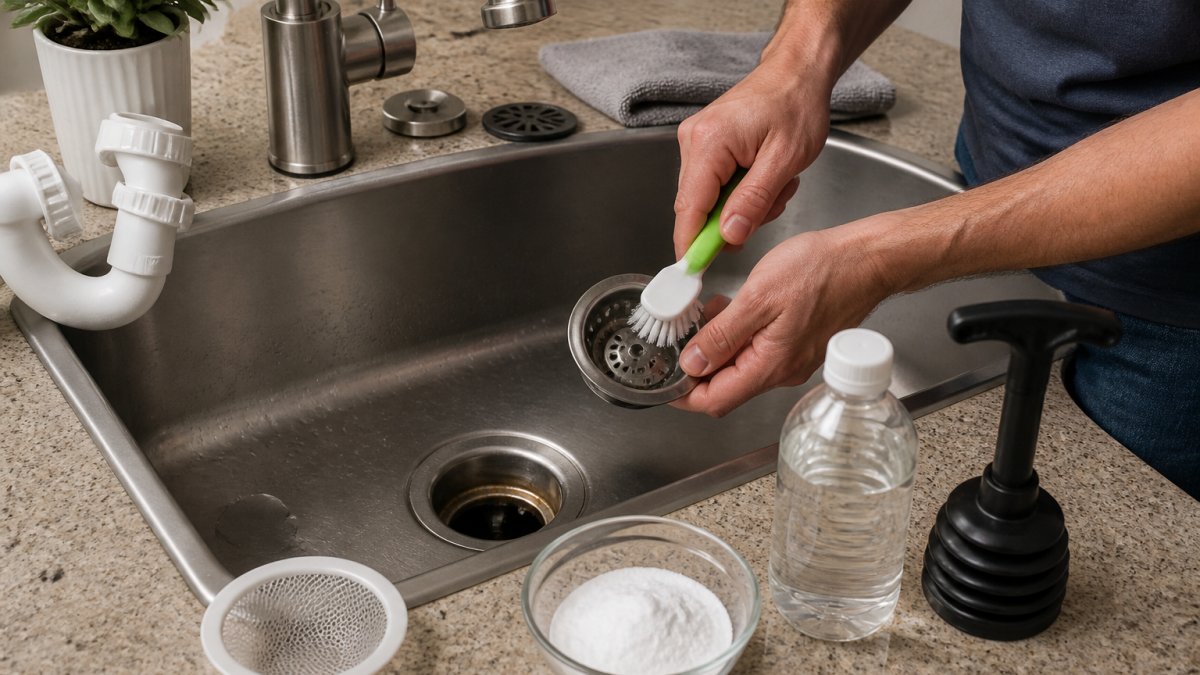
For existing buildup, pour half a cup of baking soda down the drain, add half a cup of white vinegar, let it sit 30 minutes, then flush with hot water.
Your Seven-Step Prevention Routine
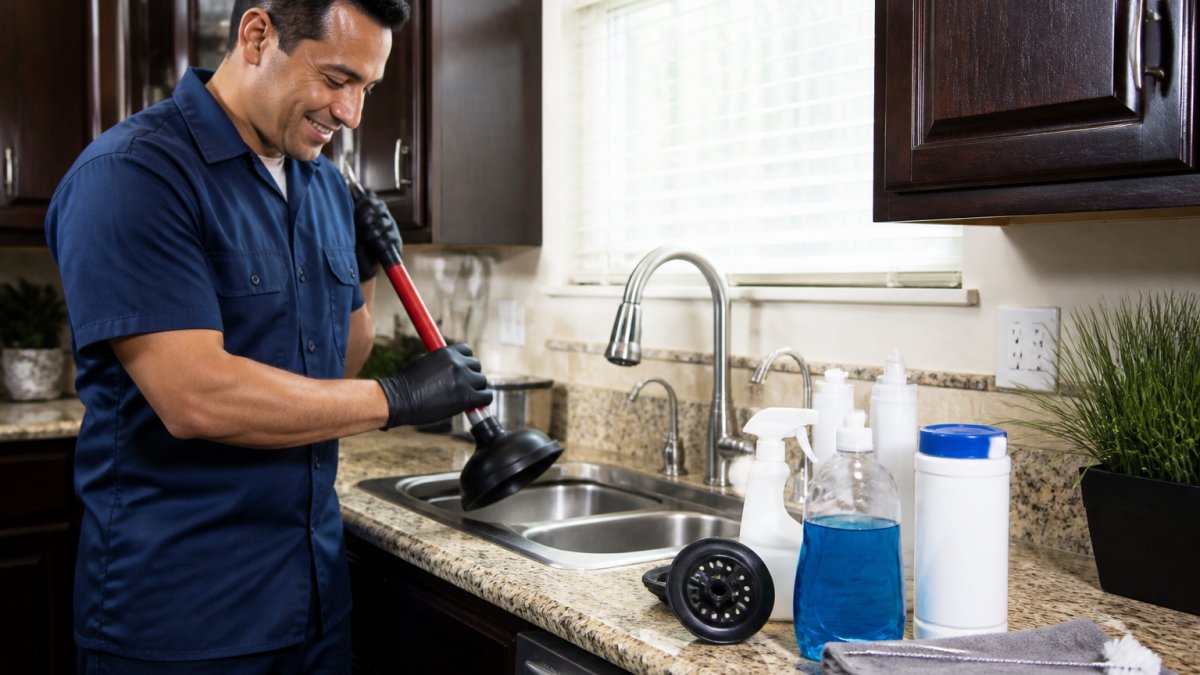
Step 1: Install strainers in every drain.
A kitchen strainer catches food scraps; a shower hair trap catches hair.
Step 2: Empty strainers after every use.
A full strainer acts like a dam instead of catching debris.
Step 3: Keep grease, oil, and fibrous food out of the drain.
Grease cools and hardens on pipe walls.
Step 5: Run hot water down shower drains after every shower.
Soap, shampoo, conditioner, and body wash leave a film that narrows the pipe.
Daily, Weekly, and Seasonal Schedule
| Task | Frequency | Time | What It Prevents |
|---|---|---|---|
| Empty strainers and hair traps | Daily | 2 minutes | Food and hair clogs |
| Scrape plates, wipe greasy pans | Every meal | 1 minute | Grease and food buildup |
| Cold water with disposal | Every use | 1 minute | Waste packing in the line |
| Hot water after shower | Every shower | 30 seconds | Soap and product film |
| Baking soda and vinegar flush | Weekly | 5 minutes | Light organic buildup |
| Flow check on all drains | Monthly | 2 minutes | Detects slow drains early |
| Main-line inspection (older homes) | Every 1-2 years | 30-60 minutes | Hidden root and scale problems |
This routine takes under 15 minutes a week. Most of it happens while you are already using the drain.
If a drain starts slowing between monthly checks, act immediately. A plunger or the baking soda-and-vinegar flush can often clear a forming clog. Waiting until water backs up means the clog has already matured.
What Not to Do
- Do not pour chemical drain cleaners down a fully blocked drain. The caustic liquid sits on top of the clog and can damage pipes, especially older cast iron or galvanized steel, without clearing the blockage.
- Do not use a plunger on a drain already treated with a chemical cleaner. Splashback can cause burns.
- Do not run a disposal with hot water. It softens waste and encourages buildup.
- Do not ignore a single drain that stays slow after two weeks of the routine above. That pattern usually means the problem is past the trap, not in it.
Diagnosing by Drain and Symptom
Use the pattern, not just the symptom, to locate the problem:
- One kitchen sink only: local buildup from food and grease. Prevention routine usually solves it.
- One shower or tub only: hair and soap mat at the strainer or in the trap arm. Pull the hair trap and check.
- Kitchen and bathroom both slow: the branch line or main line is the likely culprit.
- Gurgling when another fixture runs: a vent or main-line issue. Gurgling is a pressure symptom, not a local clog.
Homeowners often treat a main-line problem as a kitchen-sink problem for weeks. If two or more drains are slow at once, the fix is not in the sink.
Signs of a Sewer Line Blockage
Sometimes recurring drain clogs aren’t about your kitchen or shower, the problem is deeper in your plumbing. A sewer line blockage affects multiple drains, and its warning signs differ from a single slow sink.
Warning Signs to Watch For
- Multiple drains backing up at the same time (kitchen, bathroom, laundry)
- Gurgling sounds from drains, especially when another fixture runs
- Slow drainage throughout the house, not just one sink or shower
- Sewage smell coming from drains or from the yard
A single clogged kitchen sink is one thing; multiple drains slowing at once points to a main-line problem beyond DIY prevention that needs professional diagnosis.
Why Older Homes and Local Conditions Make This Worse
Recurring main-line clogs aren’t random, they track with the home’s age, pipe material, and what’s growing in the yard.
Pipe material matters. Homes built before the mid-1970s often have cast iron drain lines that corrode from the inside out, and the rough interior catches debris and scale.
Settling and slope. Older laterals settle over decades, creating low spots where waste and water pool.
Shared infrastructure. In denser neighborhoods, a blockage in the shared line or city main can back up into multiple homes at once.
Distinguishing a Main-Line Problem from a Local Clog
| Symptom | Likely Location |
|---|---|
| One sink or shower slow | Local trap or branch |
| Two or more drains slow at once | Main line or branch line |
| Gurgling when another fixture runs | Vent or main line |
| Sewage smell indoors or outdoors | Main line or sewer |
| Toilet bubbles when washer drains | Main line |
| Water backs up in lowest floor | Main line or sewer |
If the pattern points to the main line, stop running water and call a professional. Repeated snaking of a root-clogged lateral clears the pipe temporarily but doesn’t remove the roots, which is why the clog returns. A camera inspection shows what’s inside the pipe, and hydro-jetting cuts roots and scours walls more thoroughly than a cable auger.
Do not keep pouring chemical drain cleaners into a main-line backup. The chemicals sit in standing water, can damage older pipes, and create a burn hazard for anyone who opens the cleanout afterward.
When to Schedule an Inspection
If your home has cast iron, clay, or Orangeburg pipes, or mature trees near the sewer lateral, a camera inspection every 1-2 years catches root intrusion and pipe damage before they become emergency backups, far cheaper than repairing an emergency backup.
When to Call for Professional Drain Cleaning
You can prevent most recurring clogs with the routine above. But some situations need professional help.
Call a plumber when:
- Clogs keep returning despite following prevention steps
- Multiple drains are slow or backing up
- You have sewage smell or yard pooling
- Your home has old cast iron or clay pipes
For homes in older neighborhoods with cast iron or clay pipes, professional inspection every 1-2 years catches problems before they become emergencies.
Alpha Rooter & Plumbing handles recurring drain clog problems with state-of-the-art diagnostic tools, identifying whether your issue is in your home’s drains or the main sewer line.
The best time to call a professional is when you see the first warning sign of a recurring problem, not after clogs have returned three times. Early diagnosis prevents emergency backups.
Conclusion
You can prevent recurring drain clogs with the right approach. The seven-step routine above stops most clogs before they start.
If clogs keep returning despite prevention, the problem is likely deeper than your home’s drains. Alpha Rooter & Plumbing uses advanced drain inspection technology to identify hidden blockages and pipe damage.
The prevention routine takes 15 minutes per week; professional drain cleaning takes a few hours; an emergency sewer backup takes days to repair and costs thousands.
Start with the routine. Install strainers today. Empty them consistently. Watch your drains. If slow drainage starts, act immediately.
Your drains don’t have to clog repeatedly. Take control with prevention, and call us when you need professional help.
Frequently Asked Questions
How often should I clean my household drains to prevent recurring clogs?
Most households benefit from monthly drain maintenance. Run hot water through drains weekly, use a drain strainer daily, and perform a deeper clean with baking soda monthly. Homes with older pipes, multiple residents, or a garbage disposal may need more frequent attention. If you notice slow drainage or backups, increase cleaning frequency immediately and consider professional inspection to rule out pipe damage or buildup.
What are the signs of a sewer line blockage versus a regular drain clog?
A sewer line blockage affects multiple drains simultaneously, sinks, showers, and toilets all drain slowly or back up at the same time. You may also notice sewage odors near drains or in your yard, gurgling sounds from toilets when other fixtures drain, or water pooling in your yard. Regular drain clogs affect only one fixture. Sewer line issues require immediate professional drain cleaning and inspection; do not attempt DIY fixes, as they can worsen pipe damage.
Why does my shower drain clog frequently even after I clean it?
Frequent shower drain clogs usually result from hair mixed with soap residue and product buildup. Hair traps prevent most debris, but soap and shampoo residue accumulates on pipe walls over time, narrowing flow. Hard water deposits can accelerate this. Install a hair trap if you don’t have one, clean the trap weekly, and use hot water monthly to break down soap buildup. If clogs persist after these steps, you may have pipe damage or a slope problem requiring professional inspection.
When should I call a plumber for a recurring drain clog instead of trying to fix it myself?
Call a professional if a drain clogs more than twice in three months, if multiple drains back up simultaneously, if water drains very slowly despite strainer use and hot water flushes, or if you see signs of a sewer line blockage. Also call if you’ve used chemical drain cleaners and the problem persists, chemicals can damage older pipes. Professional drain cleaning equipment like hydro jetting removes stubborn buildup safely and can diagnose underlying pipe issues that DIY methods cannot address.
Comments are closed