
Table of Contents
- How Tree Roots Enter Sewer Lines and Why They Target Your Pipes
- 7 Warning Signs of Tree Roots in Sewer Lines
- How Sewer Camera Inspection Cost Fits Into Early Detection
- Sewer Line Root Removal Cost: DIY vs. Professional Repair
- How to Prevent Tree Roots in Sewer Pipes: Landscaping and Maintenance Tips
- Tree Species Risk Assessment: Which Trees Threaten Your Lateral Line
- Insurance Coverage for Sewer Line Root Damage: What Homeowners Should Know
- Frequently Asked Questions
Last Updated: September 16, 2026
How Tree Roots Enter Sewer Lines and Why They Target Your Pipes
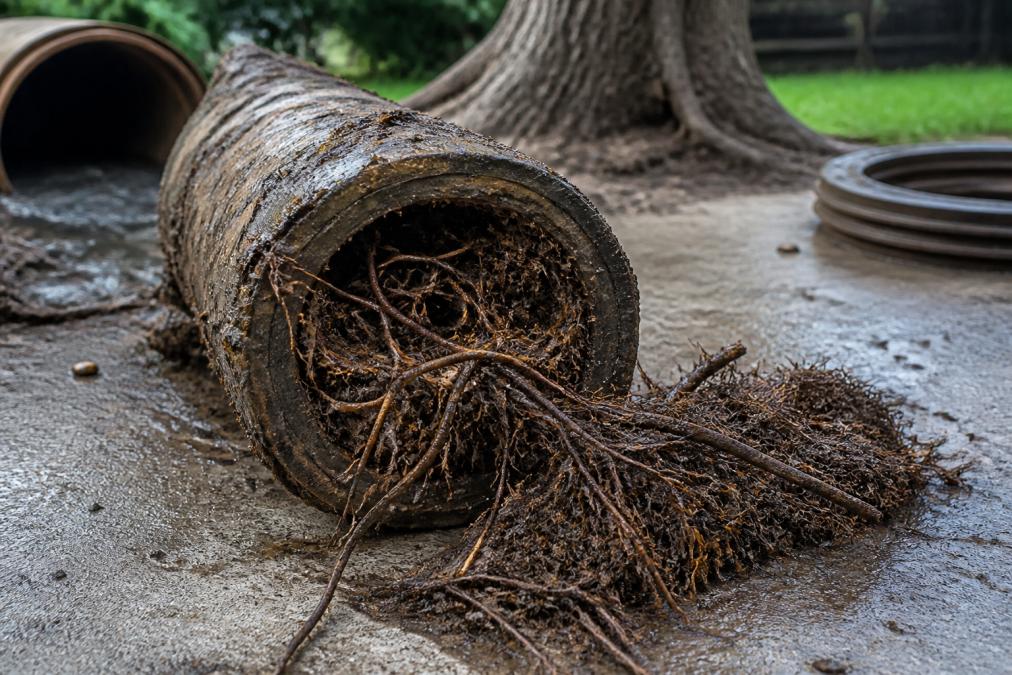
The signs of tree roots in sewer lines rarely announce themselves at once. They build quietly over months, from a faint gurgle to wastewater pooling in a basement, a pattern Alpha Rooter & Plumbing sees constantly where mature landscaping sits close to aging clay and cast iron laterals.
7 Warning Signs of Tree Roots in Sewer Lines
The clearest signs of tree roots in sewer lines fall into two groups: what you notice inside your home and what shows up in your yard. Interior symptoms appear first; exterior symptoms signal advanced intrusion.
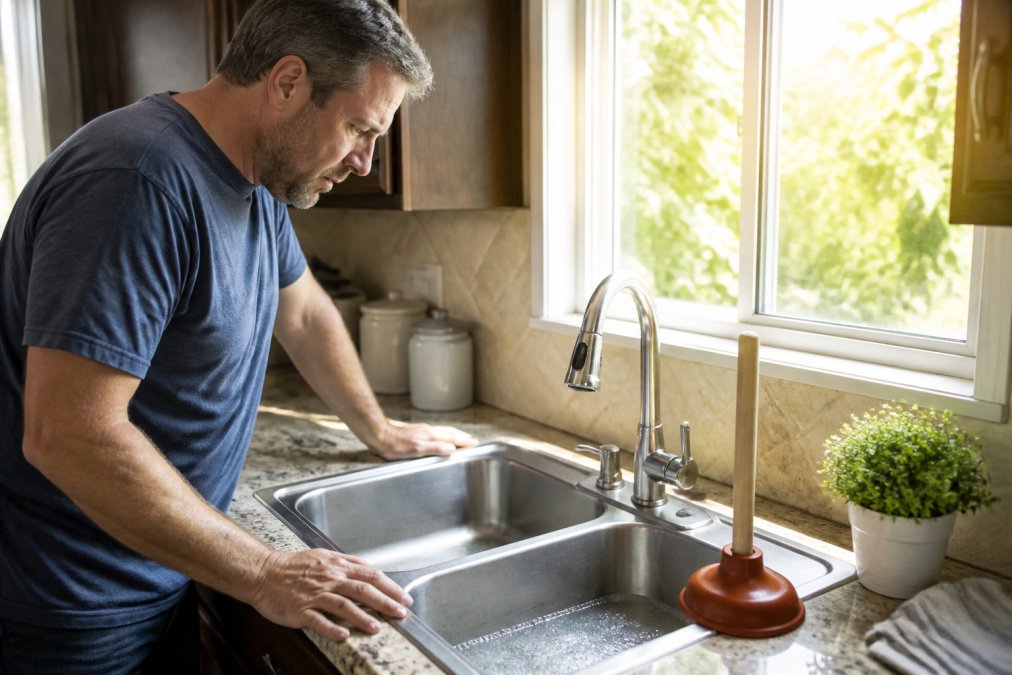
Watch for these seven indicators:
- Gurgling sounds from toilets or drains after you run water elsewhere
- Slow drainage in multiple fixtures at once, not just one
- Musty odors rising from drains or floor drains
- Sewage backup into tubs, showers, or floor drains
- Sinkholes or soft, sunken patches in the yard
- Unusually lush grass or green stripes above the lateral line
- Repeated clogs that return within weeks of clearing
Interior Signals: Gurgling Sounds, Slow Drainage, and Musty Odors
Interior symptoms are your earliest warning system. Gurgling sounds happen when air is trapped behind a partial blockage, loudest in the lowest fixture. Slow drainage across several fixtures is the next escalation: when one toilet flushes and the shower gurgles, the blockage sits downstream of both, usually the main sewer line. Musty odors are the third signal and the most often dismissed; a persistent smell near a floor drain or basement cleanout suggests wastewater is pooling in the sanitary system.
Exterior Red Flags: Sinkholes, Lush Grass Patches, and Sewage Backup
Yard symptoms mean the problem has been developing for a while. Sinkholes form when leaking wastewater erodes soil beneath the surface, often appearing suddenly after heavy rain.
Ignoring a sinkhole over your sewer line can turn a repair into a full excavation. Soil erosion under a driveway or foundation can cause concrete to crack, and that damage is rarely covered by standard policies.
How Sewer Camera Inspection Cost Fits Into Early Detection
Sewer camera inspection is the only way to confirm root intrusion without digging. A flexible camera travels the lateral line and shows where roots entered, how far they’ve spread, and whether the pipe is fractured. It’s also where an honest diagnosis and an upsell look identical on the invoice, so knowing what you’re paying for matters as much as the price.
What a Camera Inspection Actually Costs
Pricing depends on line length, access points, and whether the technician must locate the camera from above ground. Homeowners commonly pay roughly $100 to $500 for a standalone residential sewer camera inspection, with most single-family homes in the lower half of that band. Variables that push the number up:
- Line length, a 100-foot lateral to the city main costs more to inspect than a 30-foot run to a septic tank
- Access, no existing sewer cleanout means the technician has to pull a toilet or cut one in
- Locating, adding a sonde and locator wand to mark depth and position on the surface
- Bundling, many companies fold the inspection into a drain cleaning visit, which usually drops the marginal cost of the camera to well under the standalone rate
What a Homeowner Should Look For in the Report
The camera footage is documentation, and the report is what you’ll use if you file an insurance claim, sell the home, or dispute a repair recommendation. Ask for both before the technician leaves.
A legitimate report should show or state:
- Pipe material and approximate age, clay, cast iron, PVC, or Orangeburg, since each fails differently
- Depth and position of any defect, marked on the surface with a locator so you know where a repair would actually be dug
- Root mass location and density, a light root fringe at a joint is a cleaning job; a dense mat spanning several feet is a different conversation
- Joint spacing and offset joints, which are common entry points in older clay tile
- Cracks, bellies (low spots), and collapsed sections called out separately from root intrusion
- A clear recommendation that distinguishes “clean and re-inspect” from “repair now”
Red Flags That Suggest an Upsell
Watch for these patterns, which show up in reports leading to unnecessary work:
- No video provided, only a verbal summary. If you can’t see it, you can’t verify it.
- No locator mark on the surface. Without it, you know roots exist but not where to dig, turning a targeted repair into exploratory excavation.
- A recommendation to replace the entire lateral when footage shows isolated root intrusion at one or two joints. Spot repairs and trenchless lining exist for exactly this.
- Pressure to decide the same day. Genuine emergencies are rare; most root intrusion develops over months.
- No distinction between root intrusion and other defects. Grease, scale, offset joints, and collapsed sections all cause backups and don’t all need the same fix.
Ask the technician to pause the camera at each defect and read the depth aloud on the recording. That habit makes the footage far more useful later, for a second opinion, an insurance claim, or a contractor bidding the repair.
A proper inspection follows a predictable protocol:
- Access through an existing sewer cleanout when available
- Camera pushed to the city connection or septic tank
- Locator wand marks depth and position on the surface
- Recording captures pipe condition, joint spacing, and root mass
- Written report notes defects and recommended repairs
Sewer Line Root Removal Cost: DIY vs. Professional Repair
Sewer line root removal cost varies far more than most homeowners expect, and the gap between DIY and professional repair isn’t just money, it’s risk, warranty, and whether the problem returns next spring. Here’s the cost-benefit breakdown.
The Honest Comparison
| Method | Typical Cost Range | Who Does It | Best For | Main Limitation |
|---|---|---|---|---|
| Chemical root killer (foaming or granular) | $15-$60 per application | Homeowner | Light growth, ongoing maintenance | Kills roots touching the pipe, not the cause; yearly repeat |
| Mechanical auger / drain snake | $50-$150 rental, or $150-$400 pro | Homeowner or pro | Clearing soft clogs and light root tips | Cuts roots, leaves cut ends that regrow denser |
| Hydro-jetting | $300-$600 per visit | Professional | Heavy root mats, grease, scale | Requires proper equipment; not a permanent fix |
| Trenchless lining / pipe bursting | $4,000-$15,000+ depending on length and method | Professional | Fractured, offset, or collapsed pipe | Higher upfront cost; not every line qualifies |
| Traditional excavation and replacement | $5,000-$25,000+ depending on depth, length, and surface restoration | Professional | Severely damaged or collapsed lines | Most disruptive; driveways, sidewalks, and landscaping often need repair |
Ranges are typical for single-family residential laterals; actual pricing depends on line length, depth, soil, access, and emergency scheduling.
Chemical Root Killers: Cheap, Repeatable, Not a Fix
Chemical root killers are the most popular DIY option and the least effective long-term. Copper sulfate and foaming products kill roots touching the pipe, but the tree keeps growing and sends new roots into the same opening. Repeat applications become a yearly ritual, and a $30-$60 treatment every spring can approach the cost of one professional cleaning that actually addresses the problem.
Mechanical Augering: Fast Relief, Denser Regrowth
A mechanical auger clears the blockage but leaves cut root ends that sprout denser growth, which is why DIY snaking often makes things worse. A weekend rental runs $50-$150, plus the risk of damaging older clay or Orangeburg pipe. A pro charges $150-$400 and can tell you whether the line is safe to snake at all.
Hydro-Jetting: The Standard First Step
Hydro-jetting uses high-pressure water to scour pipe walls clean, removing roots, grease, and scale in one pass. It’s the standard first step before a sewer camera inspection confirms what remains. At $300-$600 per visit, it’s the only mechanical method that cleans the full pipe wall rather than punching a hole through the blockage.
Trenchless Repair: Fixing the Defect, Not the Symptom
Trenchless repair addresses the actual defect. A liner or encapsulate sleeve is pulled through the existing pipe, sealing cracks and joints so roots have nowhere to enter. It costs more upfront, often $4,000-$15,000+ depending on length and method, but lasts decades and avoids tearing up driveways, patios, and mature landscaping. Traditional excavation can run higher once surface restoration is factored in.
The Cost-Benefit Math
A simple way to think about it:
- One-time chemical treatment: cheap, but you’ll be back next year.
- Annual professional cleaning: predictable, but doesn’t stop regrowth.
- Trenchless lining: highest upfront cost, but eliminates recurring expense and emergency-call risk.
If you’ve paid for two or more cleanings in three years, the math favors a permanent repair. One light intrusion caught early means cleaning plus monitoring is sensible.
If a tree sits within 10 feet of your lateral, budget for a camera inspection every two years. Root intrusion caught at the hairline-crack stage is a cleaning job. Caught at the collapse stage, it’s a trenchless or full excavation project, often five to ten times the cost.
How to Prevent Tree Roots in Sewer Pipes: Landscaping and Maintenance Tips
Knowing how to prevent tree roots in sewer pipes comes down to two things: keeping roots away from the line and catching intrusion early. Prevention is far cheaper than repair, and most of it is landscaping, not plumbing.
Start with these steps:
- Map your lateral line before planting anything new
- Choose slow-growing, non-invasive species for the strip above the pipe
- Install a root barrier between trees and the line if you can’t relocate the tree
- Schedule annual drain cleaning to clear early growth
- Book a camera inspection every 18 to 24 months on mature properties
- Fix small leaks promptly; even a slow drip attracts roots
Tree Species Risk Assessment: Which Trees Threaten Your Lateral Line
Not all trees pose the same threat. Species with aggressive, water-seeking roots are far more likely to invade a lateral line, especially when the pipe already has cracks or loose joints.
High-risk species to watch for:
- Willows, which seek moisture aggressively and travel long distances
- Maples, with shallow, spreading root systems
- Elms, known for invasive roots in urban settings
- Poplar and cottonwood, fast growers with extensive root networks
- Birch, drawn to consistent moisture sources
Insurance Coverage for Sewer Line Root Damage: What Homeowners Should Know
What typically is covered:
- Sudden pipe collapse resulting from root damage, if it meets the policy’s definition of accidental
- Water damage inside the home caused by a covered backup
- Damage from a sewage backup if you carry a specific endorsement
What usually isn’t:
- The root removal itself
- Long-term deterioration from slow intrusion
- Replacement of the lateral line under a standard policy
The single most useful insurance step is confirming whether you carry a service line endorsement. Without it, root-related repairs typically come out of pocket, regardless of how the damage started.
If you’re unsure what your policy covers, ask your agent directly. If you’re facing an active backup, stopping the water comes before settling the claim, fast response matters more than paperwork.
Frequently Asked Questions
Does homeowners insurance cover tree roots in sewer pipe?
Standard homeowners insurance typically does not cover tree root damage to sewer lines because it’s considered a maintenance issue. However, some policies may cover resulting damage if the roots cause a sudden backup that floods your home. Review your policy or ask your insurer about specific exclusions. Alpha Rooter & Plumbing can provide documentation for claims, but coverage depends on your provider.
How fast do tree roots grow back in sewer pipes?
Tree roots can regrow within months after removal if the pipe isn’t repaired or lined. Fast-growing species like willows or maples may send new roots into cracks within a single season. That’s why mechanical augering or hydro-jetting alone is temporary. A sewer camera inspection after clearing helps confirm whether roots have returned. Preventative maintenance, such as root killer treatments, slows regrowth.
How much does it cost to fix tree roots in a sewer line?
Sewer line root removal cost varies based on the method. Mechanical augering or hydro-jetting is less expensive than trenchless repair or pipe replacement. Factors include access, pipe condition, and root severity. For an accurate quote, contact Alpha Rooter & Plumbing. They offer upfront pricing and can discuss options after a camera inspection.
What dissolves tree roots in drains?
Chemical root killers containing copper sulfate or foaming agents can dissolve small roots, but they don’t fix structural damage and may harm beneficial bacteria in your septic system. For severe intrusions, mechanical removal via auger or hydro-jetting is more effective. Always follow label directions and consult a professional if you’re unsure. Alpha Rooter & Plumbing can recommend safe treatments.
Comments are closed