
Table of Contents
- What Is Drain Snaking?
- What Is Hydro Jetting?
- Key Differences: Snaking vs. Jetting
- Pros and Cons of Drain Snaking
- Pros and Cons of Hydro Jetting
- How to Fix Recurring Drain Clogs: Prevention and Long-Term Solutions
- Plumbing Camera Inspection Benefits: Why Visual Assessment Matters
- Understanding Hydro Jetting Cost and ROI
- Frequently Asked Questions
Last Updated: September 29, 2026
What Is Drain Snaking?
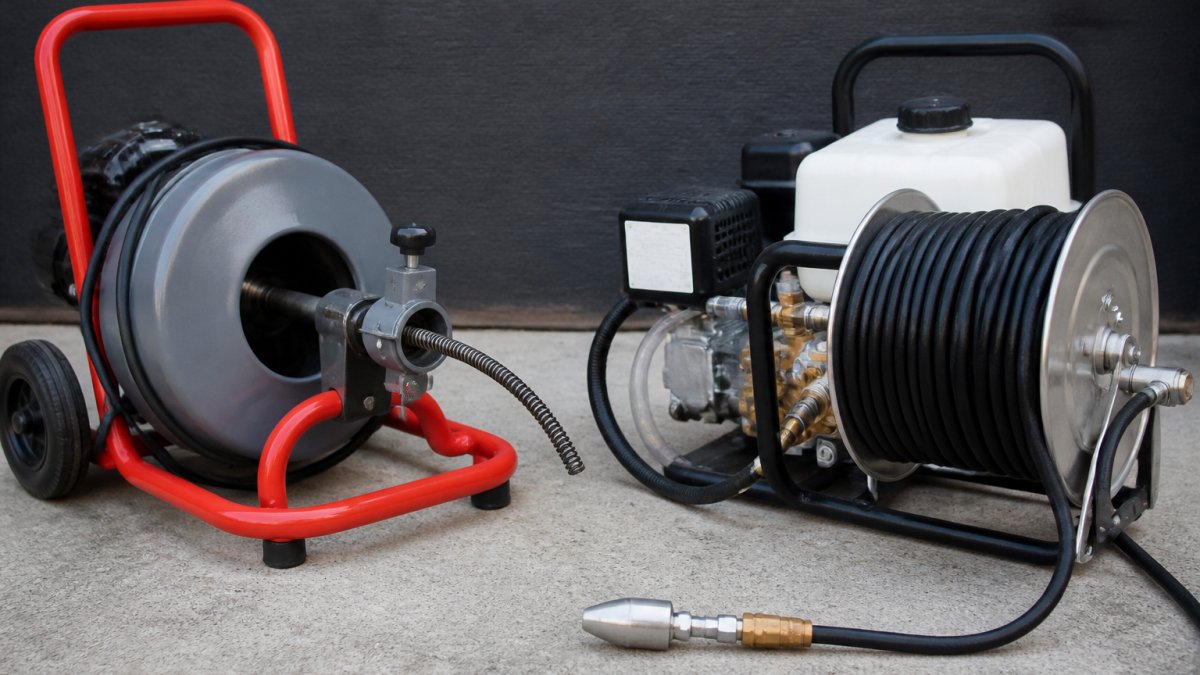
Drain snaking is a mechanical method of clearing clogs using a flexible metal cable, called a drain auger, that’s fed through the pipe to break apart or pull out the blockage. Understanding snaking vs jetting helps you choose the right drain cleaning method for your situation. The cable rotates or moves back and forth to cut through debris, grease buildup, and other obstructions that block water flow. It’s one of the most common drain cleaning methods used by plumbers for residential and commercial drainage systems.
The process works by inserting the snake into the drain opening and advancing it through the pipe until it contacts the clog. Once contact is made, the operator turns the handle or activates the machine to rotate the cable, which either breaks the obstruction into smaller pieces or catches it for removal. Drain snaking is effective for clearing physical blockages like hair, soap scum, and food debris.
However, snaking has a significant limitation: it creates a hole through the clog but doesn’t clean the pipe walls. This means buildup remains on the sides of the pipe, setting the stage for recurring clogs within weeks or months. For this reason, many plumbing professionals view snaking as a quick fix rather than a long-term solution.
What Is Hydro Jetting?
Hydro jetting uses high-pressure water to scour the entire interior surface of a pipe, removing grease, mineral deposits, root intrusion, and accumulated debris. Unlike snaking, which punches through a blockage, hydro jetting cleans the pipe walls completely, restoring the pipe to near-original condition.
The process involves connecting a high-pressure water pump to a hose with specialized nozzles designed to spray water in multiple directions. Pressures typically range from 1,500 to 4,000 PSI, depending on the pipe material and the severity of the blockage. The nozzles are engineered to propel the hose forward through the pipe while simultaneously blasting away buildup on all sides.
Hydro jetting is particularly effective for grease-heavy environments like restaurant kitchens, where repeated grease accumulation is a persistent problem. It also handles root intrusion better than snaking because the high-pressure water can cut through and dislodge root material that has penetrated the pipe. The result is a thoroughly cleaned sewer line that resists future clogs for significantly longer than snaking alone.
Key Differences: Snaking vs. Jetting
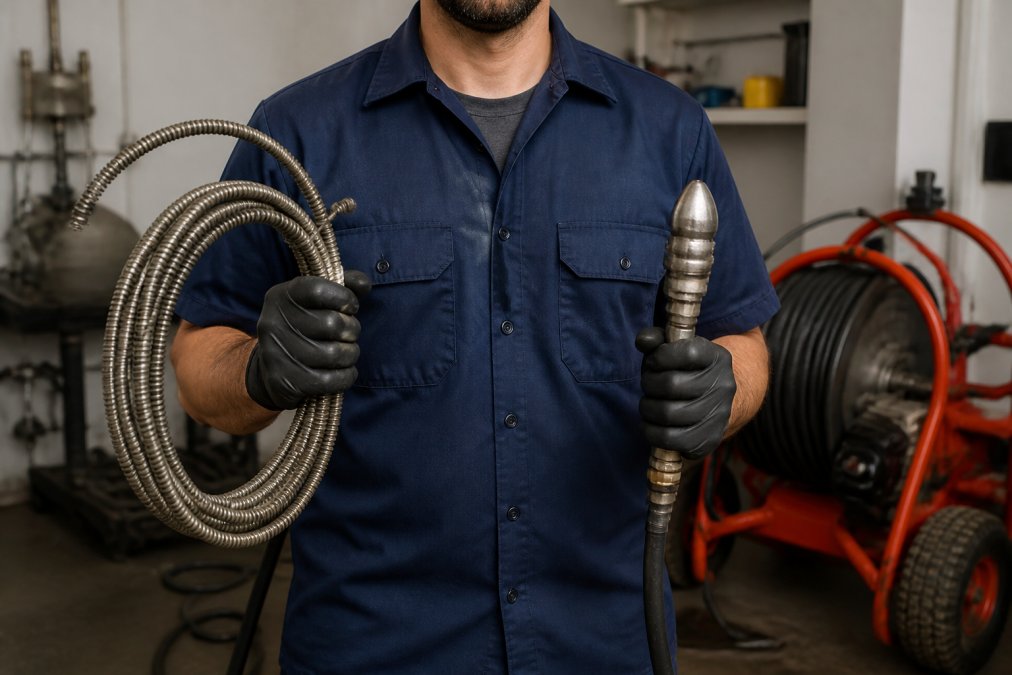
The fundamental difference between snaking and jetting comes down to how each method addresses a blockage. Snaking breaks through the obstruction; jetting removes it and cleans the pipe. Here’s where each excels and where it falls short.
Mechanism: Snaking uses a rotating metal cable to mechanically break apart or hook debris. Jetting uses high-pressure water to blast away buildup and debris. Snaking is faster for simple clogs; jetting is more thorough for complex blockages.
Pipe Cleaning: Snaking leaves the pipe walls untouched, meaning residual buildup remains. Jetting scours the entire interior surface, removing grease, mineral scale, and sludge. This is the most critical difference for long-term drain health.
Root Intrusion Handling: Snaking can cut through small root masses but often leaves roots intact. Jetting cuts through and dislodges root material more effectively because the high-pressure water penetrates deeper into cracks where roots grow.
Pipe Material Compatibility: Snaking works on most pipe types, including older cast iron and PVC. Jetting requires caution with fragile pipes, older clay pipes or heavily corroded cast iron can be damaged by high pressure. A plumbing camera inspection before jetting is essential for older systems.
Speed and Convenience: Snaking is faster and can be done in 30 minutes to an hour for simple clogs. Jetting takes longer, sometimes 1-2 hours, because the process is more methodical and thorough.
| Aspect | Snaking | Jetting |
|---|---|---|
| Method | Rotating metal cable | High-pressure water |
| Blockage Removal | Breaks through obstruction | Removes and cleans |
| Pipe Wall Cleaning | None | Complete |
| Root Intrusion | Limited effectiveness | Superior |
| Speed | Faster | Slower |
| Pipe Compatibility | Most types | Requires inspection |
| Long-term Results | Recurring clogs likely | Extended relief |
| Best For | Quick fixes, simple clogs | Chronic problems, grease buildup |
Pros and Cons of Drain Snaking
Pros:
Snaking is fast and cost-effective for simple blockages. A professional can often clear a straightforward clog in under an hour. It works on virtually all pipe types and materials, making it universally applicable. For emergency situations where you need immediate drainage restoration, snaking delivers results quickly. It’s also less risky for very old or fragile pipes that might be damaged by high-pressure water.
Snaking requires minimal setup and can be deployed in tight spaces where jetting equipment won’t fit. For homeowners dealing with a single clogged drain, snaking is often the most practical first step.
Cons:
Snaking doesn’t address the underlying cause of recurring clogs. It creates a hole through the blockage but leaves grease, mineral buildup, and other debris on the pipe walls. This means clogs often return within weeks or months, requiring repeat service calls.
The cable can sometimes damage pipes if not handled carefully, particularly in older systems with thin-walled pipes. Snaking also can’t effectively handle root intrusion because it doesn’t cut roots away from the pipe walls, it only punches through them. For grease-heavy environments like restaurants, snaking is a temporary band-aid solution that doesn’t solve the underlying accumulation problem.
Pros and Cons of Hydro Jetting
Pros:
Hydro jetting provides comprehensive pipe cleaning that removes all types of buildup: grease, mineral deposits, sludge, and root intrusion. Because it cleans the pipe walls completely, clogs are far less likely to recur in the near term. For restaurants and commercial kitchens dealing with chronic grease problems, jetting is the only method that truly addresses the issue.
Jetting is superior for older pipes with root intrusion because the high-pressure water cuts through and dislodges roots that have penetrated the pipe. The result is a drainage system that functions at near-original capacity. For properties with recurring drain problems, jetting delivers long-term relief that snaking cannot match.
Jetting is also environmentally friendly because it uses only water, no chemicals or mechanical debris left behind.
Cons:
Hydro jetting is more expensive than snaking due to equipment costs and longer service times. It’s slower, often taking 1-2 hours for a complete sewer line cleaning. For pipes that are already compromised or fragile, high-pressure water can cause damage. Older clay pipes, severely corroded cast iron, and pipes with existing cracks are at risk.
Jetting also requires professional expertise. Improper nozzle selection or pressure settings can damage pipes or cause water to escape through weak points in the line. This is why a plumbing camera inspection before jetting is critical for older systems.
How to Fix Recurring Drain Clogs: Prevention and Long-Term Solutions
Recurring clogs are a sign that the underlying problem isn’t being addressed. If you’re calling a plumber every few months for the same drain, snaking alone won’t solve it. Here’s how to break the cycle.
Identify the root cause: Is the clog caused by grease accumulation, hair buildup, root intrusion, or mineral scale? Different causes require different solutions. Grease clogs need jetting; hair clogs might respond to a drain screen and regular maintenance; root intrusion requires jetting or, in severe cases, pipe replacement.
Use preventative maintenance: Install drain screens to catch hair and debris before they enter the pipe. For kitchens, use grease traps and avoid pouring cooking oil down the drain. These simple steps prevent many clogs from forming in the first place.
Consider hydro jetting as a long-term investment: If you’ve had the same drain snaked multiple times, one hydro jetting service can eliminate the recurring problem for years.
Plumbing Camera Inspection Benefits: Why Visual Assessment Matters
Before choosing between snaking and jetting, a plumbing camera inspection reveals exactly what’s causing the clog and what condition your pipes are in. This simple diagnostic tool changes everything about how you approach the problem.
Understanding Hydro Jetting Cost and ROI
Hydro jetting costs more than snaking, but for properties with chronic drain problems, the long-term return on investment is significant. Understanding the cost structure helps you make the right choice.
Frequently Asked Questions
Is hydro jetting better than snaking for clearing stubborn clogs?
Neither method is universally better, it depends on your specific situation. Snaking excels at breaking through physical obstructions like hair or soap buildup quickly and cost-effectively. Hydro jetting removes grease, mineral deposits, and sludge from pipe walls completely, providing longer-lasting results. For recurring clogs or sewer lines with heavy buildup, jetting typically delivers superior long-term relief. For isolated blockages in accessible drain lines, snaking is often the faster, more economical choice. A professional inspection can determine which method will solve your problem most effectively.
How much does hydro jetting cost compared to drain snaking?
Hydro jetting generally costs more upfront than drain snaking due to equipment complexity and water usage, but pricing depends on several factors including clog severity, pipe diameter, and accessibility. Snaking is typically the less expensive option for simple clogs. However, if recurring clogs force you to call for service multiple times per year, jetting’s higher initial cost may deliver better long-term value by eliminating the root cause. Contact Alpha Rooter & Plumbing for a quote tailored to your situation and a clear comparison of both options.
Can hydro jetting damage old cast iron or PVC pipes?
High-pressure water can damage older, corroded pipes if pressure settings aren’t adjusted properly. Cast iron pipes from the 1950s and earlier may have weak spots or internal corrosion that cannot withstand standard jetting pressure. A professional inspection using a plumbing camera should always precede hydro jetting on older systems to assess pipe integrity. Modern PVC pipes typically handle jetting well when performed by trained technicians using appropriate nozzles and pressure levels. This is why professional assessment before choosing your drain cleaning method is critical, an experienced plumber will recommend snaking if your pipes cannot safely tolerate jetting.
What’s the environmental impact of hydro jetting versus snaking?
Hydro jetting uses significant water but produces no chemical waste or emissions, making it environmentally cleaner than drain cleaners that contain harsh chemicals. Snaking generates no water waste and produces no byproducts, but displaced debris and grease still enter the sewer system. Jetting removes more debris from pipe walls, reducing the volume of material that later causes blockages downstream. For environmentally conscious homeowners, hydro jetting represents the greener option for thorough cleaning, though snaking remains a low-impact choice for minor clogs when professional-grade equipment is used responsibly.
Comments are closed