
Table of Contents
- Recognize Signs of Burst Pipe Emergency
- How to Shut Off Main Water Valve Immediately
- Stop the Water Damage Before Help Arrives
- Call Emergency Plumbing Services Right Away
- Document the Damage for Your Insurance Claim
- Temporary Patch Solutions While You Wait
- What Happens After the Plumber Arrives
- Frequently Asked Questions
Last Updated: September 30, 2026
Recognize Signs of Burst Pipe Emergency
A burst water pipe floods your home within minutes. You need to act immediately.
Common signs of a burst pipe include:
- Water pooling on floors or in walls
- Sudden drops in water pressure
- Wet spots on ceilings or walls
- Hissing or spraying sounds from pipes
- Visible cracks or leaks in exposed pipes
- Unusually high water bills without explanation
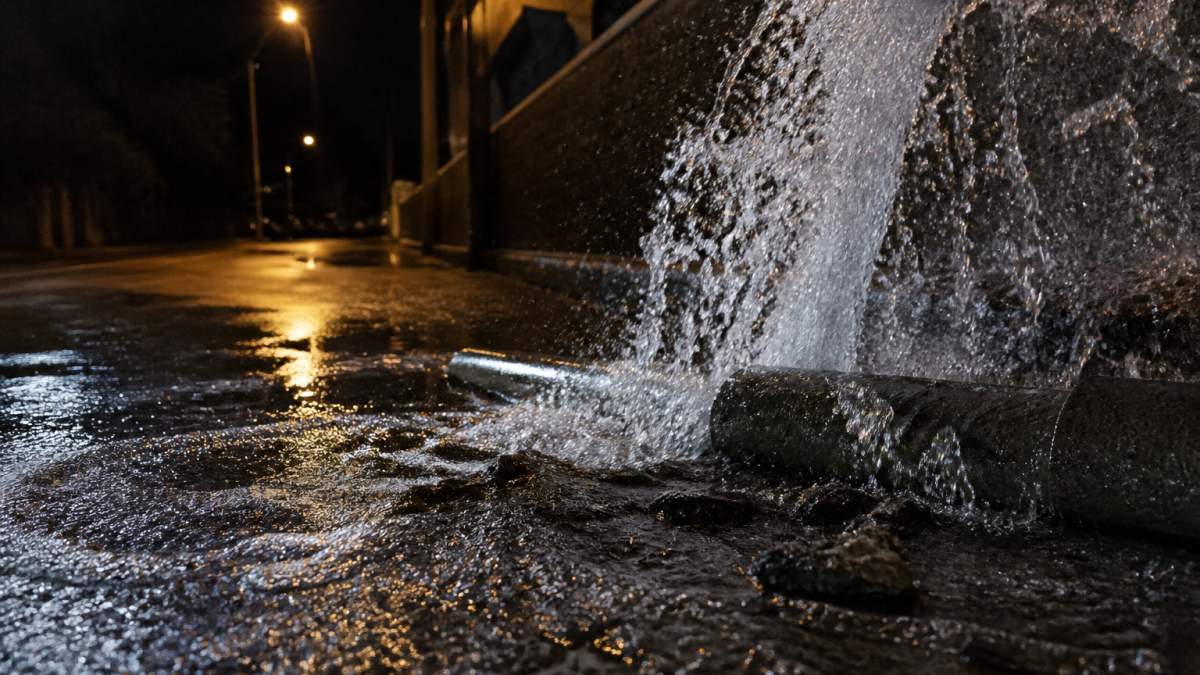
A burst water pipe bursts at night is especially dangerous, water saturates walls, foundations, and electrical systems before you notice, and repair costs climb with every hour of delay.
If you suspect a burst, turn off all faucets and appliances, then check your water meter. If it still runs, you have an active leak requiring emergency help.
Do not ignore water sounds at night. Many homeowners dismiss them as normal plumbing noise. A burst pipe can cause thousands of dollars in damage within hours. If something sounds wrong, investigate immediately.
How to Shut Off Main Water Valve Immediately
Shutting off your main water supply stops damage instantly, this is your most critical action.
Locating Your Shut-Off Valve Before an Emergency
Find your main water shut-off valve before an emergency. Most homes have two locations: where the water line enters your home (usually inside, near the foundation) or at the meter (outside, near the street).
Check these common locations:
- Basement or crawl space near the foundation wall
- Garage wall facing the street
- Under the kitchen sink or in a utility closet
- Buried in the yard near the water meter (outdoor valve)
- In a utility room or mechanical closet
In older homes, look for a brass or metal knob on a copper or steel pipe; the handle points in the direction of water flow when open.
Mark your valve location now. Take a photo and write down the exact location. When your water pipe bursts at night, you won’t have time to search. Store this information where all household members can find it.
If you can’t find your main shut-off valve in the dark, use your phone’s flashlight. Keep a wrench or adjustable wrench near the valve so you can grab it fast. Some newer valves have lever handles that turn by hand without tools. Test your valve once per year to ensure it still turns freely.
Identifying Your Valve Type
Not all shut-off valves work the same way. At night, you need to know what you’re looking at before you touch it.
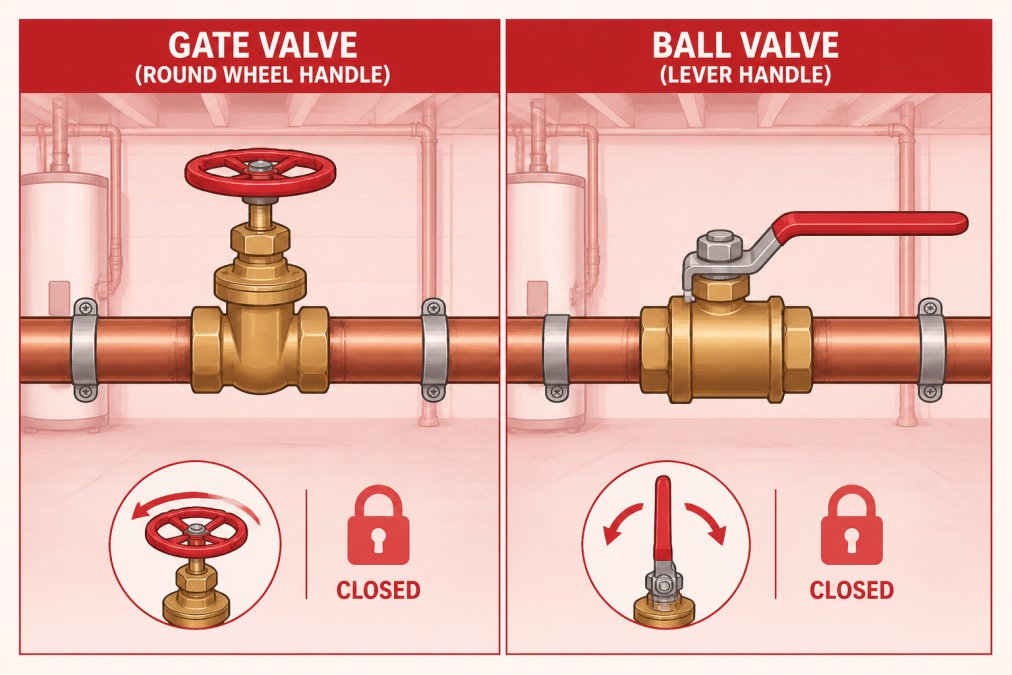
Gate valves (older homes, pre-1990s) have a round knob or wheel handle. Turn clockwise 10-20 rotations until it stops. If stuck, apply gentle pressure and wiggle slightly; do not force it.
Ball valves (newer homes, post-1990s) have a lever handle that points along the pipe when open. Turn the lever 90 degrees perpendicular to the pipe to close instantly. Slight resistance is normal.
Needle valves (sometimes found as secondary shut-offs) have a small, fine-threaded handle. These are not main shut-off valves and will take too long to close in an emergency. Skip these and find the main valve instead.
If you’re unsure which valve is the main, look for the one closest to where the water line enters your home from outside.
Shutting Off the Valve at Night
Once you locate the valve, act decisively:
For gate valves: Turn the handle clockwise with steady pressure until it stops (10-20 rotations). If stuck, wiggle gently while turning. Do not force past the stopping point.
If your main shut-off valve is stuck and won’t turn, do not force it. Forcing a stuck valve can break the handle or damage the valve seat, making it impossible to close. Instead, call an emergency plumber and tell them the main valve is inoperable. They can shut off water at the meter (if accessible) or use a temporary isolation valve as a workaround.
If Your Valve Is Outside at the Meter
If you cannot locate an interior shut-off valve, your main valve may be at the water meter in a box near the street. Lift the lid (use a flathead screwdriver if stuck). Inside, turn the shut-off valve on the supply side (closest to the street) the same way you would an interior valve. Use your phone’s flashlight and be careful not to damage the meter.
Stop the Water Damage Before Help Arrives
Never step into standing water near electrical panels or outlets. Water conducts electricity. If you see water near your breaker box, leave the area and call emergency services.
Open windows and doors to increase air circulation. Moisture feeds mold growth. Fresh air helps dry out wet areas. If you have fans, point them toward wet spots.
Call Emergency Plumbing Services Right Away
Call an emergency plumber immediately. Call an emergency plumber immediately. Alpha Rooter & Plumbing provides 24/7 emergency response for burst pipes, with licensed plumbers arriving within 90 minutes to assess damage and begin repairs.
Document the Damage for Your Insurance Claim
Take photos and videos of all water damage. Insurance companies need visual proof to process claims. Document everything before cleanup begins.
Insurance claims for burst pipes move quickly when you document damage immediately. Photos taken within hours of discovery strengthen your claim significantly.
Temporary Patch Solutions While You Wait
If the plumber can’t arrive immediately, temporary measures can slow water damage and buy time until professional repair. These are not permanent fixes and will fail under sustained water pressure. They are emergency measures only.
When Temporary Patches Are Safe to Use
Temporary patches work only for small leaks and pinhole bursts on exposed, accessible pipes where water is dripping (not spraying). Do not patch pipes in walls, under floors, or crawl spaces. Do not patch the main supply line immediately after the meter.
Plumber’s Tape (Self-Fusing Silicone Tape)
Plumber’s tape (self-fusing silicone tape) is the easiest temporary fix for small cracks. Dry the pipe completely, then wrap the tape starting 2 inches before the leak and continuing 2 inches past it at 50% overlap. Apply 3-4 layers for small leaks. It typically holds 4-8 hours under low pressure. Monitor every 30 minutes. Cost: $5-$12 per roll.
Plumber’s tape does not work on wet pipes. If the area is actively dripping, dry it thoroughly first. The tape also does not work on pipes with active spraying or gushing, only on small leaks. Do not rely on tape for more than a few hours.
Epoxy Putty
Epoxy putty works for pinhole leaks and small cracks. Knead for 1-2 minutes until uniform, press firmly over the hole, and let cure (usually 5-30 minutes). It holds 6-12 hours under low pressure. Cost: $3-$8 per package. Works only on small holes; dry the area first.
Pipe Repair Clamps
A pipe repair clamp wraps around the pipe with a rubber gasket centered over the burst. Match the clamp size to your pipe diameter (1/2, 3/4, or 1 inch). Tighten bolts evenly until snug. It holds 12-24 hours depending on pressure. Cost: $15-$40. Works best on straight sections; does not work on elbows, tees, or large bursts.
Emergency Supplies to Keep on Hand
Store these items near your main shut-off valve so you can access them quickly at night:
- Plumber’s tape (1-2 rolls)
- Epoxy putty (2-3 packages)
- Pipe repair clamps (at least one for your pipe size)
- Adjustable wrench (for tightening clamps)
- Flashlight with extra batteries (for visibility in dark basements)
- Dry towels or rags (for drying pipes before patching)
- Bucket or large container (to catch dripping water)
Critical Safety Rules for Temporary Patches
Do not patch pipes inside walls or under floors. Do not patch the main supply line after the meter, shut off water instead. Monitor patches every 30-60 minutes; if it fails, shut off water immediately. Never patch and go to sleep; stay awake to monitor or shut off the main valve.
Temporary patches buy time but are not solutions. They work only for small leaks on accessible pipes and typically hold for 4-24 hours depending on the method. Professional repair is the only permanent fix. Use patches only to minimize damage until a plumber arrives.
What Happens After the Plumber Arrives
The plumber will locate the burst, drain the affected section, remove the damaged pipe, and install new pipe. Repair time depends on location and severity, accessible basement pipes take 1-3 hours; pipes inside walls take longer. After repair, the plumber will pressure-test your entire system. Ask about your pipes’ age and material; older galvanized steel pipes corrode frequently, while copper or PVC last longer.
Request a written invoice before work begins. Alpha Rooter & Plumbing provides upfront pricing with no hidden fees. You’ll know the exact cost before the repair starts.
Frequently Asked Questions
How do I shut off the main water supply in an emergency?
Locate your main water shut-off valve, typically found in the basement, crawl space, or near the foundation where the water main shut-off valve enters your home. Turn the valve clockwise until it stops, this closes the water supply line and stops water from flowing through your plumbing system. If the valve is stuck or difficult to turn, apply penetrating oil and wait a few minutes before trying again. Knowing where this valve is located before an emergency happens is critical.
What are the immediate signs of a burst pipe?
A burst water pipe typically causes sudden water pressure drops, visible water pooling or spraying inside walls or ceilings, discolored water, a hissing sound from walls, or unexpectedly high water bills. At night, you may notice water damage spreading across floors or walls, a musty smell, or puddles appearing in basements or crawl spaces. If you suspect a pipe burst, stop using water immediately and locate your main water shut-off valve to prevent additional property damage.
Should I call a plumber immediately if a pipe bursts at night?
Yes. A burst pipe is a plumbing emergency that requires immediate professional attention. Water damage accelerates quickly, within hours, standing water can cause structural damage, mold growth, and electrical hazards. Call an emergency plumbing service right away, even at night. Most licensed emergency plumbers operate 24/7 and can respond within 90 minutes or less. Delaying the call increases repair costs and property damage significantly.
Does homeowners insurance cover a burst water pipe?
Coverage depends on your specific homeowners insurance policy and the cause of the burst. Sudden, accidental pipe bursts are often covered, but damage from frozen pipes, lack of maintenance, or gradual leaks may not be. Contact your insurance company immediately after shutting off the main water supply and documenting the damage with photos. Your insurer will guide you on what’s covered and may require you to mitigate further damage before filing a claim.
Comments are closed