
Table of Contents
- Recognizing Sewer Line Leak Signs
- What Causes Minor Sewer Line Damage
- How to Perform a Sewer Line Inspection
- Temporary Repairs and Safety Precautions
- Trenchless Sewer Line Repair Options
- Comparing Sewer Line Repair Options
- When to Call a Licensed Professional
- Post-Repair Verification and Monitoring
- Frequently Asked Questions
Last Updated: October 9, 2026
Recognizing Sewer Line Leak Signs
A leaking sewer line often reveals itself through subtle warning signs. Wet patches in your yard, slow drains, or foul odors near your home are early indicators that something is wrong below ground.
Minor leaks typically show up as isolated wet spots or soggy soil in one area of your yard, and grass may grow greener there because leaking wastewater acts as a fertilizer. Inside, you’ll see slow drainage in multiple fixtures or hear gurgling sounds when water drains.
Common early warning signs include:
- Slow drains throughout your home
- Faint sewage smell near the sewer cleanout or in the yard
- Wet patches or soft spots in the lawn
- Unusually lush grass in one area
- Pest activity near the sewer line
- Cracks or settling in your foundation
These signs suggest a minor leak you can address before it worsens. Ignoring them lets water escape, weakening the soil around your sewer line and potentially damaging your foundation.
If you notice these signs during wet weather, document them with photos. This helps a professional plumber assess whether the leak is from your sewer line or from groundwater entering a damaged pipe.
What Causes Minor Sewer Line Damage
Minor sewer line leaks develop from several common causes. Understanding them helps you prevent future problems and decide whether a repair is urgent.
Tree roots are the leading cause of minor sewer line damage. This happens gradually, which is why root intrusion often starts as a minor leak.
Older pipes are more vulnerable. Cast-iron and clay sewer laterals deteriorate over decades, and corrosion creates small holes and cracks where water escapes.
Ground movement and shifting soil also stress your sewer line.
Other causes of minor sewer line damage include:
- Debris accumulation creating pressure on the pipe
- Poor installation or improper slope
- Corrosion from acidic soil conditions
- Impact from digging or construction
- Deteriorating pipe joints and fittings
Most minor leaks stay manageable if caught early. The difference between a minor leak and a major sewer failure often comes down to how quickly you address it.
Do not ignore even small signs of a sewer line leak. A minor leak that goes unrepaired will eventually grow larger, potentially causing sewage backup into your home or contaminating groundwater near your property.
How to Perform a Sewer Line Inspection
Locating the exact source of a sewer line leak requires systematic inspection. Start with a visual assessment, but pinpointing the damage usually requires professional equipment.
Visual Inspection and Leak Location
Begin by locating your sewer cleanout, a capped pipe, usually 4-6 inches in diameter, in your yard or along the side of your home. Remove the cap carefully and look inside for water or debris.
Observe the ground around your sewer line. Wet patches, sinkholes, or grass that looks different from the surrounding lawn suggest a nearby leak. Probe soft spots gently with a screwdriver; waterlogged or mushy soil likely marks the leak location.
Check for visible damage if you can safely access the pipe. Minor leaks often appear as small weeping spots where water seeps from the pipe wall.
Steps for visual inspection:
- Locate and open your sewer cleanout
- Look for water, sewage, or debris inside the pipe
- Inspect the ground around the cleanout for wet areas
- Check for sinkholes or soft soil
- Note any foul odors or pest activity
- Take photos of wet areas or damage
Visual inspection works for obvious leaks, but minor damage often hides inside the pipe.
Using a Sewer Camera for Damage Assessment
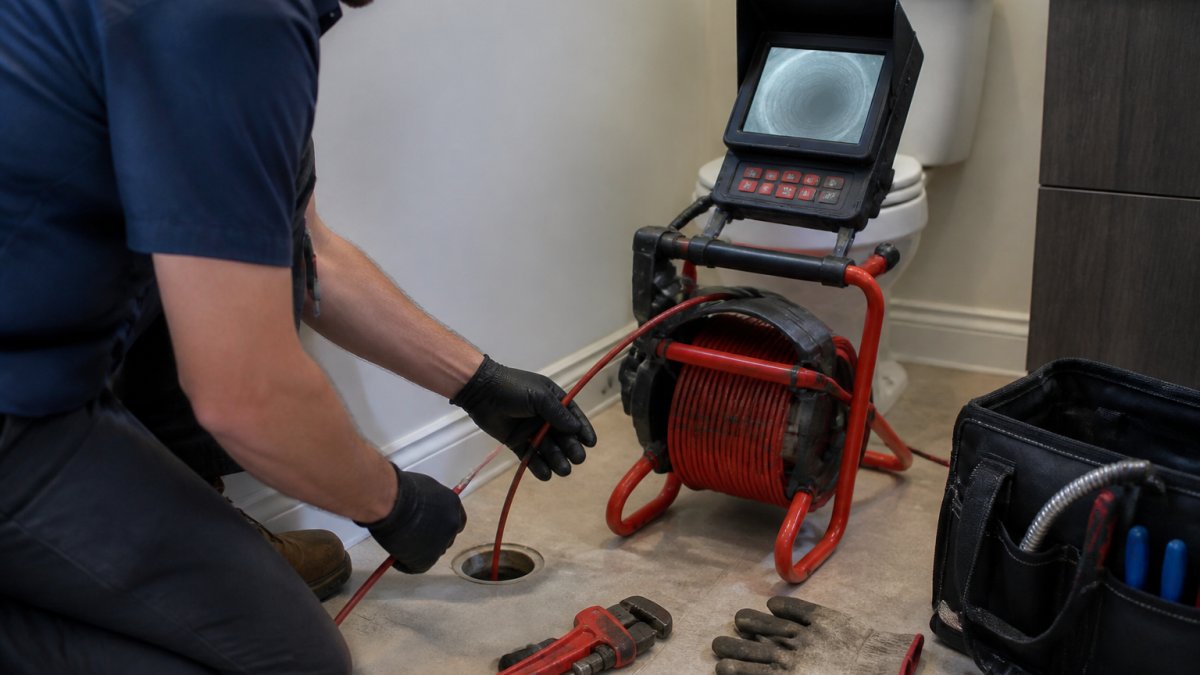
A sewer camera is the most reliable way to identify minor sewer line leaks. This small waterproof camera feeds through your sewer line, transmitting video to a monitor above ground.
Renting a sewer camera costs less than hiring a plumber, but operating it requires skill. You feed the cable slowly through the cleanout, watching the monitor for cracks, holes, or root intrusion.
What a sewer camera reveals:
- Small cracks or holes in the pipe wall
- Root intrusion and blockages
- Pipe joint separation or misalignment
- Corrosion or deterioration
- Debris or sediment buildup
- The exact location of damage
Professional plumbers use sewer cameras as standard practice. If you’re uncertain about the leak’s location or severity, hiring a professional for a camera inspection is worth the investment.
A sewer camera inspection gives you a clear picture of your pipe’s condition and helps you decide between repair options. Without this information, you’re guessing at the problem.
Temporary Repairs and Safety Precautions
Before attempting any repair, understand the health and safety risks. Sewer lines carry wastewater containing harmful bacteria, viruses, and parasites. Exposure poses serious health hazards.
Never enter a sewer line or dig near one without precautions, sewer gases like hydrogen sulfide can cause illness or death. Always wear gloves, eye protection, and a respirator if you’re digging.
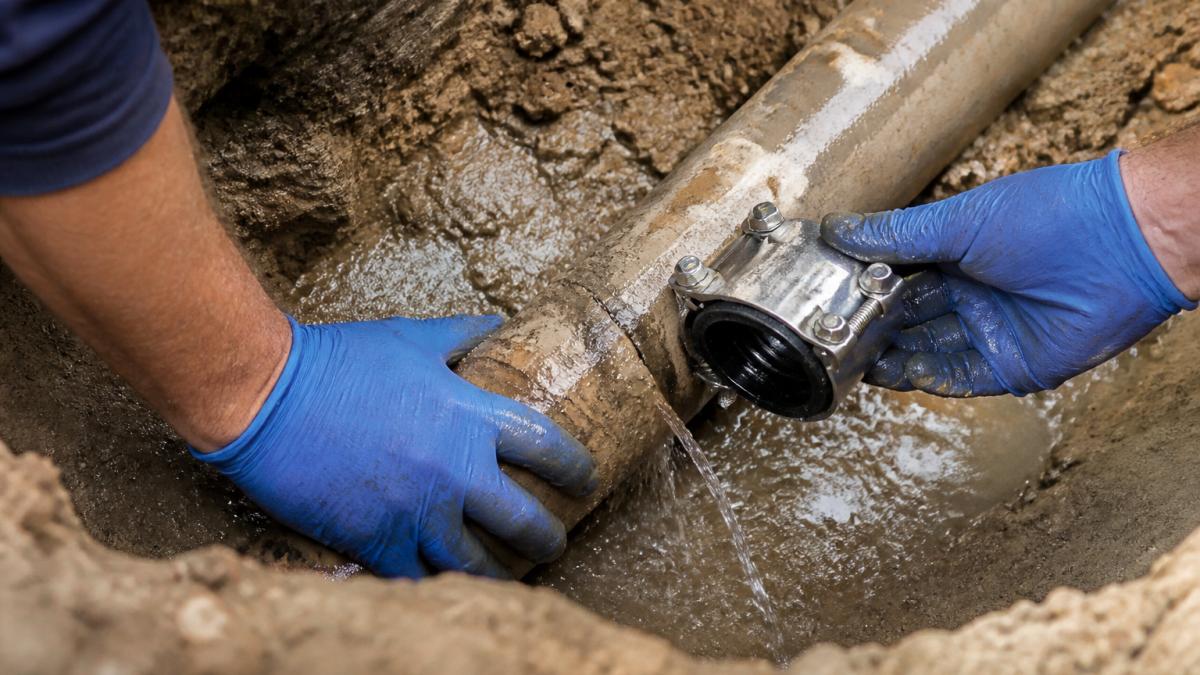
Temporary repairs can buy time before a permanent fix. Epoxy or plumber’s putty can seal small weeping leaks: clean and dry the pipe section, then press the putty firmly into the crack or hole.
Temporary repair options include:
- Epoxy putty applied to small cracks
- Pipe wrap or repair tape for minor seeping
- Temporary sealant around joint separation
- Rerouting water away from the leak area
- Limiting water use to reduce pressure on the leak
These fixes reduce water escaping the pipe but don’t address the underlying damage. Plan a permanent repair within a few weeks or months.
Safety precautions for sewer work:
- Wear gloves, eye protection, and a respirator
- Avoid digging near sewer lines without locating them first
- Call 811 before digging to locate underground utilities
- Never enter a sewer pipe or confined space
- Keep children and pets away from work areas
- Wash thoroughly after any sewer contact
Trenchless Sewer Line Repair Options
Trenchless repair methods fix minor sewer line leaks without excavating your entire yard, saving time, money, and landscaping disruption.
Pipe lining, also called CIPP (cured-in-place pipe) lining, seals leaks from inside. A flexible epoxy liner is inserted into the damaged pipe and inflated, then hardens into a new pipe inside the old one.
The process takes one to two days: the pipe is cleaned, then the liner is inserted and cured.
Spot repair is another trenchless option for localized damage. A small access point is created at the damaged section, the damaged segment is cut out, and a new section is installed.
Trenchless repair benefits:
- No large excavation needed
- Minimal yard disruption
- Faster completion than traditional replacement
- Long-lasting results
- Works for most pipe materials
The choice between lining and spot repair depends on the leak’s location and extent; a professional assessment determines the best method.
Comparing Sewer Line Repair Options
Spot Repair vs. Full Line Replacement
Spot repair addresses damage in a specific section of pipe. This option works when the leak is isolated and the rest of the line is in good condition. A professional removes the damaged section and installs a new pipe fitting.
Full line replacement removes and replaces the entire sewer lateral, the section of pipe from your home to the main sewer line. This option suits situations where multiple leaks exist, the pipe is severely corroded, or the damage is extensive.
| Repair Method | Best For | Disruption | Timeline | Durability |
|---|---|---|---|---|
| Spot Repair | Single leak in good pipe | Minimal | 1-2 days | 30-50 years |
| Pipe Lining | Multiple small leaks | Minimal | 1-2 days | 50+ years |
| Full Replacement | Severe damage, old pipe | Significant | 3-7 days | 50+ years |
Spot repair costs less than full replacement because it addresses only the problem area. However, if your pipe is aging and shows signs of deterioration elsewhere, full replacement prevents future leaks and provides peace of mind.
Material-Specific Considerations
Your sewer pipe material affects repair options and longevity. Cast-iron pipes, common in homes built before 1975, corrode over time and become brittle.
PVC pipes, installed in homes from the 1970s onward, resist corrosion better than cast-iron. They’re lighter, easier to work with, and less prone to deterioration. PVC pipes can be repaired with spot repair or lining methods.
Clay sewer laterals, found in some older homes, are fragile and prone to cracking. Tree roots penetrate clay pipes easily. Lining works well for clay pipes because it reinforces them without removal.
Material-specific repair notes:
- Cast-iron: Corrosion limits lifespan. Consider replacement if multiple leaks appear.
- PVC: Durable and repair-friendly. Spot repair or lining both work well.
- Clay: Fragile and root-prone. Lining is often the best choice.
- Concrete: Cracks and deteriorates. Lining seals cracks effectively.
Understanding your pipe material helps you choose a repair method that will last. A professional inspection identifies your pipe type and recommends the most durable repair option.
If your home has cast-iron sewer pipes and you’ve had multiple leaks in the past five years, full replacement may be more economical than repeated repairs. Ask a professional plumber to assess the overall condition of your line.
When to Call a Licensed Professional
Some sewer line issues require professional expertise. Knowing when to call a plumber saves you time, money, and potential health risks.
Call a professional if you’re uncertain about the leak’s location or severity. A sewer camera inspection from a licensed plumber provides definitive information.
You should hire a professional if the leak is near your home’s foundation. Foundation damage from sewer leaks requires careful repair to avoid structural problems.
Professional help is essential for:
- Leaks near your home’s foundation
- Multiple leaks in your sewer line
- Leaks caused by tree root intrusion
- Repairs requiring excavation
- Leaks affecting neighboring properties
- Pipe materials you’re unfamiliar with
Alpha Rooter & Plumbing provides sewer line inspection and repair services with licensed professionals who have the equipment and expertise to handle complex sewer issues.
A licensed professional brings specialized equipment like sewer cameras, hydro-jetting tools, and pipe replacement materials. They understand local codes and permit requirements.
Post-Repair Verification and Monitoring
After your sewer line repair is complete, verify that the work was successful.
Request a post-repair video from your plumber. This shows the repaired section and confirms the damage is addressed. Keep this video for your records.
Monitor your yard for the first few weeks after repair. If wet patches reappear or you notice foul odors returning, the repair may not have worked completely.
Post-repair monitoring steps:
- Watch for wet patches in your yard
- Note any changes in drain speed
- Listen for gurgling sounds when draining water
- Check for sewage odors
- Document any concerns with photos
- Report issues to your plumber promptly
Most repairs solve the problem permanently, but monitoring ensures success.
Long-term prevention starts with regular maintenance. Avoid planting trees near your sewer line. Don’t pour grease, wipes, or other debris down your drains.
Minor sewer line leaks can escalate quickly if left unaddressed. Early detection and prompt repair prevent costly damage to your home and yard.
Frequently Asked Questions
What are the most common sewer line leak signs I should watch for?
Watch for persistent odors near drains or the foundation, slow drains throughout the home, patches of unusually green or soggy grass, and raw sewage backing up into the house. Indoors, you may notice mold growth or damp walls near the slab. These sewer line leak signs often indicate the leak’s location or severity. If you notice multiple drains draining slowly at once, the problem is likely in the main sewer line rather than a single branch.
Can I fix a minor sewer line leak myself?
Minor leaks from small cracks or loose joints in accessible sections may be temporarily sealed with plumber’s putty or epoxy patches after the area is cleaned and dried. However, this is a temporary fix only. Even minor sewer line leaks require professional inspection and permanent repair because untreated leaks worsen over time, contaminate soil, and create health hazards. A licensed plumber can assess whether the damage warrants trenchless repair, spot repair, or replacement.
What is trenchless sewer line repair and when should I use it?
Trenchless sewer line repair uses CIPP (cured-in-place pipe) lining or epoxy coating to seal cracks and small leaks without excavation. This method is ideal for minor leaks in PVC or cast-iron pipes where the pipe structure is still sound. It costs less and causes no yard disruption compared to traditional excavation. However, if the pipe is severely collapsed, has multiple large breaks, or is blocked by tree roots, full replacement may be necessary.
How do I know if I need a professional sewer line inspection?
Call for a professional sewer line inspection if you notice multiple sewer line leak signs, recurring backups, or damage that you cannot pinpoint. A licensed plumber uses a sewer camera to identify the exact location, extent, and type of damage. This inspection determines whether the leak is minor and repairable or indicates a major failure requiring replacement. Professional diagnosis protects you from misdiagnosing the problem and choosing the wrong repair method.
Comments are closed