
Table of Contents
- How Tree Roots Get Into Sewer Lines and Why They Come Back
- Signs of Tree Roots in Sewer Line You Should Not Ignore
- Sewer Camera Inspection for Tree Roots: Finding the Blockage Before You Dig
- How to Remove Tree Roots From Sewer Line: Snaking, Cutting, and Chemical Options
- How Quickly Tree Roots Grow Back in Sewer Lines
- Repair or Replace? A Decision Framework for Damaged Pipes
- Prevention, Responsibility, and Long-Term Protection
- Frequently Asked Questions
Last Updated: October 17, 2026
How Tree Roots Get Into Sewer Lines and Why They Come Back
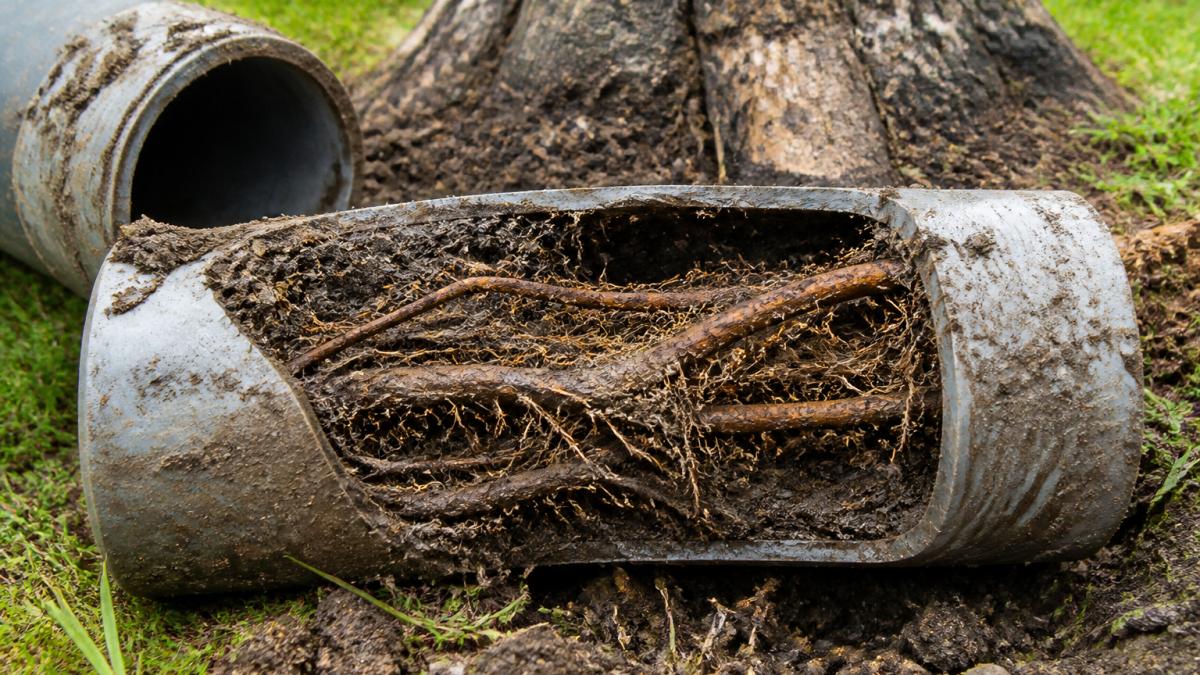
Tree roots causing sewer line blockages start with a crack you cannot see. A hairline fracture at a pipe joint lets condensation and warm vapor escape.
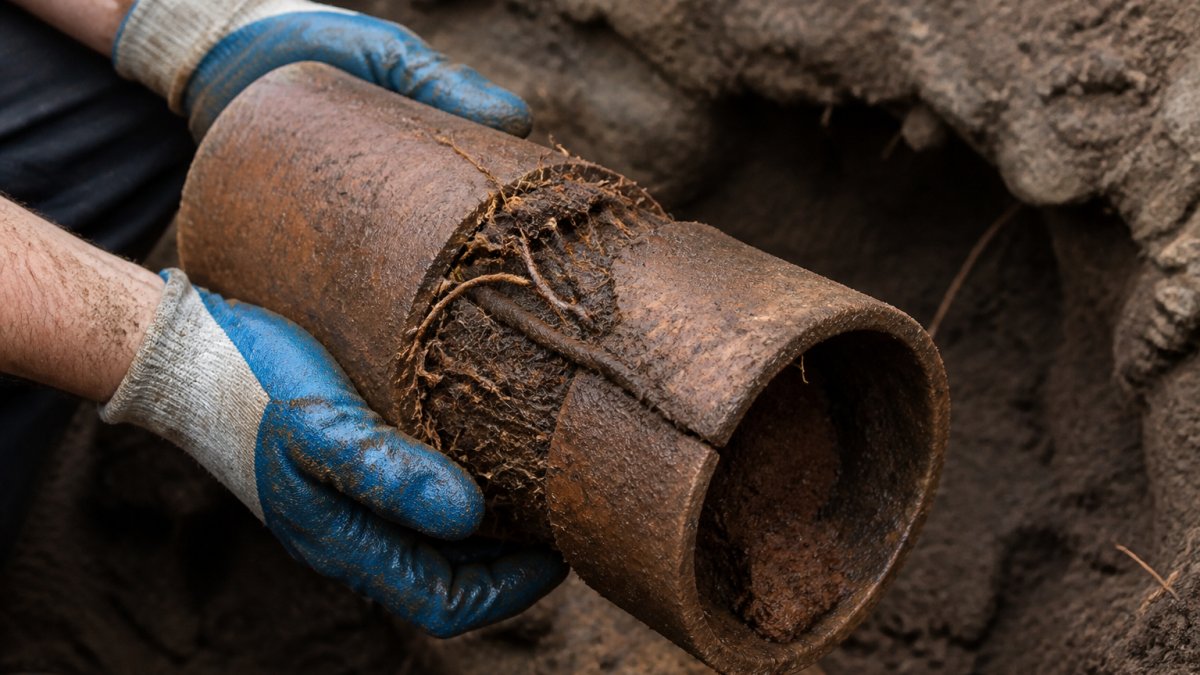
This guide from Alpha Rooter & Plumbing covers how roots invade, how to spot the damage, and how to clear it.
Root intrusion is the growth of tree and shrub roots into a sewer pipe through cracks, joints, or loose fittings.
The Path From Hairline Crack to Full Blockage
The sequence is predictable:
- A joint loosens or a crack forms. Old clay and cast iron pipes fail at the seams first.
- Moisture escapes into the soil. Roots detect the water trail.
- Fine roots enter the pipe. They start thin as hair.
- Roots thicken and spread. They catch grease, paper, and waste.
- Flow slows, then stops. You get a sewer backup.
Roots feed on the waste flowing past, so they grow faster inside the line than outside it.
Ignoring slow drains for a few months is the most common mistake we see. By the time water backs up, the root mass is usually thick enough to need mechanical cutting, not a simple drain cleaning.
Signs of Tree Roots in Sewer Line You Should Not Ignore
The clearest signs of tree roots in sewer line trouble are recurring clogs in the same fixture, gurgling toilets, and drains that empty slowly across the whole house.
Watch for these symptoms:
- Slow drains in sinks, tubs, or showers
- Clogged toilets that back up again weeks after clearing
- Gurgling sounds from drains when you run water
A clogged drain that clears and returns is the classic pattern: one fixture backing up points to a local clog, several at once to the main line.
That distinction tells you whether you have a pipe blockage near the house or a root obstruction deeper in the sewer drain.
Sewer Camera Inspection for Tree Roots: Finding the Blockage Before You Dig
A sewer camera inspection for tree roots is the only reliable way to confirm root intrusion and pinpoint its location. A licensed plumber feeds a camera through a cleanout and records the inside of the pipe, showing the roots, the pipe condition, and the exact depth of the blockage location.
Why this step matters:
- It confirms roots rather than grease or a collapsed pipe
- It shows whether damaged pipes need repair or just clearing
- It saves you from digging up the wrong spot and gives you video proof for insurance or a landlord
Blockage location is the key output: it decides whether snaking can reach the problem or trenchless repair is needed.
Ask for a copy of the camera footage. A reputable plumber will share it. If a company refuses, that is your cue to call someone else.
How to Remove Tree Roots From Sewer Line: Snaking, Cutting, and Chemical Options
How to remove tree roots from sewer line depends on root mass, pipe condition, and whether you are treating a symptom or the cause. Mechanical cutting, hydro-jetting, and chemical root treatments are not interchangeable, each has a different job, risk profile, and limit.
Step 1: Confirm the problem is roots, not something else
Root intrusion shares symptoms with grease clogs, collapsed pipe, and bellied lines. A safe diagnostic process looks like this:
- Map the symptoms. One slow fixture points to a local clog. Multiple fixtures backing up at once points to the main line.
- Check the cleanout. If water stands in the cleanout after a fixture runs, the blockage is downstream of that point.
- Stop DIY attempts if any of these appear: sewage backing up into multiple fixtures, standing water in the yard over the line, gurgling from the floor drain when you flush, or a cleanout that will not drain. These suggest a main-line blockage or a damaged pipe, and a hand snake can make it worse by packing roots and waste tighter.
- Confirm with a camera. A sewer camera inspection is the only way to see whether roots, grease, or a broken pipe is the cause and to measure how far in the problem sits.
A common pattern: a homeowner snakes a recurring clog three or four times before calling a plumber, and the camera then shows a root mass at a joint the hand snake never reached. The earlier the camera goes in, the less you spend on repeat visits.
Mechanical root cutting and snaking
Snaking and mechanical root cutting use a rotating steel cable or blade to shear roots out of the pipe. This is the standard first move for most blockages.
- Drain cleaning with a snake clears soft clogs and light root tips
- Mechanical root cutting slices through thicker roots at the pipe wall
- Hydro-jetting scours the pipe walls clean afterward and flushes the cuttings downstream
The catch: cutting removes the root but leaves the opening that let it in. Root regrowth is common unless you repair the pipe. Mechanical cutting is also a maintenance strategy, not a cure, many homes with mature trees near the line need it on a repeating schedule.
Chemical root treatments and their limits
Chemical root treatments use copper sulfate or foaming root killers to stop root growth in a line. They kill dead roots and slow new growth for a while.
What they cannot do:
- Fix a cracked pipe or damaged pipes
- Clear a full sewer backup
- Replace mechanical root cutting for heavy intrusion
Copper sulfate also affects soil and nearby plants when overused, so it works best as a follow-up to cutting, not a standalone fix.
Treatment safety and environmental considerations
Before you buy any root-killing product, read the label and weigh these factors:
- Label precautions. Root-killing products are pesticides or pipe-treatment chemicals. Follow the label’s dilution, application, and protective-equipment instructions exactly, over-application can harm the pipe, the soil, and nearby plants.
- Effect on trees and landscaping. Copper sulfate does not distinguish a root in the pipe from one feeding a desirable tree, and repeated use near shallow-rooted ornamentals can cause decline. If a valued tree sits over the line, mechanical cutting plus a pipe repair is often the lower-risk path.
- Septic systems. If your home is on a septic system rather than a municipal sewer, chemical root killers can disturb the bacterial balance in the tank and drain field. Check the label for septic compatibility before pouring anything into the line.
Chemicals manage roots. They do not repair the pipe. If roots got in, there is a crack or loose joint that will keep inviting them back.
Matching the method to the situation
| Situation | First move | Follow-up |
|---|---|---|
| Slow drain, one fixture, no backup | Hand snake or drain cleaning | Camera if it returns |
| Recurring clog at the same fixture | Camera inspection | Mechanical root cutting |
| Roots confirmed, pipe intact | Mechanical cutting + hydro-jetting | Annual maintenance or preventive treatment |
| Roots plus cracked or offset pipe | Camera + cutting to restore flow | Pipe repair or lining |
| Sewage backup or standing water | Stop DIY; call a licensed plumber | Camera, then repair decision |
If a company quotes a chemical treatment without a camera inspection first, ask why. You cannot safely treat a problem you have not seen.
How Quickly Tree Roots Grow Back in Sewer Lines
How quickly tree roots grow back in sewer lines depends on the tree, the season, and whether the pipe was repaired. In warm months, fine roots can return within a few months of cutting.
Fast-growing species make it worse, willows, maples, and poplars are notorious for aggressive root growth.
Signs regrowth has started:
- The same fixture slows again
- Water drains slower after heavy rain
- You hear gurgling return
A preventive maintenance schedule, often an annual camera check and cleaning, keeps small regrowth from becoming a sewer backup.
Repair or Replace? A Decision Framework for Damaged Pipes
Use this framework to decide between clearing, pipe lining, and sewer line replacement. The camera inspection gives you the facts, and the decision should rest on pipe condition, not on which option is cheapest today.
| Situation | Best Option | Why |
|---|---|---|
| Roots only, pipe intact | Mechanical cutting + annual maintenance | Lowest cost, no digging |
| Small cracks, roots return yearly | Pipe lining (trenchless repair) | Seals the pipe without excavation |
| Multiple cracks, collapsed sections | Sewer line replacement | Lining cannot fix a broken pipe |
| Old sewer pipes (clay, cast iron) | Camera first, then line or replace | Condition decides the path |
Three questions decide it:
- Is the pipe structurally sound? If yes, clear and maintain.
- Are cracks isolated? Pipe lining can seal them.
- Is the line collapsed or heavily damaged? Replacement is the honest answer.
Trenchless repair avoids tearing up your yard, which matters for driveways and mature landscaping.
How cost, recurrence, and access shape the decision
The total cost of a root problem is driven less by the first visit than by how often you repeat it. A few factors move the number:
- Recurrence. If you are cutting roots every year, the annual spend adds up. Lining or spot repair can cost more up front but stop the cycle. Ask for a written estimate showing both the one-time repair and the expected maintenance schedule so you can compare honestly.
- Access. A line under a lawn is cheaper to reach than one under a driveway, patio, or mature landscaping. Trenchless methods reduce access cost because they work from existing cleanouts and small launch pits.
- Pipe material and age. Clay and cast iron fail at joints and are common root targets. Plastic pipe is less prone to joint intrusion but can still be damaged by roots at fittings. Material affects which repair method will hold.
Who is responsible, and what insurance covers
Responsibility can differ between a private lateral and the public sewer main. The homeowner usually owns the sewer line from the house to the property line or the connection at the main, so repairs on that stretch are typically on you; the public main beyond is usually the utility’s responsibility.
Before you dig, check:
- Your local utility or public works department. Some utilities offer lateral repair programs or service-line coverage. Ask whether your address qualifies.
- Your homeowner insurance policy. Underground pipe damage is often excluded, but some policies or riders cover access and repair. Confirm in writing before authorizing work.
- Your warranty or service contract. Home warranty plans sometimes cover sewer line blockages but exclude root damage or pre-existing conditions.
Homes with mature trees and older clay or cast iron lines benefit most from an annual camera check before problems start.
A practical decision sequence
- Get the camera inspection and keep the footage.
- Ask the plumber to state the pipe condition in plain terms: sound, cracked, offset, or collapsed.
- Get written estimates for the recommended repair and for the maintenance alternative.
- Compare total cost over several years, not just the first invoice.
- Confirm responsibility and insurance coverage before work begins.
Prevention, Responsibility, and Long-Term Protection
Root barriers and smart landscaping are your best defense. Physical barriers placed along the pipe block roots from reaching it.
Practical prevention steps:
- Know where your sewer line runs before planting
- Keep trees a safe distance from the pipe
- Schedule preventive maintenance camera checks
Responsibility matters too.
Tree removal is a last resort. It rarely solves the problem alone if the pipe is already cracked.
At Alpha Rooter & Plumbing, we handle sewer camera inspections, mechanical root cutting, and trenchless repair with upfront pricing and no hidden fees.
Frequently Asked Questions
How can you tell if tree roots are blocking a sewer line?
The most reliable signs of tree roots in sewer line trouble are slow drains across multiple fixtures, gurgling toilets, and recurring clogs in the same spot even after snaking. Sewage odors around the yard and unusually lush or sunken patches of grass above the pipe are strong clues too. A sewer camera inspection for tree roots confirms it: the camera shows root intrusion, cracks, and pipe condition directly, so you know exactly what you are dealing with before anyone starts cutting.
How quickly do tree roots grow back in sewer lines after cleaning?
Roots can return within a few months, and in warm climates with fast-growing species they often regrow in as little as 6 to 12 weeks. Mechanical root cutting removes the obstruction but leaves cut ends that regrow toward the moisture and nutrients in the pipe. That is why a one-time snaking rarely solves the problem permanently.
Who is responsible for damage caused by tree roots in a sewer line?
Responsibility usually follows the pipe’s location. The section of sewer line on your property, typically from the house to the main, is normally the homeowner’s responsibility, even if the tree belongs to a neighbor. If a neighbor’s tree roots invade your line, you may have a civil claim, but your own insurance typically handles the repair. Many standard policies exclude root damage, so check your coverage before a blockage becomes a sewer backup claim.
How often should you use root killer in a sewer line?
If roots keep returning, the pipe itself is the problem. A sewer camera inspection tells you whether treatment is enough or whether pipe lining or trenchless repair is the smarter long-term spend.
Tree roots causing sewer line blockages will keep coming back until the pipe is fixed, not just cleared. If your drains are slowing or backing up, do not wait for a full sewer backup. Alpha Rooter & Plumbing offers 24/7 emergency service, upfront pricing with no hidden fees, and a response time under 90 minutes. Call now to schedule a camera inspection and get a clear plan for your line.