
Table of Contents
- Start With the Signs of a Plumbing Emergency
- What to Do While Waiting for Emergency Plumbers
- Verify the Plumber License and Insurance Before You Book
- Questions to Ask a Plumber on the First Call
- Understand Emergency Plumber Cost Before Work Begins
- Compare Emergency Plumbers Consistently
- Conclusion
- Frequently Asked Questions
Last Updated: October 18, 2026
Start With the Signs of a Plumbing Emergency
Water where it shouldn’t be is the fastest way to turn a small repair into a gutted room.
A plumbing emergency is any problem that threatens property, health, or safe water access and needs a licensed plumber right away.
Here’s the short version. If water is actively flooding a space, you have a true emergency. If a faucet drips, you have a Saturday project.
When It Can Wait and When It Cannot
Some issues can hold until normal business hours. Others cannot.
Call immediately for:
- A burst pipe or water spraying from a wall
- Sewage backing up into tubs or floor drains
- No water anywhere in the building
You can usually wait for:
- A slow drain in one sink
- A dripping faucet
- A toilet that runs after flushing
The EPA guide to household water emergencies is a useful reference for what counts as a health hazard. When in doubt, shut off the water and call.
Never ignore a sewage backup. Wastewater carries bacteria, and a single missed day can soak drywall and subfloor. Tear-out costs far more than an emergency call.
What to Do While Waiting for Emergency Plumbers
Shut off the water first, then protect what’s around it. Those two moves limit damage more than anything else you can do before a plumber arrives.
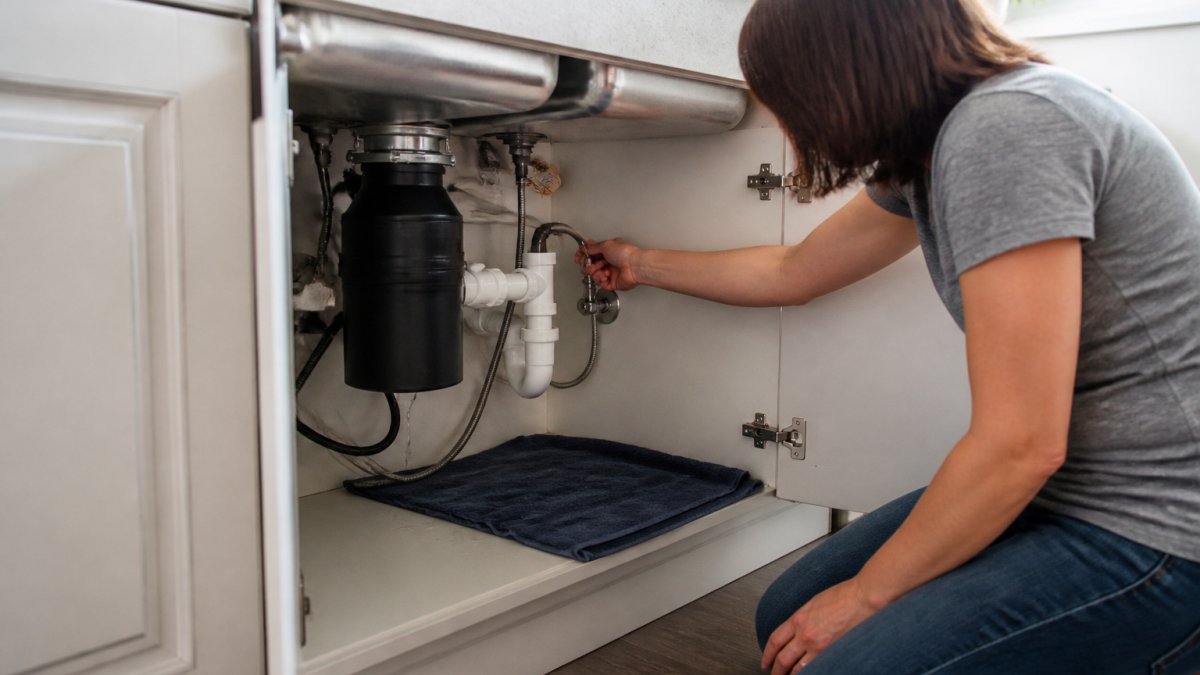
Follow these steps in order:
- Close the main shutoff valve. Turn it clockwise until it stops.
- Kill the power to any area near standing water at the breaker.
- Open a low faucet to drain pressure from the lines.
- Move furniture and rugs away from the wet zone.
- Document everything with photos for your insurance claim.
- Clear a path so the plumber can reach the problem fast.
For a water heater leak, close the cold inlet valve on top of the tank. For a sewage backup, stop using all water in the building. Every flush adds to the mess.
Verify the Plumber License and Insurance Before You Book
Ask for the license number and proof of insurance before anyone touches a pipe. A licensed plumber carries a state-issued credential, and a legitimate company will share it without hesitation.
This is where people get burned. Anyone can print “licensed and insured” on a van. Fewer can produce the paperwork, and almost none will volunteer the details that let you confirm coverage is real and current.
Ask for the license number and the certificate of insurance in the same message. A real company sends both within minutes. A fly-by-night operator stalls, sends a screenshot with the policy number blacked out, or changes the subject.
How to Check a License Step by Step
Verification takes about five minutes and follows a predictable path. Do it while you wait for the truck.
- Get the license number in writing. Ask for the individual plumber’s license and the company’s license if your state issues both. Write down the exact name on the license.
- Find your state’s licensing board. Search for your state’s plumbing licensing board or contractor licensing agency. Most states publish a free license lookup tool on the agency website.
- Search the number, not the name. Name searches return too many near-matches. Enter the license number and confirm the status reads active, the expiration date is in the future, and the license type covers the work you need.
- Confirm the name matches. The name on the license should match the company on the estimate, the invoice, and the truck. A mismatch is a red flag, not a clerical error.
- Check for disciplinary actions. Many licensing boards publish disciplinary records, citations, and suspensions alongside the license status. Read them. A single old citation may be minor; a pattern of unlicensed activity or failed inspections is not.
- Check the state consumer protection office or attorney general. Complaint records there often capture billing disputes and pressure tactics that never reach the licensing board.
- Read recent reviews for patterns. Look for repeated themes, late arrivals, surprise charges, no-shows after payment, rather than one angry review. A cluster of the same complaint is the signal.
How to Confirm Insurance Is Real
A certificate of insurance is a one-page document listing the policyholder, the insurer, the policy number, and coverage limits. Ask for it and read it.
- General liability insurance covers damage the plumber causes to your property, such as a broken pipe flooding a ceiling. Confirm the policy is current and the coverage limit is meaningful for the size of your home.
- Workers’ compensation insurance covers the plumber if they are injured on your property. Without it, an injured worker may look to your homeowner’s policy.
- Call the insurer to confirm. The certificate lists the insurer’s phone number. Call it, give the policy number, and ask whether the policy is active and covers plumbing work at your address. A forged or expired certificate fails this call.
A plumber who damages a pipe without insurance can leave you holding the bill. The FTC guidance on hiring home service providers recommends getting license and insurance details in writing before work begins. Do that, and keep the documents with your estimate.
Never accept a photo of a license card as proof. Look up the number yourself on the state board’s site. A card proves nothing; an active record on the regulator’s database does.
What to Do If the Check Fails
If the license is expired, the insurance certificate cannot be confirmed, or the name does not match, do not book the job. Call the next company on your list. In a true emergency, shut off the water and wait for a verified plumber rather than let an unverified one open a wall. The extra hour is cheaper than the repair bill for unpermitted work.
Questions to Ask a Plumber on the First Call
The first call tells you almost everything. A professional answers clearly and asks about your job details before quoting anything.
Ask these questions to ask a plumber before you book:
- Are you licensed and insured in this state?
- What is your real response time tonight?
- Do you charge extra for nights, weekends, or holidays?
Listen for vague answers. “We’ll figure it out when we get there” is a red flag on pricing. A good plumber gives you a range and explains what could change it.
Understand Emergency Plumber Cost Before Work Begins
Emergency plumber cost depends on the job, the time of day, the parts needed, and how the company structures its fees. Any company that quotes a firm price over the phone, before seeing the problem, is guessing. The useful skill is not memorizing prices; it is knowing which line items should appear on an estimate and which ones signal a problem.
The Cost Components to Expect
A transparent emergency plumbing estimate usually breaks into four parts. Ask the dispatcher which of these apply before the truck arrives.
- Service call or diagnostic fee. A flat charge to come out and diagnose the problem. Ask whether it is credited toward the repair if you approve the work. A fee that is never credited is not automatically unfair, but you should know the rule up front.
- After-hours surcharge. Nights, weekends, and holidays often carry a premium over standard rates. Ask for the exact multiplier or flat add-on, not a vague “a little extra.” A company that advertises no overtime charges should confirm that in writing.
- Minimum charge. Many companies bill a minimum labor charge even for a short visit. Ask what the minimum is and whether it includes the first block of time.
How to Compare Written Estimates
Two estimates for the same job can look identical and cost very different amounts. Compare them line by line on these points:
| What to Compare | What a Clear Estimate Shows | What to Question |
|---|---|---|
| Diagnostic fee | Flat amount, credit policy stated | Fee that appears only after the visit |
| Labor | Hourly rate or flat price, scope described | “Starting at” prices with no scope |
| After-hours charge | Exact surcharge or written no-overtime policy | Verbal assurance only |
| Parts | Itemized or clearly bundled | Vague “materials” line |
| Permit fees | Listed if a permit is required | Permit work quoted without a permit line |
| Payment terms | Accepted methods, deposit policy | Cash-only or large upfront deposit |
Ask each company to send the estimate in writing, text, email, or a signed work order, before any repair begins. A written estimate is the only version you can compare and the only version you can hold a company to.
Questions That Reveal Pricing Transparency
- What is the diagnostic fee, and is it credited if I approve the repair?
- What is the after-hours surcharge tonight, in dollars or as a multiplier?
- Is there a minimum labor charge, and what does it cover?
Listen for specifics. “We’ll figure it out when we get there” is a red flag on pricing. A good plumber gives you a range, explains what could move it, and puts the number in writing before opening a wall.
Scam and Pressure-Tactic Warning Signs
Some operators prey on panic. Watch for these:
- A price that jumps once the truck arrives and the pipe is open
- Cash-only demands or pressure to skip the invoice
- Claims that your whole system needs replacing on the spot, with no diagnostic explanation
Never let anyone start work without a written estimate. Once pipes are open, you have lost your leverage to negotiate, and the final bill is whatever they decide. If a plumber refuses to put the price in writing, end the call and dial the next company.
A fair emergency plumber will tell you the diagnostic fee, the after-hours rule, and the minimum charge before arriving, then hand you a written estimate before starting. If any of those three is missing, keep calling.
Compare Emergency Plumbers Consistently
Compare every plumber on the same five points, or you’ll pick on gut feel and regret it. Use this scorecard and rate each company from 1 to 5:
- License and insurance verified
- Response time promised and realistic
- Pricing transparency (written estimate, no surprise fees)
- Reviews and complaint history
- Experience with your type of pipe or system
Add the scores. Anything under 18 out of 25 is a pass. That’s the whole method, and it beats scrolling through reviews at midnight while water spreads across the floor.
Conclusion
A plumbing emergency is stressful enough without wondering whether the person you hired is legitimate. Verify the license, get the estimate in writing, and compare every company on the same five points.
That’s exactly how we built Alpha Rooter & Plumbing: licensed plumbers, a response time under 90 minutes, upfront pricing with no hidden fees, and no overtime charges. Call now.
Frequently Asked Questions
How do I find a reliable emergency plumber fast?
Search for licensed emergency plumbers near you, then call two or three and ask the same questions: response time, total price structure, license number, and insurance coverage. Confirm the license through your state’s licensing board before booking. Ask whether the quoted response window is a guarantee or an estimate, and get the trip charge, after-hours rate, and diagnostic fee confirmed before anyone is dispatched. A provider that answers these clearly on the first call is usually the safer choice.
How can I check whether a plumber is licensed and insured?
Ask for the license number and the name it is registered under, then look it up on your state plumbing board’s online database to confirm it is active and has no serious disciplinary actions. For insurance, request a certificate of insurance showing general liability and workers’ compensation coverage, and call the insurer to verify the policy is current. A legitimate plumber will share these details without hesitation. If a company stalls or gives only a verbal assurance, move on.
What should I ask an emergency plumber before they come?
Ask four things: how soon they will arrive and whether that window is guaranteed, what the trip or diagnostic fee is, how pricing is structured (flat rate versus hourly plus parts), and whether the plumber sent is licensed and background-checked. Also ask if the company handles your specific problem, such as burst pipes, sewer backups, or water heater failures. Write the answers down so you can compare providers on the same criteria instead of on who sounded friendliest.
What should I do while waiting for an emergency plumber?
Shut off the main water valve if a pipe is leaking or burst, and switch off power to any circuit near standing water at the breaker panel. Move furniture and valuables away from the water, place towels or buckets to limit spread, and photograph the damage for insurance. Do not pour chemical drain cleaner into a backed-up drain, and do not attempt to open a sewer cleanout yourself. Keep the affected area clear so the plumber can reach the problem quickly.