
Last Updated: October 29, 2026
Quick Summary
The best methods for sewer pipe leak detection combine a homeowner dye test, sewer camera inspection, and pressure or flow testing. A dye test confirms a break between the house and street, a camera pinpoints the exact crack or joint, and hydrostatic pressure testing confirms leak severity.
- Log symptoms and locations first to judge whether the issue is a clog or a leak.
- A dye test takes 30 to 60 minutes and confirms a break between house and street.
- A camera inspection takes 1 to 2 hours and finds the exact crack, joint, or root location.
- Hydrostatic pressure testing confirms a leak and its severity but not its exact location.
- Ask for the full price before work starts, including any charge for pulling a fixture.
Table of Contents
- 7 Best Methods for Sewer Pipe Leak Detection
- How to Read the Symptoms Before You Test
- Signs You Have a Sewer Leak and Not a Clog
- Sewer Camera Inspection: Seeing the Pipe From the Inside
- Sewer Dye Test: Tracing a Leak With Color
- Underground Sewer Leak Detection: Pressure and Flow Testing
- Sewer Line Smoke Testing: Mapping Hidden Connections
- A Step-by-Step Homeowner Diagnostic Workflow
- What an Inspection Costs and What It Includes
- Frequently Asked Questions
7 Best Methods for Sewer Pipe Leak Detection
A wet patch in the yard or a gurgling drain rarely means nothing. Sewer pipe leak detection is the process of finding the exact failure point in an underground sewer line before anyone digs. Below, we walk through the seven methods. The 5 diagnostic methods we cover can help narrow down leaks without tearing up a yard.
How to Read the Symptoms Before You Test
The clues your house gives you can help you decide what to investigate.
Start with a simple log. Note when symptoms appear and where:
- Gurgling after a flush or while the washer drains
- A slow drain in one fixture, not all of them
- Sewage odor indoors near a floor drain
- A wet or extra-green patch in the yard
- Water backing up in a tub when the toilet flushes
One symptom is a hint. Symptoms alone do not establish whether the issue is a leak or a clog.
Signs You Have a Sewer Leak and Not a Clog
A sewer leak may have signs beyond the drain.
Watch for these visual signs:
- Wet spots or soggy soil over the line, even in dry weather
- Unusually lush grass in one strip of the yard
- Yard pooling where water collects and won’t drain
- Sewage odor outdoors, strongest near the cleanout
- Sewage backup into a floor drain or tub
A recurring clog in the same spot is another reason to investigate the line.
Sewer Camera Inspection: Seeing the Pipe From the Inside
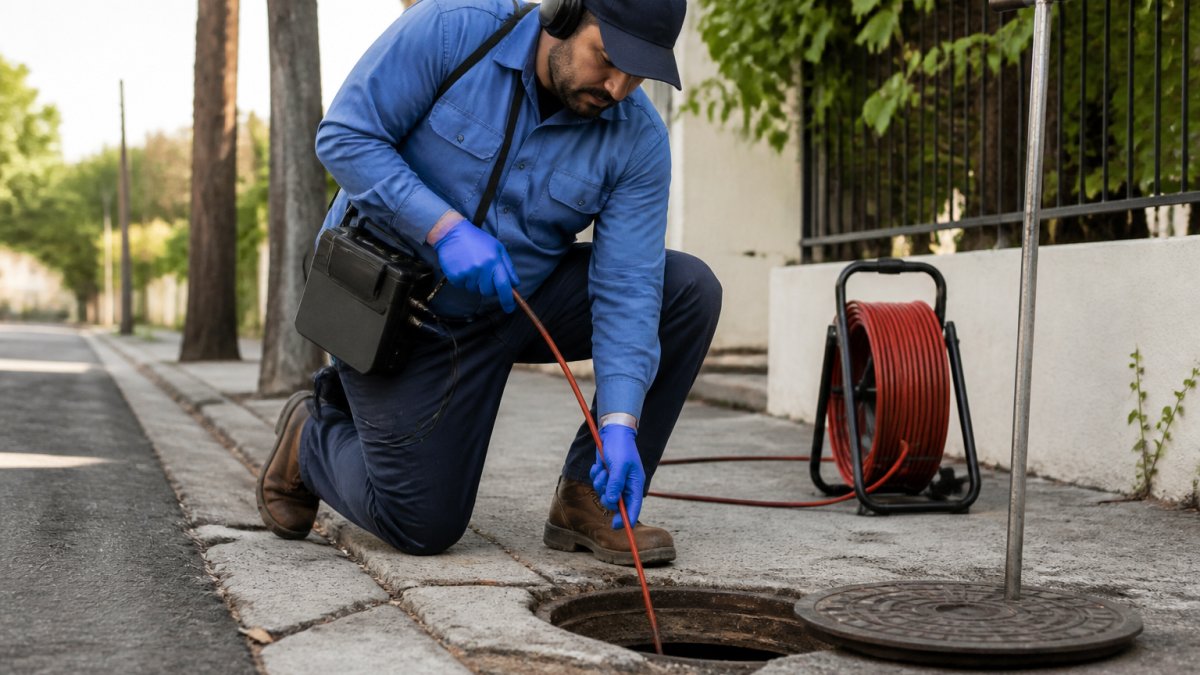
Sewer camera inspection is one method for examining a sewer line. A camera can be fed through an access point into the pipe.
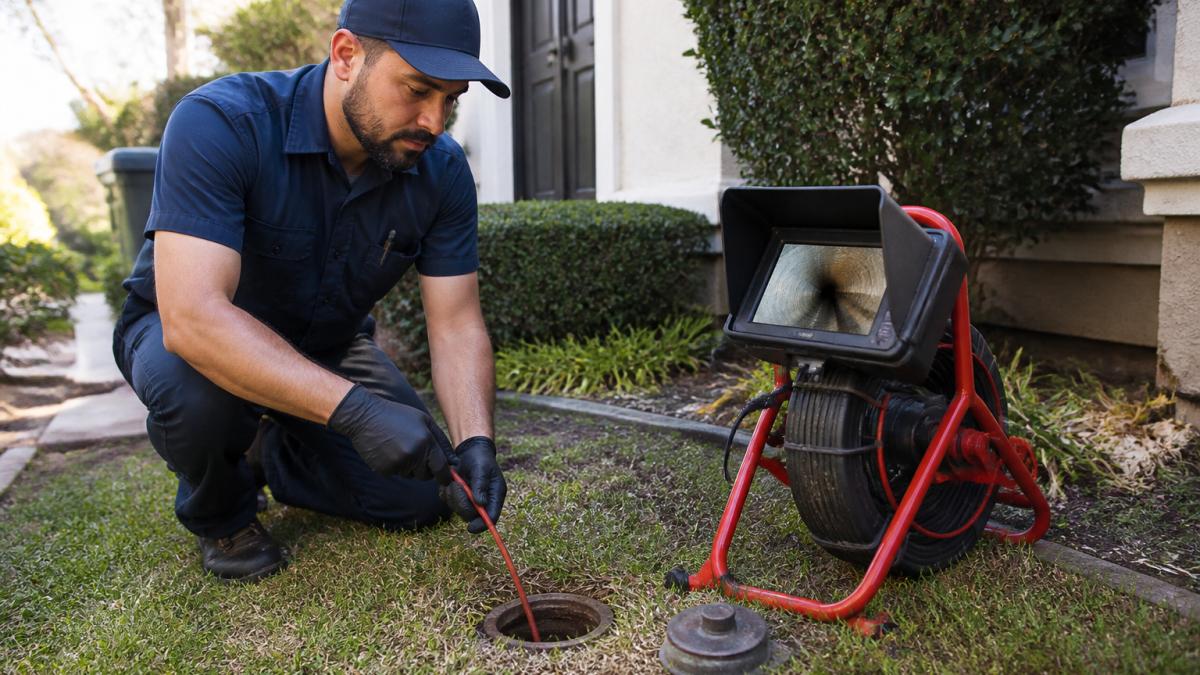
Before you schedule one, it helps to know how to prepare for a sewer camera inspection, and if the camera finds damage, read up on what to do if a sewer inspection finds cracks. To book the service itself, see our sewer camera inspection page.
Sewer Dye Test: Tracing a Leak With Color
A sewer dye test is one method described for investigating a suspected leak.
- Locate the cleanout. If you can’t find it, follow this guide to find your sewer cleanout.
- Flush non-toxic dye down a toilet or pour it into the cleanout.
- Run water for several minutes.
- Watch the yard, the basement, and the slab edges.
Colored water surfacing may be a clue to investigate further.
Underground Sewer Leak Detection: Pressure and Flow Testing
Pressure and flow testing are methods described for investigating a suspected leak. They address different questions than a camera inspection.
Hydrostatic pressure testing
A hydrostatic test is one method described for investigating a sewer line.
Flow testing
Flow testing is another method described for investigating a sewer line.
When to choose which
| Test | Best for | Requires excavation? | Shows exact location? |
|---|---|---|---|
| Hydrostatic pressure | Confirming a leak and its severity; verifying a repair | No, if cleanouts or test ports are accessible | No |
| Flow | Finding slow or blocked sections; comparing line segments | No | No |
If you’re dealing with a backup right now, call Alpha Rooter & Plumbing. We run 24/7, respond in under 90 minutes, and charge no overtime rates. Our licensed plumbers use state-of-the-art diagnostic tools to find the leak fast and fix it right.
Sewer Line Smoke Testing: Mapping Hidden Connections
Sewer line smoke testing is one method described for investigating a sewer line.
A Step-by-Step Homeowner Diagnostic Workflow
This is one possible order for investigating a suspected sewer line issue.
| Step | Action | Time | What It Tells You |
|---|---|---|---|
| 1 | Log symptoms and locations | 10 min | Whether the issue is a clog or a leak |
| 2 | Check the yard for wet spots and lush grass | 15 min | Rough leak area outdoors |
| 3 | Run a dye test | 30-60 min | Confirms a break between house and street |
| 4 | Book a camera inspection | 1-2 hrs | Exact crack, joint, or root location |
| 5 | Add pressure or smoke testing if needed | Varies | Leak severity and hidden connections |
For a deeper walkthrough of each step, see our guide on how to diagnose sewer line issues.
What an Inspection Costs and What It Includes
Most competitors describe the methods but skip the part homeowners actually need: what the visit costs, how long it takes, and what you walk away with. Here is what to expect.
What drives the price
A common pattern is a base camera inspection fee plus an add-on for each additional test. Ask for the full number before work starts, including any charge for pulling a fixture to reach the line.
How long it takes
- Smoke test: fast for a single building, longer for a multi-unit property
What the inspection should include
- A clear statement of what the test could not establish, for example, that a pressure loss confirms a leak but not its exact point
Interpreting the results
If you’re dealing with a backup right now, call Alpha Rooter & Plumbing. We run 24/7, respond in under 90 minutes, and charge no overtime rates. Our licensed plumbers use state-of-the-art diagnostic tools to find the leak fast and fix it right.
Frequently Asked Questions
What are the signs of a sewer pipe leak?
Gurgling drains, recurring slow drains, sewage odors, wet or unusually lush patches of grass, sewage backups, and pooling wastewater can be clues to investigate. These signs alone do not establish whether the issue is a leak or a clog.
Can a sewer leak be detected without digging?
Some methods are described for investigating a suspected sewer leak without digging, but the business facts do not establish which of these methods Alpha Rooter & Plumbing offers or what they can determine.
How does a sewer dye test detect a sewer pipe leak?
A dye test is one method described for investigating a suspected sewer leak. The business facts do not establish that Alpha Rooter & Plumbing offers this test or what its results can determine.
When should you call a plumber for a suspected sewer leak?
Call a plumber when you see sewage backup, wastewater pooling, a wet patch that stays wet, or odors that persist after cleaning. Recurring clogs and gurgling can be reasons to have the line inspected. Keep people and pets away from standing wastewater until a licensed plumber inspects the line.
A leak you can’t see is still damaging your yard, your foundation, and your pipes. Alpha Rooter & Plumbing offers 24/7 emergency service, upfront pricing with no hidden fees, and a licensed team that responds in under 90 minutes. Get started with Alpha Rooter & Plumbing and stop guessing where the water is coming from.
