
Last Updated: November 11, 2026
Quick Summary
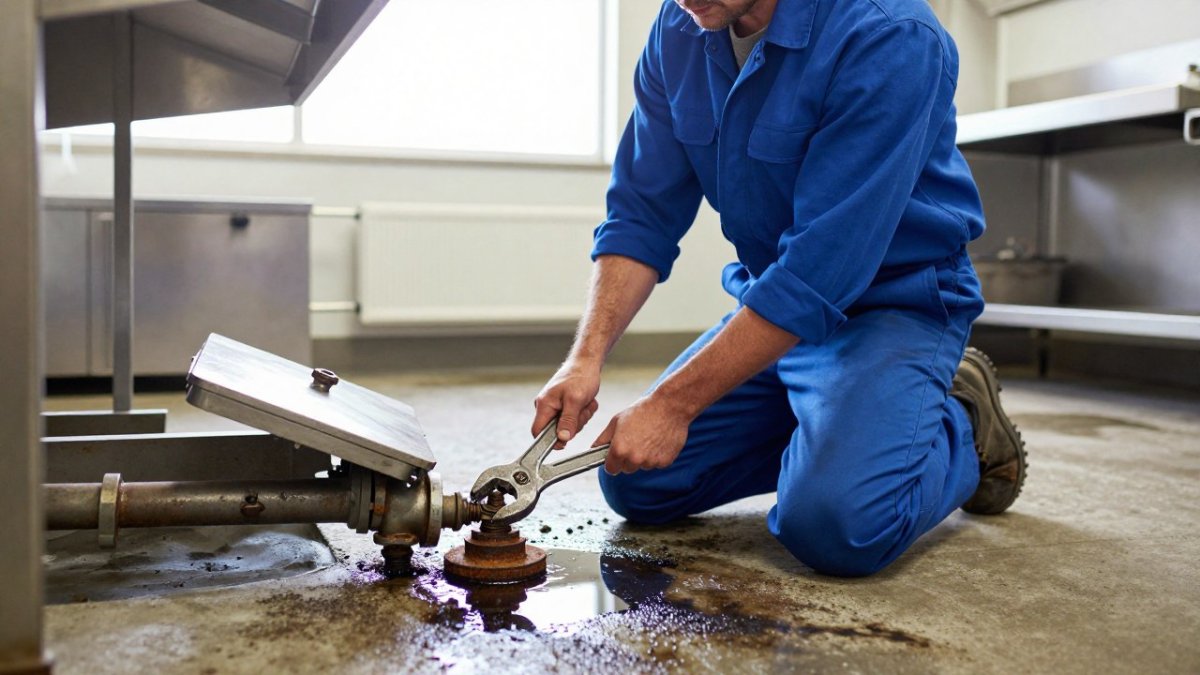
Signs your restaurant grease trap needs immediate repair include backups in sinks or floor drains, grease or wastewater overflowing from the trap, and leaks, cracks, or visible damage to the tank or lid. Any overflow with visible wastewater or a confirmed crack means you should stop service and call for grease trap repair.
- Slow drains at every sink at once point to a trap at or near capacity, not a single clogged drain.
- Odors that return within days of a pump-out suggest a worn lid gasket, failed seal, or rotting solids behind baffles.
- Overflow shortly after a pump-out means a blocked baffle or clogged outlet pipe, so stop use and call for repair.
- Staff should never open, pump, or reach into a trap; keep the lid closed and let the service provider open it.
- Alpha Rooter & Plumbing handles grease trap repair around the clock with a response time under 90 minutes.
Table of Contents
- 7 Warning Signs Your Restaurant Grease Trap Needs Immediate Repair
- Slow-Draining Sinks and Kitchen Drains
- Foul or Persistent Odors
- Backups in Sinks, Floor Drains, or Other Plumbing
- Grease or Wastewater Overflowing from the Trap
- Standing Water Around Drains and Visible Grease Buildup
- Reduced FOG Capture and Changes in Trap Performance
- Leaks, Cracks, or Other Visible Damage
- Common Grease Trap Problems and What They Mean for Repair
- How Often Should a Restaurant Grease Trap Be Serviced?
- Grease Trap Pumping: What It Removes and When It Is Not Enough
- Grease Trap Cleaning Tools: What Your Staff Can Use and What Requires a Pro
- How to Tell Whether Your Grease Trap Needs Cleaning or Repair
- Immediate Steps for Restaurant Staff When a Grease Trap Fails
- Call Alpha Rooter & Plumbing for Fast Grease Trap Repair
- Frequently Asked Questions
7 Warning Signs Your Restaurant Grease Trap Needs Immediate Repair
A grease trap repair issue rarely starts with a dramatic flood. It starts with a slow drain your staff ignores for a week. Small warnings often turn into a closed kitchen if they are ignored. Below are the seven signs your restaurant grease trap needs immediate repair, ranked by how fast they escalate.
Slow-Draining Sinks and Kitchen Drains
Water pooling in the sink for more than a few seconds means flow is restricted downstream. A trap filled with solids and congealed fats, oils, and grease (FOG) slows the whole drainage rate. If every sink drains slowly at once, suspect the trap, not the individual drain.
Foul or Persistent Odors
Grease traps smell when waste sits too long or a seal fails. A whiff near the lid after service is normal; a smell that lingers through the dining room is not. Persistent odors usually mean rotting food particles inside the unit or gas escaping past a worn gasket.
Backups in Sinks, Floor Drains, or Other Plumbing
Any backup beyond a single fixture points to a blockage or a full trap. Wastewater rising in the lowest floor drain when the dishwasher runs is a classic sign the waste line cannot keep up, and it can turn into a full drain backup fast.
Grease or Wastewater Overflowing from the Trap
Overflow is where a maintenance problem becomes a health and safety problem. Grease overflow usually means the trap hit capacity, the baffles are blocked, or the outlet pipe is clogged. Stop service in that area and call for help.
Standing Water Around Drains and Visible Grease Buildup
Standing water around a floor drain plus a visible grease layer on the grate signals the trap is not capturing FOG properly. Solid grease on the inlet side is a strong clue that pumping is overdue or the unit is damaged.
Reduced FOG Capture and Changes in Trap Performance
When a trap works, grease stays inside and clear water exits. When performance drops, more grease reaches your plumbing. Staff may notice grease farther down the line or the trap needing pumping more often than usual.
Leaks, Cracks, or Other Visible Damage
Cracks, corrosion, and worn seals on the tank or lid mean the unit can no longer hold waste. A leaking trap can seep under floors and damage the slab. Visible damage is a repair or replacement call, not a cleaning call.
Common Grease Trap Problems and What They Mean for Repair
Most grease trap problems trace back to a short list of causes. A clogged trap from skipped pumping is most common, followed by blocked baffles and a clogged inlet pipe. Corrosion and failed seals matter more in older units.
The key question is whether the problem sits in the contents or in the structure. Contents problems respond to pumping and cleaning. Structural problems, meaning cracks, corrosion, or a failed outlet pipe, need grease trap repair.
For more on repeat failures and prevention, see our guide to commercial grease trap maintenance.
How Often Should a Restaurant Grease Trap Be Serviced?
Service intervals depend on trap size, kitchen volume, and how much FOG your menu produces. A high-volume, fryer-heavy kitchen fills a trap far faster than a small cafe.
A common approach is to set a baseline interval, then adjust based on inspection. Checking the trap regularly and pumping on a measured schedule is generally more reliable than guessing. Slow drains and rising odors tell you the interval is too long.
Service interval is not the same as repair. Servicing keeps a healthy trap working. It will not fix cracks, blocked baffles, or a failing outlet pipe.
Grease Trap Pumping: What It Removes and When It Is Not Enough
Grease trap pumping removes the accumulated FOG layer, settled solids, and wastewater from the tank, restoring capacity and keeping the unit capturing grease. For a trap that is simply full, pumping solves the problem.
Pumping is not enough when the trap has structural damage or a blocked line beyond the tank. If drains stay slow after a pump-out, the issue is downstream. If water seeps from the tank, the issue is the tank itself.
For a step-by-step look at the cleaning process, see our grease trap cleaning guide for restaurants to judge whether cleaning will solve your problem or whether you need a repair.
Grease Trap Cleaning Tools: What Your Staff Can Use and What Requires a Pro
Staff can handle light surface work with basic tools, such as gloves and approved disposal containers, while heavy work should be left to a professional.
Heavy work requires a professional with proper equipment and safe handling. Sending staff to clear a blocked baffle with hand tools risks damage and injury.
How to Tell Whether Your Grease Trap Needs Cleaning or Repair
The more useful question is narrower: is the problem in the contents of the trap, or in the structure of the trap and the line around it? Contents problems respond to pumping and cleaning.
Here is a decision framework for narrowing down the cause, with the mechanism behind each symptom.
| Symptom | What is likely happening | First action | Urgency |
|---|---|---|---|
| All sinks drain slowly at once | Trap at or near capacity, or the outlet side is restricted | Pump and inspect; recheck flow the same day | Same day |
| One fixture drains slowly, others fine | Localized clog between fixture and trap | Clear the branch line first | Same day |
| Odors that return within days of a pump-out | Worn lid gasket, failed seal, or rotting solids stuck behind baffles | Inspect seals and baffles | Within 24-48 hours |
| Overflow shortly after a pump-out | Blocked baffle or clogged outlet pipe, the trap is empty but cannot pass water | Stop use, call for repair | Immediate |
| Standing water plus visible cracks or corrosion | Structural failure of the tank or lid | Stop use, plan repair or replacement | Immediate |
| Grease reaching far down the waste line | Reduced FOG capture, baffles damaged or missing, or unit undersized | Camera inspection, then repair | Within a week |
| Slow drains that return within days of cleaning | Downstream blockage beyond the trap | Camera the line | Within a week |
| Water seeping from the tank base or sides | Failed tank, joint, or seal | Stop use, repair or replace | Immediate |
Why the distinction matters. A trap that is simply full still works, it just has less room to separate FOG from water, and pumping restores that room.
What a proper inspection covers. A useful inspection goes beyond a glance through the lid.
The urgency tiers. Schedule this week: slow drains that respond to cleaning, odors that clear after a pump-out, grease showing up farther down the line.
Use this table as a starting point, not a verdict. An inspection confirms the cause, and the cause, not the symptom, determines whether you are paying for a cleaning or a repair.
Immediate Steps for Restaurant Staff When a Grease Trap Fails
The first ten minutes after a grease trap fails decide how much of your kitchen you lose for the rest of the day. The goal is not to fix the trap, staff should never open, pump, or reach into a trap, it is to stop adding waste, contain what has already escaped, and get the right people on the phone. Work through these steps in order.
1. Stop the flow at the source. Shut off the affected sinks, the dishwasher, and any floor drain in the impacted zone.
2. Contain what has already spilled. Use absorbent material, kitty litter, commercial absorbent, or floor-dry, on standing wastewater, and push it away from electrical outlets, walk-in cooler thresholds, and dry storage.
3. Protect food and food-contact surfaces. If wastewater has reached prep areas, discard any exposed food, sanitize the surfaces, and treat the event as a contamination event, not a plumbing inconvenience.
**4.
5. Document the event. Note the time, the affected fixtures, the volume of spill, and the service call.
Watch out: staff should never open the trap lid to “check” during a backup.
What not to do. Do not pour chemical drain openers into a backed-up trap, they can damage baffles and seals and make the repair more expensive. Our guide on how to dispose of restaurant grease trap waste legally covers the options.
Call Alpha Rooter & Plumbing for Fast Grease Trap Repair
A failing trap is a downtime problem, and downtime costs money. Our team handles grease trap repair and commercial drain cleaning around the clock, with a response time under 90 minutes.
Alpha Rooter & Plumbing offers upfront pricing with no hidden fees and no hourly or overtime charges. Our licensed plumbers use diagnostic tools to find the cause.
If a backup has already hit your plumbing, see our emergency sewer backup cleaning service. When you are ready to act, book commercial drain cleaning.
A grease trap problem will not fix itself, and every hour of delay raises the risk of a shutdown. Alpha Rooter & Plumbing responds 24/7 with licensed plumbers, upfront pricing, and no overtime charges, so you know the cost before we start. Get started with Alpha Rooter & Plumbing and get your kitchen draining freely again.
Frequently Asked Questions
How do you know if a grease trap needs repair or just cleaning?
Cleaning removes accumulated FOG and solids, but repair is needed when you see structural damage: cracks in the tank, leaking seals, corrosion on baffles, or wastewater backing up after a fresh pump-out. If slow drains or odors return within days of cleaning, the trap likely has a repair issue. A licensed plumber can inspect the inlet pipe, outlet pipe, and baffles to confirm whether pumping alone will solve the problem or if grease trap repair is required.
What should you do if a restaurant grease trap is overflowing?
Stop using all drains connected to the trap immediately. Do not run water, dishwashers, or sinks, because added flow will worsen the overflow. Put on gloves, contain the spill with absorbent material, and keep staff and customers away from the area. Call a 24/7 commercial plumbing service for emergency pumping and inspection. Document the incident for health department records. Alpha Rooter & Plumbing offers a response time under 90 minutes and no hourly or overtime charges.
Can a clogged grease trap cause a sewer backup?
Yes. When a grease trap is full or its baffles are blocked, FOG and food particles pass into the waste line and congeal inside the pipe. Over time this narrows the line and causes a sewer backup that can affect floor drains, sinks, and even toilets. A backed-up grease trap also strains the municipal system. If you notice slow drains across multiple fixtures, schedule grease trap pumping and a camera inspection before a full backup occurs.
How long does grease trap repair usually take?
Repair time depends on the damage. Replacing a baffle or sealing a leak is generally faster than repairing a cracked tank or replacing a damaged inlet pipe. Emergency service can begin immediately to stop overflow. Alpha Rooter & Plumbing offers upfront pricing with no hidden fees.
