
Table of Contents
- Why Plumbing Maintenance Matters for Property Managers
- Building a Plumbing Maintenance Schedule Template
- Creating a Commercial Plumbing Maintenance Checklist
- Emergency Plumbing Services for Property Managers
- Preventive Maintenance to Reduce Costly Repairs
- Compliance, Building Codes, and Insurance Documentation
- Budgeting and Capital Expenditure Planning
- Conclusion
Last Updated: August 21, 2026
Why Plumbing Maintenance Matters for Property Managers
Plumbing maintenance for property managers isn’t optional, it’s the foundation of operational continuity and liability protection. A single burst pipe in a multi-unit building can trigger water damage across multiple units, insurance claims, tenant disputes, and code violations. Small leaks become major corrosion; slow drains become complete blockages. What costs a few hundred dollars to fix preventively becomes a five-figure emergency repair.
Property managers who establish quarterly inspection routines and follow annual deep-dive maintenance protocols see 40-60% fewer emergency calls and significantly lower repair costs over a five-year cycle. This guide walks you through the exact systems that work.
Building a Plumbing Maintenance Schedule Template
A structured plumbing maintenance schedule template gives you a repeatable process instead of guessing when to inspect or what to check. The framework below splits tasks into quarterly checks and annual deep-dive work, designed to fit most property management workflows.
Quarterly Inspection Checklist
Quarterly inspections catch emerging problems before they become emergencies. These checks take 30-60 minutes per building and require no special equipment.
During each quarterly visit, inspect these areas:
Water Supply and Pressure:
Check all accessible water lines for visible leaks, corrosion, or mineral buildup. Test water pressure at a few fixtures; normal pressure runs 40-60 PSI (the CDC). Pressure over 80 PSI can damage pipes and fixtures; too low suggests a developing problem upstream (the EPA).
Drain Lines and Fixtures:
Run water through all drains and listen for unusual sounds. Slow drains, gurgling noises, or water backing up are early warning signs of clogs or pipe issues. Check under sinks for standing water or dampness indicating slow leaks.
Visible Plumbing Infrastructure:
Look for water stains on ceilings or walls, indicating leaks above. Check basement or utility areas for pooling water, corrosion on pipes, or rust-colored water from fixtures. In older buildings with cast iron pipes, look for signs of deterioration around joints.
Shut-off Valves:
Locate and test main water shut-off valves and individual fixture shut-offs. Make sure they turn smoothly. Label them clearly so tenants or emergency responders can find them quickly.
Document findings in a simple checklist with date, property, issues found, and action taken. This record becomes invaluable if you need to justify maintenance costs or defend yourself in a liability dispute.
Annual Deep-Dive Tasks
Once yearly, conduct a more thorough inspection that goes beyond visual checks.
Sewer Line Inspection:
Schedule a professional sewer line inspection using a camera system. This reveals tree root intrusion, pipe cracks, or blockages that aren’t visible from the surface. For multi-unit buildings, this is non-negotiable annually.
Water Heater Maintenance:
Drain sediment from water heaters annually; sediment buildup reduces efficiency and shortens tank life. Check the temperature and pressure relief valve. Test the anode rod if accessible.
Sump Pump Testing:
If your property has a sump pump, test it annually by pouring water into the pit to confirm it activates and drains properly. Verify the discharge line isn’t frozen or blocked.
Backflow Prevention Testing:
Commercial properties and some residential buildings require annual backflow prevention device testing by a certified technician. Documentation of these tests is required for code compliance.
Pressure Testing:
Consider pressure testing the main water line annually, especially in older buildings. This identifies micro-leaks in pipes behind walls that won’t show up during visual inspection.
Creating a Commercial Plumbing Maintenance Checklist
Commercial properties face different plumbing demands than residential buildings. Higher water volume, specialized equipment like grease traps, and stricter code requirements mean your maintenance checklist needs to be more detailed and more frequent.
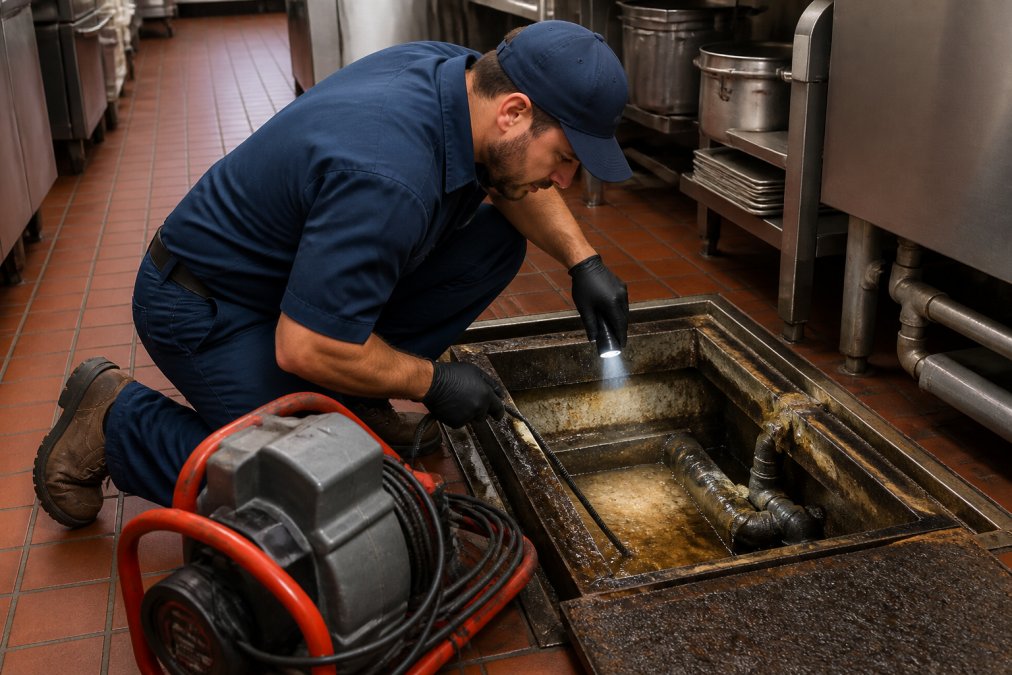
A commercial plumbing maintenance checklist should address the unique infrastructure in your building. Restaurants need grease trap protocols. Offices need fixture maintenance for high-traffic restrooms. Medical facilities need backflow prevention and specialized drain handling.
Grease Trap and Drain Line Protocols
Grease traps catch grease and solids before they enter the sewer line. When neglected, grease accumulates, hardens, and blocks drains, resulting in backed-up sinks and emergency calls.
Schedule grease trap cleaning based on usage, not just calendar dates. A busy restaurant might need cleaning every 1-2 weeks; a small office break room might go monthly. Clean when the trap is 25% full of grease and solids, not when it’s overflowing.
During cleaning, have the contractor inspect the trap for cracks or corrosion. If the trap is more than 15 years old, budget for replacement. For drain lines connected to grease traps, schedule hydro-jetting annually or when flow slows noticeably. Hydro-jetting uses high-pressure water to scour pipe interiors, removing grease buildup and mineral deposits.
Document every grease trap cleaning and drain maintenance visit. Inspectors look for this documentation, and it protects you in liability disputes.
Backflow Prevention and Code Compliance
Backflow prevention devices protect your water supply from contamination. When water pressure drops in the main line, backflow can siphon contaminated water backward into the clean water system. Commercial properties, especially those with specialized equipment or chemical storage, must have backflow prevention.
Hire a licensed plumber to assess your building and install devices where required. Schedule annual testing with a certified backflow device tester. This testing is mandatory, and failure to document it is a code violation. Keep records of all backflow testing for inspectors.
Emergency Plumbing Services for Property Managers
Emergencies happen despite perfect maintenance. A pipe freezes during unexpected cold. A tenant flushes something they shouldn’t. A sewer line fails suddenly. When it happens, you need a response system that minimizes downtime and damage.
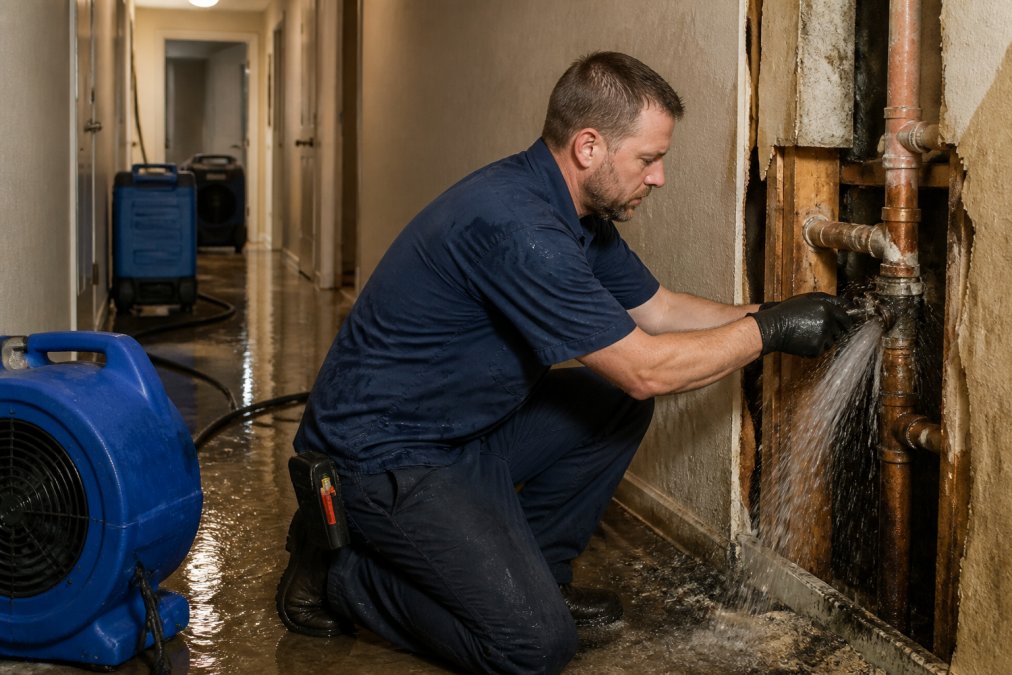
The difference between a manageable emergency and a disaster is preparation. Know who to call before you need them. Brief tenants on how to report issues. Understand your shut-off valve locations. Have emergency contact information accessible 24/7.
When to Call for Emergency Response
Not every plumbing issue requires an emergency call at midnight.
Call immediately:
- Burst pipes with active water spray
- Water pouring from ceilings or walls
- Sewage backing up into units
- Water pooling in electrical areas
- No water pressure to multiple units
Can wait until morning:
- Single slow drain
- Small drip under a sink
- Water heater not heating (if tenants have alternative hot water)
- Single toilet not flushing
The key is stopping water damage. If water is actively flowing where it shouldn’t be, call immediately. If it’s a functional problem without active water damage, you can usually wait.
Tenant Communication During Emergencies
Tenants panic when their plumbing fails. Your communication during the emergency determines whether they stay calm or escalate complaints.
When an emergency is reported, acknowledge it immediately. Send a message within 15 minutes confirming you’ve received the report and explaining what happens next. Provide realistic timing: "Someone will be here within two hours" is better than "as soon as possible."
During the repair, keep tenants updated. After the repair, provide documentation. A simple written summary prevents misunderstandings and disputes later.
Preventive Maintenance to Reduce Costly Repairs
Preventive maintenance is the insurance policy of plumbing management. It costs money upfront but saves far more in emergency repairs and water damage. By addressing predictable failures, you avoid expensive surprises.
Leak Detection and Pipe Corrosion Assessment
Leaks are the silent killers of plumbing systems. A small drip behind a wall goes unnoticed for months, causing mold growth and structural damage. Visual inspection catches obvious leaks, but dangerous leaks are hidden ones inside walls or under concrete slabs.
For properties with recurring issues or older buildings, invest in professional leak detection. Plumbers use acoustic sensors, thermal imaging, or tracer gas to locate hidden leaks without tearing apart walls. The cost of detection (typically $200-400) is trivial compared to water damage repair costs.
Pipe corrosion is a different threat. Galvanized steel pipes, common in buildings from the 1950s-1980s, corrode from the inside, restricting water flow and weakening the pipe structure. If your building has galvanized pipes and you’re experiencing low water pressure, frequent leaks, or rust-colored water, corrosion is likely the culprit. There’s no repair, only replacement. Budget for this as a capital project based on severity.
Cast iron sewer lines, also common in older buildings, corrode similarly. Tree roots exploit cracks in corroded pipes. Annual sewer camera inspections catch corrosion before catastrophic failure.
Water Heater and Sump Pump Maintenance
Water heaters have predictable lifespans. Tank-style heaters typically last 10-15 years (energy.gov). Knowing your water heater’s age helps you budget for replacement before it fails.
Annual maintenance extends life and improves efficiency. Drain sediment that accumulates on the tank bottom. Check the anode rod, a sacrificial component that corrodes instead of the tank. Replacing the anode rod costs $200-400 and adds years to the heater’s life.
For sump pumps, testing is critical. Test monthly by pouring water into the pit and confirming the pump activates. If it doesn’t, repair or replace it immediately. Check the discharge line to ensure it’s not frozen or blocked.
Compliance, Building Codes, and Insurance Documentation
Plumbing maintenance isn’t just about functionality, it’s about legal compliance. Building codes specify maintenance requirements. Insurance policies require documentation. Neglecting either exposes you to liability.
Local plumbing codes vary, but common requirements include annual backflow device testing, grease trap cleaning records, and water pressure regulation. Failure to comply results in fines, forced closures, or liability if code violations cause problems.
Maintain detailed records of all maintenance, inspections, and repairs. Document the date, work performed, findings, and contractor information. These records prove you’re maintaining the property properly. If a tenant is injured by a plumbing failure or a code inspector arrives, documentation shows you acted reasonably.
Insurance companies increasingly require maintenance documentation. If a plumbing failure causes water damage and you can’t produce maintenance records, the insurer may deny the claim. With records, the claim is covered.
Create a simple maintenance log, spreadsheet or notebook, and update it consistently. This log becomes your defense against liability claims.
Budgeting and Capital Expenditure Planning
Plumbing maintenance requires budget planning. Emergency repairs are expensive and unpredictable. Preventive maintenance costs less but requires upfront investment.
Start by assessing your current plumbing infrastructure. How old are the pipes? What’s the condition of the water heater? Are there known problem areas? This assessment informs your long-term capital expenditure plan.
For multi-unit residential buildings, budget approximately $50-100 per unit annually for routine maintenance and inspections. Commercial properties typically run higher due to specialized equipment and code requirements.
Separate your budget into operational maintenance (routine inspections, cleaning, minor repairs) and capital expenditure (pipe replacement, water heater replacement, major system upgrades). Operational maintenance is an annual expense. Capital expenditure is a long-term investment spread over years.
Prioritize capital projects based on urgency and impact. If sewer lines are failing frequently, that’s urgent; budget for replacement within 1-2 years. If pipes are approaching end-of-life but not failing yet, you have more flexibility.
| Maintenance Category | Frequency | Estimated Annual Cost | Notes |
|---|---|---|---|
| Quarterly inspections | 4 times/year | $200-400 | DIY or contractor |
| Annual deep-dive assessment | Once yearly | $300-600 | Professional inspection recommended |
| Grease trap cleaning (commercial) | Monthly-quarterly | $1,200-2,400 | Depends on usage volume |
| Sewer camera inspection | Annually | $400-800 | Preventive, catches issues early |
| Backflow testing (commercial) | Annually | $200-400 | Required by code |
| Water heater maintenance | Annually | $150-300 | Extends life significantly |
| Emergency repairs (budgeted reserve) | Variable | $2,000-5,000 | Set aside for unexpected failures |
Plan for at least one major capital project every 3-5 years. These projects cost $5,000-50,000+ depending on scope, so budgeting early prevents financial surprises.
Plumbing maintenance for property managers is fundamentally about control. You control whether small issues become emergencies. You control whether repairs are planned or chaotic. You control your liability exposure through documentation and compliance.
The systems in this guide, quarterly inspections, annual deep-dive assessments, preventive maintenance, and careful budgeting, give you that control.
When you need professional support implementing these systems or responding to emergencies, Alpha Rooter & Plumbing provides 24/7 emergency plumbing services with licensed professionals, state-of-the-art diagnostic equipment, and transparent upfront pricing. Contact them for maintenance planning, emergency response, or specialized commercial plumbing work.
Frequently Asked Questions
What should be included in a plumbing preventive maintenance checklist for rental properties?
A rental property checklist must cover shut-off valve accessibility and testing, fixture inspection for leaks, drain cleaning, water heater flushing, sump pump operation, and pressure testing of supply lines. Schedule these tasks quarterly or semi-annually depending on property age. Document all work in a maintenance log to protect liability and demonstrate due diligence to tenants and insurers. Older properties with cast iron or galvanized pipes need more frequent corrosion assessment.
How can property managers reduce emergency plumbing repair costs?
Regular preventive maintenance can help reduce emergency calls compared to reactive-only approaches. Implement quarterly inspections to catch leaks early, schedule routine drain cleaning to prevent backups, maintain water heater temperature settings, and test backflow prevention devices. Service contracts with licensed professionals can be a cost-effective alternative to emergency rates. Document all maintenance work to support insurance claims and demonstrate that you took reasonable steps to prevent damage.
What are the most common plumbing issues in multi-unit residential buildings?
Multi-unit buildings typically face clogged drains from tenant misuse, sewer line backups due to tree root intrusion or pipe age, water heater failures, leak damage in shared walls, and corrosion in older cast iron or galvanized piping. Tenant turnover creates spikes in maintenance needs. Sewer line inspection via camera is critical for buildings over 30 years old. Establish clear tenant communication protocols so issues are reported early before they escalate into costly emergency repairs.
How do you vet a reliable plumbing partner for property management?
Verify licenses with your state licensing board and confirm insurance coverage. Ask for references from other property managers handling similar building sizes and ages. Confirm 24/7 availability and response time guarantees in writing. Request upfront pricing transparency and ask how they handle scope changes. Check whether they provide work order documentation and maintenance records for your files. A reliable partner will offer service contracts tailored to your property's preventive maintenance needs, not just emergency call-outs.
What are the essential components of a commercial plumbing maintenance schedule?
Commercial schedules must include grease trap pumping (monthly for restaurants), drain line hydro-jetting (quarterly), backflow prevention testing (annually), water heater inspection and flushing, sump pump testing, pressure testing of supply lines, and fixture replacement planning. Build in quarterly walk-throughs of mechanical rooms and kitchen areas. Document all work for health code compliance and insurance purposes. Coordinate with HVAC and other building systems to avoid operational downtime. Tailor frequency based on equipment age and usage intensity.
What is the difference between plumbing maintenance for residential and commercial properties?
Commercial plumbing handles higher water volume, requires health code compliance, involves grease trap management, and demands faster response to avoid business downtime. Residential focuses on tenant communication and building code adherence. Commercial systems need more frequent drain cleaning, backflow testing, and pressure monitoring. Both need preventive maintenance schedules, but commercial properties can benefit from service contracts with guaranteed response times. Insurance and liability documentation is more complex in commercial settings, especially for food service operations.
How often should property managers schedule routine plumbing inspections?
Quarterly inspections are standard for multi-unit residential buildings; commercial properties with heavy usage (restaurants, offices) should inspect monthly or bi-monthly. Properties over 40 years old with cast iron or galvanized pipes need semi-annual corrosion assessments. After emergencies or tenant turnover, conduct immediate inspections. Sewer line camera inspections should occur every 3-5 years for older systems or annually if backups have occurred. Document all inspection dates and findings to build a maintenance history that supports insurance claims and demonstrates responsible property management.
This article was written using GrandRanker
Comments are closed