
Table of Contents
- Why Homeowners Seek Roto-Rooter Alternatives
- Licensed Plumber vs Franchise Plumbing: What Really Differs
- Types of Drain Cleaning Equipment Professionals Use
- Comparing Local Emergency Plumbing Services vs. National Franchises
- Understanding Upfront Plumbing Pricing Models
- When to Call a Professional vs. DIY Drain Cleaning
- How to Vet a Local Plumbing Service Provider
- Conclusion: Choosing the Right Roto-Rooter Alternative
- Frequently Asked Questions
Last Updated: September 4, 2026
Why Homeowners Seek Roto-Rooter Alternatives
A single sewer backup can release hundreds of gallons of wastewater into a home, and the cleanup often costs more than the repair itself (the CDC). When that emergency hits, many homeowners default to the biggest national name they remember, only to find inconsistent pricing, long wait times, or a technician who arrives without the right equipment.
National chains rely on local franchisees, so service quality, pricing, and equipment can vary dramatically from one neighborhood to the next. At Alpha Rooter & Plumbing, we’ve built our operation around the opposite approach: a licensed, local team that answers the phone 24/7 and guarantees a response time of under 90 minutes.
Licensed Plumber vs Franchise Plumbing: What Really Differs
The core difference comes down to accountability and equipment investment. A licensed local plumber puts their state license and local reputation on the line with every job, while a franchise technician answers to a corporate playbook that prioritizes standardized upselling.
Pricing is set by the local franchise owner, so the “national” rate you see advertised rarely matches the quote you receive. Local licensed plumbers typically offer flat-rate pricing per job because they control their own overhead and don’t carry franchise royalty fees.
A franchise may send a technician with a basic drain auger for a job that requires hydro-jetting or a sewer camera inspection. A local company that invests in diagnostic tools can identify the real problem, grease blockage, root intrusion, or a collapsed pipe, before recommending a solution.
Before you book any service, ask what equipment the technician will bring. A company that arrives prepared with cameras and hydro-jetting gear can diagnose and fix the issue in one visit, saving you a second service call fee.
Types of Drain Cleaning Equipment Professionals Use
Professional drain cleaning is not a one-size-fits-all service. The right tool depends on what is blocking the pipe and where the blockage sits.
Mechanical Snakes and Drain Augers
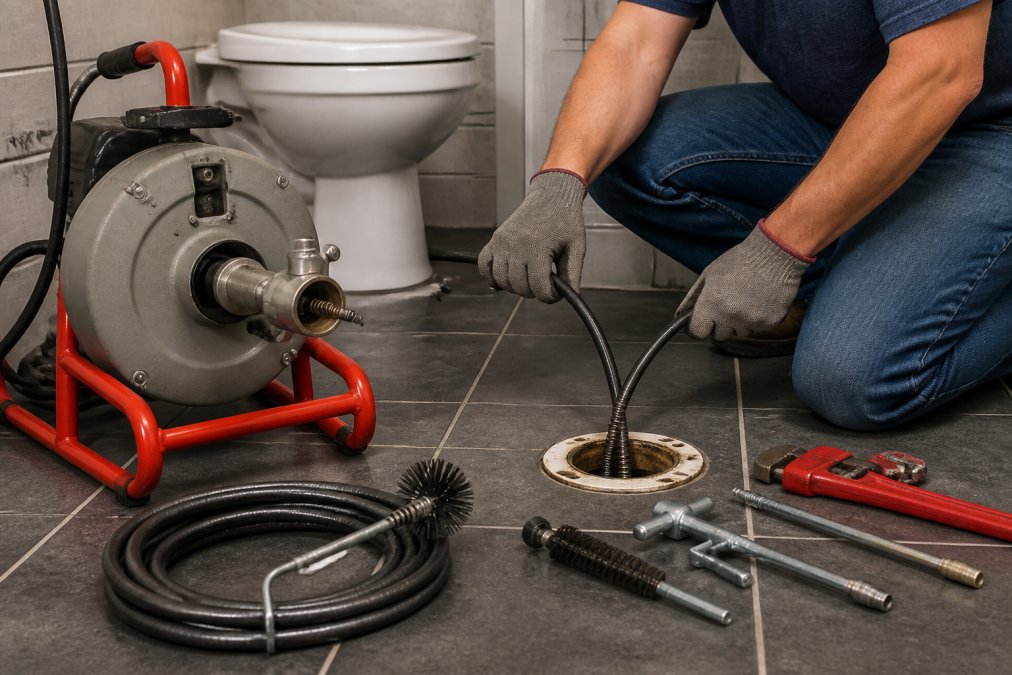
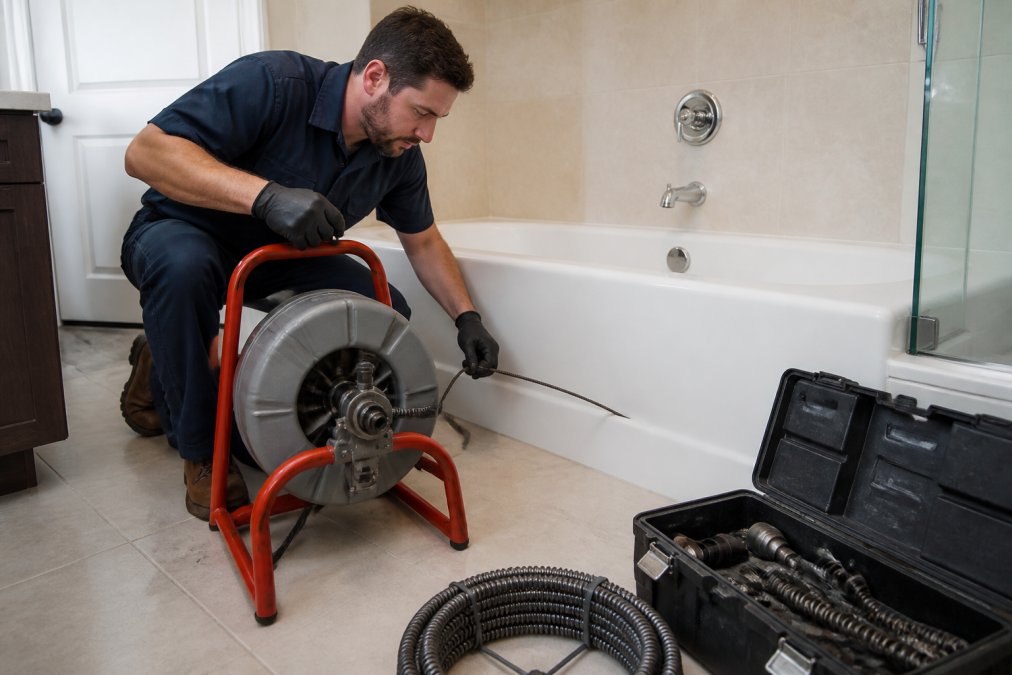
Mechanical snakes, also called drain augers, are the workhorses of residential drain cleaning. A motorized auger feeds a rotating steel cable into the pipe, and the cutting head breaks up or hooks whatever is obstructing the line.
Consumer-grade rental snakes handle simple clogs near the fixture, but they lack the torque and cable length to clear a main line obstruction. Professional units like the Electric Eel Model C specifications offer dual-cable capability and high-torque motors designed for frequent residential use. A professional auger can reach 50 to 100 feet down the line, while a rental unit often stalls at the first bend.
A hand auger with a 1/4-inch cable is adequate for a bathroom sink trap, but it will not cut through a 2-inch branch line clogged with hair and soap scum. A sectional machine with a 1/2-inch or 5/8-inch cable has the rigidity and cutting power to navigate 90-degree elbows and reach the main sewer lateral. Most residential main lines require at least 50 feet of cable reach; a professional truck typically carries 100 feet or more.
A drop-head or arrowhead cutter bores through soft obstructions like grease and tissue, while a saw-tooth cutter or chain knocker is needed for tree roots. A plumber who arrives with only one type of cutter may not be equipped for a root intrusion, the most common cause of main line clogs in older neighborhoods.
Hydro-Jetting for Stubborn Blockages and Sludge Buildup
Hydro-jetting uses highly pressurized water, often 3,000 to 4,000 psi, to scour the inside of the pipe. It excels at removing grease, sludge buildup, and soap scum that a snake pushes through or misses entirely.
Hydro-jetting is the preferred method for restaurant grease lines and older residential pipes with years of accumulated debris. It does not cut through tree roots or repair a collapsed pipe. A reputable plumber will recommend a camera inspection first to confirm the pipe can handle the pressure.
Professional jetting nozzles are rated for the specific pipe diameter and use rear-facing jets that propel the hose forward while scouring the pipe walls. Rental units typically max out around 1,500 to 2,000 psi, insufficient for a main sewer lateral coated with years of mineral buildup.
A professional truck-mounted unit delivers 8 to 12 gallons per minute, flushing debris down the line rather than just loosening it. A portable electric unit delivering 2 to 3 gallons per minute may push a clog further down the pipe, turning a simple blockage into a main line obstruction. If a plumber quotes hydro-jetting, ask whether the unit is truck-mounted and what the flow rate is.
Sewer Camera Inspection for Accurate Diagnostics
A sewer camera inspection involves feeding a waterproof camera through the line to visually confirm the location and cause of the blockage. This diagnostic step is non-negotiable for recurring clogs, because it reveals issues like root intrusion, pipe corrosion, or a belly in the line where water pools.
Most flat-rate quotes include a camera inspection before major work like hydro-jetting or pipe lining. If a plumber recommends a repair without offering to show you the camera footage first, that is a red flag.
A modern inspection camera uses a self-leveling lens and records high-definition video with a locator sonde that transmits the exact depth and position of the camera head. This locator function is critical when a plumber needs to dig to expose a buried pipe; without it, the technician is guessing at the excavation point, which can add hours of labor and unnecessary trenching.
Cast iron pipes develop a characteristic “orange peel” texture as they corrode, while clay pipes often show root intrusion at the joints. A belly, or sag, in the line shows up as a low spot where water pools and debris settles. Each finding changes the recommended repair method. A belly may require pipe re-routing or trenchless lining, while a single root intrusion point can sometimes be cleared with a cutter and treated with root killer. A plumber who skips the camera and goes straight to snaking is treating the symptom, not the cause.
Ask to see the camera footage before authorizing any repair. A reputable plumber will walk you through the video, point out the specific blockage or defect, and explain why the recommended method addresses what the camera shows. If the plumber cannot produce footage, the diagnosis is guesswork.
The cost of a camera inspection typically runs between $150 and $350 for a residential main line. Many flat-rate service calls include this diagnostic fee in the quoted price, but some companies charge it separately and credit it toward the repair if you authorize the work. Ask about this credit policy before the technician arrives.
Comparing Local Emergency Plumbing Services vs. National Franchises
When a pipe bursts at 2 a.m., you need a response, not a call center. Local emergency plumbing services typically route calls directly to a dispatcher who knows the service area, while national franchises often use centralized booking that delays dispatch.
Alpha Rooter & Plumbing guarantees a response time of under 90 minutes across the Los Angeles area, backed by a 24/7 emergency line. A national franchise may promise similar windows, but actual dispatch depends on the local franchisee’s staffing levels that night.
Local companies that stand behind their work with a written warranty have a stronger incentive to do the job correctly the first time, because a callback costs them time and reputation. Franchises may offer a warranty, but enforcing it often means navigating corporate bureaucracy.
| Comparison Factor | Local Licensed Plumber | National Franchise |
|---|---|---|
| Response Time | Local dispatch, under 90 min possible | Central booking, varies by franchise |
| Pricing Model | Flat-rate per job, local control | Set by franchise owner, varies widely |
| Equipment | Invests in own cameras and jetting gear | Standardized, may lack specialty tools |
| Accountability | State license and local reputation | Corporate protocols, local enforcement |
| Service Warranty | Written, backed by local owner | Available, but corporate claims process |
Understanding Upfront Plumbing Pricing Models
Upfront plumbing pricing models exist to protect the homeowner from the dreaded “we found more problems” upsell. A true upfront quote means the plumber assesses the job, provides a fixed price, and does not add charges for hourly labor or after-hours premiums.
Many homeowners hesitate to trust upfront pricing because they have been burned by bait-and-switch tactics. The key is asking what the quote includes before work begins. A legitimate flat-rate quote covers the service call, the diagnostic work, the equipment used, and the repair itself. It does not include surprise fees for “emergency dispatch” or “hazardous material handling” that appear on the final invoice.
At Alpha Rooter & Plumbing, upfront pricing with no hidden fees is a core commitment, and it includes no hourly or overtime charges. That means the price quoted over the phone or after the initial assessment is the price you pay, even if the job takes longer than expected.
Never authorize work based on a verbal “estimate” that lacks a written scope. If a plumber refuses to put the price and the described work in writing, the final bill will likely exceed the quote.
When to Call a Professional vs. DIY Drain Cleaning
Knowing when to attempt a DIY fix and when to call a professional can save you hundreds of dollars, or prevent a costly mistake that damages your pipes. The decision comes down to where the clog is located and what is causing it.
Signs of a Clogged Drain You Shouldn’t Ignore
A slow-draining sink or tub is the first warning sign. If multiple fixtures are draining slowly at the same time, the obstruction is likely in the main sewer line, not a single trap. Gurgling sounds from the toilet or floor drain when you run water elsewhere also indicate a main line obstruction that requires professional equipment.
Recurring clogs in the same fixture point to a deeper issue, such as grease buildup or root intrusion, that a plunger or chemical cleaner will not resolve. Chemical drain openers can damage older pipes and create a hazardous situation for the plumber who has to work on them later.
Cost Factors and Preventative Maintenance for Residential Pipes
The cost of professional drain cleaning varies based on accessibility, the severity of the blockage, and the method required. A simple sink snake runs far less than a hydro-jetting service on a main sewer lateral. Emergency calls, particularly at night or on weekends, also carry a premium with most providers.
Preventative care is the most effective way to avoid emergency pricing. Monthly maintenance, such as flushing drains with hot water and avoiding grease disposal, prevents sludge buildup. For older homes with cast iron pipes, an annual camera inspection can catch corrosion before it becomes a backup.
How to Vet a Local Plumbing Service Provider
Vetting a local plumbing service provider requires more than reading online reviews. Most homeowners stop at star ratings, but a five-star average can hide a pattern of unresolved complaints or a lapsed license. The following framework gives you a concrete checklist to verify licensing, insurance, and warranty policies before you authorize any work.
Verify the License Through the State Contractor’s Board
Every state that licenses plumbers maintains a public database where you can confirm a license is active and in good standing. In California, that is the Contractors State License Board (CSLB); in Texas, it is the Texas State Board of Plumbing Examiners; in Florida, the Department of Business and Professional Regulation. The process is the same in most states: ask the company for its license number, then search that number on the state board’s website.
A valid license number tells you three things: the company has passed a trade exam, it carries the required bond, and it has met the state’s minimum insurance requirements. A lapsed license or a license held under a different business name is a red flag. Some companies operate under a trade name that differs from the legal entity on the license; confirm the license matches the company you are hiring, not just the brand on the truck.
Confirm Insurance Coverage and Ask for a Certificate of Insurance
Liability insurance protects you if the plumber damages your property, and workers’ compensation covers injuries to the technician while on your job. If a plumber is injured in your home and does not carry workers’ comp, you can be held liable for medical bills. Ask for a certificate of insurance (COI) before work begins. A legitimate company will provide one within a day; a company that hesitates or makes excuses likely does not carry adequate coverage.
The COI should list the company name exactly as it appears on the license, the policy effective dates, and the coverage limits. General liability limits of $1 million per occurrence are standard for residential plumbing contractors. Workers’ comp limits vary by state, but the certificate should show an active policy, not a canceled one. You can call the insurance carrier listed on the COI to verify the policy is in force.
Ask About Warranty Policies in Writing
A service warranty is the contractor’s promise that the work will hold up. The strongest warranty in the plumbing industry is a written guarantee that covers both parts and labor for a defined period, typically one to two years for drain cleaning and up to 10 years for trenchless pipe lining. A verbal “we stand behind our work” is worthless if the company goes out of business or the technician moves on.
Ask these three questions before authorizing work:
- What exactly does the warranty cover? Parts only, or parts and labor? Does it cover a recurrence of the same clog, or only a failure of the repair itself?
- How long is the warranty period? One year is common for drain cleaning; pipe lining and repiping should carry longer terms.
- Who honors the warranty? The company that did the work, or a third-party manufacturer? If the company is a franchise, confirm the local franchisee honors the warranty, not just the corporate office.
Get the warranty terms in writing before the work starts. A company that refuses to put warranty terms on paper is signaling that it does not expect to be around to honor them.
Check Complaint History and Resolution Patterns
The state contractor’s board maintains a public complaint history for every licensed contractor. Search the company name and license number to see whether complaints were filed and how they were resolved. A single complaint that was resolved satisfactorily is not a disqualifier; a pattern of unresolved complaints about the same issue, such as incomplete work or unauthorized charges, is a serious red flag.
Also check the Better Business Bureau (BBB) profile, but read the complaints, not just the letter grade. The BBB grades reflect whether a company responded to complaints, not whether the complaint was valid. A company that responds to every complaint and documents its resolution is more accountable than one with an A+ grade but no complaint responses.
Ask About Equipment and Diagnostic Protocols
Equipment transparency is another vetting criterion. Ask whether the technician will perform a camera inspection before recommending hydro-jetting or pipe lining. A provider that relies on guesswork rather than diagnostics is more likely to recommend unnecessary work.
Ask what equipment the technician will bring to the job. A company that arrives prepared with cameras and hydro-jetting gear can diagnose and fix the issue in one visit, saving you a second service call fee. A company that sends a technician with only a hand auger is not equipped for main line work, regardless of how experienced the technician is.
Never authorize work based on a verbal “estimate” that lacks a written scope. If a plumber refuses to put the price and the described work in writing, the final bill will likely exceed the quote.
Finally, request a written warranty. The EPA’s guidance on maintaining your septic and sewer systems emphasizes that regular inspection and maintenance are the most cost-effective ways to extend the life of your infrastructure, and a service warranty reflects a company’s confidence in its own work. A provider that offers service warranty coverage in writing demonstrates accountability that a fly-by-night operation cannot match.
This vetting framework takes about 20 minutes to complete. That time is a fraction of the cost difference between a properly licensed, insured, and warranted contractor and a company that leaves you with a recurring clog and no recourse.
Conclusion: Choosing the Right Roto-Rooter Alternative
The right rotorooter alternatives for residential plumbing share a few non-negotiable traits: licensed technicians, transparent upfront pricing, modern diagnostic equipment, and a response time that respects your emergency. A national franchise name offers familiarity, but a local provider that invests in its team and tools delivers more consistent results.
When you are comparing options, look for a company that answers the phone 24/7 and guarantees a specific response window. Ask about their equipment before they arrive, and confirm their pricing model covers the full scope of work with no hidden fees.
Alpha Rooter & Plumbing meets those standards for residential and commercial clients throughout the Los Angeles area. With licensed, experienced plumbers, state-of-the-art diagnostic and repair tools, and a guaranteed response time of under 90 minutes, we handle everything from urgent burst pipes to preventative maintenance for older drainage systems. Our upfront pricing with no hidden fees means you approve the total cost before we start, and our customer satisfaction guarantee backs every job. Get started with Alpha Rooter & Plumbing and resolve your plumbing issues effectively and affordably.
Frequently Asked Questions
Is Roto-Rooter more expensive than a regular plumber?
Franchise pricing can vary significantly by location and often includes overhead costs that independent plumbers don’t carry. Local companies may offer more competitive rates, but the real difference comes down to the pricing model. Independent plumbers are more likely to provide upfront flat-rate quotes with no hidden fees, while franchises might use service-based quotes that change after diagnosis. Always ask for a written estimate before work begins to compare total costs accurately.
What professional tools do local plumbers use for drain cleaning?
Local plumbers typically use the same professional-grade equipment as national franchises. This includes motorized drain augers and snakes for mechanical clearing, hydro-jetting systems for sludge buildup and grease removal, and sewer camera inspection tools for accurate diagnostics. Many independent services invest in state-of-the-art equipment to stay competitive, so the quality of service often depends on the individual company’s commitment to their trade rather than whether they are a franchise.
How do I verify the licensing and insurance of a residential plumber?
Ask for their license number and verify it through your state’s licensing board website. For insurance, request a certificate of insurance directly from their provider to confirm coverage is current. A licensed plumber should be happy to provide these details upfront. You can also check for complaints through your local Better Business Bureau or consumer protection agency to see if any unresolved issues exist against the company before you hire them.
When should I call an emergency plumber versus a standard service provider?
Call an emergency plumber when you have water actively leaking into your home, sewage backing up into drains, or a complete loss of water supply. These situations cause immediate property damage and health risks. Standard service providers are appropriate for slow drains, minor leaks, or scheduled maintenance. Emergency services typically offer 24/7 availability and faster response times, which justifies the priority given to urgent situations.
What is the difference between a licensed plumber and a franchise plumbing service?
A licensed plumber operates independently and their reputation is tied directly to their local work. They often provide more personalized service and flexible scheduling. A franchise plumbing service operates under a national brand with standardized protocols, which can mean consistent training but sometimes less flexibility. Independent plumbers may offer more transparent upfront pricing models since they have lower overhead, while franchises may have regional pricing variations that affect your final bill.
This article was written using GrandRanker
Comments are closed