
Last Updated: November 17, 2026
Quick Summary
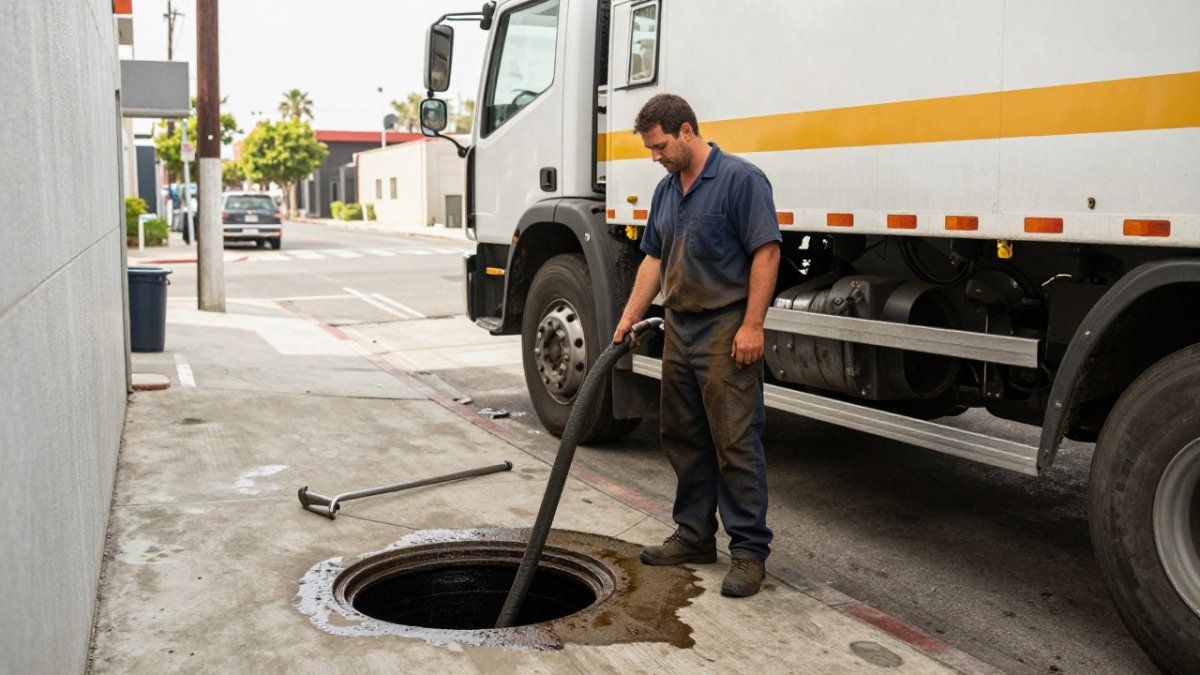
Pumped grease trap waste is hauled in a sealed vacuum truck to an authorized facility such as a wastewater treatment plant, grease-receiving facility, or permitted landfill. There it moves through screening, settling, and separation, and recovered brown grease can be recycled into biofuel and industrial lubricants. The load cannot legally go to a storm drain, dumpster, or the ground.
- A vacuum truck pulls the entire trap contents out at once as one sealed load.
- The hauler must document each load on a manifest or disposal receipt.
- Recycling turns brown grease into biofuel and industrial lubricants.
- Most restaurants need pumping on a set schedule, often every few months.
- Verify the receiving facility is authorized to accept grease trap waste.
Table of Contents
- What Grease Trap Waste Contains Before It Leaves Your Property
- The Pumping Process: What the Vacuum Truck Actually Pulls Out
- Collection and Transport: Tracking the Load From Trap to Facility
- Grease Trap Waste Disposal: Where the Load Legally Goes
- Grease Trap Waste Recycling: Turning Brown Grease Into Fuel and Products
- Grease Trap Pumping Frequency: How Often Waste Leaves Your Trap
- How to Verify Your Hauler’s Disposal Destination
- Book Grease Trap Pumping With Alpha Rooter & Plumbing
- Frequently Asked Questions
What Grease Trap Waste Contains Before It Leaves Your Property
Pumped grease trap waste is a thick mix of fats, oils, and grease, known in the trade as FOG, plus food solids, water, and sludge. It collects in a grease interceptor, a buried tank that traps grease before wastewater reaches the sewer system.
Here is what sits inside a typical trap before pumping:
- FOG layer: brown grease that floats on top, cooled and congealed
- Food solids: scraps, grit, and debris that sink
- Sludge: the dense bottom layer of settled material
- Wastewater: the middle band that drains onward to the sewer
The mix is heavy and smells like a dumpster on a hot day. It also has to go somewhere legal, and that “somewhere” is a big part of the story. If you handle cooking oil separately, learn how to properly dispose of cooking oil so it never reaches the trap in the first place.
The Pumping Process: What the Vacuum Truck Actually Pulls Out
A vacuum truck pulls the entire contents of the trap out through a wide hose, all at once, into a sealed tank. Nothing is sorted on your property. The truck hauls off the whole load: grease, solids, sludge, and water together.
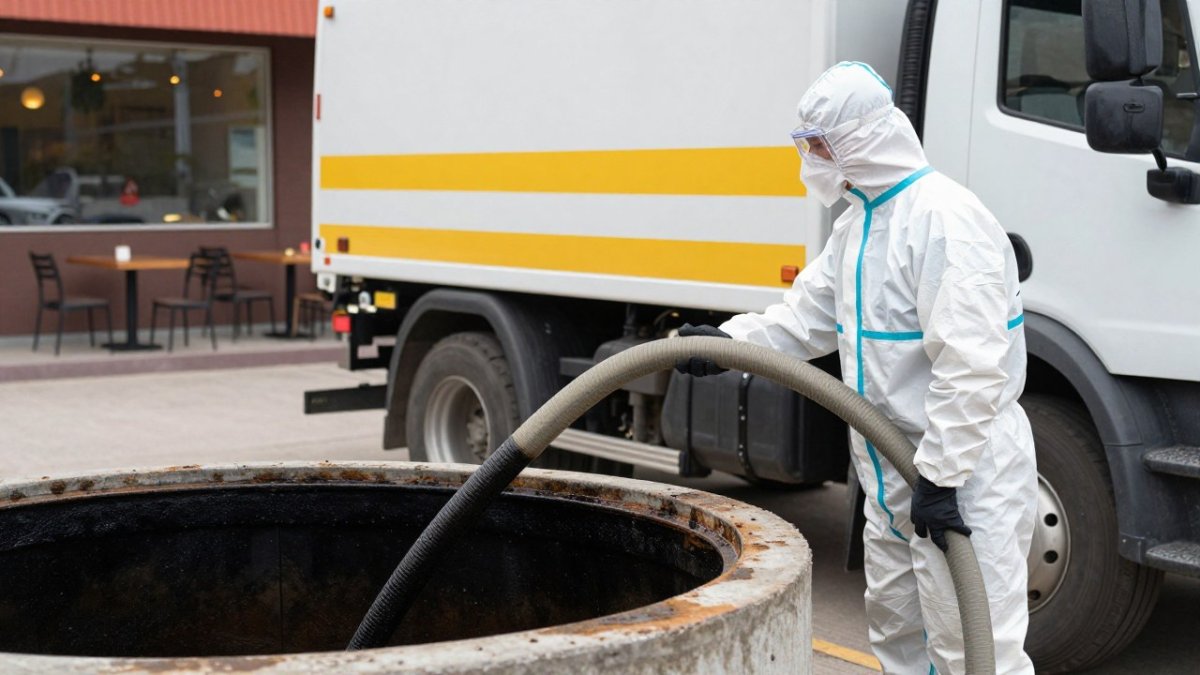
The driver opens the manhole and checks the trap’s condition first. For a full walkthrough of what cleaning involves from start to finish, see Grease Trap Cleaning for Restaurants: A Step-by-Step Guide. Then the hose goes in, the pump runs, and the tank empties.
Pumped waste leaves your site as one sealed load. The sorting happens later, at a facility built for it.
Collection and Transport: Tracking the Load From Trap to Facility
Pumped waste travels in a sealed vacuum truck to an authorized facility, and the hauler is legally required to document that trip. The load is tracked from your trap to the destination.
Hauling of this waste is regulated, and the load is typically documented on a manifest or disposal receipt, which serves as your record of where it went.
Ask where the truck goes after it leaves your lot. The answer tells you a lot about the operation.
Grease Trap Waste Disposal: Where the Load Legally Goes
Grease trap waste disposal ends at an authorized destination, such as a wastewater treatment plant, a grease-receiving or processing facility, or a permitted landfill for residual solids. The load cannot legally go to a storm drain, a dumpster, or the ground. The specific destination depends on the hauler, the receiving facility’s permits, and the composition of the waste.
Typically, the vacuum truck empties into a receiving pit at a treatment plant or transfer station, where the load moves through screening, settling, and separation. Each fraction has a defined destination, and a permitted facility should be able to account for each one.
The End-to-End Journey After Pickup
A simple way to understand the journey is to follow the load in order:
What Happens to Each Separated Fraction
Each fraction of pumped grease trap waste has its own typical destination:
How Processing Varies by Facility and Location
There is no single universal process. Local pretreatment rules, the facility’s permits and equipment, and the composition of the load all affect what happens after pickup. Some facilities are built mainly to receive and separate grease trap waste; others are wastewater treatment plants that accept it as part of a broader waste stream. A facility with composting capability may divert solids from the landfill, while another may landfill all residual solids. That is why the receiving facility’s name and permit status matter as much as the hauler’s registration.
Watch out: if a hauler cannot name the receiving facility, the paperwork trail is weaker than it should be.
Why the Destination Has to Be Permitted
Illegal dumping is a real problem and a serious offense. Dumped FOG clogs sewer lines, causes backups, and can trigger fines and cleanup costs. That is why the destination has to be a permitted site, and why the manifest or disposal receipt is your proof that the load went somewhere legal. The environmental and public-health consequences differ by route: permitted treatment contains the risk, while illegal dumping or improper sewer discharge can overload collection systems and create backups that affect an entire area.
Each fraction of pumped grease trap waste has its own typical destination.
| Destination | What it accepts | Note |
|---|---|---|
| Wastewater treatment plant | Grease trap waste loads | Load moves through screening, settling, separation |
| Grease-receiving or processing facility | Grease trap waste | Built mainly to receive and separate grease trap waste |
| Permitted landfill | Residual solids | Some facilities landfill all residual solids |
| Receiving pit at treatment plant or transfer station | Whole vacuum truck load | Each fraction has a defined destination |
| Storm drain, dumpster, or ground | Not legal | Load cannot legally go there |
Grease Trap Waste Recycling: Turning Brown Grease Into Fuel and Products
Grease trap waste recycling turns brown grease into usable products, mainly biofuel and industrial lubricants. The skimmed grease is a feedstock, not garbage.
Here is how it works. Recovered brown grease is heated and filtered to remove water and debris. It then goes to a biodiesel or renewable fuel producer. Some of it becomes lubricants or industrial products.
This is the part most people never see. The grease that once clogged your trap can come back as fuel. Recycling also cuts how much waste reaches a landfill, which is better for the environment and often cheaper for the hauler. That savings can show up in your service bill.
Grease Trap Pumping Frequency: How Often Waste Leaves Your Trap
Grease trap pumping frequency depends on trap size and how much grease your kitchen produces, but most restaurants need pumping on a set schedule, often every few months. A common rule of thumb is to schedule pumping once the FOG layer and solids reach a substantial share of the trap’s depth.
Higher-volume kitchens typically fill a trap faster than smaller ones. Set a schedule based on volume rather than guesswork. For a deeper look at ongoing maintenance, see our commercial grease trap maintenance guide.
Watch out: waiting until the trap backs up can cause grease to reach the sewer and may create problems with local pretreatment rules.
How to Verify Your Hauler’s Disposal Destination
You can verify a hauler’s disposal destination by asking for the manifest and confirming the receiving facility is authorized to accept grease trap waste. A registered transporter should provide documentation.
What the Paperwork Should Show
A manifest or disposal receipt is only useful if it contains enough detail to trace the load. Look for the hauler’s registration or permit number, the date and time of pickup, the estimated volume or weight, the name and address of the receiving facility, and a facility signature or stamp acknowledging receipt. If any of those fields are blank or generic, the document does not prove much.
A Practical Verification Checklist
Use this checklist before you sign a service agreement and again after each pumping:
- Ask for the hauler’s registration or permit number and confirm it is current
- Request the name and physical address of the receiving facility
- Confirm the facility is authorized to accept grease trap waste
- Keep a copy of every manifest or disposal receipt for your records
- Ask how the hauler handles spills and what insurance covers them
- Ask what happens to each separated fraction at that facility
Questions to Ask the Service Provider
Beyond the checklist, a few direct questions separate a well-run operation from a vague one. Ask where the truck goes after it leaves your lot, whether the same facility receives every load, and how the hauler documents the final destination of grease, water, and solids. A hauler who can answer those questions without hesitation is showing you the trail. A hauler who dodges them is a red flag. If you are worried about your own trap, learn to recognize the signs your grease trap needs repair.
What to Do Before and After Pumping
A concise operator routine makes verification actionable. Before pumping, confirm the service date, the hauler’s registration, and the expected receiving facility. After pumping, collect the manifest, check that the facility name and address match what you were told, and file the record. If a load is ever questioned, that file is your defense. The paperwork protects you, not just the hauler, if the load ends up dumped illegally, the trail leads back to your restaurant.
Watch out: treating the manifest as a formality is the mistake that costs the most. A missing or vague receipt leaves you unable to show where your waste went, which is exactly the position you do not want to be in during an inspection or a sewer backup investigation. For the full legal picture, read how to dispose of restaurant grease trap waste legally.
Book Grease Trap Pumping With Alpha Rooter & Plumbing
Keeping a grease trap under control takes a real schedule, real paperwork, and a hauler you can trust. Miss any of the three and the problem lands in your kitchen, your sewer line, or your wallet.
At Alpha Rooter & Plumbing, our licensed plumbers offer upfront pricing with no hidden fees and 24/7 emergency service with a response time under 90 minutes.
Get started with Alpha Rooter & Plumbing and keep your grease trap compliant, clean, and off your list of problems.
A grease trap that backs up mid-service can shut a kitchen down fast. Alpha Rooter & Plumbing responds around the clock with licensed plumbers, upfront pricing, and no overtime charges. Call to schedule grease trap cleaning or an emergency visit, and we will get your trap back under control.
Frequently Asked Questions
What happens to grease trap waste after it is pumped?
A licensed hauler vacuums the load into a tanker and drives it to an authorized facility. There, the grease trap waste is screened and separated into three fractions: brown grease and oil, wastewater, and residual solids. The water is treated and discharged, the grease is often recycled into biofuel or industrial products, and the solids go to a landfill or composting operation. The exact route depends on the facility and local rules, so ask your hauler where the load is taken.
How often does a grease trap need to be pumped out?
There is no single schedule. A common rule of thumb is to pump once the combined layer of FOG and solids reaches a substantial share of the trap’s depth. Higher-volume kitchens may need service more often than lighter operations. Grease trap pumping frequency also depends on trap size, menu, and whether staff are scraping plates before washing. Check your local pretreatment permit, which often sets a minimum frequency.
Can grease trap waste be composted or recycled?
Recycling is one route for grease trap waste. Recovery of grease and oil is generally considered an established option, and facility practices vary by location.
What happens if grease trap waste is disposed of improperly?
Illegal dumping can clog sewer systems, cause blockages and sewage backups, and contaminate stormwater. It also exposes the business to fines and permit penalties under local pretreatment rules. Always keep pumping records and confirm the load went to an authorized facility, not a back lot or a storm drain.
